



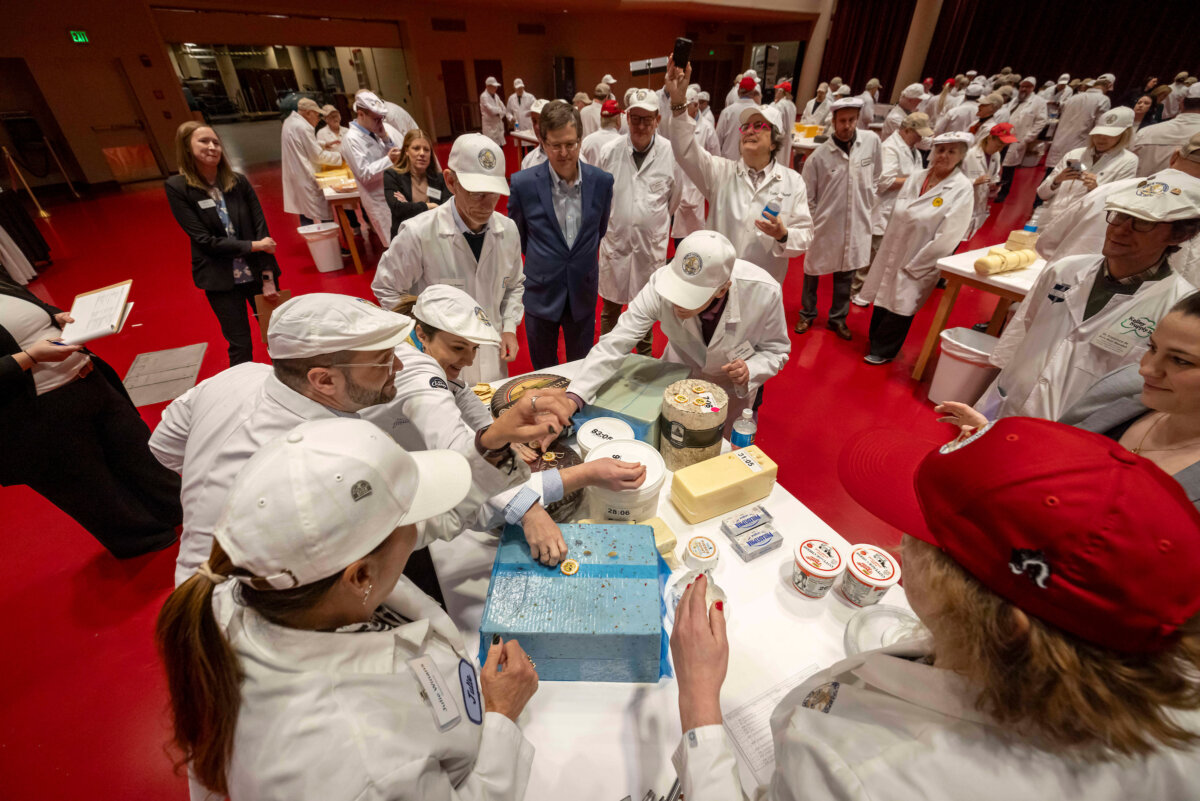
When someone tells me “free cheese samples,” I pay attention. From March 3 to March 5, I attended the World Cheese Championship, hosted biennially (in even-numbered years) by the Wisconsin Cheese Makers Association (WCMA) in Madison, Wisconsin.
A Global Gathering of Cheesemakers
The WCMA dates back to 1893, when cheesemakers, concerned about the quality of the cheese they were seeing around them, came together to protect the prestige of Wisconsin cheese. In 1957, they hosted their first world cheese competition. It began with five countries and a bunch of cheddars. By 2026, the three-day event brought 3,375 products from 25 countries and 34 states to compete in 150 classes, including cheese spreads, butter, and yogurt, all vying for the ultimate prize: World Champion Cheese.
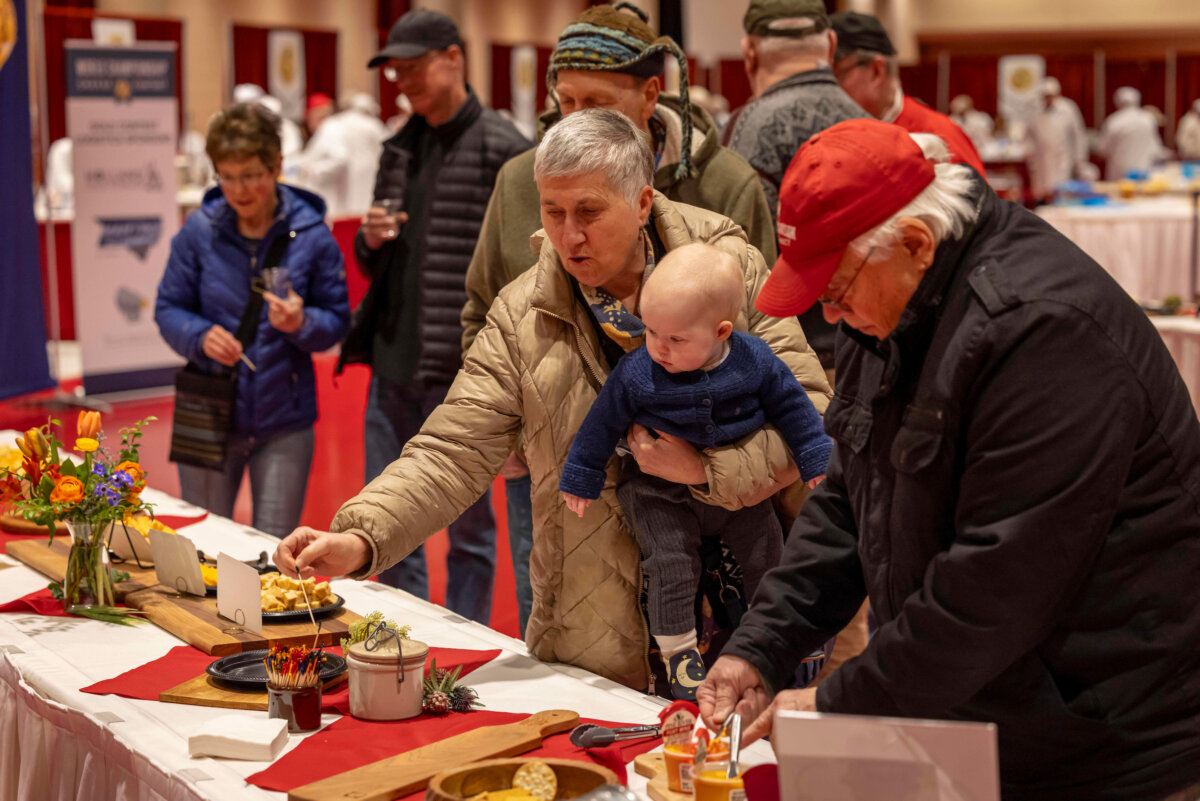
For the first two days, the event is open to the public. Many people are on hand to nab samples of the competing cheeses after they’ve been judged in their classes, and to attend tastings and presentations.
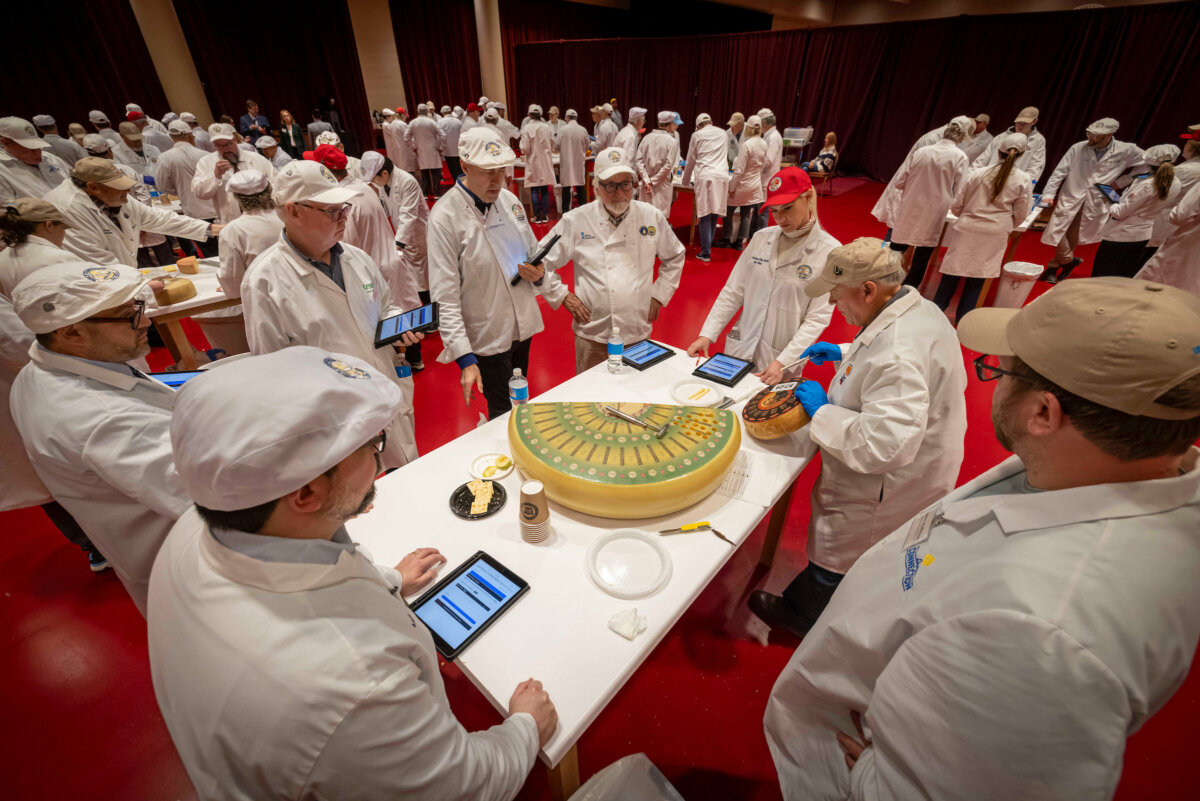
The cheesemakers are anything “from billion-dollar companies to one-cow creameries,” said Kim Rabuck of Marieke Gouda in Thorp, Wisconsin, one of the participants.
“To have that type of representation in a competition like this is awesome,” Rabuck said. “This is where a lot of cheesemakers become famous.”
The creamery Rabuck works for milks about 380 cows and was founded by Marieke Penterman, a Dutch immigrant who missed the Gouda of her homeland and decided to make it in Wisconsin. In 2007, a year after the creamery produced its first cheese, it won gold at the U.S. Cheese Championships (an event held in Green Bay, Wisconsin, in odd-numbered years), and became U.S. Grand Champion six years later. Here at the 2026 World Cheese Championship, the creamery’s Golden Young Gouda took gold in Open Class: Semi-Soft.
Inside the Judging Room
All the judges come from the cheese business. Many are cheese producers themselves or cheese trainers, professors, or even manufacturing technologists.
One of them is judge Josef Hubatschek, who hails from a region between Munich, Germany, and Salzburg, Austria, and is retired from Alpenland Maschinenbau GmbH, a leading manufacturer of cheese-processing machinery. He entered the cheese world right after high school.
“I didn’t really want to go to university; I wanted to do something with my hands,” he said. At the time, there were no skilled workers in the cheese industry there, and he saw it as a way “to climb the ladder quickly.” And for 10 years he was the only one, before he moved into the cheese-processing machinery industry as a technologist.
However, before he went down this path, he did not even like cheese.
“I couldn’t drink milk and still can’t,” he said.
But he loves cheese now.
Hubatschek started judging in 2012 but was recently promoted to one of nine assistant chief judges. These judges organize the competition, settle discrepancies among regular judges, and discuss issues such as whether a cheese has been entered in the wrong class.
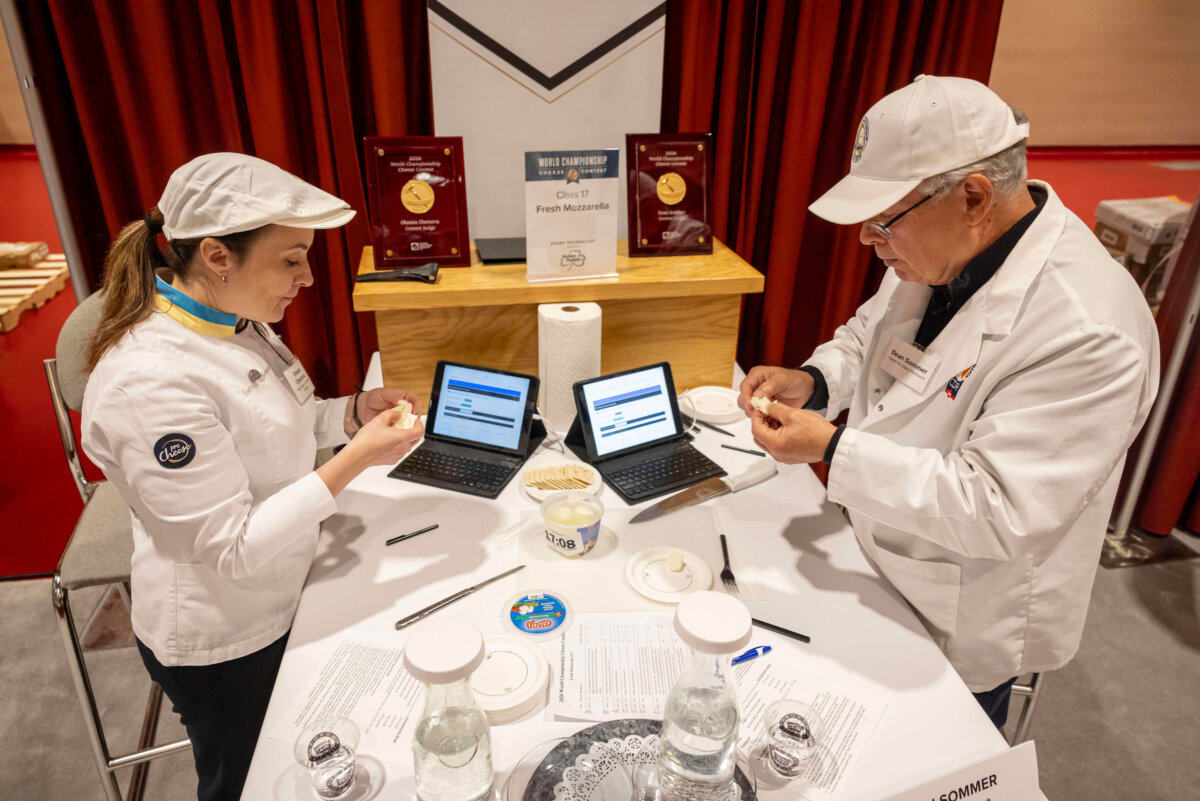
Oksana Chernova, a Ukrainian cheese expert from Kyiv, was one of the 56 contest judges at the 2026 championship. Although she has judged at several European competitions, this was her first time at the World Cheese Championship.
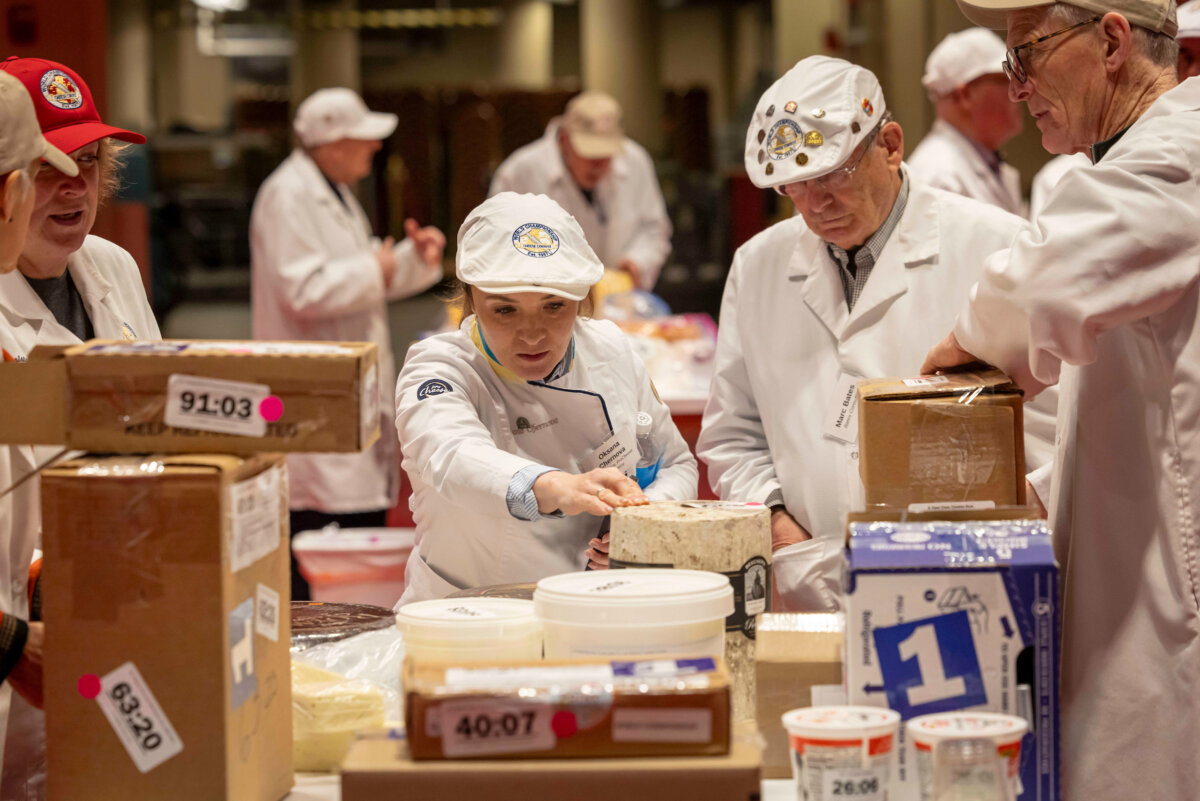
“This technical judging is very helpful for cheesemakers,” she said. The competition allows judges to share knowledge of different cheese styles and find small defects.
“In the last 10 years Ukrainian cheesemakers have spread into other categories,” she said. “Not just fresh cheese and mozzarella [their most popular styles], but they’ve started to do cheese with rind mold and now boiled and semi-hard cheeses like Gouda-style.”
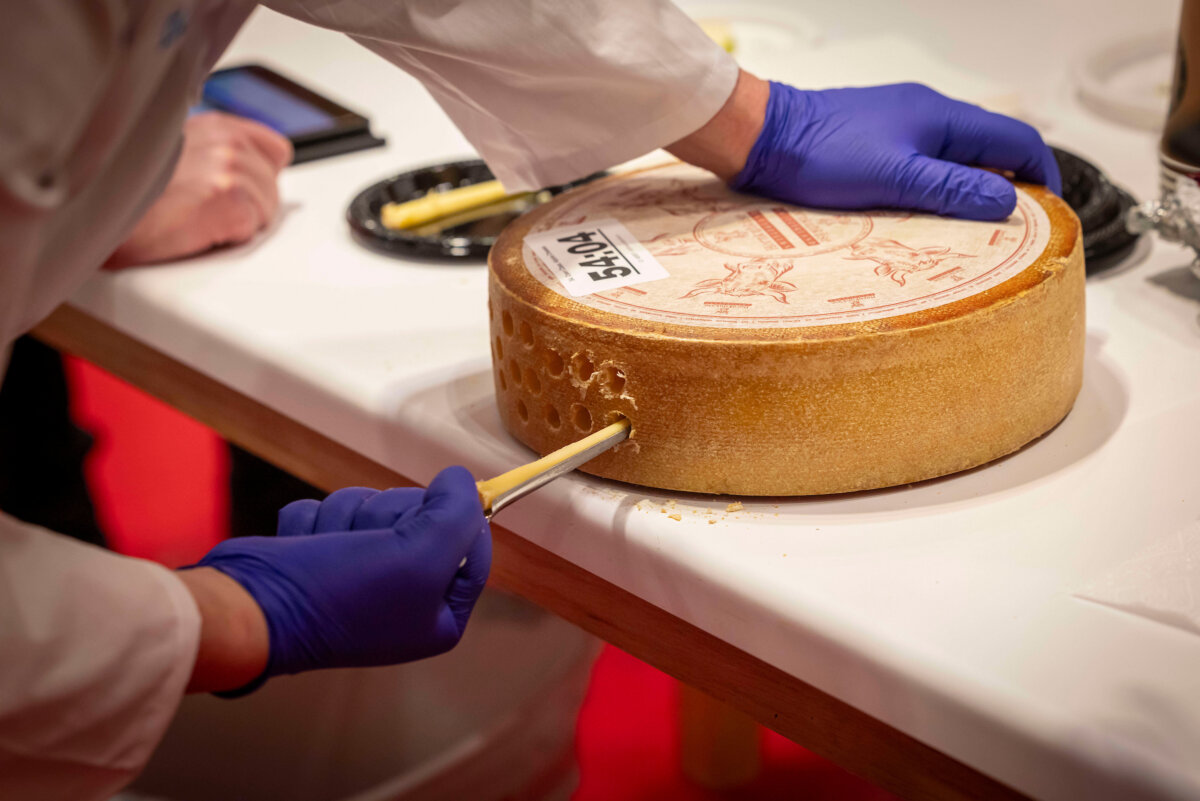
Entries in each class are judged on “flavor, body and texture, salt, color, finish, packaging and other appropriate attributes.” Every cheese starts with 100 points, and judges deduct points for defects.
“This is technical scoring, which is much more representative when it comes to the quality of the cheese,” Hubatschek said. “In other competitions they just say: ‘Ah, nice cheese. Tastes good. Get a medal.'”
The top three cheeses in each class take gold, silver, or bronze medals—also referred to as Best in Class, Second Place, and Third Place.
However, day three is when things really heat up.
How the Final Round Works
Rabuck described the professional crowd gathering for the private final round as a “small town”—everyone knows everyone else. Old friends catch up, new ones are introduced, and congratulations are exchanged, but all hope to take home the World Champion Cheese title.
When asked whether Las Vegas gives odds on the winning nation, Rabuck laughed.
“It’s probably the Dutch or the Swiss,” she said. “Oh man, it’s always the Swiss. And then they come and then they yodel.”
Swiss cheesemakers had taken the title the previous three years in a row, and seven of the previous 10. The last time the United States won the championship was 2016, when Emmi Roth of Wisconsin scored 99.8 with Roth Grand Cru Surchoix, an alpine-style washed rind cheese.
All 150 classes—including butter, yogurt, and whey powders—compete for class medals, but the final day is limited to the 100 Best of Class cheeses.
Come the morning of the third day, the event closes to the public and 10 cheeses are placed on 10 tables before five or six judges, who carefully taste and score their favorites. Only two cheeses advance from each table, leaving 20 amazing cheeses for the final round.
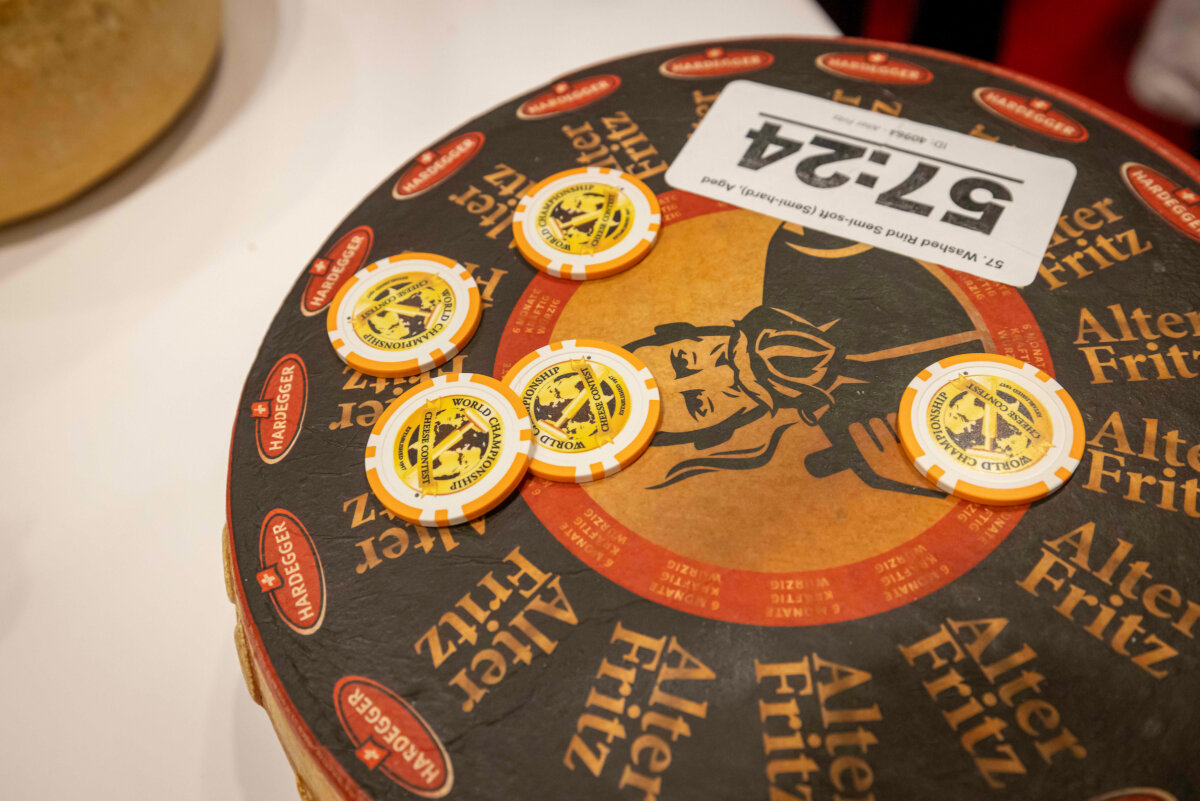
Each judge is given two poker chips to cast their votes. On the count of three, these serious, intently focused judges in white lab coats suddenly dive toward the table, like children grabbing candy thrown at a parade, to place their chips on two cheeses.
John Umhoefer, director of WCMA for the past 33 years, came up with the poker chip idea.
“It’s visually dramatic and the judges love it,” he said. “It’s got far more excitement than typing into an iPad.”
After a break, the judges return to the tables with the remaining 20 cheeses, rotating from table to table so that, in the end, all 55 judges—plus the five assistant chief judges—have the opportunity to score each cheese.
The world’s best cheese, then, is determined by 60 opinions.
The Winner’s Circle
Any style can win, but fresh cheeses will never be among the winners.
“Mozzarella should not taste like a cheese that has been ripened for two or three years,” Hubatschek said.
In all the years of the competition, only one Brie has won the overall championship. This year, Le Châtelain Brie, from France’s Fromagerie du Raival, made it to the final 20.
Brie is fragile and if it gets too warm for a few hours, it can be ruined. The hard cheeses do not have this vulnerability.
Judge Bénédicte Coudé judged a Brie on day two.
“Yesterday it was amazing,” she said. “Perfect. But the rind got older and brown and today it was ammoniated.”
Still, she said, “It was wonderful cheese.”
She said she was not surprised by this year’s winner, although it was not her personal favorite. What did surprise her was a smear rind cheese (cheese with a flavorful, orange rind made by smearing the surface with brine, yeast, and bacteria during ripening) from Japan: Rinndou by Ima Noriko of Ima Farm Cheese Factory, which scored 99.53 to take Best of Class in Washed Rind/Smear Ripened Soft Cheeses, edging out Vermont’s Jasper Hill Farm’s Willoughby.
The interest in more diverse styles of cheeses is spreading.
From Greensboro, Vermont, Jasper Hill Farm’s Suncatcher took Best of Class in Washed Rind/Smear Ripened Hard Cheeses, Mature (less than nine months), the only U.S. cheese to make the final 20 this year.
In 2026, U.S. cheesemakers led the pack, taking 96 Best of Class awards, with Wisconsin winning 45 of those, followed by New York with eight and Vermont with six. The Netherlands and Switzerland each took 12.
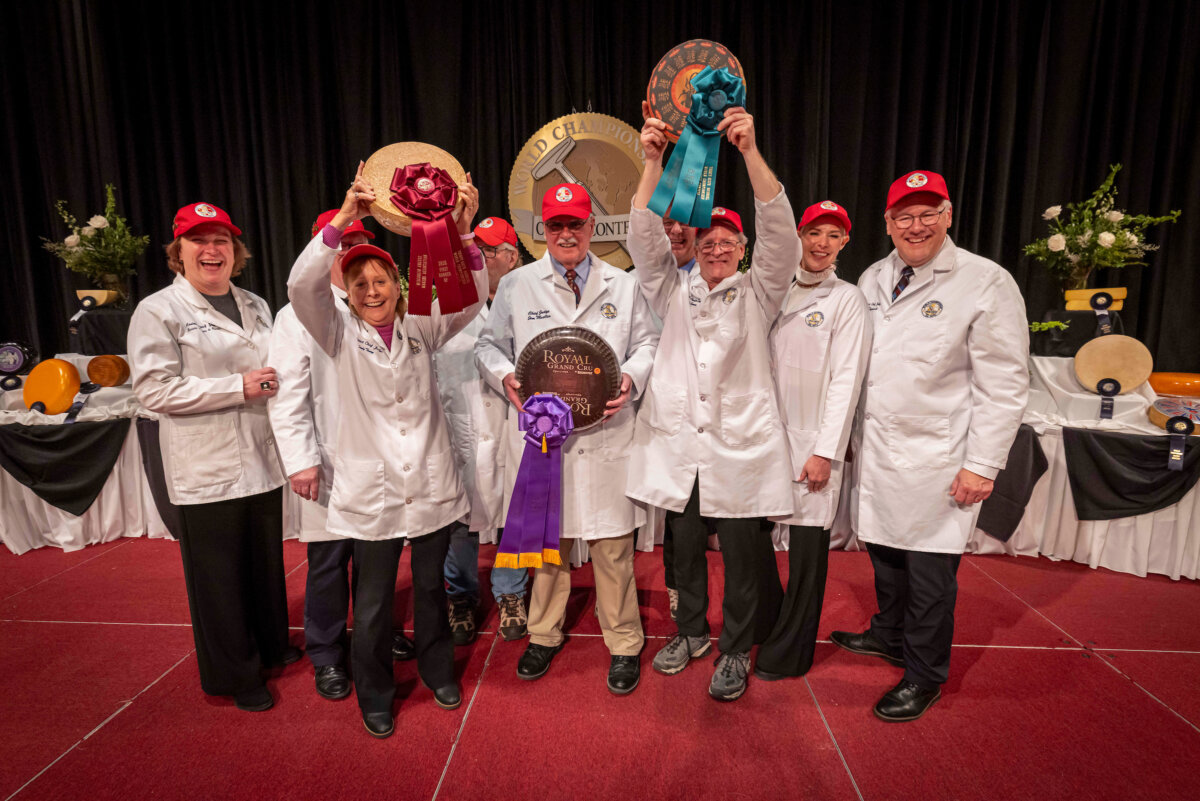
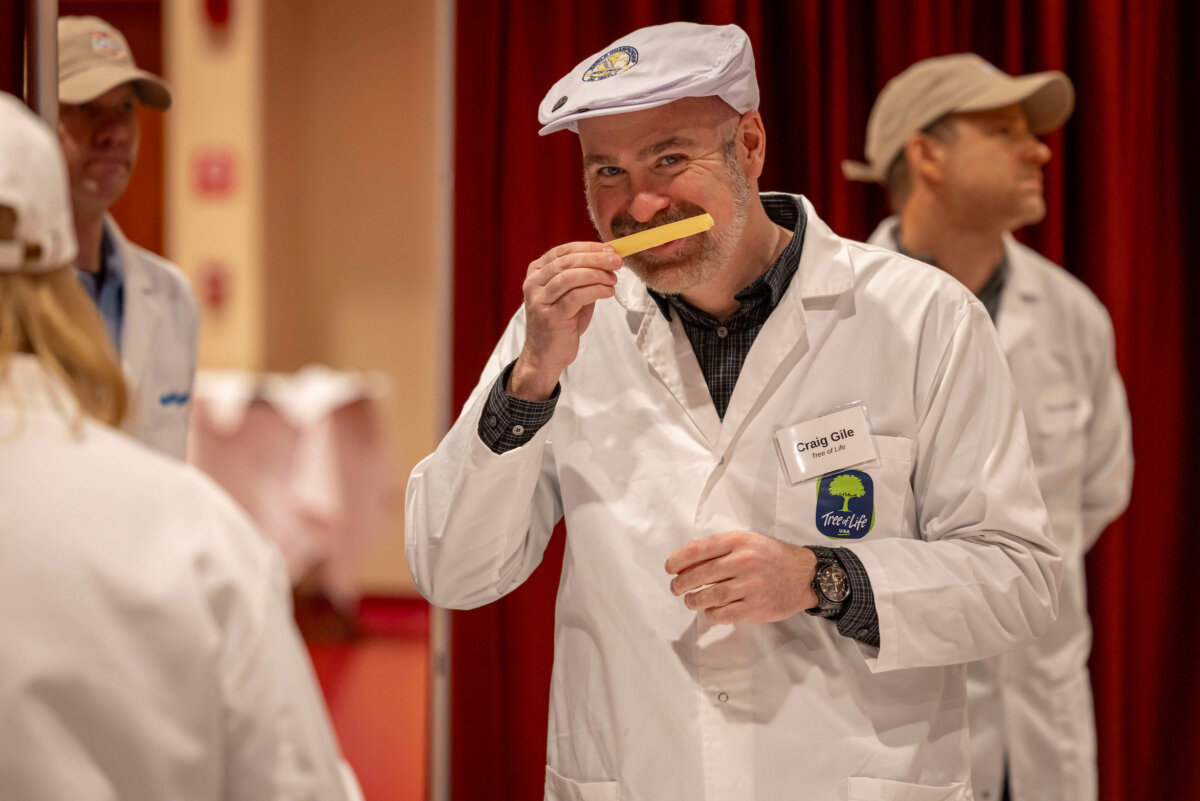
“Pretty much the ideal version of [Gouda],” judge Craig Giles said of the winner. “Really great balance between it being really sweet [with] a nutty flavor to it … [and a] little bit of acid behind it. Body was perfect on it, nice little crystallization with it, wasn’t too crumbly.”
First runner-up, with a score of 98.45, was Appenzeller Purple Label, an aged Appenzeller made by Lucas Meier and Käserei Kirchberg in Appenzell, Switzerland.
With the cheese equivalent of a photo finish, the second runner-up, an aged washed rind/smear ripened hard cheese called Alter Fritz made by Hardegger Käse AG in Jonschwil, Switzerland, had a score of 98.41, just 0.04 points behind.
But there would be no yodeling: The Dutch claimed the top prize with Beemster Royaal Grand Cru, from CONO Kaasmakers in Westbeemster, Netherlands, with a score of 98.68.
