



Of the many Bible passages that emphasize the prudence of preparedness, Proverbs 24:27 has special meaning for Lucinda Bailey: “Prepare your work outside, and make it ready for yourself in the field; afterwards, then, build your house.”
A Michigan native who grew up gardening and selling vegetables to neighbors, Bailey found that the instruction of working to prepare the field always resonated with her. As an adult, however, the verse’s wisdom took on a whole new meaning.
In 2012, living in Texas, Bailey became concerned about the rising national debt, which at the time amounted to just over $16 trillion. It dawned on her that at some point in the future, she might need to grow her own food.
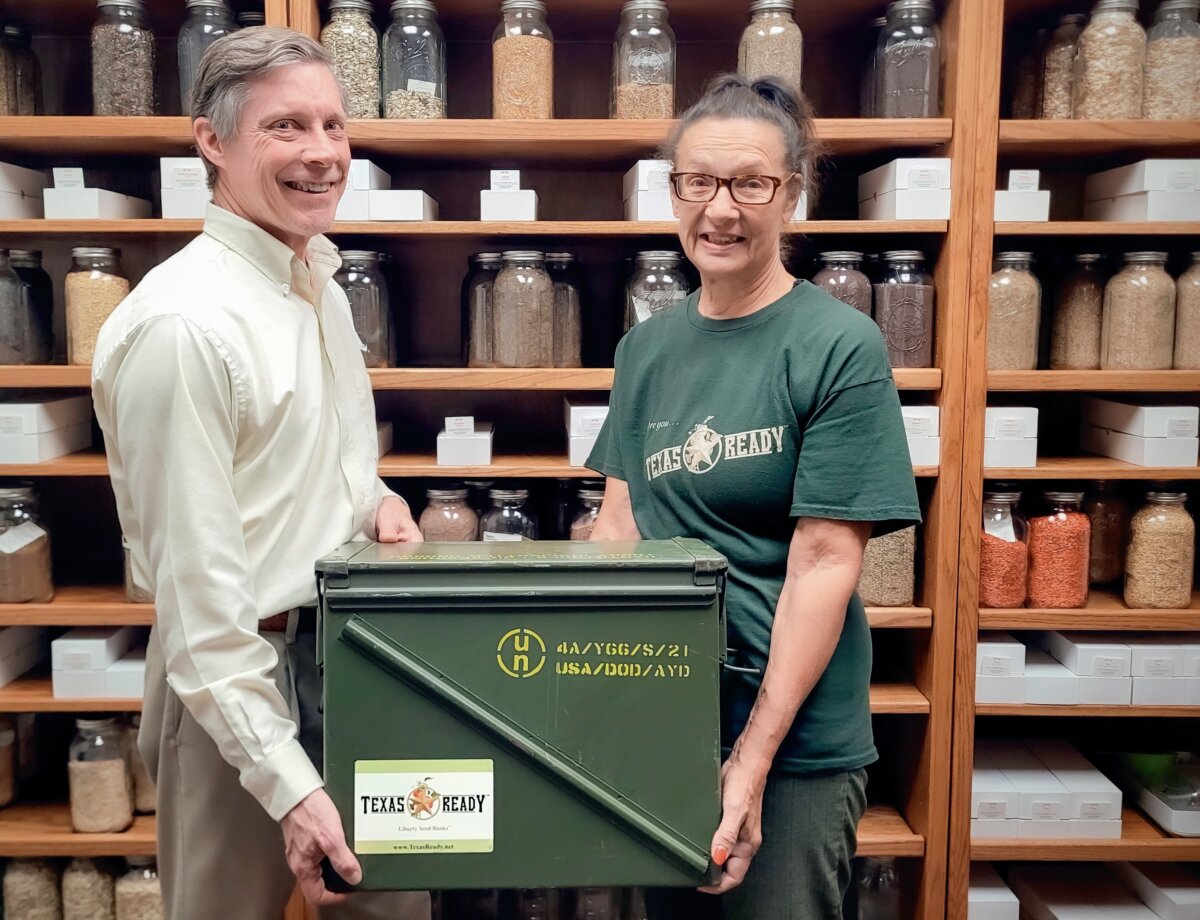
So Bailey and her best friend Kurt Nauck, a wildlife biologist and born-and-bred Texan, decided to purchase a seed bank, a collection of heirloom seeds designed to preserve the unique genetics of different varieties so that they could continue to be used for future gardens. But there was a problem.
“We thought it should be pretty easy to find a good kit, but that turned out to be much more difficult than expected,” she said. A certified crop advisor, Bailey couldn’t find an existing seed bank that met her standards for quality, diversity, and overall value, and that would also grow well in her Houston-area garden. So she and Nauck decided to build their own.
Proper seed saving (the practice of collecting seeds from mature plants to sow in future seasons) is the key to successfully building and maintaining a seed bank. Bailey knew that modern hybrid seeds and GMOs developed in laboratories grow into plants that often yield sterile seeds, meaning they cannot be relied upon as a future food source. Heirloom seeds, on the other hand, retain the genetics that have been preserved over many generations. When properly saved, heirloom seeds will reproduce true-to-type plants indefinitely.
It took three months of research and gathering for Bailey and Nauck to create their very first heirloom seed bank.
“By the time we finished it, we had talked to a whole bunch of our church buddies and friends, and they said, ‘Hey! When are you gonna make me one?’” said Bailey.
She and Nauck immediately saw the business potential.
“We knew there should be a business for this because we had such a difficult time putting our own bank together,” said Bailey.
Fueled by their shared Christian faith and desire to help others, Bailey and Nauck started Texas Ready, a seed bank company that would shine a light on—and help meet—the need for food self-sufficiency.
From Preppers to MAHA
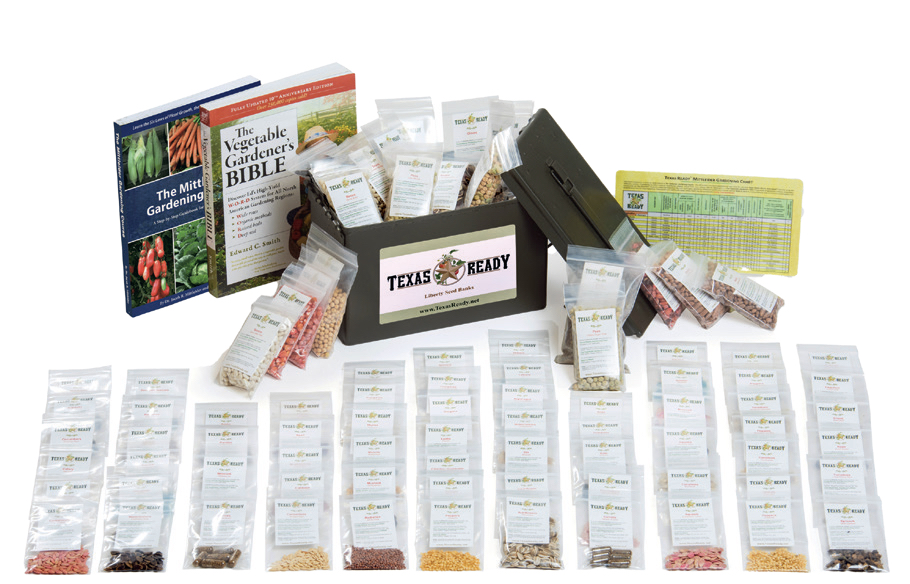
Texas Ready’s primary products are a line of “Liberty Seed Banks.” Each seed bank contains 70 different varieties of certified vegetable, herb, and fruit seeds sourced from heirloom growers across the country. Bailey and Nauck explained that their seed varieties are chosen for their nutrient content, ease of storage, climate tolerance, and rate of maturity. Each lot of seeds is tested by an independent seed lab to certify that it meets or exceeds the USDA minimum germination rate for a particular variety, and that it is free of weed seed and debris.
The largest of their five banks, called The Treasury, is designed to grow enough crops to feed over 30 adults per year. The seeds come packaged in resealable bags and stored in repurposed steel U.S. Army ammo boxes that protect them against moisture, light, and pests. Backed by a five-year warranty, the banks were perfect for the pantries, basements, and root cellars of the prepper community Bailey and Nauck originally geared their products toward.
As time went on, however, Nauck noticed a shift.
“Our customer base changed,” he said. “Now, we’re servicing just as many people who simply want to garden because they understand that the produce you buy in the grocery store may contain undesirable chemicals, is increasingly expensive, and is possibly genetically modified. And they are also increasingly aware that food scarcity is something that could become a future reality.”
The COVID-19 pandemic brought that into sharp focus. Suddenly, gardening and homesteading were on Americans’ minds in a way they hadn’t been since World War II.
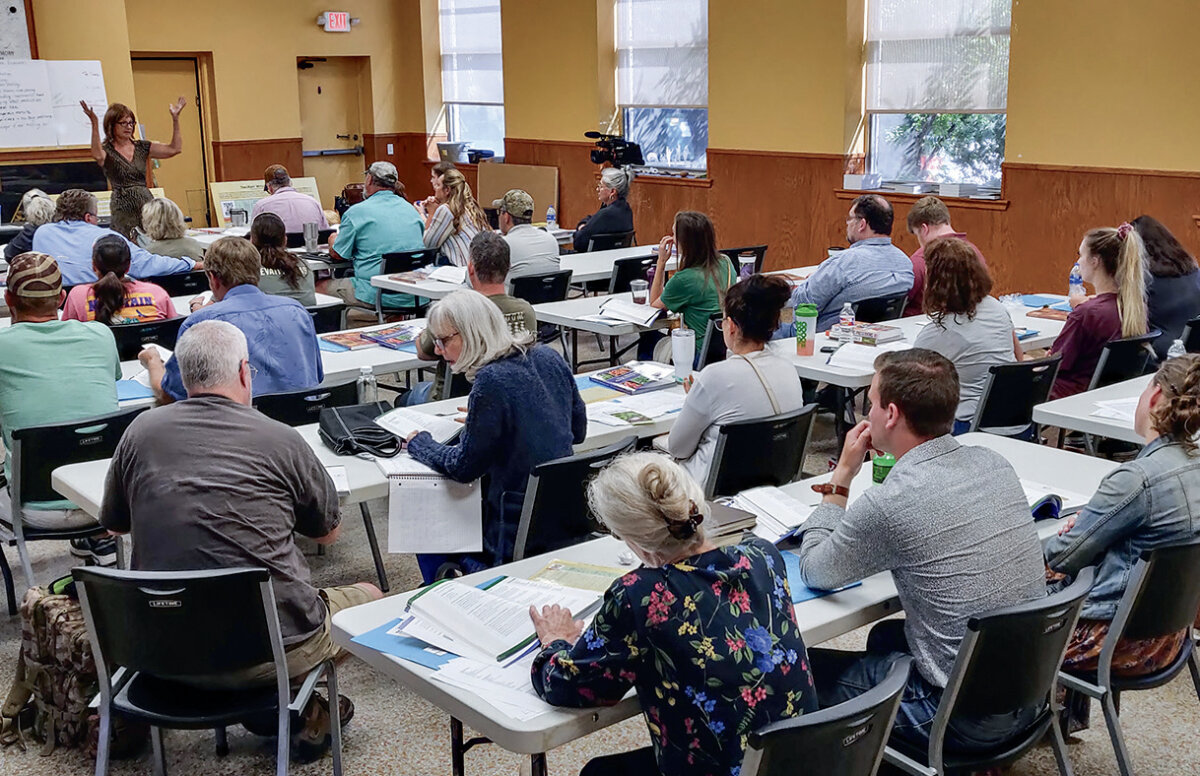
In response, Texas Ready began offering classes on gardening, food preservation, and animal husbandry at Bailey’s 30-acre ranch outside of Houston. They now offer online video courses to reach customers wherever they are.
Nauck also noted the impact the recent “Make America Healthy Again” movement has had on their business.
“People are beginning to realize that health begins with what they put into their bodies,” he said.
Bailey added, “Many of our customers live on a 1/4-acre subdivision lot, have a family of four, and want good nutrition, but they have no idea how to make that happen.”
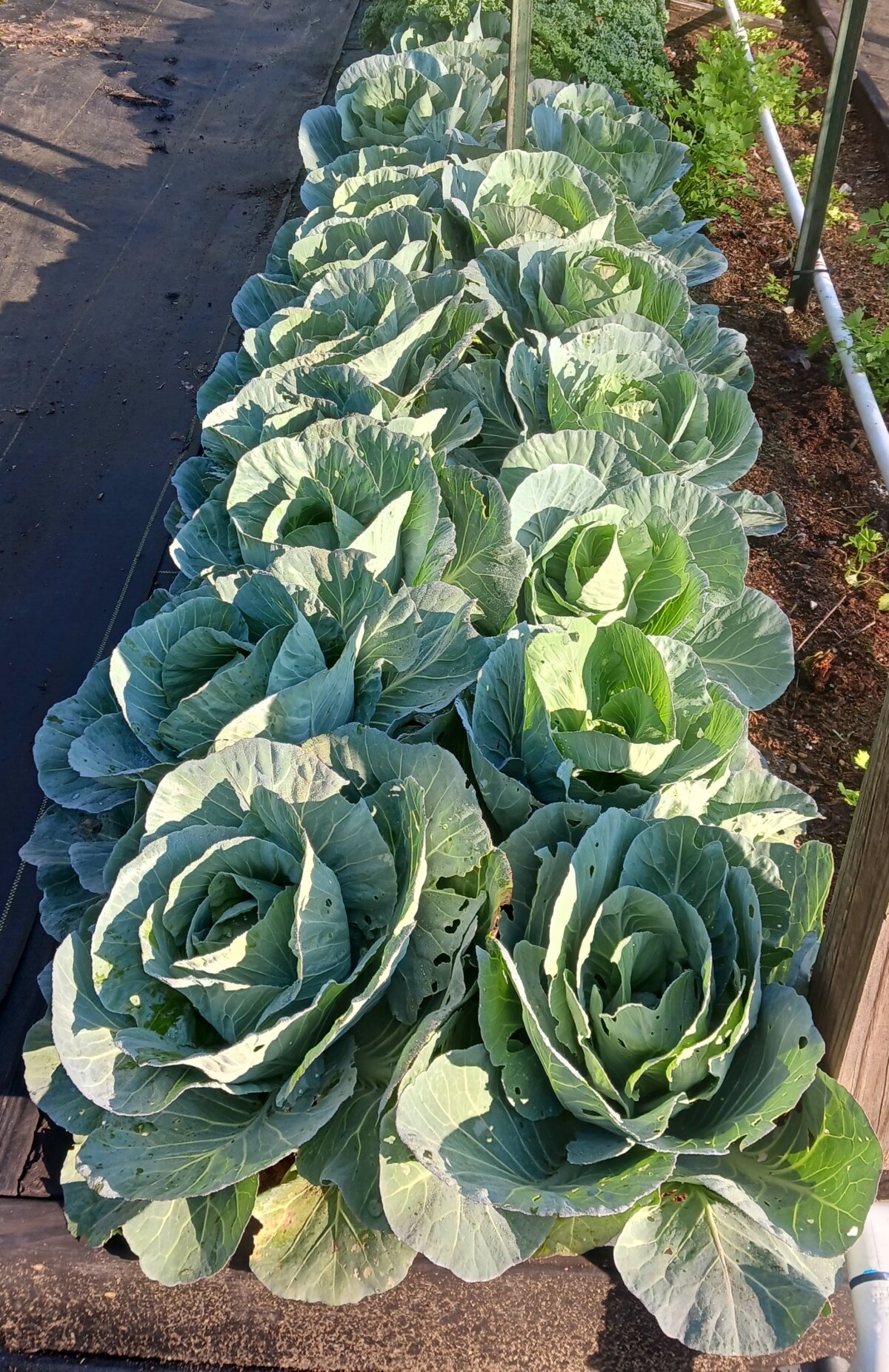
To help those customers, Bailey and Nauck teach a method of gardening designed to grow literal tons of food in their own backyards.
Texas Ready Meets Mittleider
Over her lifetime of gardening, Bailey has tried dozens of gardening methods with varying degrees of success. Roughly a decade ago, she and Nauck visited the garden of a nearby friend who introduced them to the Mittleider method. When they saw the quality and sheer volume of vegetables his garden was producing, they knew they had to give it a try.
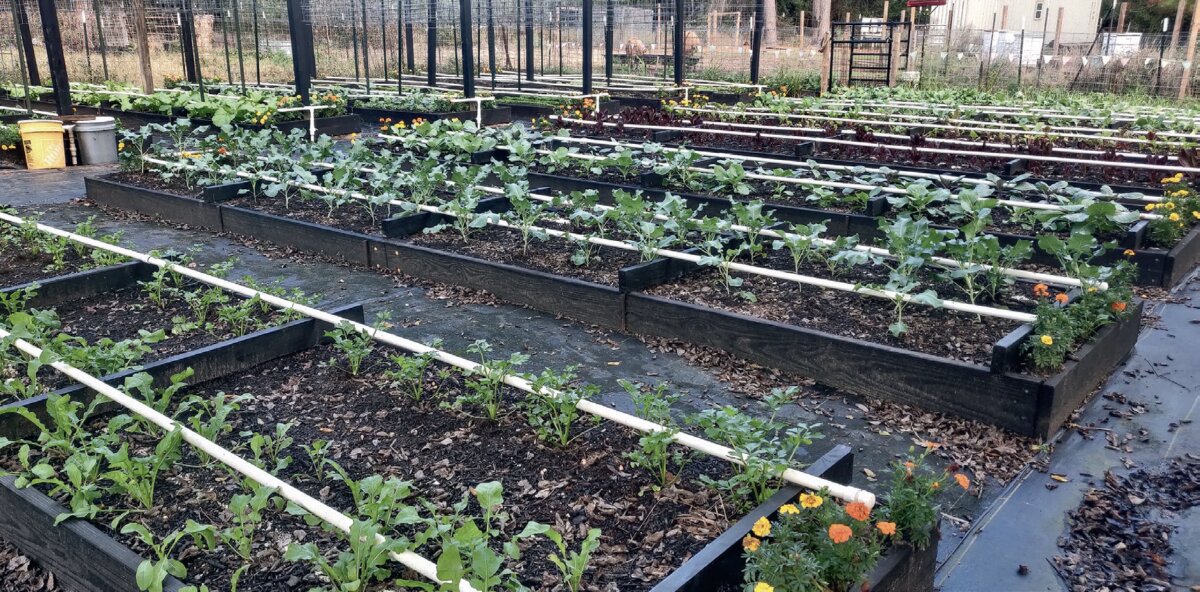
Developed over 50 years ago by Jacob R. Mittleider, an international agricultural consultant, the Mittleider Method is a marriage of soil-based gardening with hydroponics—without the time, energy, or expense of a full hydroponics setup. It’s also geographically versatile, having been successfully applied in places with climates as different as England and Papua New Guinea.
After applying it to their own gardens, Nauck and Bailey found that the method reduced pests, plant disease, and the amount of watering and weeding needed. Their plants took less time to mature, and yields increased dramatically.
The Mittleider method’s success is due to several factors, but the method of irrigation, coupled with weekly feedings of a nutritive mix of the 16 essential elements for optimal plant growth, is crucial.
“Think of it this way: If a mother only fed her children a great Thanksgiving dinner and then let them eat junk food the rest of the year, those kids are going to be malnourished. But people do that to their gardens all the time,” said Bailey.
The Mittleider fertilizer recipe includes a mix of trace elements that can be difficult for home gardeners to source. So Bailey and Nauck decided to develop their own. When combined according to the Mittleider recipe with NPK fertilizer and Epsom salt, each 20-ounce package yields two 5-gallon buckets of feed. That’s enough to sustain a garden for a family of four for an entire year.
“We love Mittleider because it dictates exactly what minerals you should put in your garden, and in what amount, proportion, and period of time so that the plants can realize their full potential,” said Nauck. “By optimizing the nutritive mix for your plants, you maximize the nutritional intake for your family. You can have double the amount of nutrients in a tomato you’ve grown in your backyard versus one you would buy at the grocery store.”
“Plus,” Bailey added, “the plants grow to their maximum size in two-thirds the time of other methods we’ve tried.”
Customer success stories echo their experience. “An 8-year-old girl grew 4,200 pounds of fresh food in her first season using this method,” said Bailey. “And in high desert altitudes, no less!”
Are You Ready?
Much has changed since Bailey and Nauck created their first seed bank. Besides offering tools to help people grow abundant gardens, they also sell food preservation equipment and teach courses on methods such as freeze drying, canning, and dehydration. Their goal is to provide a holistic approach to living: one that connects seeds, gardening, harvest, and food preservation.
“Our desire is to help people become food self-sufficient,” Nauck said. Their seed banks aren’t meant to be purchased and forgotten in the pantry. He and Bailey encourage people to start planting and saving seeds now.
“You need to cultivate the seeds in times of plenty so you develop all the skills necessary to grow your own food,” said Nauck. “The more control you have over your food supply, the more confidence you have in what you’re eating.”
Bailey added, “Even if all you have is a backyard, you can still grow great food.”
This article was originally published in American Essence magazine.
