



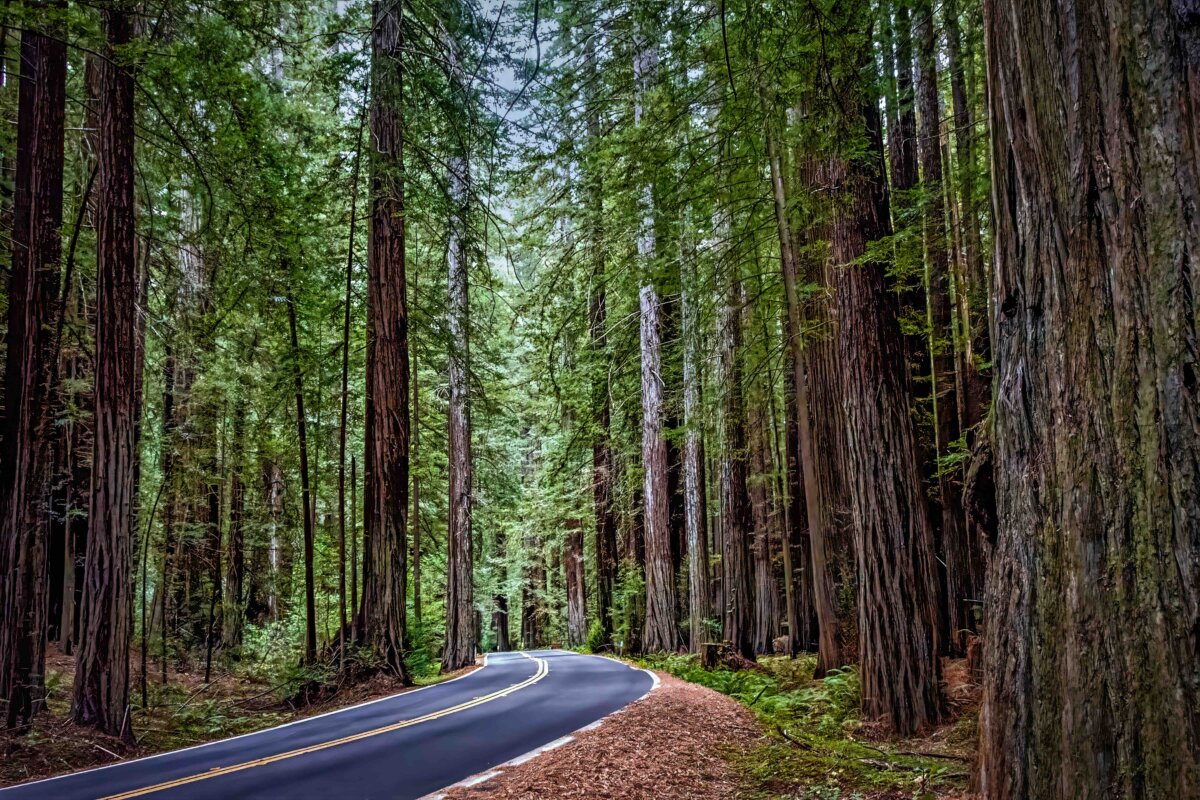
At the western edge of the continent, a swath of soaring redwoods scrapes the sky on untamed terrain that plunges toward the sea. Mist steals through the trees. The wind smells of salt spray and carries the cries of gulls.
Raindrops trickle from the dark green forest canopy, and tendrils of steam drift up from the rough, almost furry, red-hued bark. In the rays of the sun after the storm, the redwood forest sparkles as if sprinkled with Tinker Bell’s fairy dust in nature’s magical kingdom.
The northern spotted owl seeks refuge in high branches, while the banana slug slithers through the thick flora on the soft forest floor. In the sheltered golden meadows, deer and elk graze on the dew-bathed and sun-dried grasses.
Renowned Redwoods
Redwood forests are so numerous in California that nearly 50 state parks and quite a few regional ones contain “redwood” in their names. But a national and four state parks on the northern redwood corridor are considered not only the best places to see them in California but also in the world.
Just north of San Francisco, Highway 101 is known as the Redwood Highway and a well-suited starting point for a family vacation or romantic getaway. After motoring little more than three hours, the rolling hills and vineyards are gradually overtaken by forestland that encompasses the cozy enclave and historic lumber camp of Leggett.
The most dramatic scenery on the Redwood Highway is the 174-mile stretch weaving its way north between Leggett and Crescent City near the Oregon border. Sections of the route have been modernized for heavier traffic and higher speeds with town bypasses, multiple-lane freeways, and long bridges over deep ravines.
Where and When
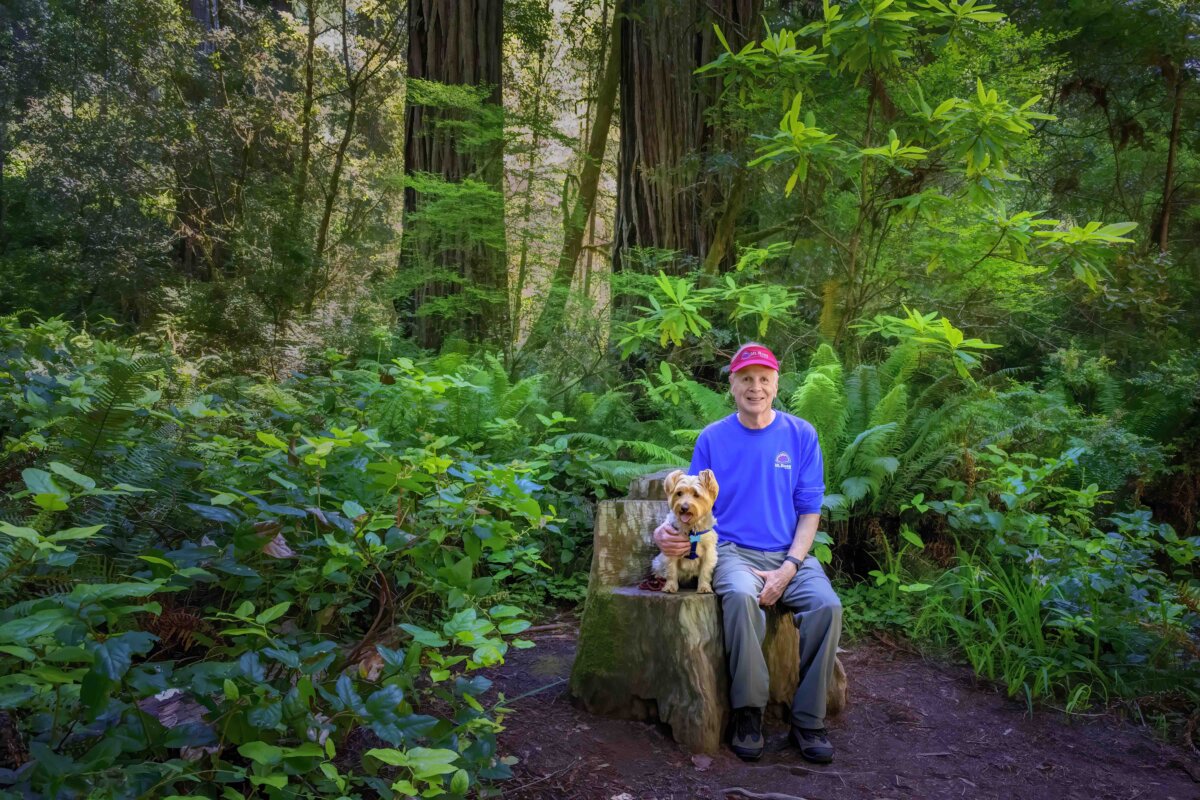
Accommodations on this less-developed northern segment of the Redwood Highway are somewhat limited. My wife Maria and I spent two weeks in our small motor home with our Yorkie pup Tahoe at well-maintained state park campgrounds convenient for hiking and sightseeing. Eureka, Klamath, and Crescent City offer lodging options ranging from RV parks and motels to bed-and-breakfasts and vacation rentals.
Temperatures are seasonal and range from the low 40s to the mid-80s in the inland Humboldt redwood region. They register from the mid-40s to the low 60s year-round along the redwood coastline, where it is foggiest during peak season June to August. Spring and fall are preferred times to plan your trip weather-wise and to avoid crowds.
Founders Grove and Statue of Liberty
About an hour drive from Leggett, you arrive at the Avenue of the Giants. The 31-mile departure on old Highway 101 follows the free-flowing Eel River through the heart of Humboldt Redwoods State Park. There are pullouts and picnic areas to fully appreciate the majesty of the coast redwood, which can live for two millennia and is the tallest living thing on the planet. It can grow as high as a 38-story building, exceeding the height of the 305-foot Statue of Liberty by 75 feet.
The Founders Grove is home to some of the largest and oldest trees in the park. Children crane their necks to try to see the tops of the colossi you cannot capture in a single photograph. They pretend to wrap their arms around massive trunks as much as 17 feet wide and scurry inside scorched survivors hollowed out at their base by centuries-old fires.
In 1921, a single grove of protected redwoods became Humboldt Redwoods State Park. Today, the park is almost twice the size of San Francisco, with more than 100 miles of hiking trails and more than 250 campsites. About one-third of its 53,000 acres cloister virgin coast redwoods, making it the most extensive expanse of old-growth redwood forest on Earth.
More impressive than the facts and figures relating to redwoods is the grandeur and tranquility that pervades the forest and the reverence it inspires. As if at the foot of an altar, the forest floor is carpeted with sprays of delicate redwood sorrel with pink flowers and purple stems and salal with leathery green leaves and purple-black berries. An array of azaleas and rhododendrons is naturally arranged among abundant feathery ferns.
Queen Anne and Sue-Meg
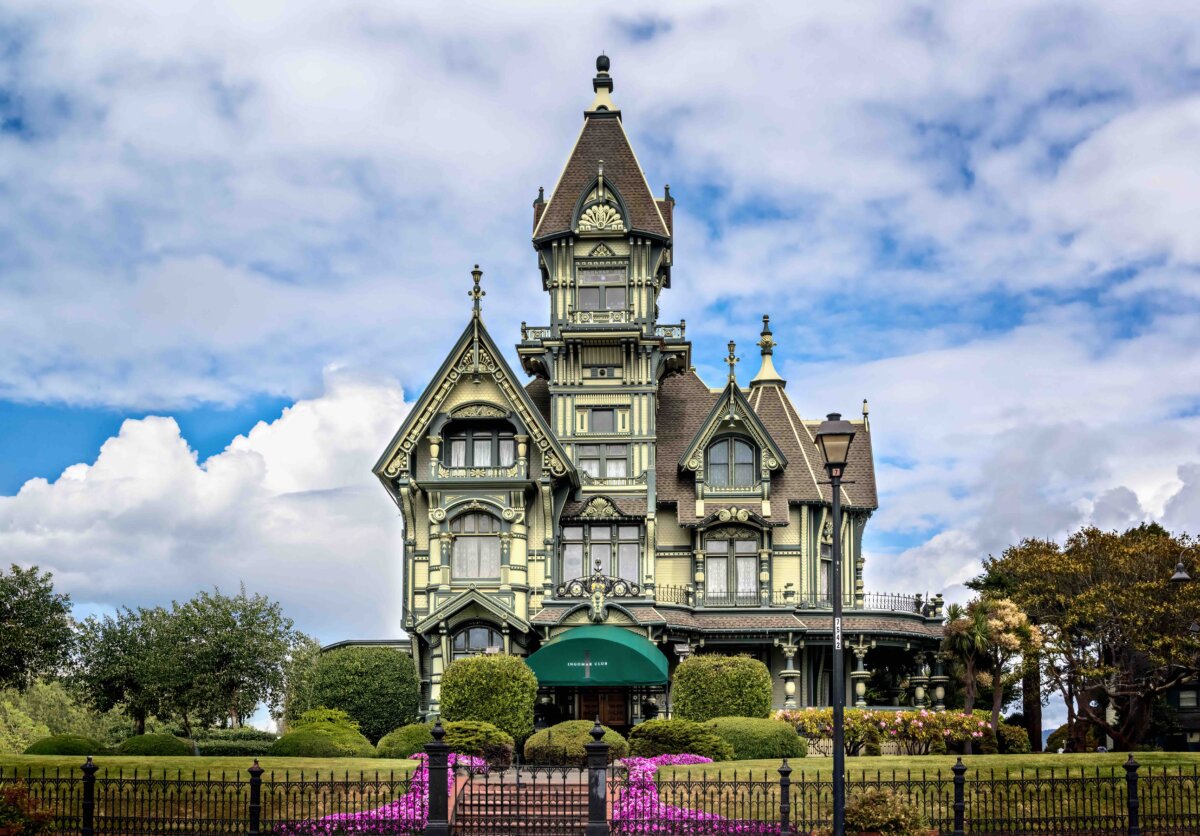
The Redwood Highway runs through Eureka, the largest coastal city between San Francisco and Portland, Oregon. Hugging the shore of Humboldt Bay with its 25,000 residents, it’s known for its bustling waterfront and Victorian district. The ornate Carson Mansion, built in 1884, stands as a testament to Queen Anne architecture with its intricate woodwork, turrets, and gables.
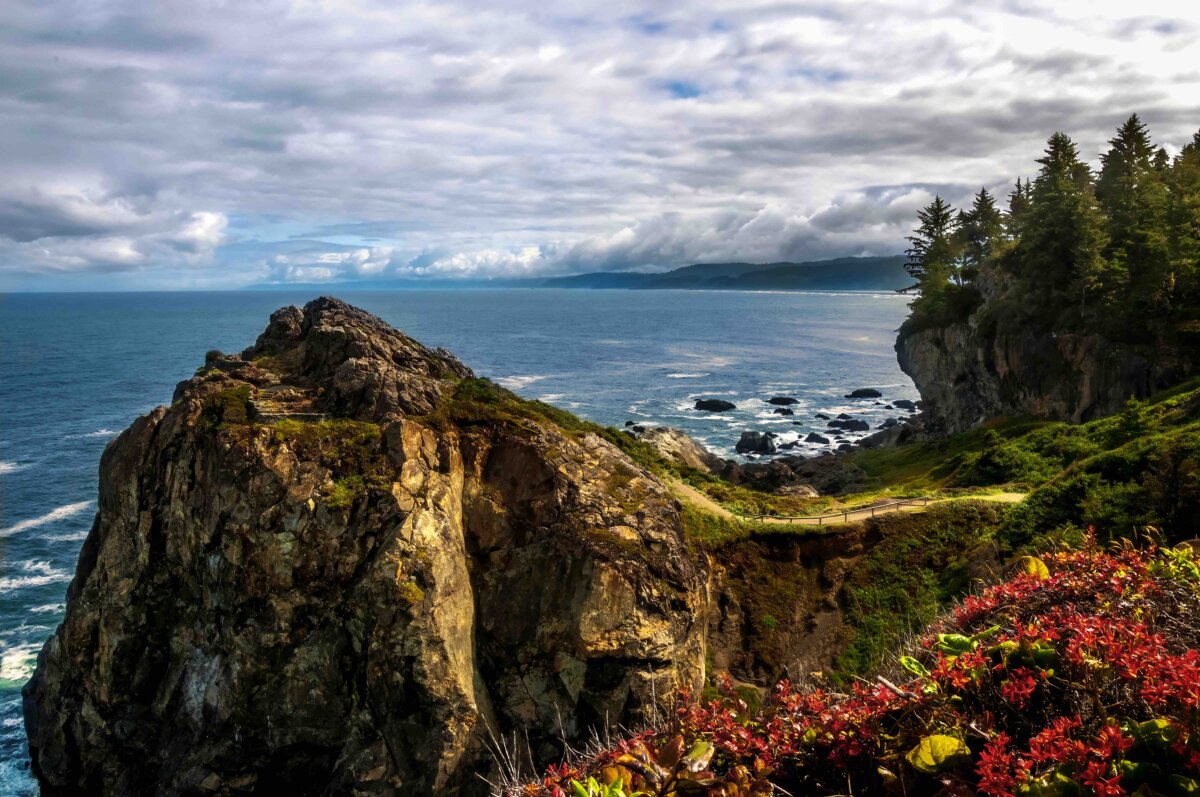
Driving north, it’s a little more than a half hour from Eureka to Sue-meg State Park (formerly Patrick’s Point), perched on an often wind-socked or fog-shrouded headland jutting abruptly from the craggy shoreline. But on crystal-clear days with gentle ocean breezes, the park becomes comforting and offers commanding views from lofty overlooks and rocky outcrops of a sweeping seascape settled by raucous seals and sea lions.
A dense forest of spruce, hemlock, and red alder covers a portion of the park’s 640 acres. In the spring, the wildflower-festooned meadows bloom with fairy bells, trillium, and Douglas iris. On areas of the Rim Trail, flourishing plants and shrubs shelter and isolate hikers.
A 2-mile crescent strip of sand reached by a short, steep trail, Agate Beach is conducive to leisurely beachcombing for the semi-precious, polished stones. Palmer’s Point possesses rich tide pools of such colorful creatures as purple shore crabs, orange cup coral, wine plum dorids, and northern red anemones.
Park Quartet and Lady Bird
Redwood National Park is one of four parks known collectively as Redwood National and State Parks. The three state parks—Prairie Creek, Del Norte, and Jedediah Smith—taken together with the national park, protect nearly half of California’s remaining old-growth coast redwoods in a designated World Heritage Site and International Biosphere Reserve.
The parks also preserve prairies, oak woodlands, and wild rivers. Quite a few endangered fish and wildlife live in the parks, including the Chinook salmon, northern spotted owl, and Steller’s sea lion.
A short distance from Sue-meg, Redwood National Park offers 75 miles of trails and more than 40 miles of coastline. A mile north of the rustic town of Orick, turn onto the steep and windy Bald Hills Road to the park’s Lady Bird Johnson Grove. The easy 1.4-mile loop trail is well-groomed and popular with young families. Near the top of a ridge, the redwood grove has an airy feel and presents unusual downslope views of the trees as a colonnade of titanic torsos rather than behemoth buttresses.
Bugling Elk and Jurassic Canyon
It’s 15 minutes from Orick on Highway 101 to Prairie Creek Redwoods State Park and tawny meadows with Roosevelt elk browsing below conifer-capped hillsides. During the fall rut, the bulls’ bugling echoes across the valley as they challenge each other for mating rights.
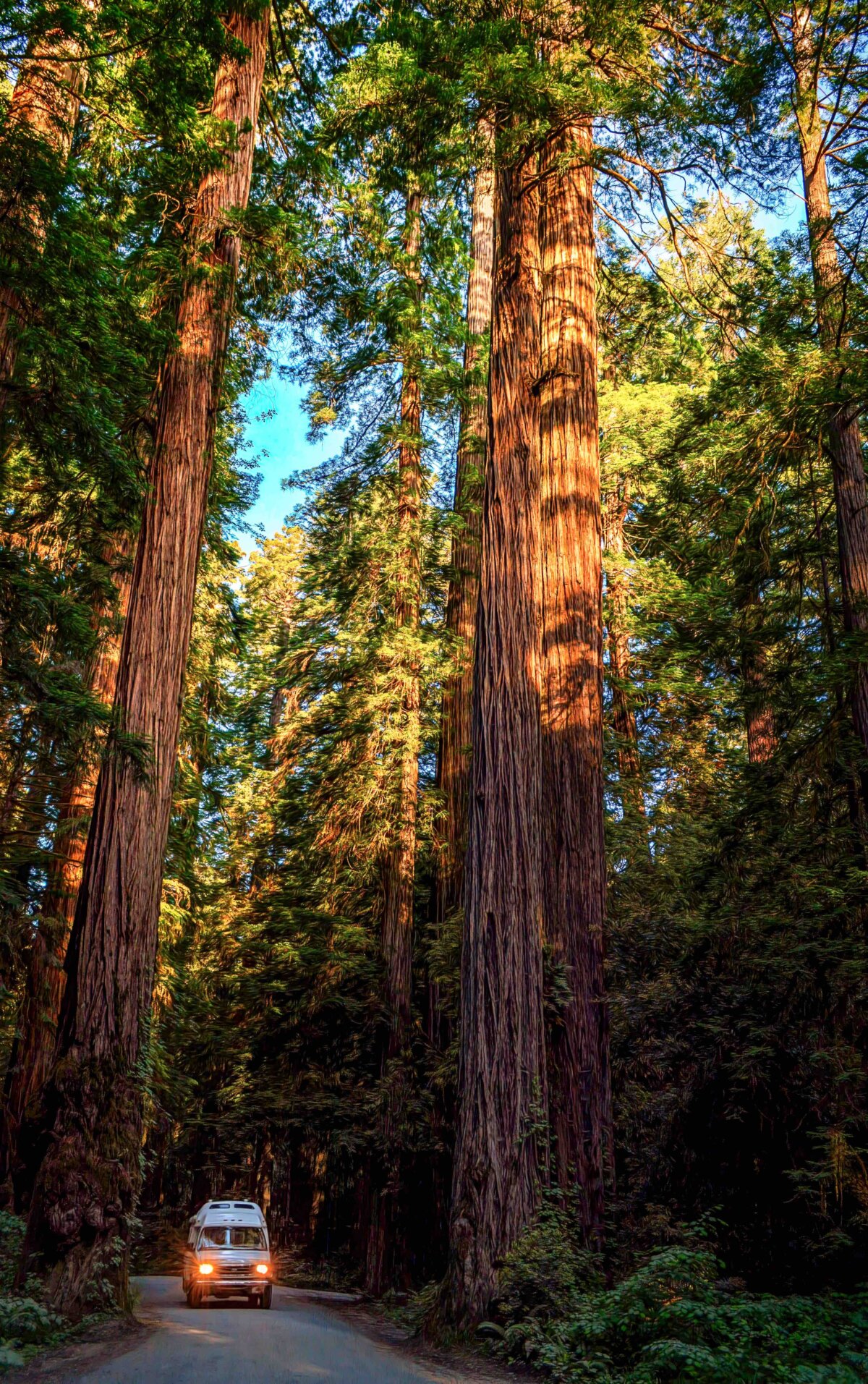
Newton B. Drury Scenic Parkway crosses Prairie Creek’s stand of old-growth coast redwoods with access to many trailheads. Hiking in the deep shade of the forest with only pale beams of sunlight peeking through, lichens hang from branches, moss covers the rocks, and fallen giants give life to new generations of a species dating back more than 200 million years.
The park’s Fern Canyon is a narrow gorge with seven kinds of large leafy ferns draping the 50-foot-tall dripping walls, creating a primeval landscape pictured in “The Lost World: Jurassic Park.” Wooden footbridges are installed for summer strolls over shallow Home Creek, which ripples through the canyon. It is close to a sandy ocean beach and reached by hiking trail or rough road.
Legendary Lumberjack and Mysterious Trees
On Highway 101, amid the redwoods near the mighty Klamath River, the 120-acre Trees of Mystery with its unusual tree formations and interpretive trails is the premier nature attraction on the North Coast. At the park entrance, a 49-foot wooden statue of legendary lumberjack Paul Bunyan, alongside a 35-foot one of Babe the Blue Ox, greets visitors with a wave and a welcome.
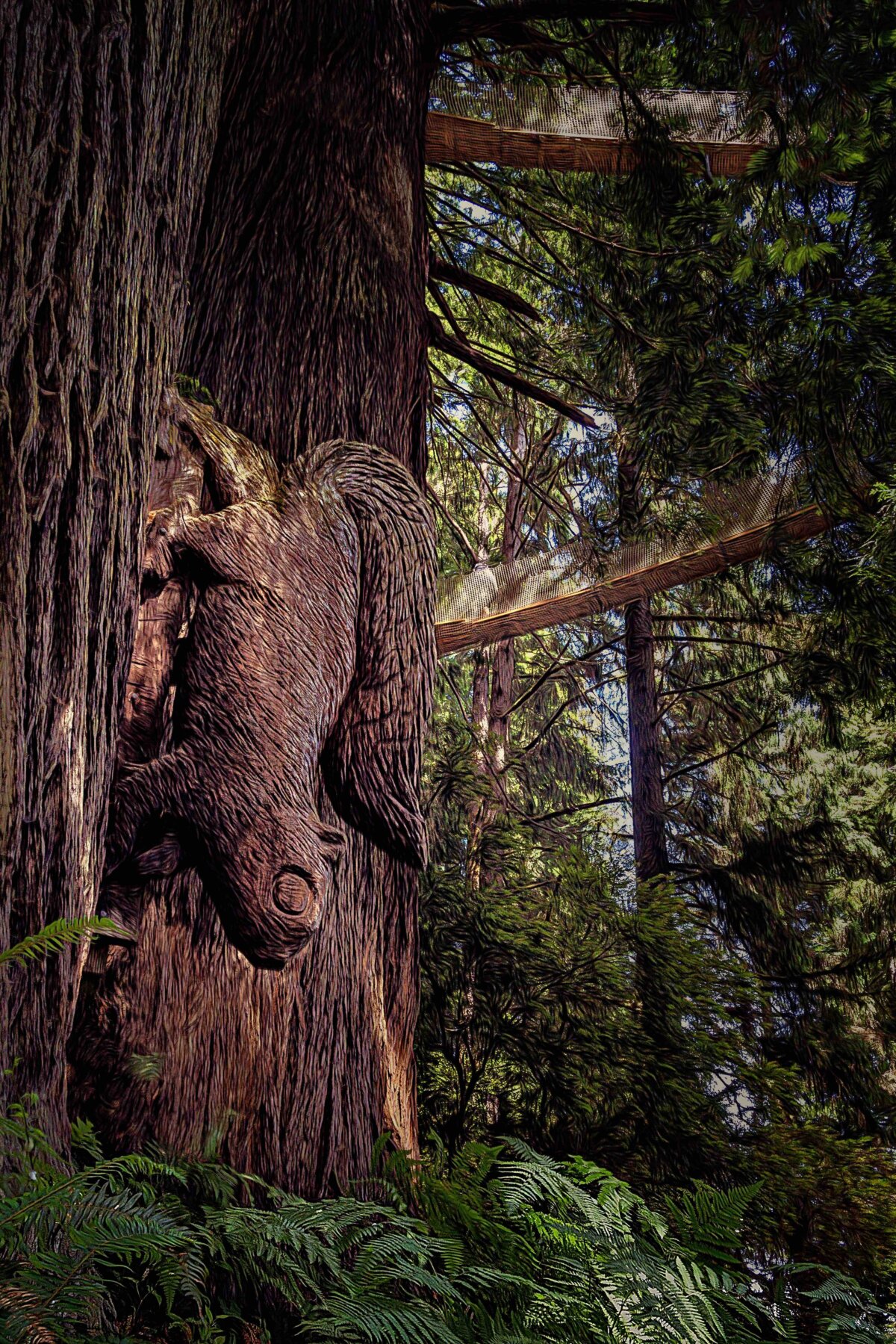
The Trail of Tall Tales delights children with redwood sculptures of mythical loggers and forest creatures like gnomes and elves. The Redwood Canopy Trail’s nine netted suspension bridges rise high above the forest floor, and the Sky Trail’s gondolas glide through the imposing trees. The free-admission The End of the Trail Museum is one of the largest privately owned collections of authentic Native American artifacts in the country.
Embracing Beauty and Busy Highway
Within about 10 minutes is Del Norte Coast Redwoods State Park, embedded with picturesque palisades. Fingers of fog creep silently through the trees’ softening shadows, evoking a sense of surrealism. Moisture collects on the pendant branches of the redwoods and the broad leaves of rhododendrons up to 30 feet tall. There is a damp chill to the air, and an earthy, woody aroma.
Despite its embracing beauty, the 33,000-acre Del Norte is the least visited of the five redwood-corridor parks for two primary reasons: The busy highway crosses the park’s narrow ridgetop, and only a couple of spots are easily accessible, most notably Enderts Beach.
Jedediah Smith and John Steinbeck
Named for an extraordinary 19th-century explorer and frontiersman, Jedediah Smith Redwoods State Park is the northernmost of California’s redwood parks. A few miles inland from the coast at the confluence of the Smith River and Mill Creek, the 10,000-acre heavily forested domain has scant roads or trails in its interior.
An old stagecoach track in the park climbs and winds 10 miles to the Redwood Highway, 1 mile south of Crescent City. The narrow, unpaved but well-maintained Howland Hill Road is an intimate redwood ramble. You can roll down your car window and almost touch the Goliaths.
Trailheads for Jedediah Smith’s two most wondrous groves are found along the Howland Hill Road. The Mill Creek Trail leads to the reclusive Grove of Titans tucked away in a secluded dale. You proceed on a metal-mesh walkway over a small tributary to clear-flowing Mill Creek, where silver coho salmon spawn in logjam pools.
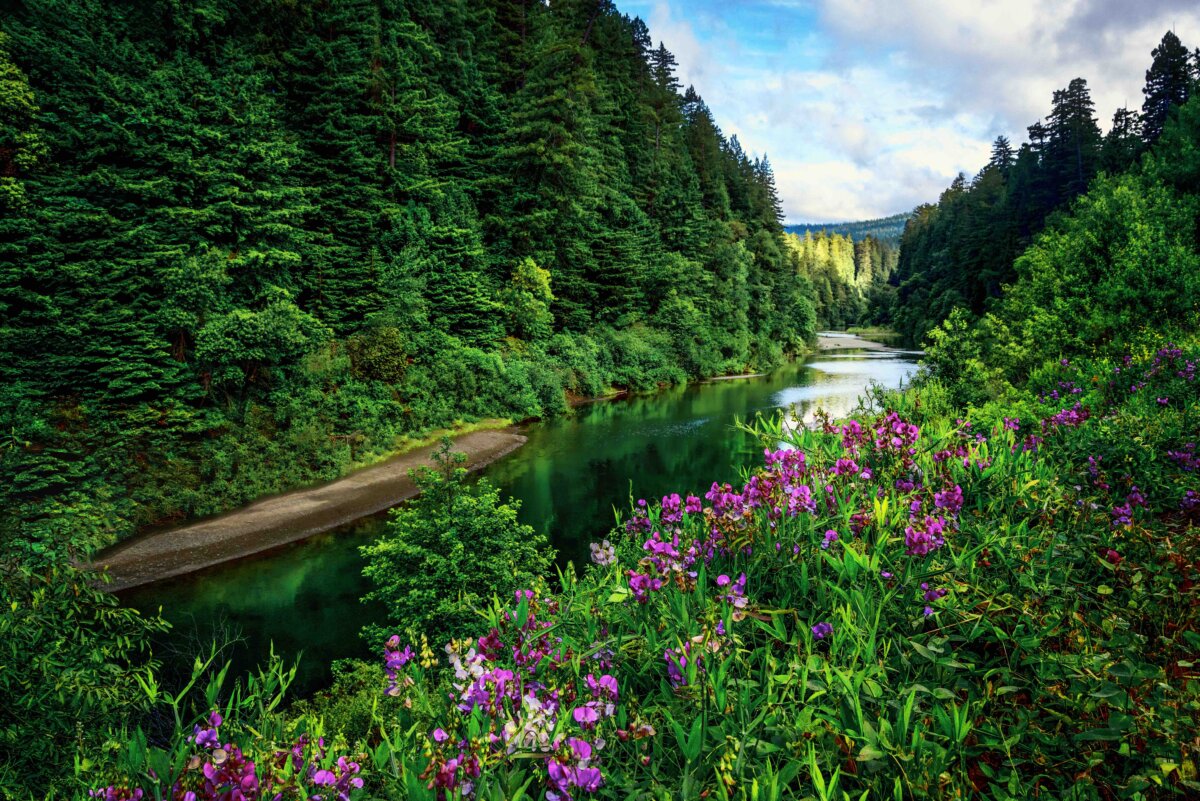
Stout Grove is a 44-acre pocket of magnificent old-growth coast redwoods observed from a half-mile loop. As you stare skyward at the statuesque leviathans, the open understory gives the sense you have entered a natural cathedral.
“It’s not only their unbelievable stature, nor the color which seems to shift and vary under your eyes, no, they are not like any trees we know, they are ambassadors from another time,” writes author John Steinbeck, reflecting on the redwoods in his “Travels with Charley: In Search of America.”
Sanctuary for the Soul
The Redwood Highway is a breathtaking road trip through Northern California’s national and state redwood parks corridor. Redwood forests are a sanctuary for the soul for naturalists at heart—a place to escape the everyday hustle and bustle and to rediscover inner peace. The coast redwoods’ towering presence is both awe-inspiring and humbling, a reminder of the sheer power and timelessness of nature, as you create redwood memories to last a human lifetime.
This article was originally published in American Essence magazine.
