To the classical Greeks, hubris meant more than overconfidence or excessive pride. It evoked a deliberate, dishonorable offense against status boundaries, especially those separating humanity from the divine, and was accompanied by physical violence. Committing hubris led to nemesis, which led to destruction.
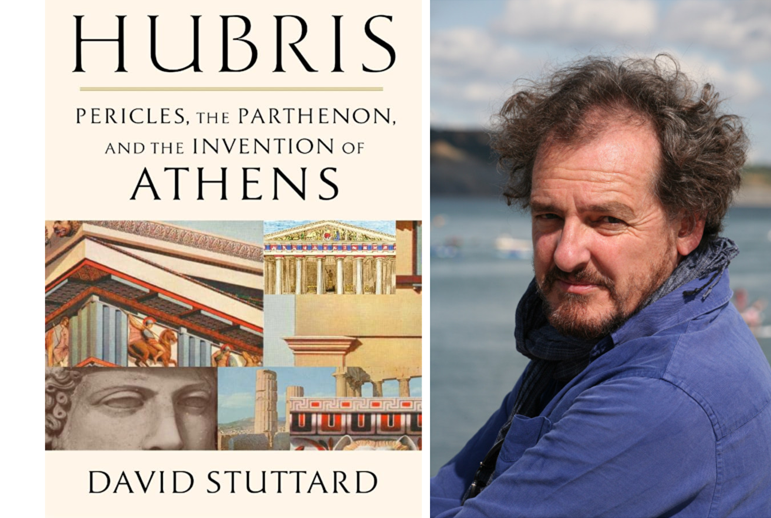
“Hubris: Pericles, the Parthenon, and the Invention of Athens” by David Stuttard offers an account of Athens during its golden age in the 5th century. It shows how over a course of less than 100 years Athens rose from just another Greek city-state to become the master of the Mediterranean and drift from there to defeat. The author shows that Athens followed the classical pattern of hubris to nemesis to destruction during this period.
“Hubris” opens by showing the Athenians’ link with their religion, describing the rituals associated with Athena Polias (the Athena who protects the city-state). It demonstrates the connection Athenians felt with their gods and goddesses. The majority of the population believed they had a special connection with these deities. They believed they were protected and favored by them, and that Athens was destined for greatness because of this relationship.
The book’s early chapters show why Athenians had reasons for this belief. Athens was just emerging, one among many Greek city-states. Then, with victories at Marathon and Salamis, Athens defeated the hitherto unstoppable Persian empire. In both battles the odds seemed so heavily against Athens victory seemed divinely provided.
As Stuttard subsequently shows, Athenians did more than simply accepted these victories as tokens of divine favor. As Athens grew in power and influence, they carefully curated their history and religion to underscore Athens as inheritors of divine favor.
They transformed the Marathon battle into an Athenian-only triumph by writing the Plateans, their only allies, out of the histories of the battle. They massaged myths to transform Theseus, once a minor figure in mythology, into a hero equal to Heracles.
Athenian Democracy
Athenians felt justified in doing so. They were the Greek world’s leading democracy. They felt democracy contributed to the decisions that led to victories at Marathon and Salamis. “Hubris” examines how Athenian democracy worked, and the tensions between those in Athens who supported democracy and those wanting a return to oligarchy. The book shows how control of Athens see-sawed between the two groups as Athens grew in influence and power.
It also traces the growth of the Athenian Empire. It started as a league against Persia into which members voluntarily entered. It ended as a union, controlled by Athens, which could not be exited, and which was run for Athens’s exclusive benefit.
“Hubris” shows how Athens and its charismatic leaders used the revenue they gathered from the league to develop Athens’s public buildings, including what is now known as the Parthenon. The sculpture and friezes adorning the building were as much political propaganda as religious statements. As the leaders underscored the theme of an Athens favored by the gods, hubris reigned.
Athens reaped the inevitable fruit of arrogant hubris. It overreached, triggered an unnecessary war, and tumbled headlong into defeat. This defeat was not due to outside influences like the Plague of Pericles. As the book shows, the plague was so deadly because Athens had crowded the population of Attica into Athens due to the war they started. Poor sanitation did the rest.
Little Has Changed
Perhaps the most fascinating thing about this book is how it shows how little people, with their motivations and behaviors, have changed in 2,500 years. People today are virtually identical to those who lived in Golden Age Athens. Progressives then, like progressives today, believed in the perfectibility of man, only if those (other than themselves) followed the principles they held most dear.
Lawfare to bring down rival politicians was as prevalent in 5th-century Athens as it is in Washington today. The ancient politicians were as narcissistic and self-centered as politicians today. They bought favor with the voting public by distributing largess from the public purse.
Of their elites, many were atheistic or agnostic. They scorned the sincerely religious as naïve and gullible—dupes to be manipulated. The Attic equivalent of this century’s trust fund babies behaved virtually identically. They looked down on their “inferiors” and lived for the Golden Age Greek version of virtue signaling. Swap one of them, ancient or modern, for a counterpart in the other time and teach them the current language, and both would feel at home.
“Hubris” is an outstanding account of 5th-century Athens. It offers portraits of the movers and shakers of that golden age—Themistocles, Pericles, Phidias, Alcibiades, Sophocles, Euripides, and Socrates. The author shows how public and private life of ancient Athens are interconnected and reveals how its democratic assembly worked.
‘Hubris: Pericles, the Parthenon, and the Invention of Athens’
By David Stuttard
Belknap Press: March 17, 2026
Hardcover, 416 pages
What arts and culture topics would you like us to cover? Please email ideas or feedback to features@epochtimes.nyc