In 1853, English novelist Charles Kingsley published “Hypatia.” Named after a real figure from the 4th century, the novel follows the spiritual travails of Philammon, a Christian monk from Egypt who leaves his monastic community in search of an education in philosophy. He finds a school in Alexandria, Egypt, led by Hypatia (370–415), notorious for her willingness to teach pupils of all religious backgrounds.
Kingsley’s historical fiction helped establish Hypatia’s name as a symbol of openness, courage, and intellectual freedom. Who, then, was she? And what can her life teach readers today?
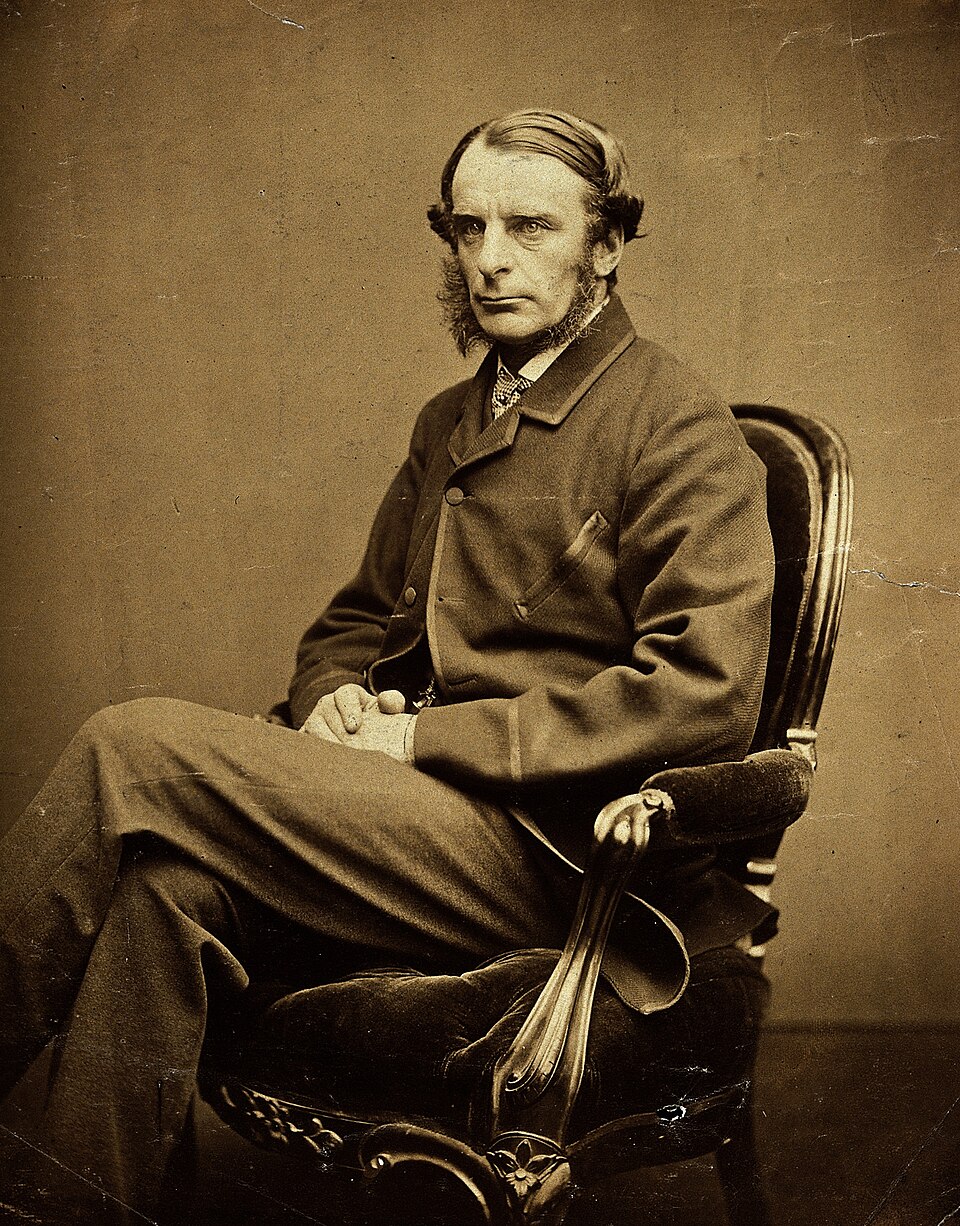 Charles Kingsley in midlife. (Fæ/ CC BY-SA 4.0)
An Eclectic Mind
Born in Alexandria to a prolific mathematician around 350, Hypatia grew up in the elite circles of her native city, then capital of Egypt. In the 2nd century, Egypt was part of the Eastern Roman empire. Alexandria was one of the empire’s intellectual centers, second only to Athens. For many years, Hypatia’s father headed the Mouseion, a vibrant intellectual community where she received the best education available.
Hypatia’s scholarly career began in astronomy and mathematics. She wrote many commentaries on algebra and geometry and earned a reputation as an inventor of astrolabes, hydrometers, and other scientific tools.
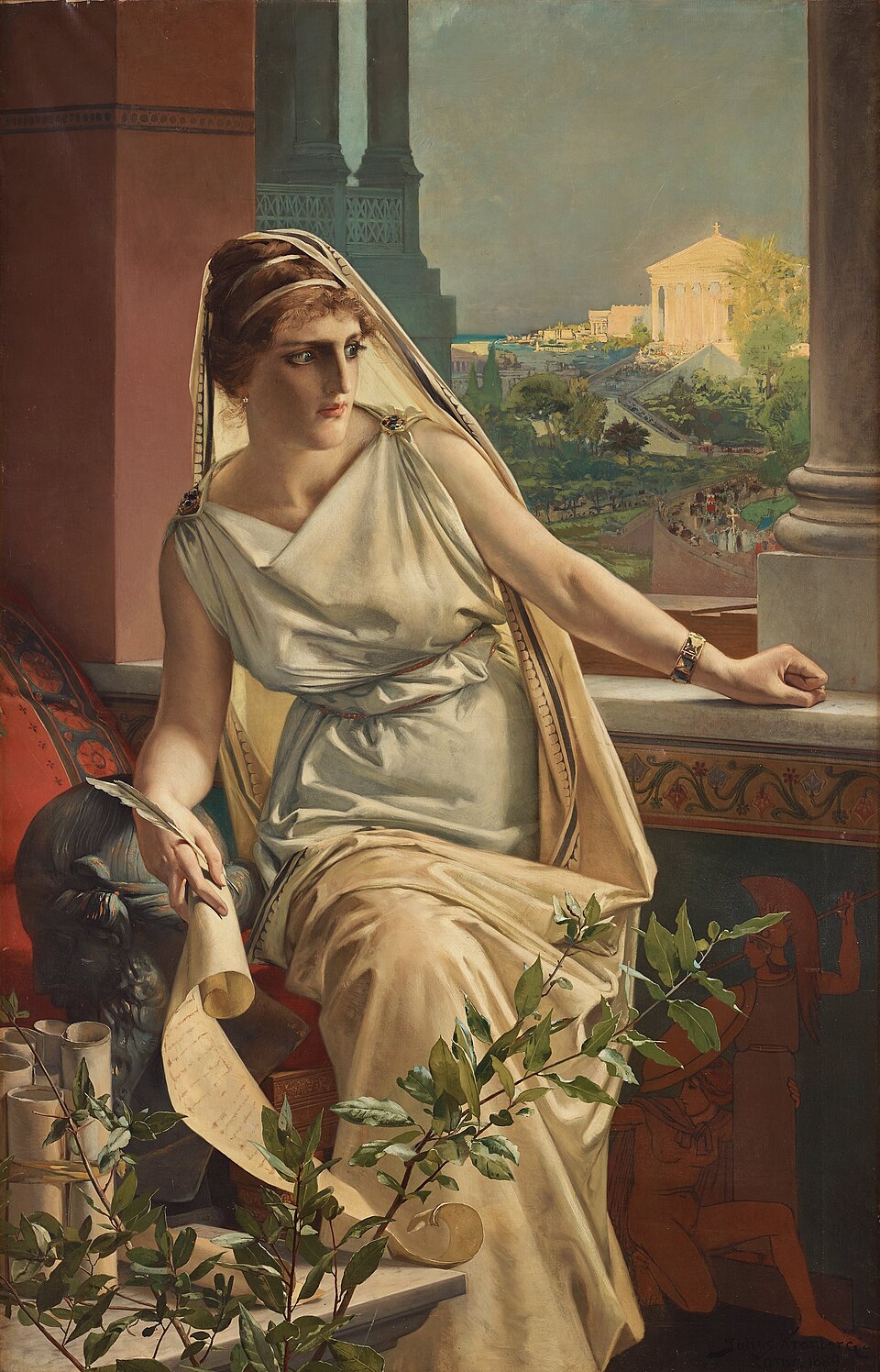 “Hypatia,” 1889, by Julius Kronberg. (Public Domain)
The more Hypatia’s popularity grew, the more she began to attract students from all walks of life. She was a pagan, a term used to denote traditional Roman beliefs before Christianity. Unlike other pagans, Hypatia didn’t worship any particular deity. She was also remarkably tolerant of other faiths. While her pagan colleagues in Athens had adopted a hostile attitude towards Christians, she took a different course. Students flocked from all corners of the empire to attend her classes, and she opened her doors to all of them.
Like the fictional Philammon, these seekers weren’t so interested in technical knowledge about math and geometry. Rather, they were after insight into how to live a good life. They felt Hypatia’s knowledge could help them better understand themselves and the world. Her reputation suggests that she often succeeded in giving pupils a compelling model to improve their lives. Indeed, despite her wide-ranging interests and accomplishments in scientific subjects, Hypatia became and remains most known as a philosopher.
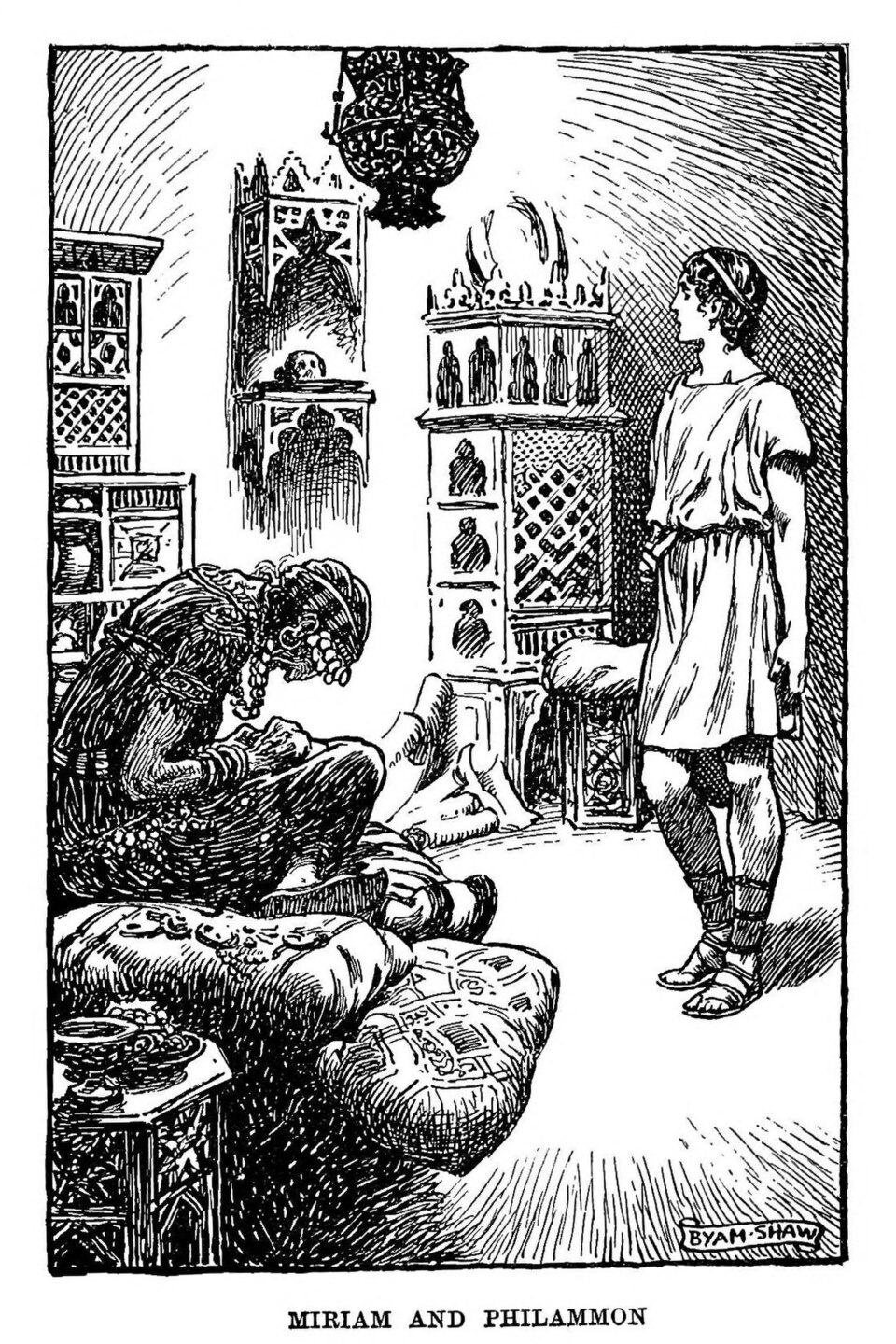 An illustrated scene from Chapter 19 of a 1914 edition of “Hypatia,” by Charles Kingsley. (Public Domain)
Teacher and Philosopher
A follower of Neoplatonism, Hypatia often lectured on the ancient Greek philosophers Plato (circa 428 B.C.–circa 347 B.C.) and Aristotle (384 B.C.–322 B.C.). Her goal was to lead students to “apatheia,” which in Greek means a state of being without (“a-”) emotion (“pathos”). According to Neoplatonists, liberation from emotions began through mathematics, which was thought to have a spiritual dimension. They studied arithmetic, geometry, astronomy, and music not only for practical use, but also to learn what they called the “secret language” of the universe.
The study of constellations, the intricate relationships between musical notes, and the underlying mathematical structures of material objects was seen as a first step to glimpse the universe’s creative force, which Neoplatonists called the All, or the One. A better understanding of the One, which was deemed perfect, beautiful, and unchangeable, was thought to make one more like it, and to make one’s material existence more enlightened.
Neoplatonists also believed that each human had a soul, which was the most important part of the person. During a person’s mortal span, the human soul was corrupted by bodily urges, including hunger and sexual desire, and emotions like sadness and fear. The philosopher’s task was to distance herself from those urges as much as possible. She could do so through reason, a faculty of the mind that distinguishes humans from all other living creatures.
Reason helped her understand whether an urge should be satisfied. Since Neoplatonists believed the human soul wasn’t bodily, they also believed humans should refrain from those urges that treat the body as the most important part of the person. Only the urges that best benefit the soul should be satisfied. That doesn’t mean Neoplatonists stopped eating or drinking. But they did treat eating, drinking, and other physical activities as requirements to sustain the soul while it existed in the body—not as things to be done for their own sake. In the words of Plotinus (circa 204–270), whom scholars consider the founding figure of Neoplatonism, the purpose of nourishing the soul through philosophy was “to bring back the god in us to the divine in the All.”
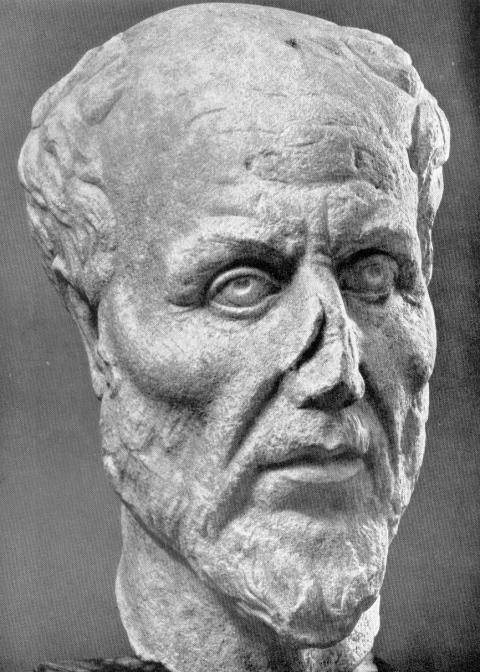 The marble head of a statue plausibly attributed to the ancient philosopher Plotinus. (Public Domain)
Although apatheia is possible during our mortal existence, Neoplatonists thought that absolute apatheia could only be attained once the soul left the body and returned to the One. This assumption often produced a harsh attitude towards the human body and the material world more generally. Porphyry (234–305), Plotinus’ student and biographer, wrote that his teacher “seemed ashamed of being in the body,” so much so that he could not “bear to talk about his race or his parents or his native country.” Like Plato before him, Plotinus often seemed to imply that the material world was nothing but a prison to be escaped from as soon as possible.
Hypatia probably shared this attitude, but her intellectual openness suggests that she felt much more comfortable in the world. Although the goal of her teaching was apatheia, she thought of philosophy more as a lifestyle, a constant and disciplined search for truth, to be pursued not through ascetic contemplation, but in a worldly community ruled by friendship. Members of Hypatia’s academy were expected to be humble, incessantly inquisitive, and open to receiving help from all sources—three traits she exemplified.
Friendship With a Christian Bishop
Hypatia’s most influential student was Synesius of Cyrene (circa 373–circa 414), who became a Christian bishop a few years before Hypatia’s death in 415. Synesius and Hypatia corresponded for decades. When Cyrene fell into war, Synesius lamented to her the violence that swept its streets. As he put it, he was “breathing an air tainted by the decay of dead bodies.” Yet he still expressed love for his birthplace. “Why then do I suffer?” he asked confusedly. Only Hypatia, he seemed to suggest, could help him shed grief and anger.
In another letter, Synesius declared a heartfelt appreciation for the philosopher’s presence, a source of strength throughout his life: “The greatest loss of all, however, is the absence of your divine spirit. I had hoped that this would always remain to me, to conquer both the caprices of fortune and the evil turns of fate.”
None of Hypatia’s replies survive. But, in keeping with her teachings, she probably offered solace by drawing Synesius’s attention to truth, beauty and the One—to the things that mattered most to them and could help them endure life’s inexorable woes.
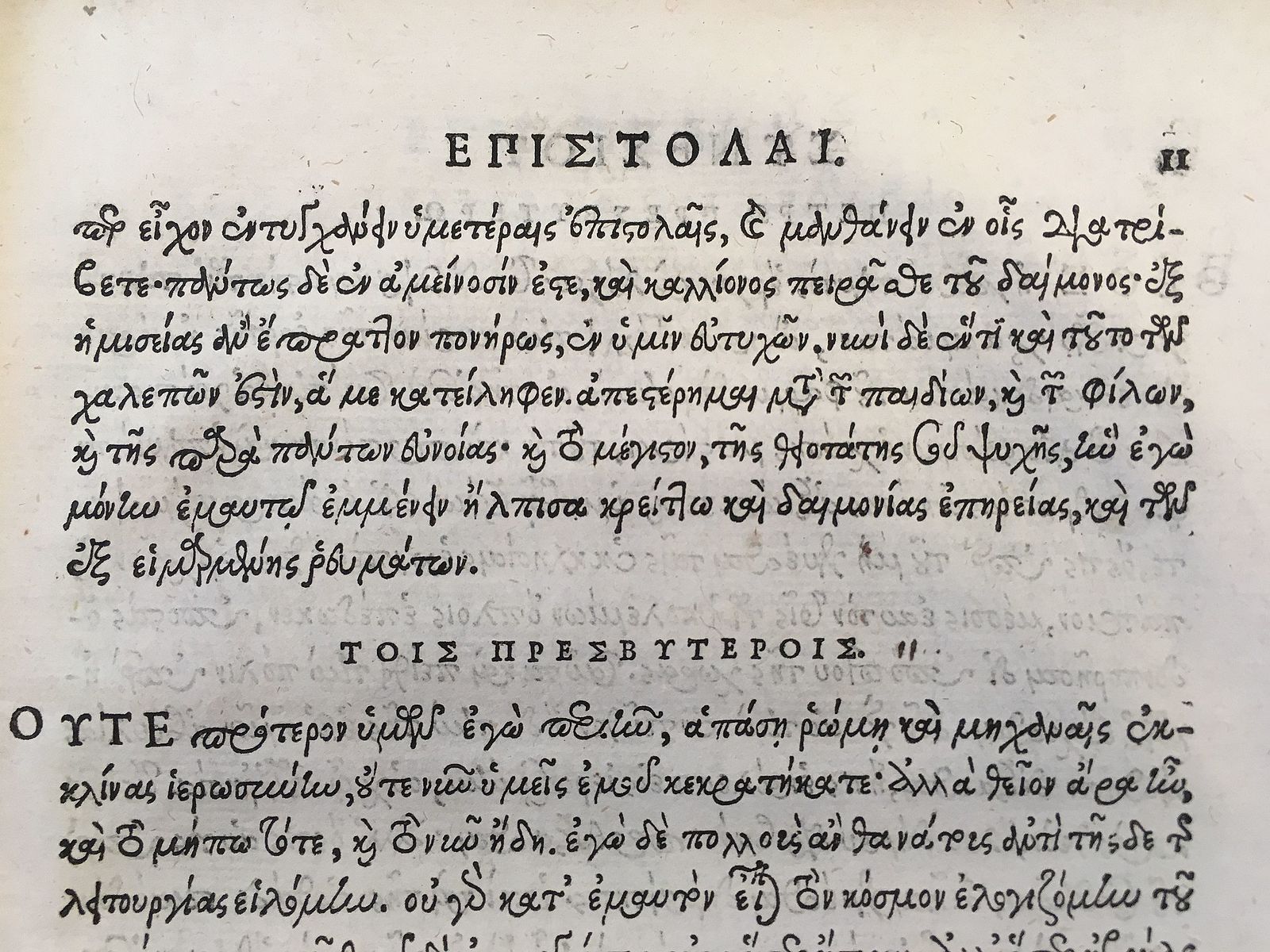 While none of Hypatia’s letters to Synesius survive, his letters to her were preserved in the original Greek and reprinted for a 16th-century audience. (Public Domain)
Friction in Alexandria
If Hypatia’s openness to intellectual diversity earned her the support of students and scholars, it also cast her into dangerous waters. Writing two decades after her death, the Christian historian Socrates Scholasticus told readers that she was often involved in politics: “On account of the self-possession and ease of manner which she had acquired in consequence of the cultivation of her mind, she not infrequently appeared in public in the presence of the magistrates.”
Politicians sought her advice, and she gave it willingly. But not everyone appreciated that. As Socrates Scholasticus remarked, Hypatia fell “victim to the political jealousy which at that time prevailed,” until that jealousy killed her.
In 414, a Jewish mob slaughtered a group of Christians. As a result, Cyril, Alexandria’s Christian bishop, shut down synagogues, confiscated all properties from Jews, and exiled those responsible for the massacre. Orestes, the city’s pagan governor, reported Cyril to the emperor, seeking his removal from office. A Christian mob tried to stop Orestes and nearly killed him. In turn, the governor publicly tortured Ammonius, a monk who had been identified as the instigator of the assassination attempt. When Cyril sought to proclaim Ammonius a martyr, additional tension broke out between those who repudiated violence outright and those who thought Orestes had been rightly punished for opposing Christians.
The conflict eventually stopped, but the factions didn’t reconcile. Orestes went to Hypatia for help, in hopes that she could conceive a reasonable solution. Some saw her ties to Orestes as a deliberate attempt to thwart Christianity. She was chased by a Christian-sympathizing mob and publicly executed.
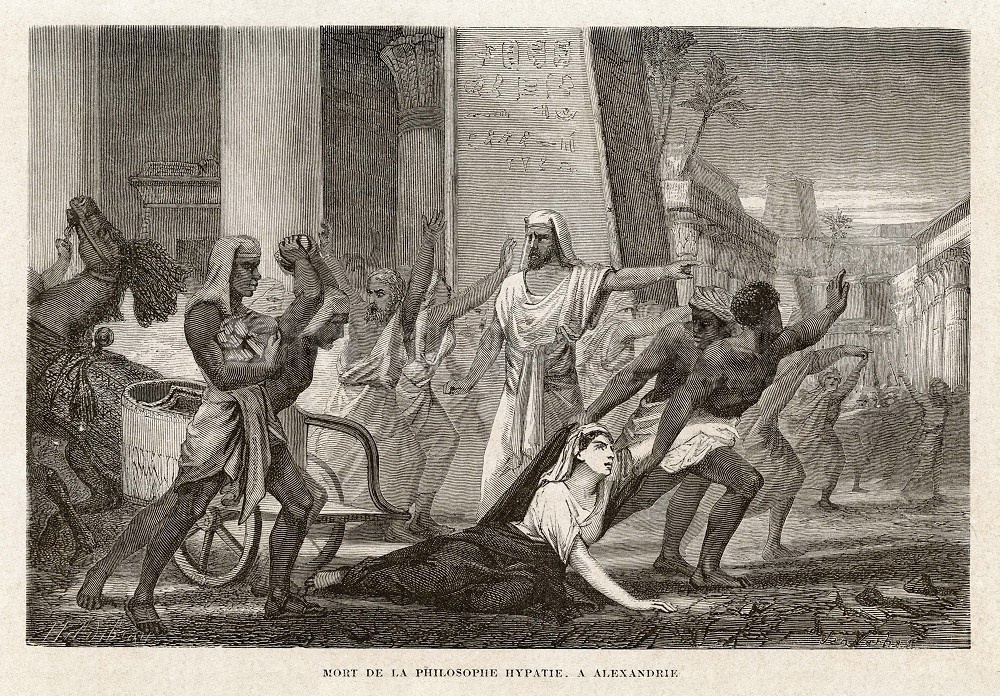 The death of the philosopher Hypatia, as illustrated in “Lives of Illustrious Scholars,” by Louis Figuier, 1866. (Public Domain)
The Courage to Teach Freely
The nonpartisan environment Hypatia fostered in her school was especially remarkable given the turmoil that engulfed Alexandria in the 4th century. Despite ubiquitous tensions between religious factions vying for political influence, Hypatia chose to welcome pagans, Jews, and Christians into her classroom. Knowing well the risks involved, she championed difference of opinions and never sacrificed her intellectual freedom.
Her hope of uniting people of different faiths faded as history took a violent turn. Following her execution, Christian bishops began persecuting people they deemed heretical, while Neoplatonic leaders began taking fanatical pride in those beliefs that set them apart from their Christian counterparts.
As Hypatia knew, emotions could cloud judgment and, in the worst of cases, incite destructive violence. Not everyone learned her lesson, which still resounds as history unfolds.
What arts and culture topics would you like us to cover? Please email ideas or feedback to features@epochtimes.nyc