




If I hear “I don’t need the money” again when I suggest that a stock is vulnerable and should be sold, I’m going to scream—and I’m a pretty loud guy to begin with.
Let me ask you a question. When the NASDAQ Composite Index peaked above the 5100 mark in March 2000 and proceeded to plunge to 1108 in October 2002, what would have happened if you held on to those stocks that mirrored that index simply because you didn’t need the money? You would have been financially crushed, and for a ridiculous reason. And what if it turns out that you did need the money near the end of that treacherous slide—for college, the down payment on a home, a car, a wedding, a vacation, or everyday living expenses? Sadly, most of it would have been gone. That can put a strain on your lifestyle, as well as on your relationship with your spouse and family. Remember, investment difficulties have the potential to spread beyond the financial realm.
We’ve already mentioned the 1973–1974 market drubbing. And back during the 1929–1932 span, the Dow Jones Industrial Average sank from above the 380 level to the low 40s—a nearly 90 percent setback. What about the countless other southerly market moves that have claimed substantial sums of capital that “weren’t needed” at the time? Or the waterfall-like tumbles in so many household-name financial shares during the 2007–2009 period known as the “subprime mortgage crisis”? Some of those names are no more, others at mere fractions of their former share prices. Remember Bear Stearns and Lehman Brothers? What about Federal National Mortgage Association (commonly referred to as “Fannie Mae”) and Federal Home Loan Mortgage Corporation (also known as “Freddie Mac”)? These are just some of many examples. As I remember these instances and others like them, I think about all those hardworking, wonderful folks who’ve seen their money either evaporate or significantly diminish in these and other names.
It takes only one severe bear market period to destroy your capital no matter how much money you’ve made previously, and in stock market parlance, that’s one too many. Think about it. You can make money year in and year out over a long span and then, in a single big bear market lasting only a fraction of that lengthy period, lose the bulk of it. Remember, it only takes one! Some would say that isn’t fair, but that’s the stock market for you. In life, a single mistake can also have severe consequences, like crossing against the light or driving too fast on a slippery road. You need to plan and think ahead.
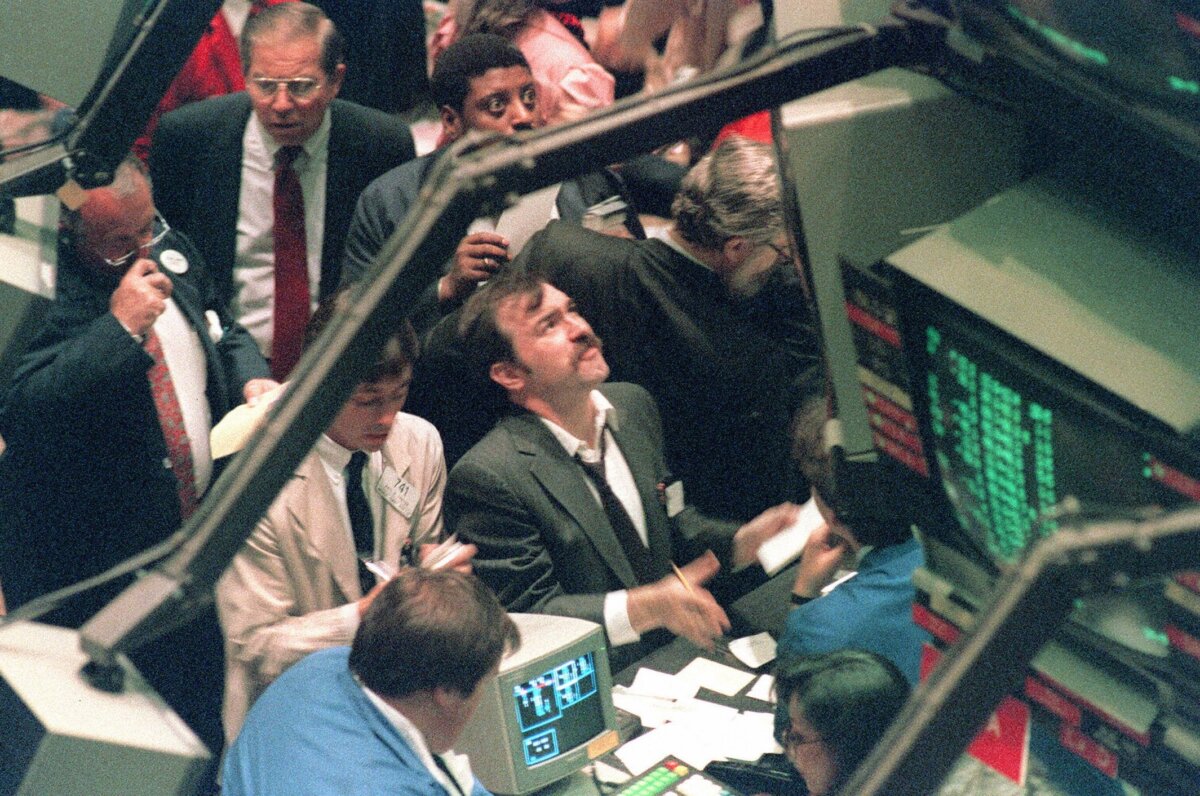
I can remember 1987 like it was yesterday. In just eight short weeks, ending with the October 19, 1987, “crash” as it came to be called, the Dow Jones Industrial Average surrendered approximately 52 percent of its December 1974–August 1987 gains! To give up, in less than 2 percent of the time, what it took approximately 662 weeks to achieve over that span speaks for itself concerning the downside dangers of stock market investing and the importance of risk management. And don’t forget, a stock market that surrenders 50 percent of its value has to double in price just to get back to where it was prior to that fall. That’s a humbling statistic to dwell on.
There’s no limit to how much a stock can rise, but we know that a complete loss equals 100 percent. Because the former’s northerly potential is so much greater in percentage terms, there has to be a counterbalancing factor. That factor, my friends, is that stocks fall faster than they rise. An object needs force to push it up, but that same object can fall of its own free weight—and picks up speed as it descends. And so it is with the stock market. That’s why large losses can occur on relatively light trading volume. So don’t fall for that oft- mentioned market line that says that it’s always a bullish sign when stocks decline on light trading volume. Not for one second. There’s a lot more to it than that.
The same principle holds true for a stock that rises on heavy trading volume. It’s not necessarily a bullish occurrence. For instance, what if that visibly increased volume fails to lift the shares above a key northerly region on my charts (referred to as “resistance”)? That wouldn’t be a favorable sign. In fact, I’d probably use an occurrence like that to do some selling if confirmed by some of the other gauges I use.
If a thorough analysis of my price charts suggests that a position needs to be reduced or eliminated, it needs to be done —regardless (I said regardless) of whether or not I need the money. That’s not even a remote consideration.
A friend recently remarked to me that saying “I don’t need the money” is like saying, relationship-wise, that “I shouldn’t break up with my live-in girlfriend who I’m not getting along with because I don’t need the extra room in my closets.” One has nothing to do with the other. And not needing the cash isn’t relevant to whether or not a stock should be sold. Are we clear on that?
Moral: Personal considerations such as a present lack of need for capital should not be part of the investment decision- making process. It’s difficult enough to achieve success in the stock market without basing important decisions on flawed thinking. Remember, in the stock market there is never a time when you don’t need the capital if an investment should be sold. In fact, being able to conserve capital at the proper market junctures (this is especially true in bear markets) is a cornerstone of investment success.
(To be continued…)
This excerpt is taken from “Relationship Investing: Stock Market Therapy for Your Money” by Jeffrey S. Weiss.
To read other articles of this book, click here.
To buy this book, click here.
The Epoch Times copyright © 2023. The views and opinions expressed are those of the authors. They are meant for general informational purposes only and should not be construed or interpreted as a recommendation or solicitation. The Epoch Times does not provide investment, tax, legal, financial planning, estate planning, or any other personal finance advice. The Epoch Times holds no liability for the accuracy or timeliness of the information provided.
