Arbor Day is celebrated throughout the United States on the last Friday in April. Since its founding on April 10, 1872, organizations like the Arbor Day Foundation, have helped plant millions of trees. The commemorative day often evokes images of saplings taking root and children learning how trees clean the air, provide shade, prevent soil erosion, and nurture wildlife. Alongside that, trees flourish in a quieter, more contemplative realm: art.
American painters have long been drawn to forests, groves, and lone trees, capturing not just the visual splendor of woodlands but also their emotional depth and cultural significance.
In paintings that range from sublime panoramas to quiet woodland interiors, trees emerge as subjects as varied and expressive as any human figure. They bend with wind, catch shifting light, and stand steadfast through seasons and centuries. In celebrating Arbor Day through the brushstrokes of iconic artists, we uncover the many ways trees have inspired imagination, shaped national identity, and invited viewers to contemplate the deep connection between humans and nature.
California Redwoods

One of the most celebrated painters of the American West, Albert Bierstadt was known for his expansive landscapes that soared with drama and light. In “Giant Redwood Trees of California,” Bierstadt turned his gaze upward, capturing the towering stature of the Pacific coast’s ancient redwoods. Sunlight filters through the dense canopy, radiating glowing pathways across the forest floor.
Bierstadt’s handling of light is central to the emotional impact of the work. It isn’t merely a depiction; it is a veneration of nature’s grandeur. Shadows deepen the sense of mystery, while shafts of light articulate the forest’s beauty. These redwoods seem monumental, sentient, and almost cathedral‑like in the way they command reverence.
The painting reminds us that trees are not only living organisms, but also symbols of endurance and transcendence—a fitting reflection for Arbor Day.
Wooded Interior
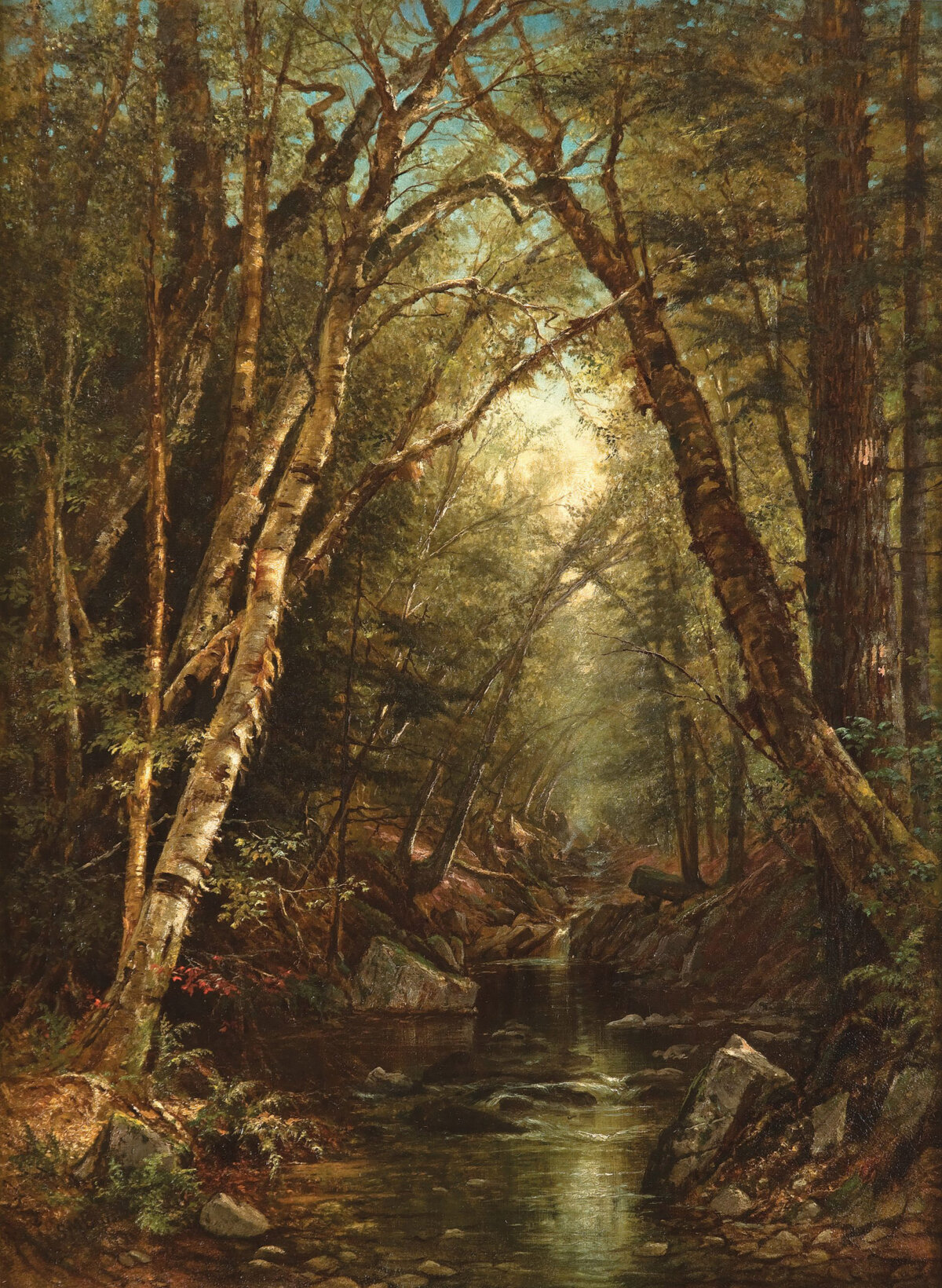
Like Bierstadt, Susie M. Barstow was a devoted nature lover—one who hiked nearly 110 peaks in her lifetime and often sketched along the way. Yet where Bierstadt favored sweeping panoramas, her wooded landscape is more intimate. This quiet study of trees feels almost hushed, as though the viewer is stepping into a secluded grove where a single breath might disturb the stillness.
Barstow’s composition emphasizes texture and nuance: Leaves rustle softly in subdued light, shadows play along the forest floor, and individual trunks rise with graceful modesty. Barstow’s approach suggests that forests aren’t only grand theaters of nature; they are also repositories of quiet beauty.
Barstow’s work reminds us to attend not only to the towering and dramatic, but to the delicate and intricate details that make trees—and our experience of them—so rich.
‘Catskill Cove’
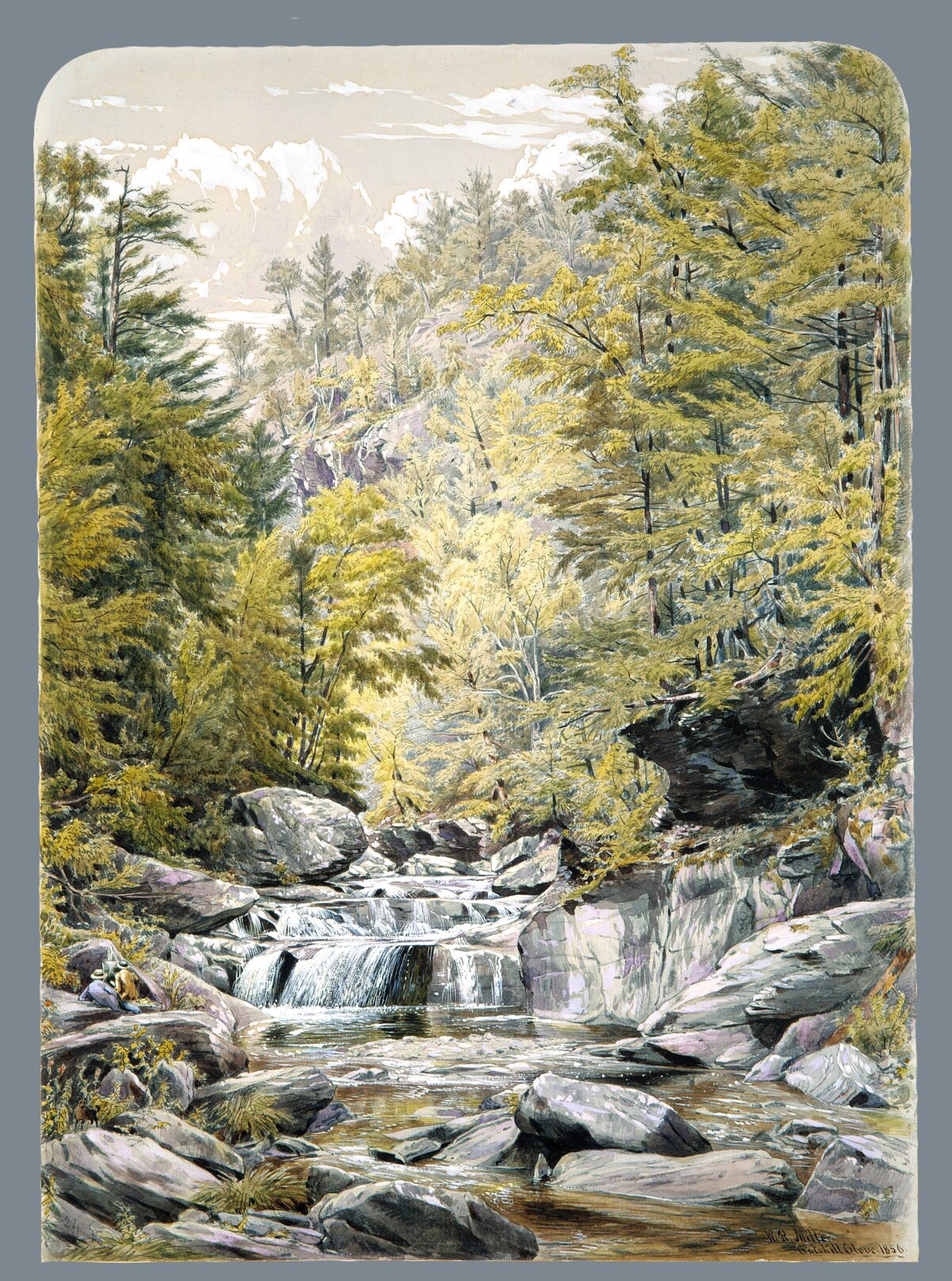
William Rickarby Miller was born in England but spent most of his life in the United States. Settling in New York, he made his living painting portraits, though his true passion lay in landscapes. That preference is evident in “Catskill Cove,” where the trees along the banks of the river are sturdy yet graceful, their golden leafy colors mirrored below in the water’s rippling surface.
The stillness creates a mood of quiet harmony, a reminder that trees contribute not only to dramatic panoramas but also to softer, relational landscapes where land and water meet. On Arbor Day, when we celebrate trees as watershed protectors and oxygen producers, that balance feels especially resonant, at once aesthetic and ecological.
Squirrels in a Chestnut Tree
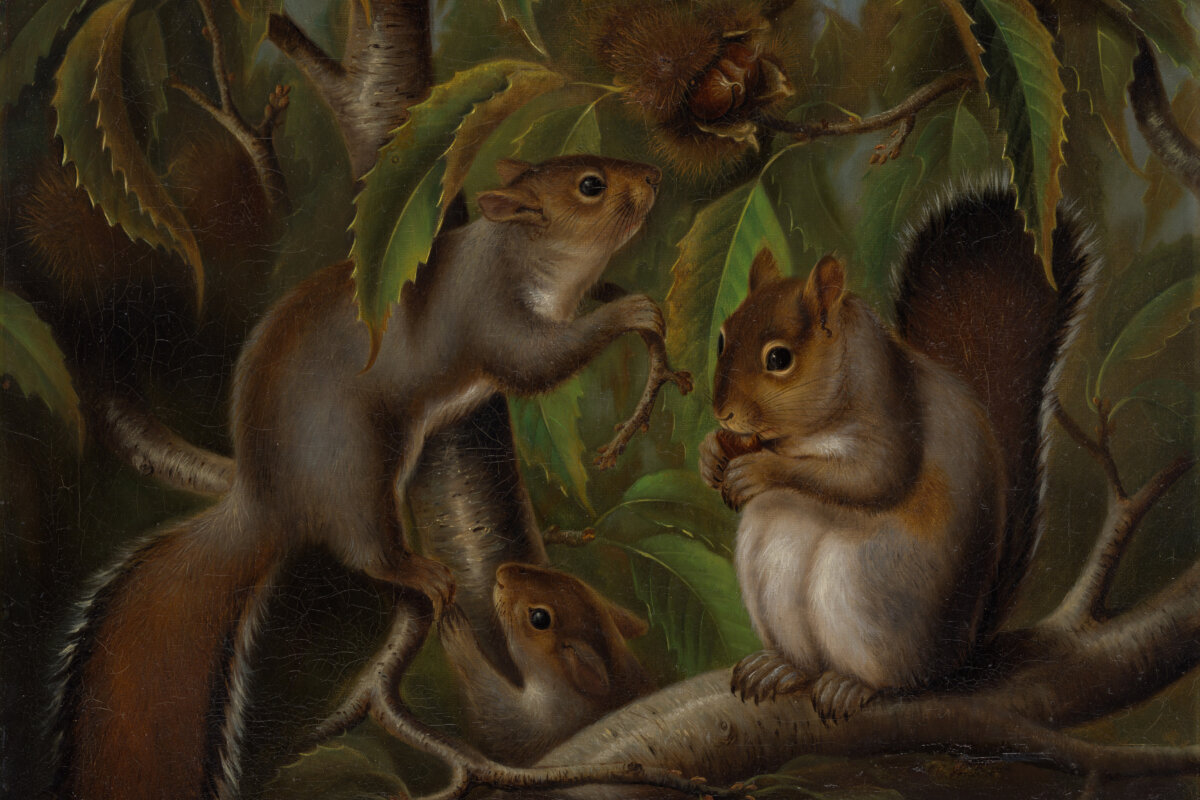
Largely self-taught, Susan Catherine Moore Waters brings playful sensibility to the painting of squirrels in a chestnut tree, capturing energy and motion among branches laden with foliage. Where earlier painters often idealized forests in luminous grandeur, Waters embraced forest life in its everyday vibrancy. The tree becomes a stage for small dramas: A squirrel pauses at a forked branch and another darts along a fissured trunk.
Here, trees are not static guardians of landscape. They are active habitats, alive with other lives that depend on their presence. The painting invites viewers to consider trees as dynamic ecosystems full of animated detail.
‘Spring Landscape’
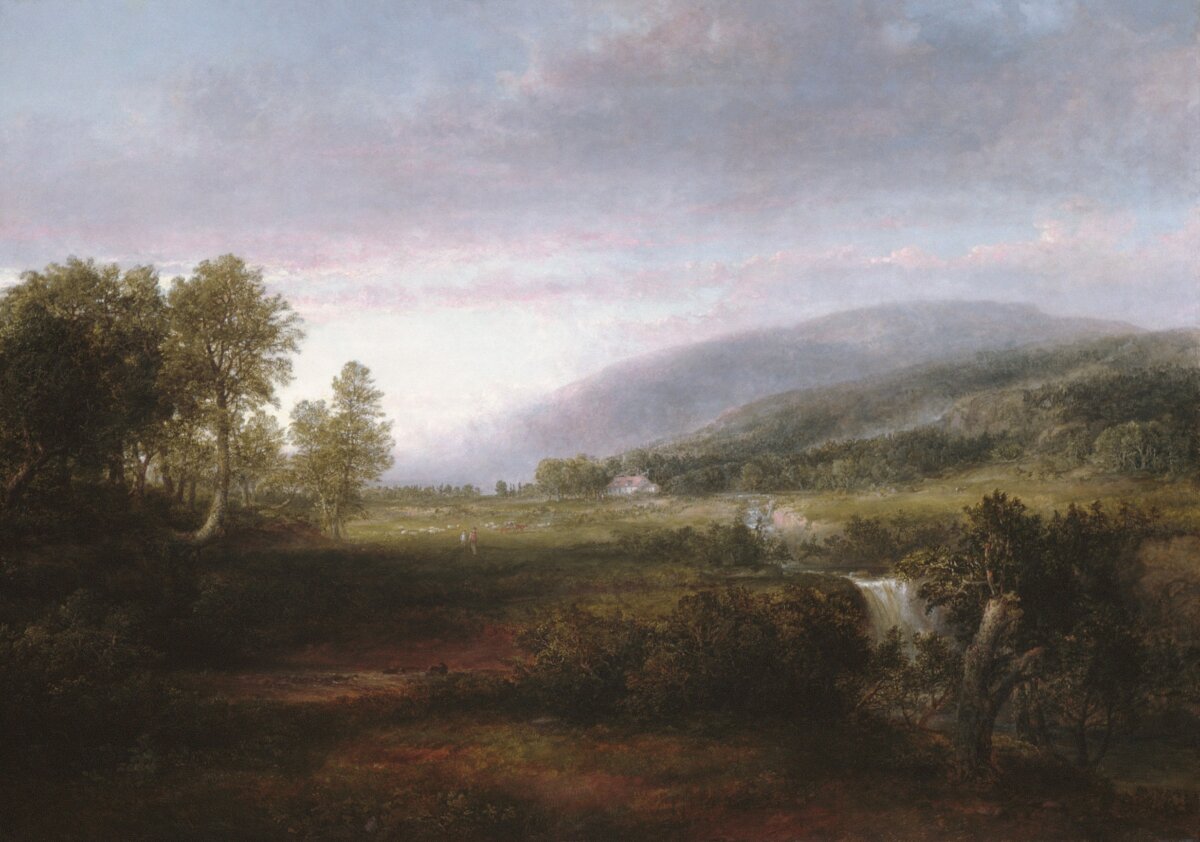
One of America’s first artists to work exclusively in landscape, Thomas Doughty left behind at least 165 recorded paintings. His “Spring Landscape” captures the freshness and optimism of the season through rolling hills, delicate foliage, and a lustrous sky that seems to introduce the first warmth after a long winter.
Doughty had a keen sensitivity to atmosphere, and his careful tonal variation naturally draws the eye through the foreground and into the hazy distance. Soft greens and subtle touches of color breathe renewal into the scene, the whole of it a testament to his rare gift for finding poetry while keeping the scene true to nature.
Subject, Symbol, and Muse
Across these varied works, trees take on many roles. For some artists, they are grand cathedrals of nature, majestic and towering, capable of inspiring genuine awe. For others, they are quieter presences, offering shade and light, shelter for animal life, and space for human reflection. In every case, they anchor the landscape, grounding composition, context, and meaning.
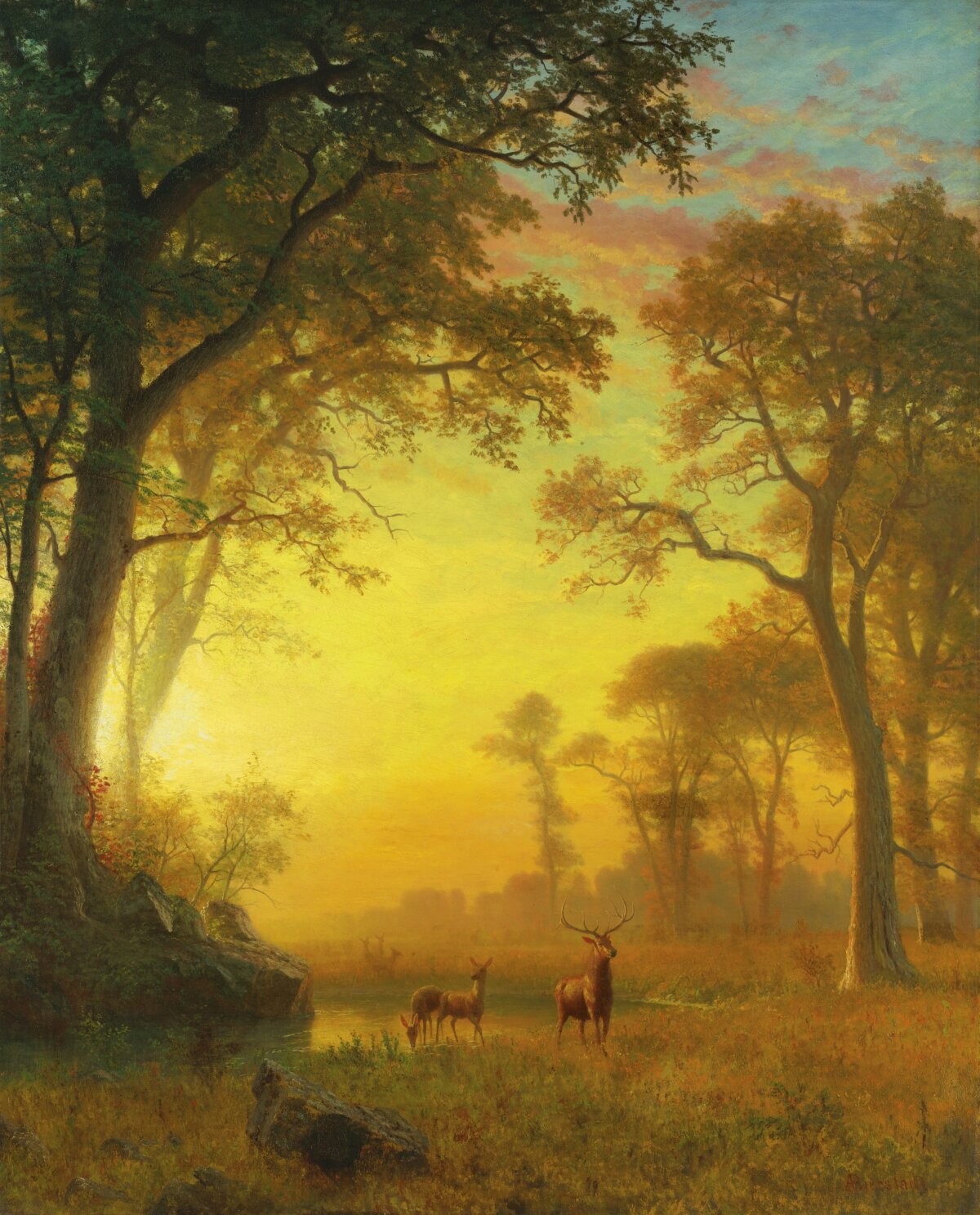
In American art, trees are more than scenery. They have become a visual language for connection, stability, change, and spirit. Rooted in soil yet reaching skyward, their branches link earth and horizon, and their leaves whisper of seasons, cycles, and the passage of time. Trees shape ecosystems and climate, and they inspire poetry, science, and wonder.
To explore iconic tree paintings on Arbor Day is to do more than observe a civic tradition. It’s a cultural encounter, an opportunity to behold what trees meant to the artists who studied them most closely, and through their eyes, to ask what trees might mean to us today.
What arts and culture topics would you like us to cover? Please email ideas or feedback to features@epochtimes.nyc.