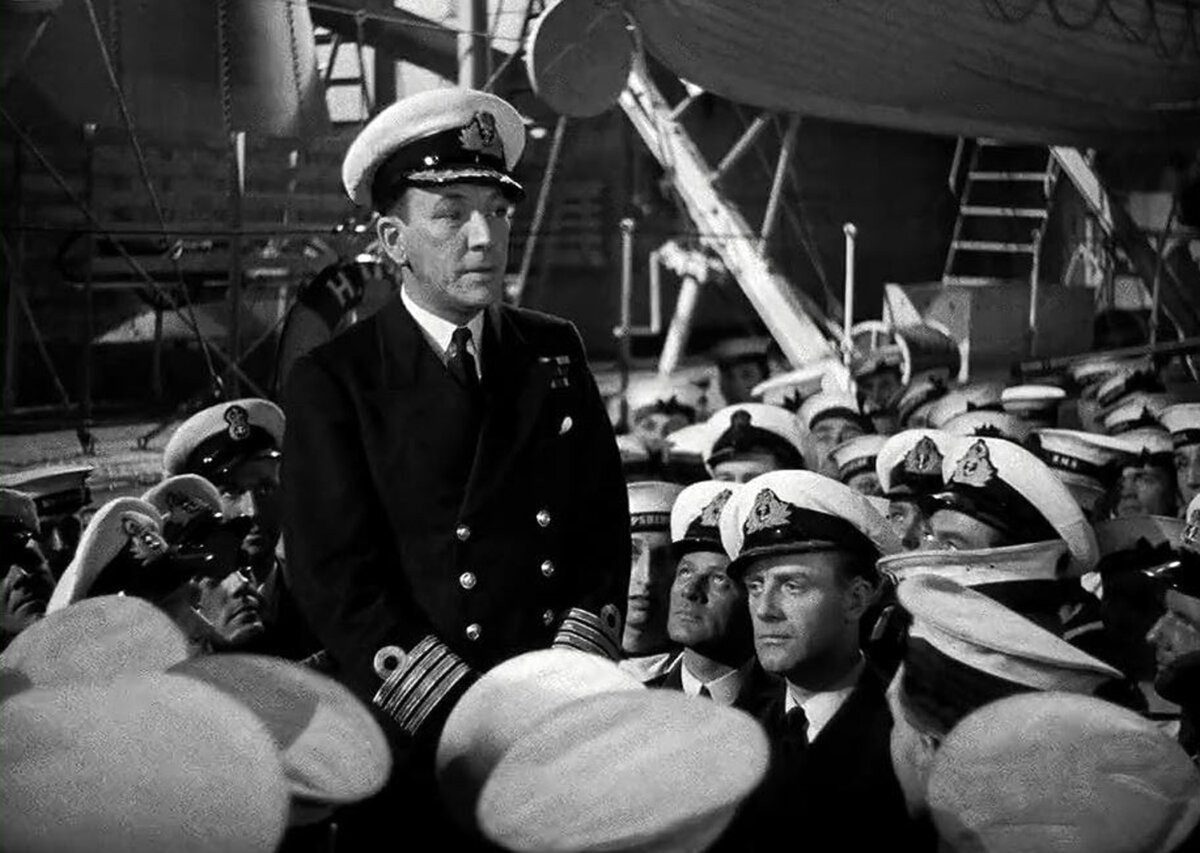
NR | 1h 55m | Drama, War | 1942
“In Which We Serve” emerged out of wartime Britain in 1942. With support from the Royal Navy, the film was built from a mix of real dockyard footage and staged construction. It was written by and stars Noel Coward, a well-known figure from British theater; this was the first film he directed. It was co-directed by David Lean, also directing his first feature after working as an editor.
The opening centers on the construction of the destroyer HMS Torrin, shown from its earliest stage. The exposed ribs of the hull come into view while hardworking dock workers guide heavy plates into position. White-hot rivets are driven in with force, each impact sending sparks outward in a steady rhythm.
The sequence stays with these actions long enough for the process to unfold in full, allowing each stage to register as the ship takes shape.
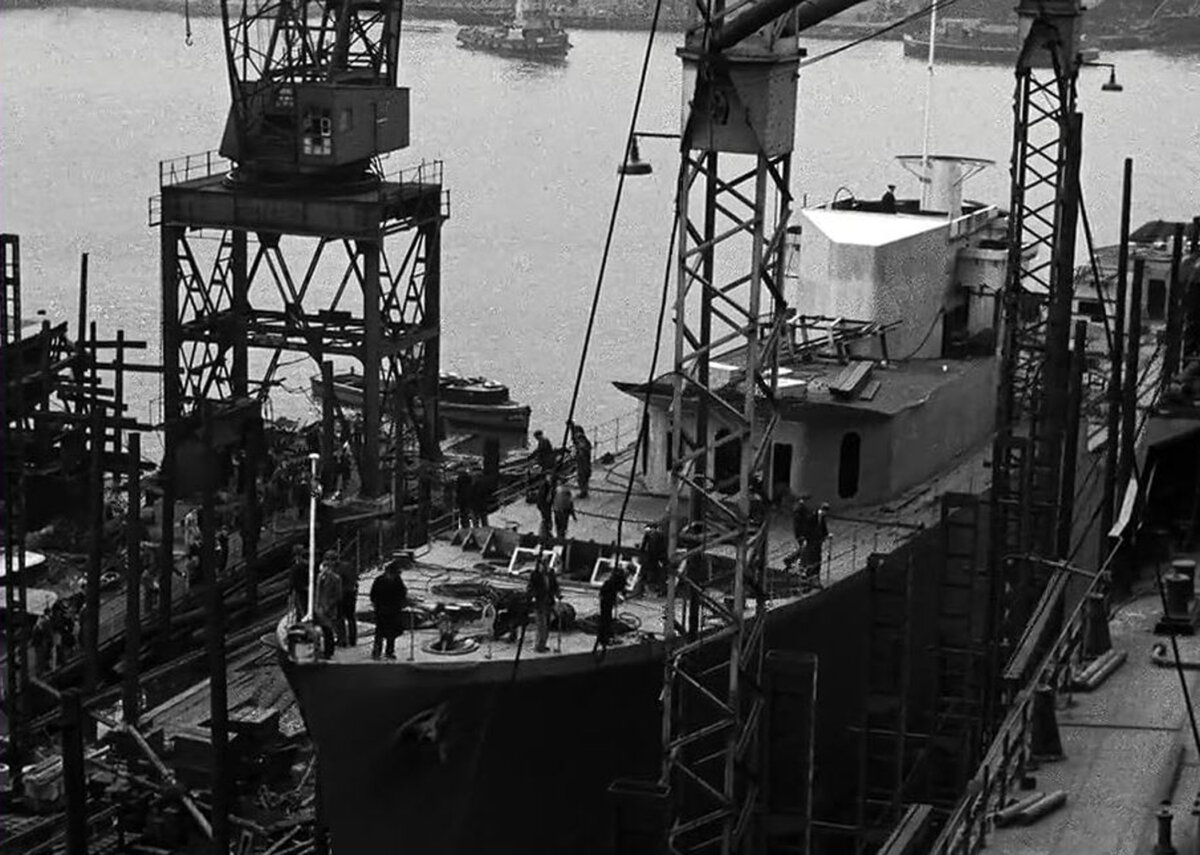
The building process advances as machinery is installed, surfaces are smoothed, and paint is spread over the hull until the raw metal disappears beneath a finished exterior. The scene is a brutal kind of industrial poetry, shaped by steel and sweat instead of rhyme and meter.
Then comes the christening. A bottle of champagne strikes the bow and bursts across the freshly painted hull, marking the ship’s launch. The moment continues a long-standing British maritime tradition, connecting the vessel to those that came before.
The completed HMS Torrin has a presence shaped by time, effort, and ritual. When the crew finally enters the frame, they step into something well-established yet new at the same time.
War and What Follows
During the first act, we see the HMS Torrin in an active engagement as she moves against German ships under the cover of darkness. As her mighty guns blast away, orders are shouted across sea-sprayed decks, and the crew operates with a sense of coordination that shows just how well the vessel is run.
However, all that morale-boosting momentum shifts with the dawn, as enemy bombers arrive overhead. The German planes attack relentlessly, and the Torrin takes a multitude of hits, which force the crew to abandon ship as it begins to roll and sink beneath them.
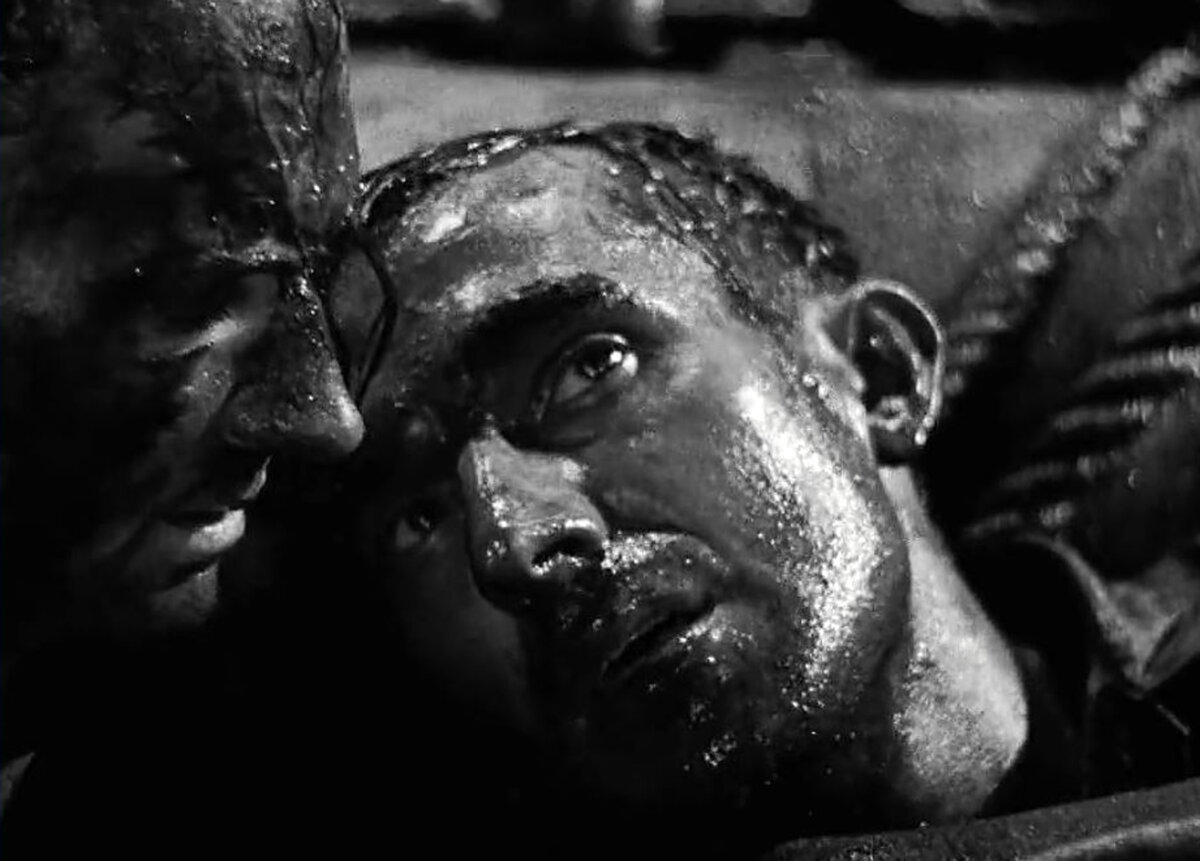
From there, the film moves between the survivors holding on in open water and the memories that brought them there. Capt. E.V. Kinross (Noel Coward), Chief Petty Officer Walter Hardy (Bernard Miles), and Ordinary Seaman Shorty Blake (John Mills) each carry pieces of that past. Their recollections move through early service, time at sea, and moments back home.
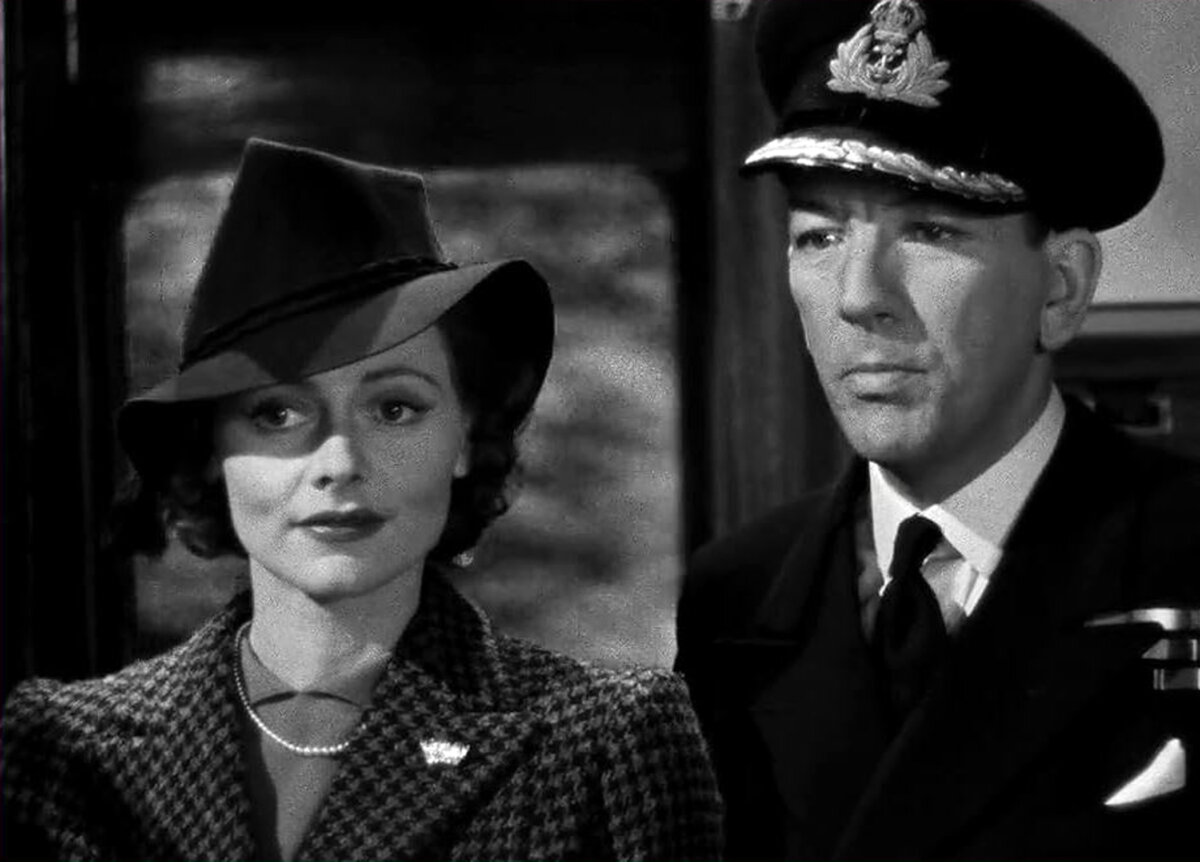
Kinross’s life with his wife, Alix (Celia Johnson), shows the strain of a career tied to the navy. Hardy’s family back home and Shorty’s relationship with Freda (Kay Walsh), the young woman he falls for and later marries, show their respective lives away from the ship. As these various memories unfold, the Torrin itself becomes the thread holding everything together.
Duty at Sea and Home
The film deftly moves between the action unfolding at sea and life on shore, with a sense of continuity that keeps both sides connected.
Families live with the absence of fathers and husbands as part of their routine, adjusting to long stretches when they don’t know what comes next. Scenes at home show people carrying on with small tasks, although both worry and stress show up in subtle ways.
Meanwhile, each sailor’s rank determines his job and what he’s responsible for, and that kind of order carries through every scene on board. At the same time, there’s familiarity among the crew. This shows in little ways, such as certain types of mannerisms and speech patterns. These moments build a sense of camaraderie that comes from shared experiences and repeated actions, and this feeling shapes how the crew functions as a unit.
The opening abandonment sequence reminds me of another World War II film that I recently reviewed, “Action in the North Atlantic” (1943), which stages a more drawn-out and punishing escape. In that film, the destruction of the crew’s ship unfolds over multiple stages, as fire spreads across decks, smoke closes in, and sailors are forced to move through it step by step before finally getting clear.
With “In Which We Serve,” the Torrin’s end comes faster, as the bombs land, and the order to abandon ship follows with more urgency. Both sequences carry impact, though they aim for different effects. While the American movie stretches the moment for more dramatic effect, the British film pushes the action forward and moves quickly into what comes afterward.
“In Which We Serve” ultimately leaves audiences with a clear impression of what WWII service looked like from several perspectives, as it shows life at sea and back on the home front.
There’s a strong current of patriotism which runs through it, shaped by the time when it was made and the audience it was speaking to. The film bolstered morale in Great Britain, as well as encouraging the entire Allied war effort in its fight against tyranny and evil.
“In Which We Serve” is available on HBO Max, YouTube, and Tubi TV.
‘In Which We Serve’
Director: Noel Coward, David Lean
Starring: Noel Coward, John Mills, Bernard Miles
Not Rated
Running time: 1 hour, 55 minutes
Release Date: Dec. 23, 1942
Rated: 4 stars out of 5
What arts and culture topics would you like us to cover? Please email ideas or feedback to features@epochtimes.nyc