There are men who invent, and there are men who inhabit what they invent. William S. Harley belonged to the latter kind—the sort who pressed his thinking into metal until it carried a pulse of its own. He was not a showman. He did not chase legend. But the machines he helped create would come to speak in a voice that outlived him—a low, unmistakable thunder.
Born Dec. 29, 1880, in Milwaukee, Wisconsin, Harley grew up in a city already fluent in industry and identified as a principal manufacturing hub. His father, an immigrant from England, worked as a railway engineer.
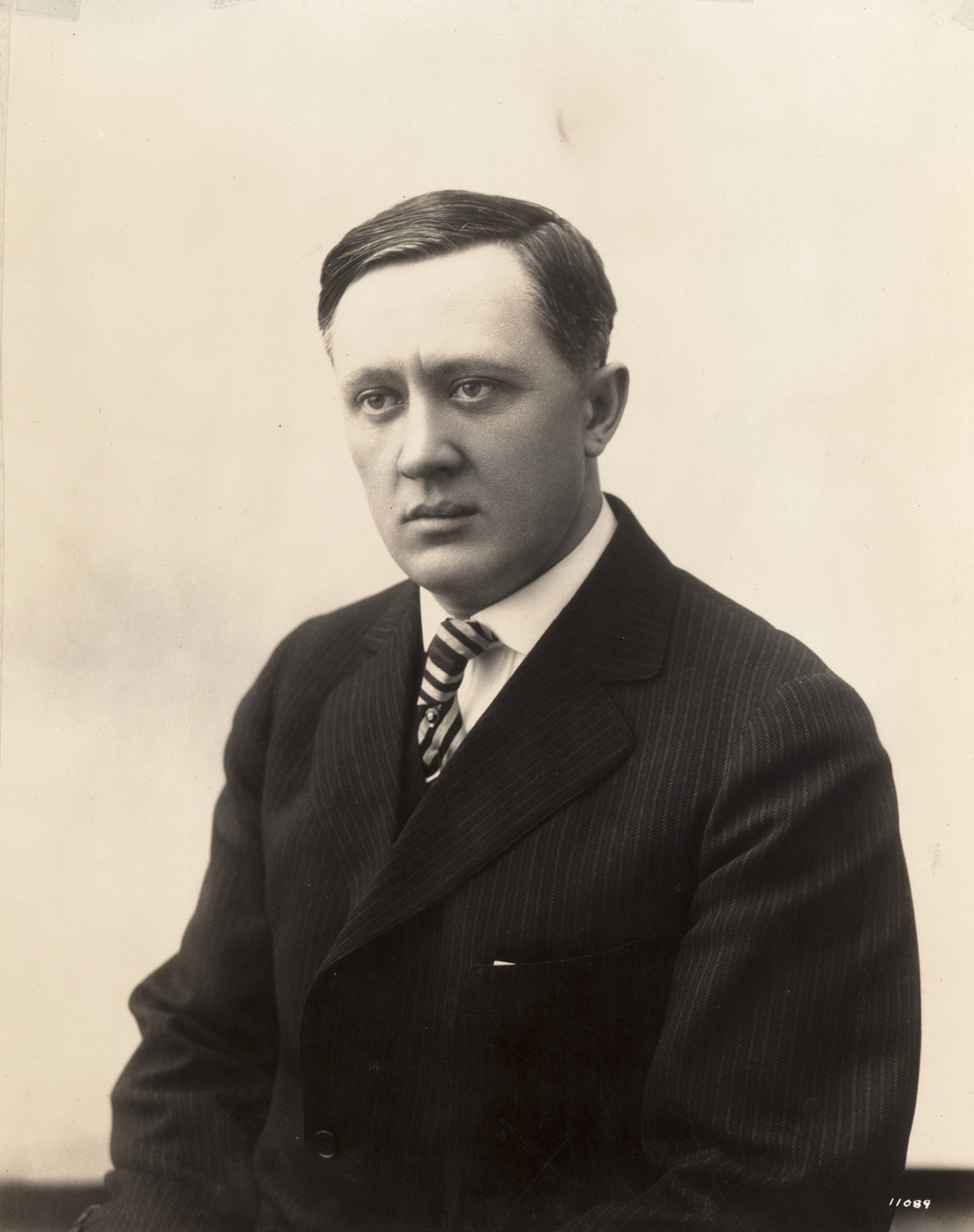
Like many young men of his time, Harley was drawn first to the bicycle—that elegant compromise between effort and motion. As a teenager, he worked in a bicycle factory, learning the grammar of gears, chains, and frames through repetition and feel.
The leap came gradually. Around 1901, Harley drafted plans for a small internal combustion engine that could be mounted on a bicycle frame. The earliest version proved underpowered, more concept than solution, but the idea held. What it needed was refinement—and a partner who could help bring it off paper.
The Other Founders
That partner was Arthur Davidson (1881–1950), a Milwaukee native and a childhood friend with a practical bent and a talent for organization and sales. Their temperaments aligned without overlapping: Harley methodical and engineering-minded, Davidson outward-facing and pragmatic. Joined by Arthur’s brothers, Walter and William A. Davidson, they formed a compact, durable partnership. In 1903, working out of a small wooden shed behind the Davidson home, they completed their first workable prototype. It was not yet a fully realized commercial machine, but it ran—and that was enough.
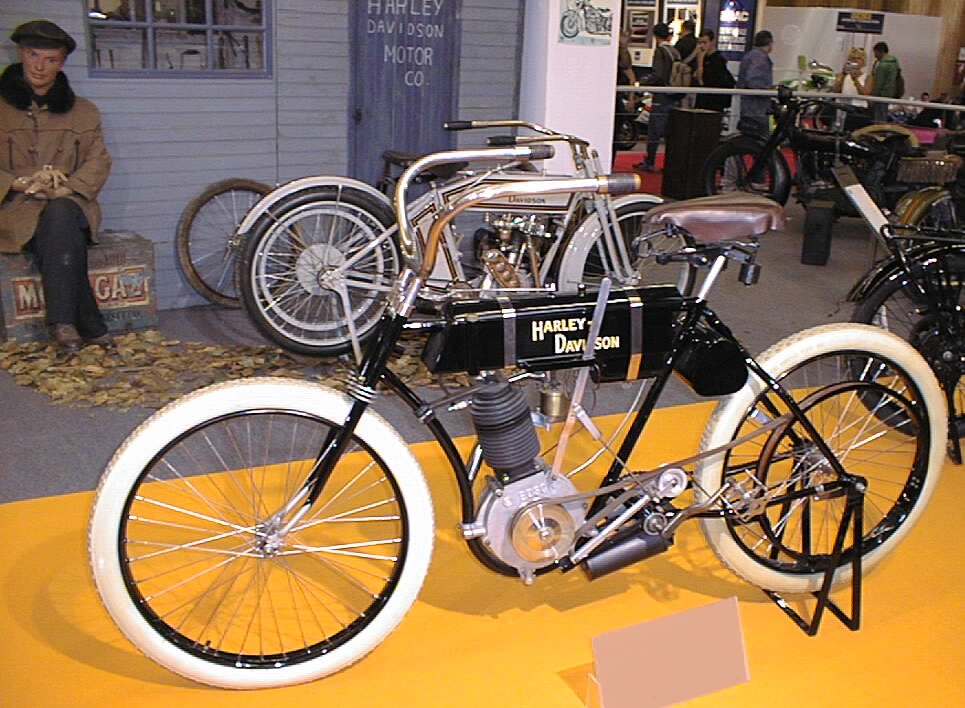
Production, at first, was modest. By 1905, they had built only a scant few motorcycles. Two years later, in September 1907, the Harley-Davidson Motor Company was formally incorporated. That same year, Harley graduated from the University of Wisconsin–Madison with a degree in mechanical engineering—the only founder with formal technical training. He became chief engineer and remained the company’s primary technical authority for the rest of his life.
Progress came through iteration, not spectacle. Harley focused on strengthening engines, improving ignition, and building frames capable of sustained use on poor roads. In 1909, the company introduced its first V-twin engine. The initial version ran hot and proved unreliable, but it was quickly reworked. By 1911, the improved V-twin had become a defining feature—delivering the torque and durability that would anchor the brand’s identity for decades.
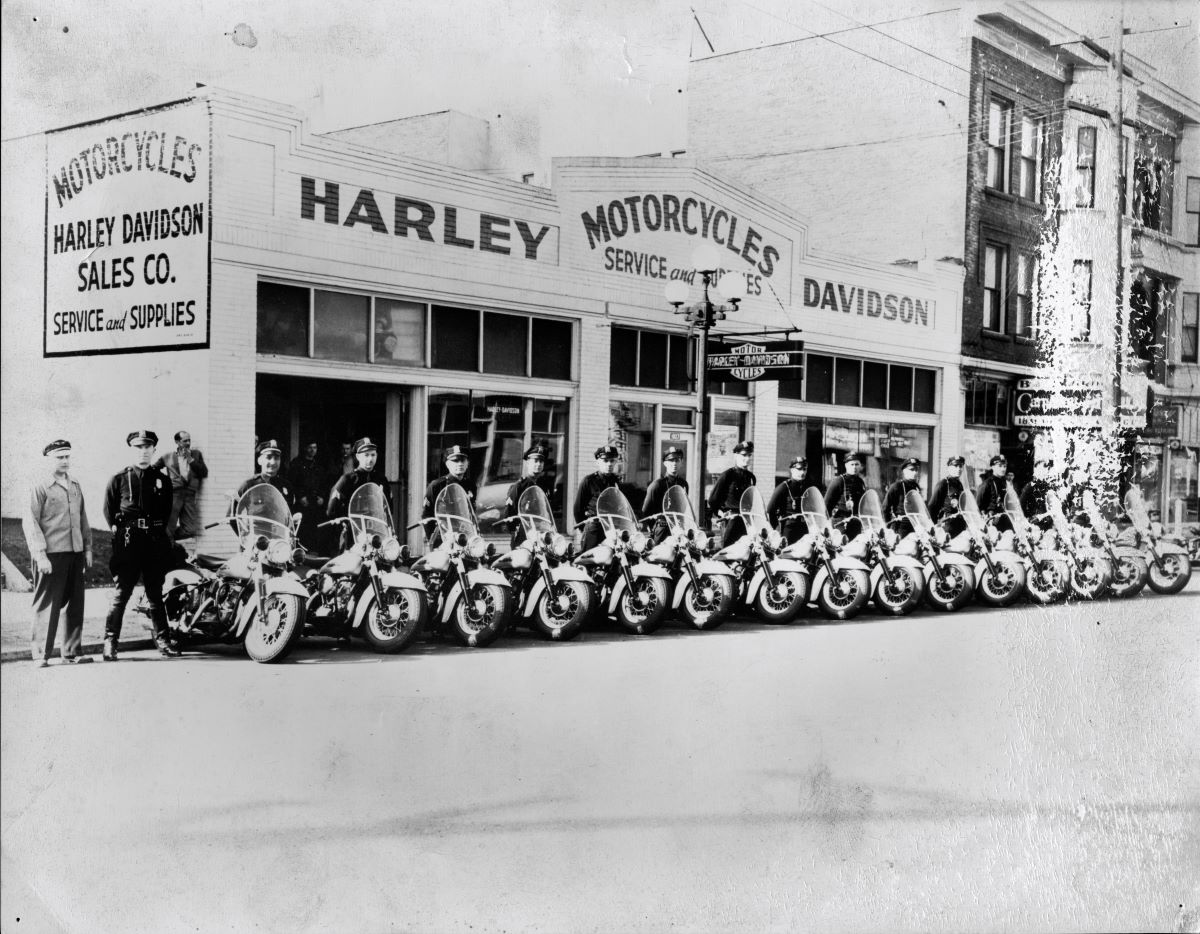
By the 1910s, Harley-Davidson motorcycles had been adopted by police departments and the U.S. military. During World War I, the company supplied roughly 15,000 to 20,000 motorcycles to the armed forces, expanding both production capacity and reputation. By 1920, Harley-Davidson was widely regarded as the largest motorcycle manufacturer in the world, with a dealer network spanning more than 60 countries.
Throughout this rise, Harley remained a steady, largely private figure. He stayed close to the mechanical side of the business, known to work closely with machinists and engineers, keeping a practical hand in development. The division of labor among the founders held: Arthur Davidson drove sales and distribution; Walter Davidson (1876–1942), the first president of Harley-Davidson, contributed myriad executive leadership; William A. Davidson (1870–1937) oversaw pivotal elements of manufacturing. Harley, at the center, ensured the machines themselves justified the company’s expanding reach.
His influence can be measured less in individual inventions than in continuity of approach. Harley emphasized durability, serviceability, and mechanical clarity—machines that could be repaired, relied upon, and ridden hard without pretense. He contributed to ongoing refinements of the V-twin platform and helped shape an engineering philosophy that favored torque and resilience over novelty.
A Lasting Legacy
The cultural meaning attached to Harley-Davidson came later, but its foundation was laid in these early decisions. The motorcycles were built for distance, for uneven roads, for riders who expected function before flair. Over time, they would come to symbolize independence and a certain refusal to conform. Some of that reputation would be amplified by marketing and myth, but it did not begin there.
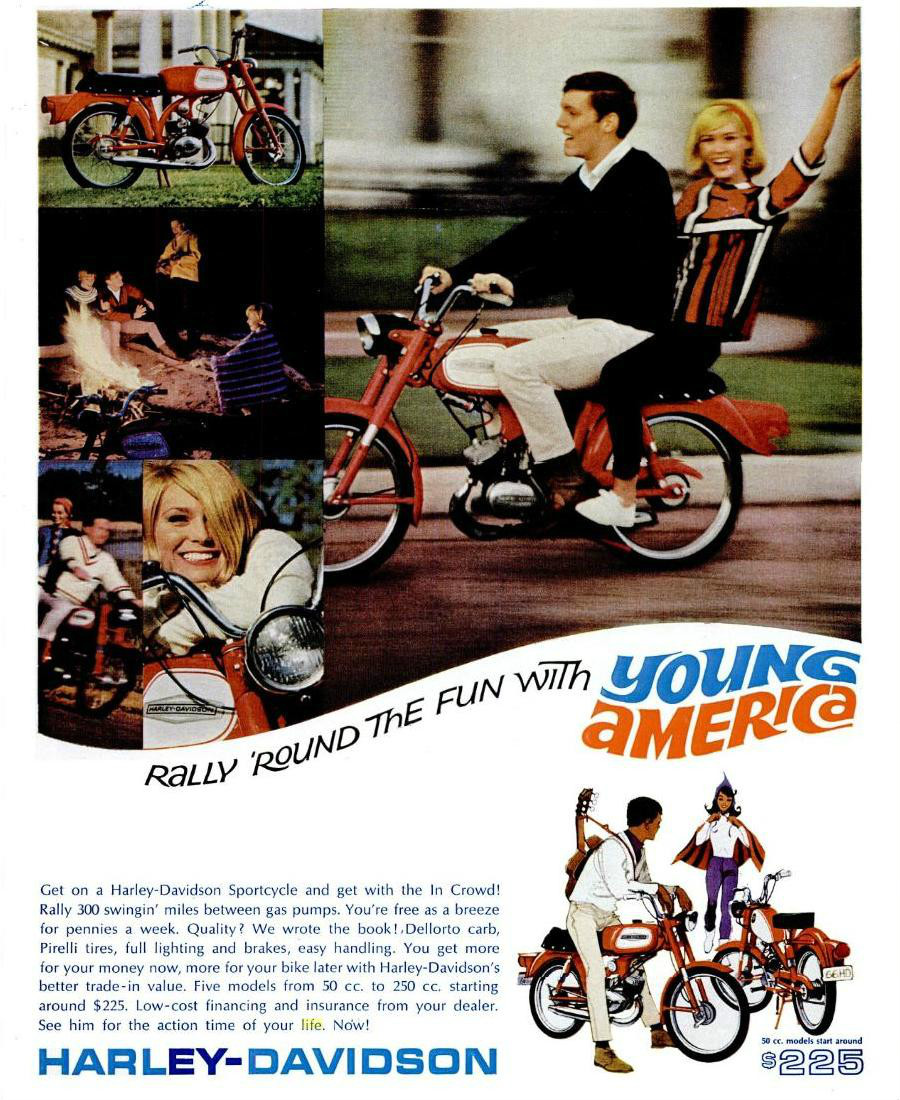
Harley died on Sept. 18, 1943, in Milwaukee, at the age of 62. By then, the company he helped build had survived economic downturns, war, and intense competition. It faced new pressures in the decades that followed, but the core identity—a lifestyle brand rooted in function, freedom, and fraternity—remained intact.
Harley did not traffic in myth. He worked in tolerances, in heat and stress, in the stubborn honesty of metal under strain. But the thing he helped set in motion slipped its leash somewhere along the line. It got loud. It got restless. It found the long road and refused to come back. And long after the man was gone, the engine kept talking—rough, insistent, and a little bit dangerous, like it still had something left to prove.
What arts and culture topics would you like us to cover? Please email ideas or feedback to features@epochtimes.nyc.