By Gordy Megroz
Bloomberg News
Flying to Aspen, Colorado, has always meant rolling the dice on weather. But the conversation has shifted in recent years. Gone are the days when you wondered if snowstorms would prevent your flight from landing. Now you worry about whether there’s enough snow on the ground to ski at all.
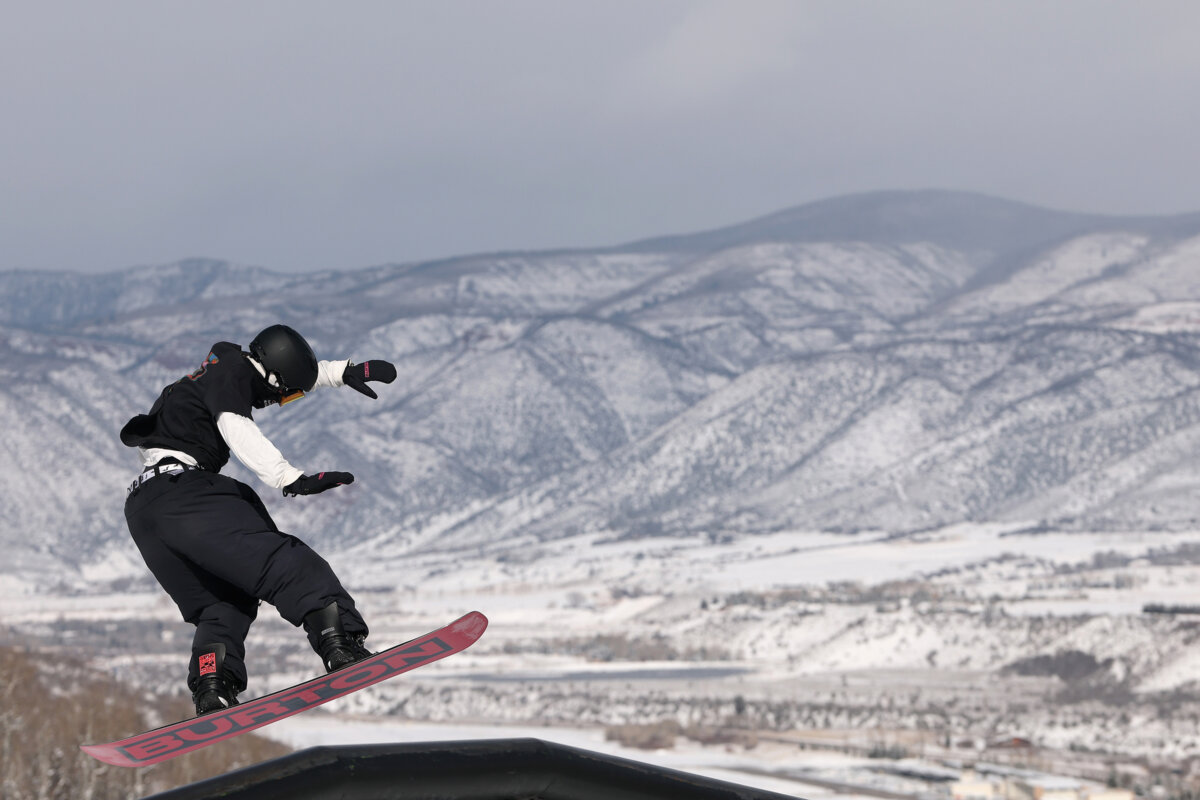
By mid-February the resort town had gotten a meager 105 inches of snowfall for the season—35 inches short of its average this time of year. From the Deep Temerity chairlift you could see swaths of brown, with skiers bouncing on rocks, saplings, and dirt patches below.
There’s no way to sugarcoat it: This season has been terrible for resorts in the U.S. West. And it’s not just Aspen. Before a snowstorm finally enveloped the broader region in late February, ski areas in Colorado, Utah, and California had all been registering snow totals that were well below normal, with some falling to record lows. That includes such legendary spots as Deer Valley and Palisades Tahoe, formerly known as Squaw Valley.
It’s not the first time that these places have seen low snowfall. But this year the bad conditions are more significantly souring skiers on some of their favorite places—possibly for good, according to some travel agents and industry experts. In a growing climate of travel disloyalty, even Aspen is at risk of losing its most steadfast fans.
A spokeswoman for Aspen One, the parent company for Aspen Snowmass resort, declined to share skier-visit data with Bloomberg. She said that the resort is operating the largest skiable area in Colorado despite lower snow totals than usual, and that the resort has focused on other aspects of the mountain experience, such as “après” culture and a mountaintop concert, to keep guests entertained.
Skiers are prone to dividing themselves into two camps: those who are going on trips for, well, the skiing, and those who are in it only for the après. Surveys from the National Ski Areas Association consistently show that more than 80 percent of respondents cite “downhill skiing or snowboarding” as their primary reason for visiting a resort, while a much smaller share list dining, nightlife, or social experiences as their main draw.
But even for the roughly 15 percent to 20 percent of visitors for whom skiing isn’t the only point of a ski trip, it makes little sense to splurge on flights, lodging, lift tickets, and dining for a weeklong Aspen vacation that’s about mountainside revelry alone. Run the math on all of these things, and it’s easy for such a trip to cost somewhere from $8,000 to $15,000 per person, per week.
That has left travelers wondering if they should cancel their plans and try again next year. For most of them, it’s not so simple.
“A lot of the hotels in these places have very strict cancellation policies—30 days or more,” said Leigh Rowan, founder of Savanti Travel, an elite travel management company that caters largely to the Silicon Valley jet set. “They’re saying, ‘Sorry, we can’t let you out of your reservation just because the snow is bad.’”
It’s an experience that has Rowan’s frequent travelers—people who count on at least one ski trip a year, often to the same place—rethinking their plans for next year. “A lot of people who book trips to these places do so up to nine months in advance so that they can secure a hotel room,” he says. “People are tired of gambling on a $10,000 ski vacation that might literally melt away.”
As such, the conversation has shifted from a riskier, wait-and-see approach—in which some skiers settle for less optimal hotel rooms once they see snow on the ground—to a hunt for Aspen alternatives. People are seeking “places that still have all the perks, just without the hassles,” Rowan said.
Among the personality types looking elsewhere, Rowan said, are those who fly in on private jets from the East Coast and Texas; young, moneyed luxury lovers who’ll go anywhere for a good party; families who take school breaks in Aspen with their younger kids; and tight groups of snowboarders and skiers seeking to get away with friends.
Search data back that up. According to Google Trends, U.S. search interest for “Aspen Colorado ski” is down by roughly 10 percent from a year earlier, while searches for “Aspen ski conditions” have surged by more than 100 percent over the same period—suggesting that travelers are focused less on planning new trips and more on monitoring the viability of existing ones. Longer-term Google Trends data also show that overall global search interest in Aspen ski-related terms has gradually declined from its early-2010s peaks.
“Particularly during holiday season, we’re seeing more bookings for people looking for ‘snowsurity,’” said Cat Iwanchuk, vice president for business development at the winter sports booking platform Ski.com. (The word “snowsurity” refers to “snow sure” trips.) Among the locations that count as snow sure, he said, are “places in Europe with high elevations that have glaciers,” including Austria’s Hintertux and Stubai Glacier ski areas, or Switzerland’s Zermatt.
Besides looking for more of a snow guarantee, travelers can also prioritize a refundable trip or added flexibility by searching beyond the big-name resorts. Boutique ski areas such as California’s Sugar Bowl Resort, in the Lake Tahoe region, or Utah’s Sundance Mountain Resort have myriad appeals, including rich histories and last-minute availability.
Lift tickets can also cost a fraction of what some guests are used to paying. At Sugar Bowl you can pay as little as $89 per day, versus Aspen’s $249 starting price. Sundance charges about $159 per day, roughly half of the $351 you’d spend on a midweek day pass at nearby Park City.
Both of those spots—and many other indie ski areas like them—are also undergoing massive renovations, building infrastructure, and expanding the type of amenities that might appeal to the Aspen and Deer Valley customer. Industry analysts and resort operators say this wave of capital investment reflects a broader shift. As megaresorts consolidate under large pass products and push prices higher, independently owned mountains see an opportunity to capture skiers seeking fewer crowds, more flexibility, and a differentiated experience.
At Sugar Bowl the newly kicked-off plans include $100 million in upgrades over the next few years, focusing on the lodges, beginner terrain, and a new gondola. Sundance, meanwhile, is undergoing a multiyear expansion that has already added a new day lodge, heated relaxation pools, and enormous snowmaking upgrades. Soon, it will also welcome two new high-speed lifts and more than 200 acres of new terrain.
Then there are the less obvious advantages of smaller ski areas, such as vacation homes ensconced in alpine seclusion and short lift lines that stem from fewer, smaller resorts. As more luxury lovers turn to these options, the dining is getting upscaled, too. At Sugar Bowl a new restaurant called Yarrow, by James Beard Award-winning chef Traci Des Jardins, is already attracting guests who’d otherwise be Palisades Tahoe devotees.
“January 2026 became the biggest January in our history for skier visits,” said Bridget Legnavsky, Sugar Bowl’s president and CEO. Still, Rowan pointed out that many skiers are ditching the United States entirely for their next ski trips. Instead, they’re heading to Europe or Japan next winter in search of a cultural experience that you just can’t get stateside.
“They want to go and enjoy the towns and eat well and stay in a great hotel and build a cultural experience around the trip,” Rowan said. “Families especially love that.”
As for those who simply can’t wait a year to make up for lost time? There’s still one more fallback: South America. According to Ski.com, Chile’s Portillo is leading the pack with a 126 percent year-over-year increase in demand.
Rowan agreed. “I’m seeing more and more people book a ski trip in July or August in Chile or Argentina,” he said. “People just want something different.”
But none of this means that Aspen is rolling up its red carpets and putting them in permanent storage. Aspen will always be Aspen to many. And even for the ski season defectors, it’s glorious come summertime.
Copyright 2026 Bloomberg L.P. Visit bloomberg.com. Distributed by Tribune Content Agency, LLC.
Dear Readers: We would love to hear from you. What topics would you like to read about? Please send your feedback and tips to features@epochtimes.nyc.