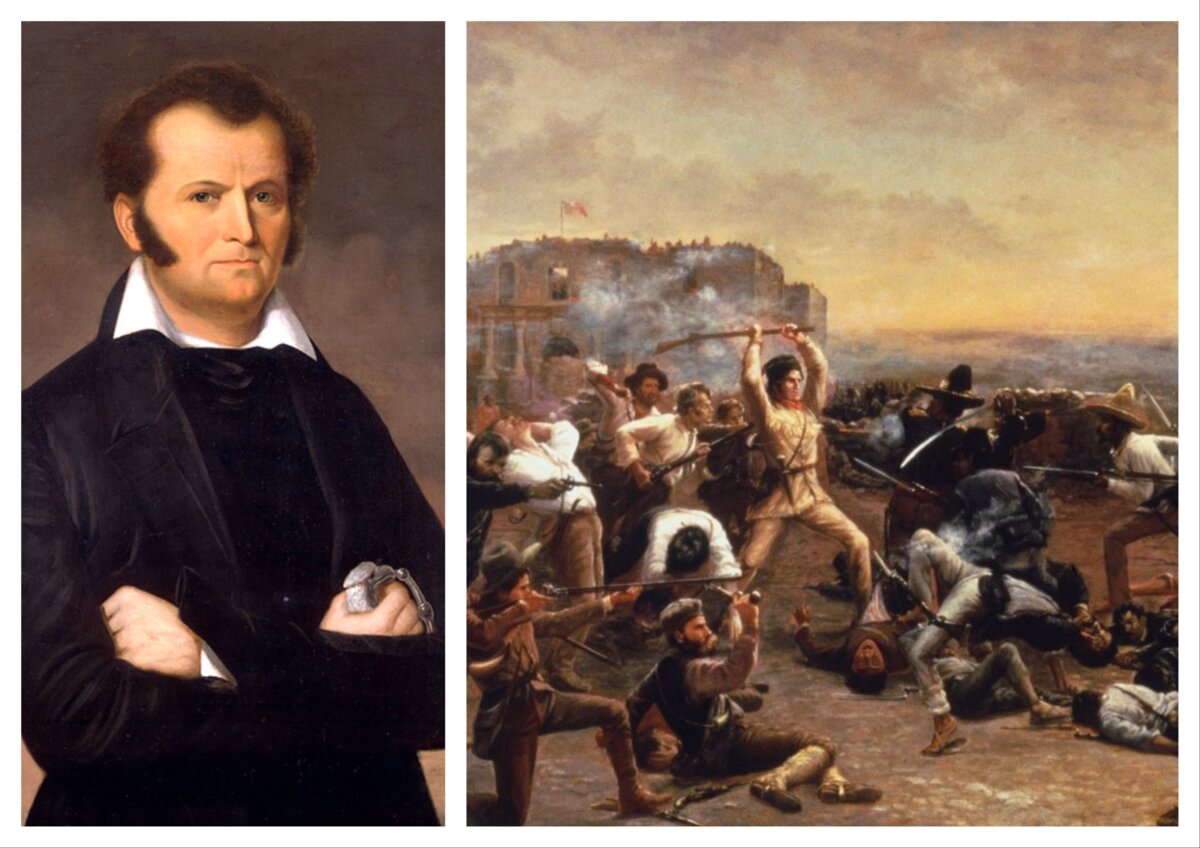
James Bowie remains one of the most recognizable figures of early Texas history, remembered as a frontiersman, land speculator, and defender of the Alamo. Though later generations helped turn him into a larger-than-life figure, the historical record offers a more limited but still compelling account of his life.
A Frontiersman’s Life
James Bowie was born in 1796 in Kentucky and raised largely in Louisiana. As a young man, he entered business ventures with his brothers and became involved in land speculation in Louisiana. By 1830, Bowie had moved to Texas, then part of Mexico. He began pursuing land opportunities, but some aspects of his business dealings remain difficult to reconstruct because records from the period are incomplete and land disputes were common.
Anglo-American settlement in the region was increasing, and tensions with Mexican authorities were growing over immigration policy and governance. Bowie joined the Texian cause as those tensions escalated into armed conflict.
He was not a major political leader of Texas independence, but he was an active military participant. Historical records place him at the Battle of Concepción in October 1835, where Texian forces defeated a larger Mexican force near San Antonio. He also participated in the siege that led to the capture of San Antonio later that year.
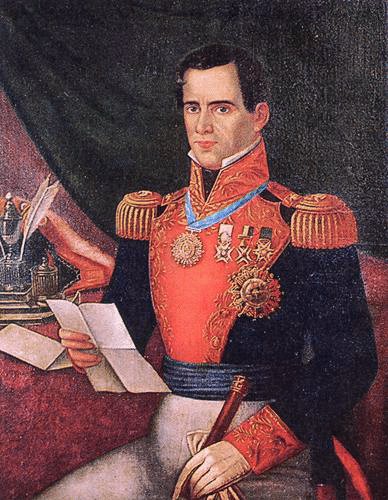
Bowie’s most famous chapter began in early 1836 at the Alamo. The former Spanish mission in San Antonio de Béxar had been occupied by Texian forces as General Antonio López de Santa Anna advanced with Mexican troops. Bowie joined the garrison alongside Lt. Col. William B. Travis (1809–1836) and other defenders.
One of the most firmly documented aspects of Bowie’s final days is that he became desperately ill during the siege. Contemporary accounts describe him as bedridden for much of the final period. Historians have suggested pneumonia, typhoid fever, tuberculosis, or other illnesses, but no diagnosis can be confirmed with certainty. Certainly, his condition prevented active command in the final defense. Leadership responsibilities therefore shifted primarily to Travis and others in the garrison.
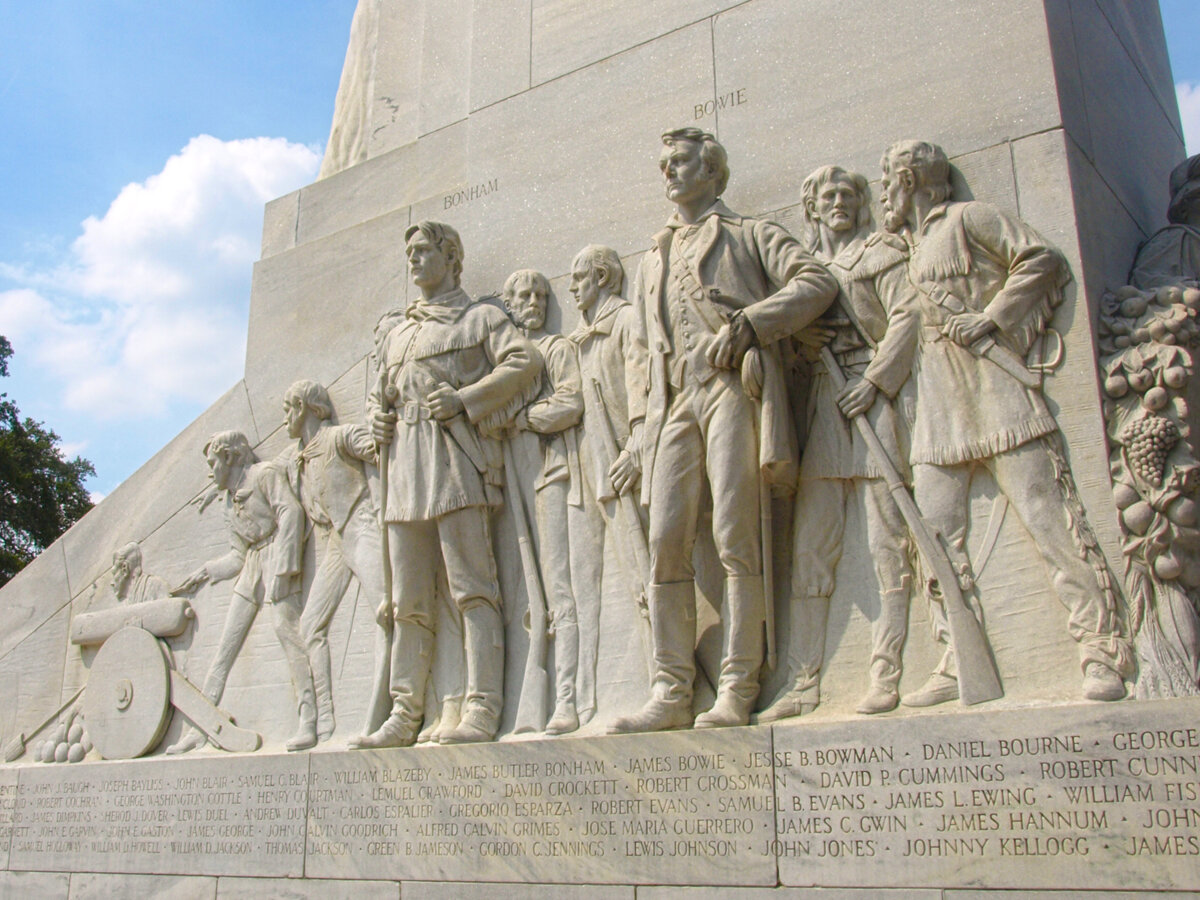
The exact circumstances of Bowie’s death remain disputed. Mexican accounts, later Texian recollections, and later retellings often conflict. Some stories claim he fought from his bed as Mexican soldiers entered his room, but historians cannot verify those accounts. What is well established is that he died during the final assault on March 6, 1836, when nearly all the Alamo defenders were killed.
The Melee and a Famous Knife
Years before the Alamo, Bowie became nationally known because of the 1827 Sandbar Fight near Natchez, Mississippi. The incident began as a formal duel between two men but escalated into a larger fight involving several participants. Bowie was shot, stabbed, and seriously wounded but survived. Newspaper coverage spread widely, though some accounts were sensationalized.
That fight helped make the Bowie knife famous. The knife’s exact origin remains disputed. Rezin Bowie (1793–1841) later claimed he designed an early version for his brother before the Sandbar Fight, but historians note that large hunting and fighting knives were already common at the time. There is no definitive record identifying a single original Bowie knife.
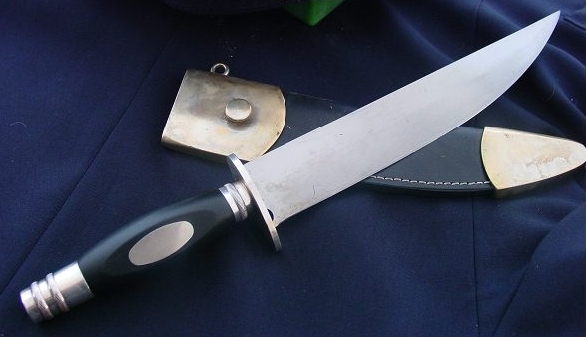
Early Bowie knives varied widely in appearance. Some had straight blades, others curved blades, and they differed significantly in size and point design depending on the maker. There was no standard model.
What can be stated with confidence is that Bowie’s name became attached to this type of knife after the Sandbar Fight. As newspaper accounts spread, blacksmiths produced their own versions, and the knife became associated with frontier toughness. Its growing popularity was fueled by repeated newspaper coverage and later retellings that expanded Bowie’s reputation.
Much of James Bowie’s life remains obscured by conflicting accounts and later mythology. What is firmly documented is significant enough: He fought in the Texas Revolution, died at the Alamo, and became permanently associated with one of the most recognizable weapons in American history. Those documented events—not later embellishment—secured his place in American history.
What arts and culture topics would you like us to cover? Please email ideas or feedback to features@epochtimes.nyc.