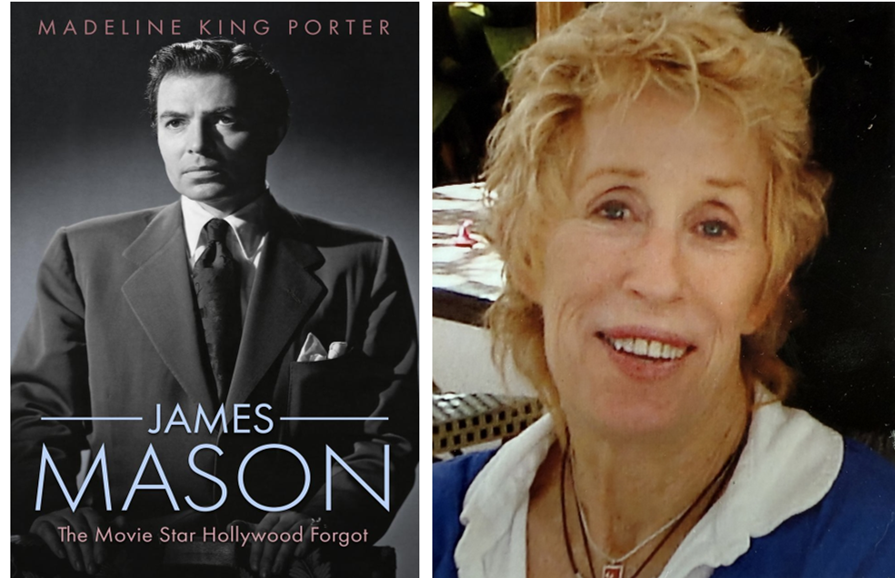
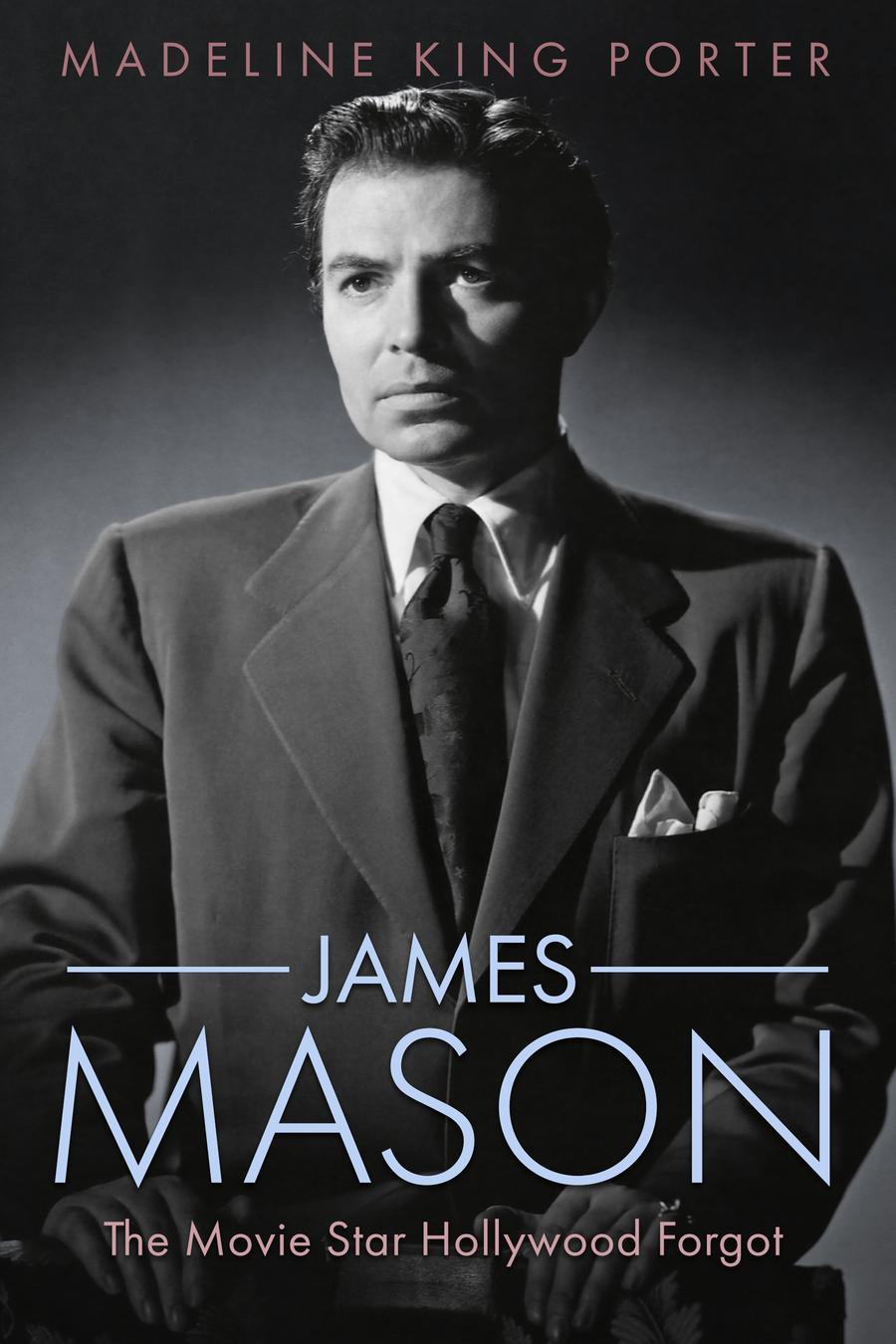
Madeline King Porter’s new biography on James Mason gets off to a strange start with its subtitle. It insists the British actor is “The Movie Star Hollywood Forgot.”
Really? A three-time Academy Award nominee who worked for Walt Disney, Alfred Hitchcock, and Stanley Kubrick, and who inspired earlier biographies is forgotten? That subtitle is further contradicted midway through the book, when the author recalls that Stephen Colbert and Bill Hader performed imitations of Mason in a 2019 segment on “The Late Show,” which aired 35 years after Mason’s death. Clearly, he is not forgotten.
Porter’s book opens along the strange path set by that subtitle, resulting in an eccentric work that laces a genuine insight into Mason’s career with a wobbly presentation.
A Slow Start
Born in 1909, Mason graduated from Cambridge University with a degree in architecture but opted to pursue acting. He snagged a few small roles in repertory theater before gaining what should have been his first big break in the 1934 film “The Private Life of Don Juan,” starring Douglas Fairbanks.
Porter insists Mason’s supporting role was reduced at the start of production, and he was then dropped because of an “instant dislike” between the young actor and Fairbanks, the film’s American star. In reality, producer Alexander Korda was unhappy with the neophyte actor’s performance and recast his role after three days.
Mason pressed on, alternating between the stage and low-budget films. He registered as a conscientious objector during World War II, which strained his relations with his family for many years. Porter claims that Mason, who was 30 when the war began, was at the age “that exempted him from military service.” In reality, UK men over the age of 41 were exempt from military duty; that age was raised to 51 in 1941.
After receiving strong notices for his roles in the British films as a tyrannical guardian in “The Seventh Veil” (1945) and a wounded Irish Republican Army fighter in “Odd Man Out” (1947), Mason relocated to Hollywood. But his saturnine good looks and authoritative voice ran counter to the Hollywood stereotype of the dashing British romantic lead; the actor initially had trouble finding roles that connected with audiences.
Rise to Stardom
Mason eventually found his niche playing charismatic yet conflicted men who struggle to face larger-than-life crises. These included his roles as the ghostly mariner in “Pandora and the Flying Dutchman” (1951), Germany’s Field Marshal Erwin Rommel in “The Desert Fox” (1951), and Brutus in “Julius Caesar” (1953).
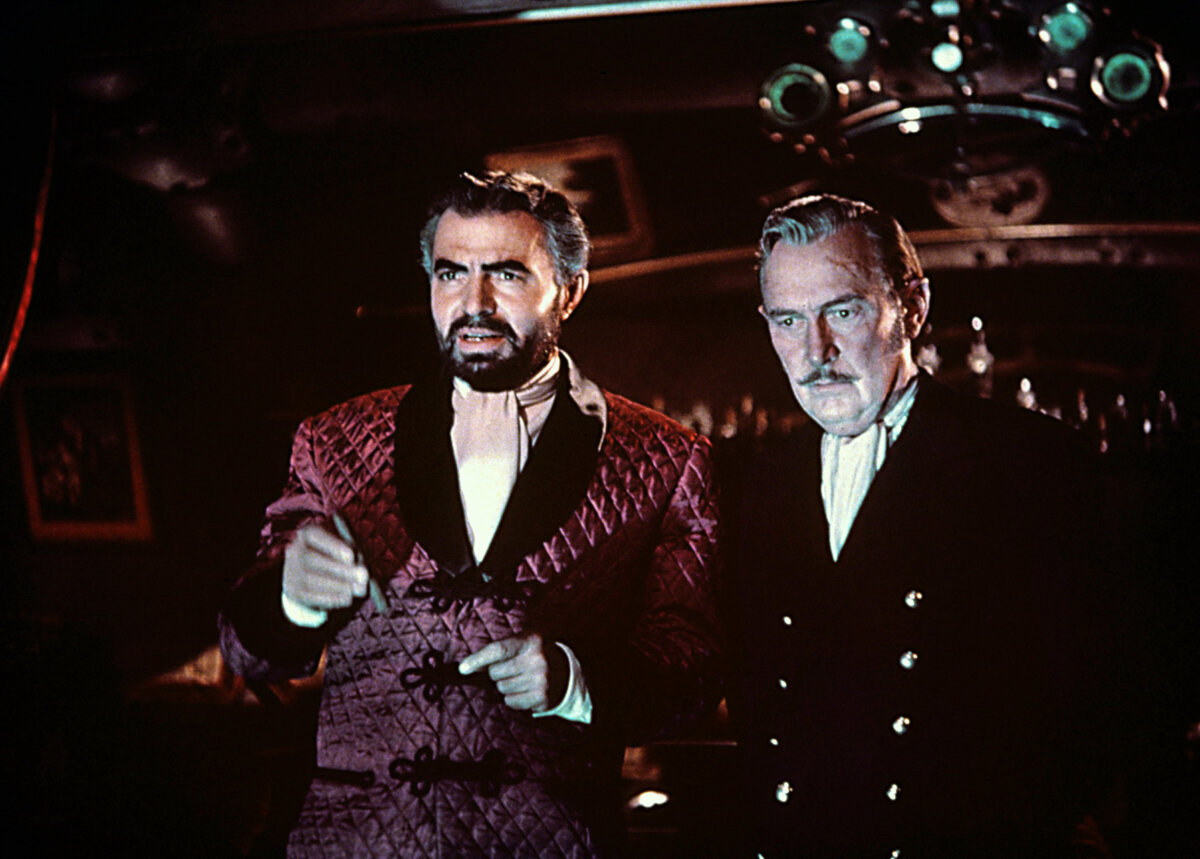
He played the self-destructive alcoholic actor in “A Star is Born” (1954, his first Oscar nomination). He played Capt. Nemo in “20,000 Leagues Under the Sea,” which Porter incorrectly identifies as Disney’s “first foray from animation into live-action.”
Porter highlights the most celebrated peaks in Mason’s output, including Hitchcock’s “North by Northwest” (1959) and Kubrick’s “Lolita” (1962). The author notes that Mason declined a campaign push to be considered for Best Supporting Actor at the Oscars for his small role in “The Pumpkin Eater” (1964). But he had no problems becoming a contender for that prize in “Georgy Girl” (1966) and “The Verdict” (1982).
Beginning in the mid-1960s, Mason often found himself within all-star ensemble pieces; these included “The Fall of the Roman Empire” (1964), “Lord Jim” (1965), “The Sea Gull” (1968), “Mayerling” (1968), “The Last of Sheila” (1973), and “Evil Under the Sun” (1982).
A Mixed Output
Mason made more than a few crummy films later in his career, which Porter attributed to his “so-so judgment of scripts.” Most notably, there was his over-the-top performance as the despicable antebellum plantation owner in “Mandingo” (1975), which he admitted doing because he needed the money.
To her credit, Porter highlights several commendable Mason films that do not receive the adulation they deserve, including “A Touch of Larceny” (1959), “The Deadly Affair” (1967), and his final film, “The Shooting Party” (1985).
However, it is a shame that Porter neglects his masterful work as a mysterious landlord who assists a young teacher suspected of murder in Luigi Zampa’s 1975 Italian thriller, “The Flower in His Mouth.”
Mason was well-liked by his peers, and he often repaid their admiration. Porter points out a rare burst of unpleasantries when the actor referred to Raquel Welch, one of his co-stars on “The Last of Sheila.” He called her “the most selfish, ill-mannered, inconsiderate actress that I’ve ever had the displeasure of working with.” Welch, who died in 2023, declined to be interviewed by the author but wished her success for creating a book on “that marvelous actor.”
Porter touches carefully across the actor’s personal life, including the 1962 divorce from his first wife, Pamela, which resulted in a then-record $1 million settlement. His second marriage to Australian actress Clarissa Kaye led him to demand that his film contracts include a guarantee that she would receive bit parts in his productions. Porter also includes some of Mason’s rarely-seen illustrations and an interview with Morgan Mason, the actor’s son.
“James Mason” is far from a perfect tribute to the actor, though perhaps it works as an introduction for those seeking a crash course in the Golden Age of Hollywood’s screen royalty.
‘James Mason: The Movie Star Hollywood Forgot’
By Madeline King Porter
University Press of Mississippi: Sept. 4, 2026
Hardcover, 272 pages
What arts and culture topics would you like us to cover? Please email ideas or feedback to features@epochtimes.nyc.