Flemish artist Jan van Eyck was a pioneer in the practice of oil painting and portraiture. His virtuosic exploration of the medium entailed building up paint in translucent layers, or glazes. This allowed him to render minute details and effects of light with astonishing realism. His portraits portray a sensitivity to sitters without shying away from naturalism.
For the first time, all of the artist’s surviving portraits will come together for an exhibition exclusive to the National Gallery, London. Among the works to be displayed in “Van Eyck: The Portraits,” on view from Nov. 21, 2026 to April 11, 2027, will be his “Portrait of a Man (Self Portrait?).” This oil on wood, owned by the National Gallery, has been recently conserved.
Only nine van Eyck portraits are known today. This accounts for about half of his existing oeuvre. Van Eyck’s famous “The Arnolfini Portrait” is one of the most recognizable works in art history and is part of the National Gallery.
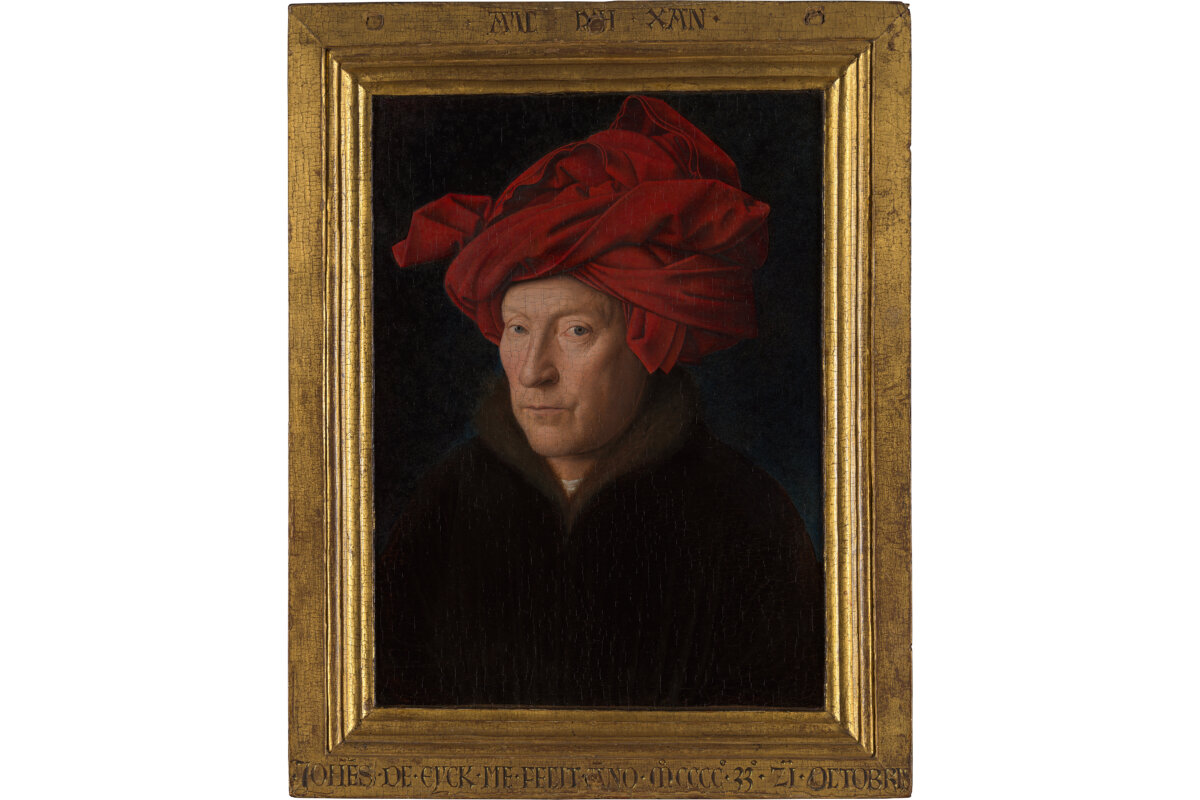
In portraiture, creating recognizable likenesses, as opposed to stylized images, began with van Eyck’s work in the 1430s. People in his pictures look alive, although they were painted almost 600 years ago. Van Eyck’s patrons included illustrious figures such as Philip the Good, Duke of Burgundy, but the artist painted merchants, craftsmen, and relatives as well. Van Eyck’s 1439 painting “Margaret, the Artist’s Wife” is the first known portrait of a non-aristocratic woman. Groeningemuseum, Bruges, Belgium, will lend this work to the exhibit, reuniting van Eyck and his wife. Previously, the National Gallery cleaned and restored this painting.
The Fashionable Gent
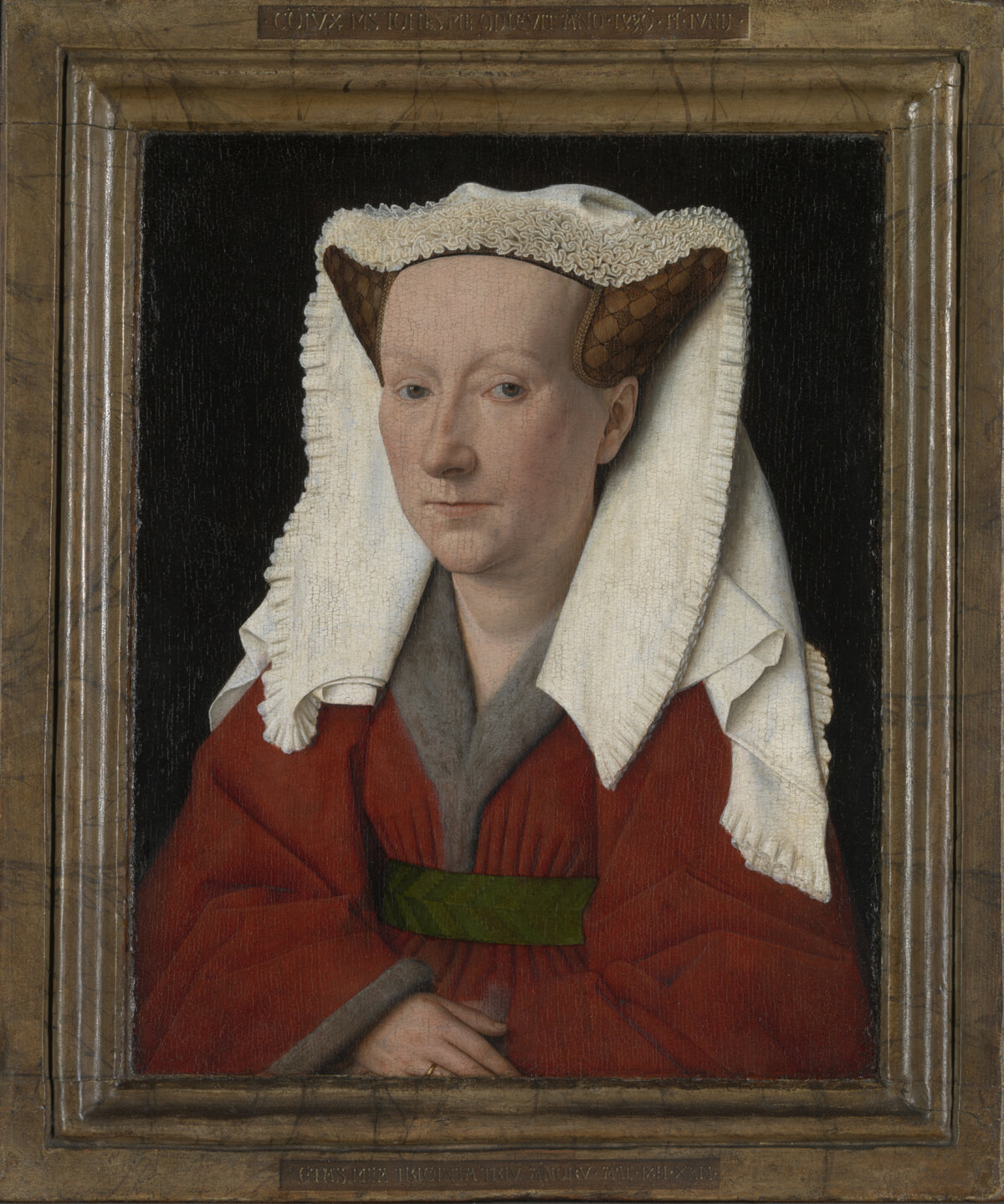
In the National Gallery’s description of van Eyck’s small oil panel “Portrait of a Man (Self Portrait?),” the museum states, “This impassive face is almost certainly that of Jan van Eyck himself, and the painting a powerful statement of his artistic skill.”
The artist belonged to the gentry, and the clothing in this painting reflects the subject’s prosperity. The panel’s most conspicuous element is an accessory, a “chaperon,” a male headdress fashionable in the 15th century. It appears flamboyant due to color, form, and lighting.
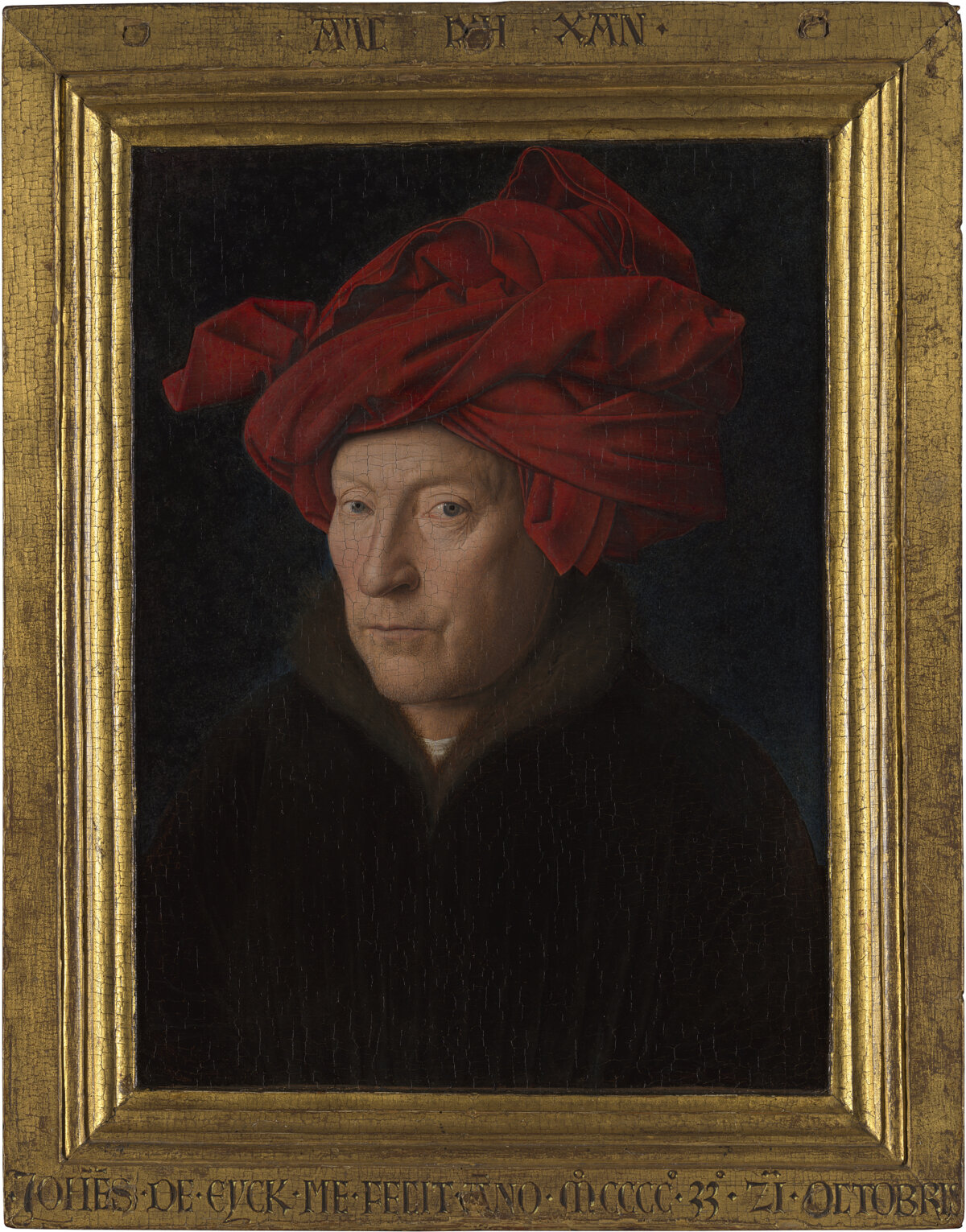
In fact, van Eyck wears his chaperon in an unorthodox way in this painting. Instead of being hung down over the man’s neck and shoulders as is typical, the red hood was piled upon the head so it resembled a turban. Perhaps it was wrapped and tucked to keep it out of the artist’s way while he worked.
“The strong contrast between the dark shadows in the creases and the bright highlights where the folded fabric catches the light is typical of van Eyck,” notes the museum.
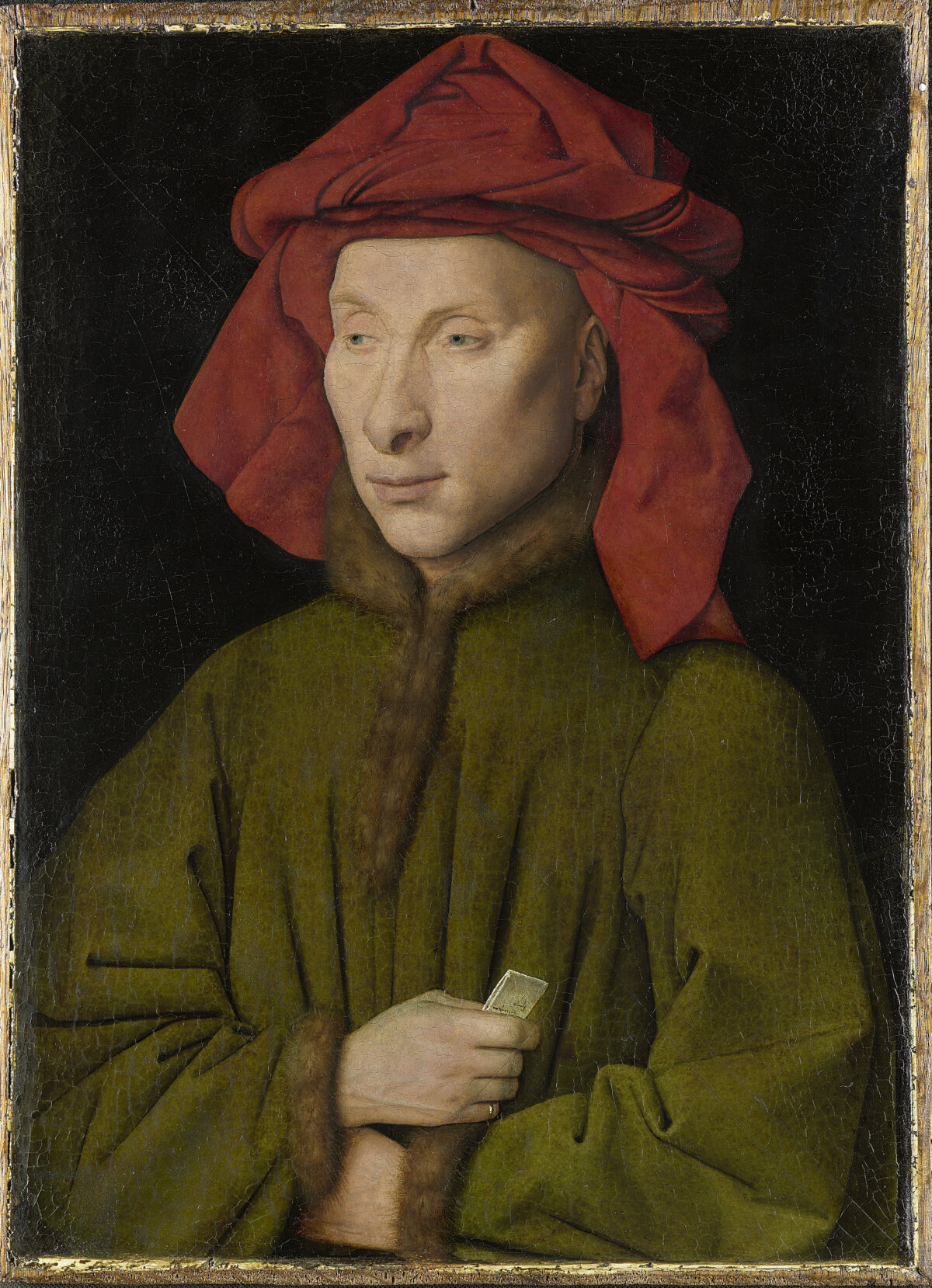
In a circa 1440 van Eyck portrait of a man, which is believed to depict the same Giovanni Arnolfini as in “The Arnolfini Portrait,” the sitter also wears a red chaperon. However, here, the headgear is traditionally arranged. Housed in the Gemäldegalerie, Berlin, this painting will be included in the exhibit, where it will be displayed alongside the famous Arnolfini panel for the first time ever.
In the probable van Eyck self-portrait, further elements of the attire are identifiable. The figure wears a “houppelande,” a loose, long-sleeved overgown that was belted at the waist. Both men and women wore them in the later Middle Ages. The sitter’s collar is trimmed with brown fur.
The lighting in the picture casts shadows on the man’s face, emphasizing wrinkles around his piercing blue left eye as well as the veins of his temple and lines around his mouth on the same side. While this conveys honest naturalism, the artist did take liberties with the proportions of the figure’s face and body for pictorial purposes. For example, the head is enlarged and, thus, a focal point.
Given how realistic his art is, one might conclude that van Eyck labored slowly. In fact, he painted with great speed. This is visible in the figure’s stubble, which is composed of minute individual marks of paint. Though done quickly, this facial feature looks more credible than stubble painted painstakingly by other artists.
Van Eyck’s motto “Als Ich Can” (As I Can), which is an abbreviation of a Flemish saying and a pun on his name, is painted in large Greek letters on the painting’s upper frame. This phrase was included in several of the artist’s paintings, including “Margaret, the Artist’s Wife.” The bottom inscription says, “Jan van Eyck made me on 21 October 1433,” in abbreviated Latin. The artist is believed to have been literate. He may have gone on diplomatic missions for Philip the Good.
Van Eyck is a foundational figure of the Early Renaissance. His religious and secular artworks inspired generations of Europeans artists due to their technical mastery and astonishing aesthetics. His resoundingly human portraits inspire dialogues with viewers. “Portrait of a Man (Self Portrait?)” allows one to gaze intensely back at the artist himself.
What arts and culture topics would you like us to cover? Please email ideas or feedback to features@epochtimes.nyc.