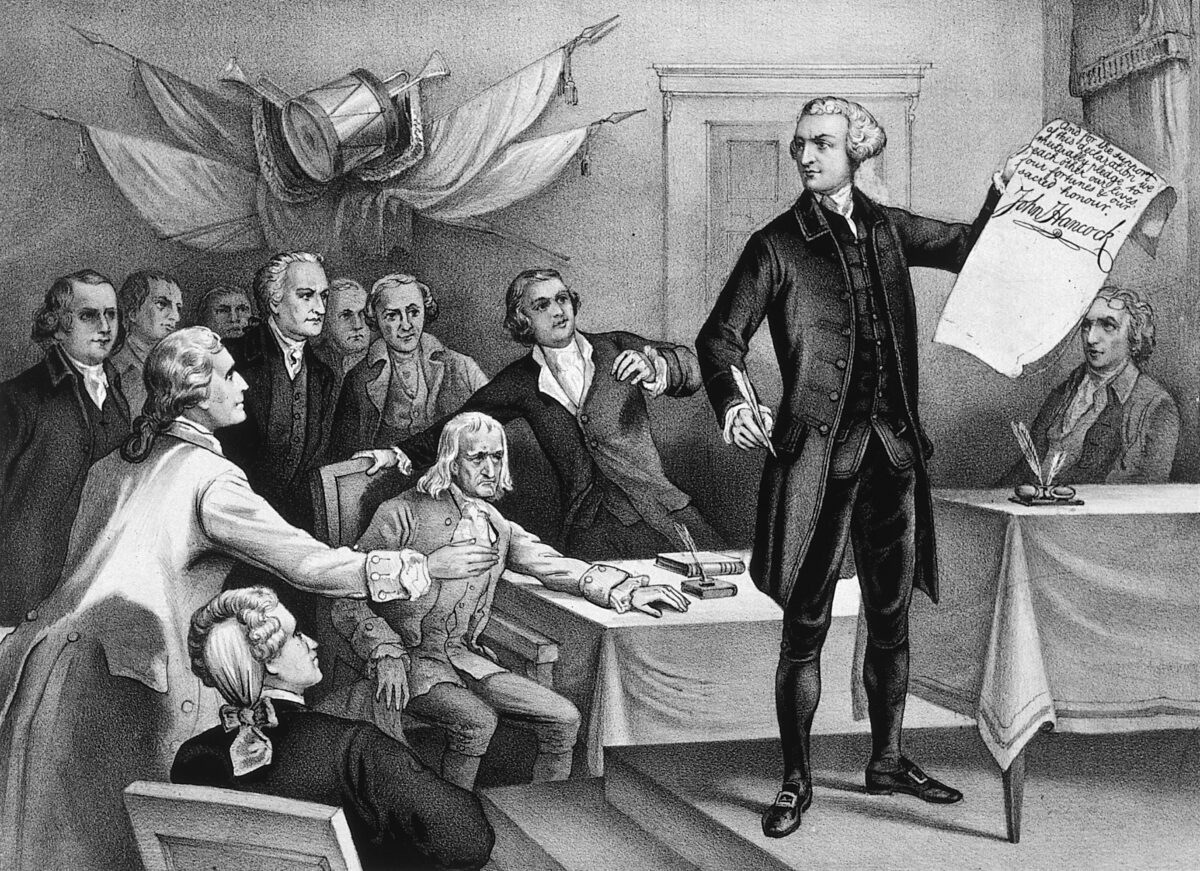
John Hancock was the first President of Congress after the country won its independence; he was arguably also its the most popular. A successful merchant and renowned American patriot, Hancock was a signer of the Declaration of Independence, the Articles of Confederation, and he was also twice elected United States President of Congress Assembled.
Hancock operated a thriving mercantile business before he got involved in politics. He utilized his vast personal fortune for local philanthropic causes and to support groups opposing unfair British taxation policies. His willingness to defy the British made him an icon of colonists. His personal popularity is evident considering he served as a nine-term governor of his native Massachusetts
During his first term as president of Continental Congress, one of that body’s order of business included the reviewing and revising of the draft of the Declaration of Independence prepared by the Committee of Five. After the bill was drafted, Hancock ensured the resolution for independence passed, hence why his name appears first on that founding document.
As President of Congress at that time, it could be said that John Hancock was the country’s first president after America declared its independence.
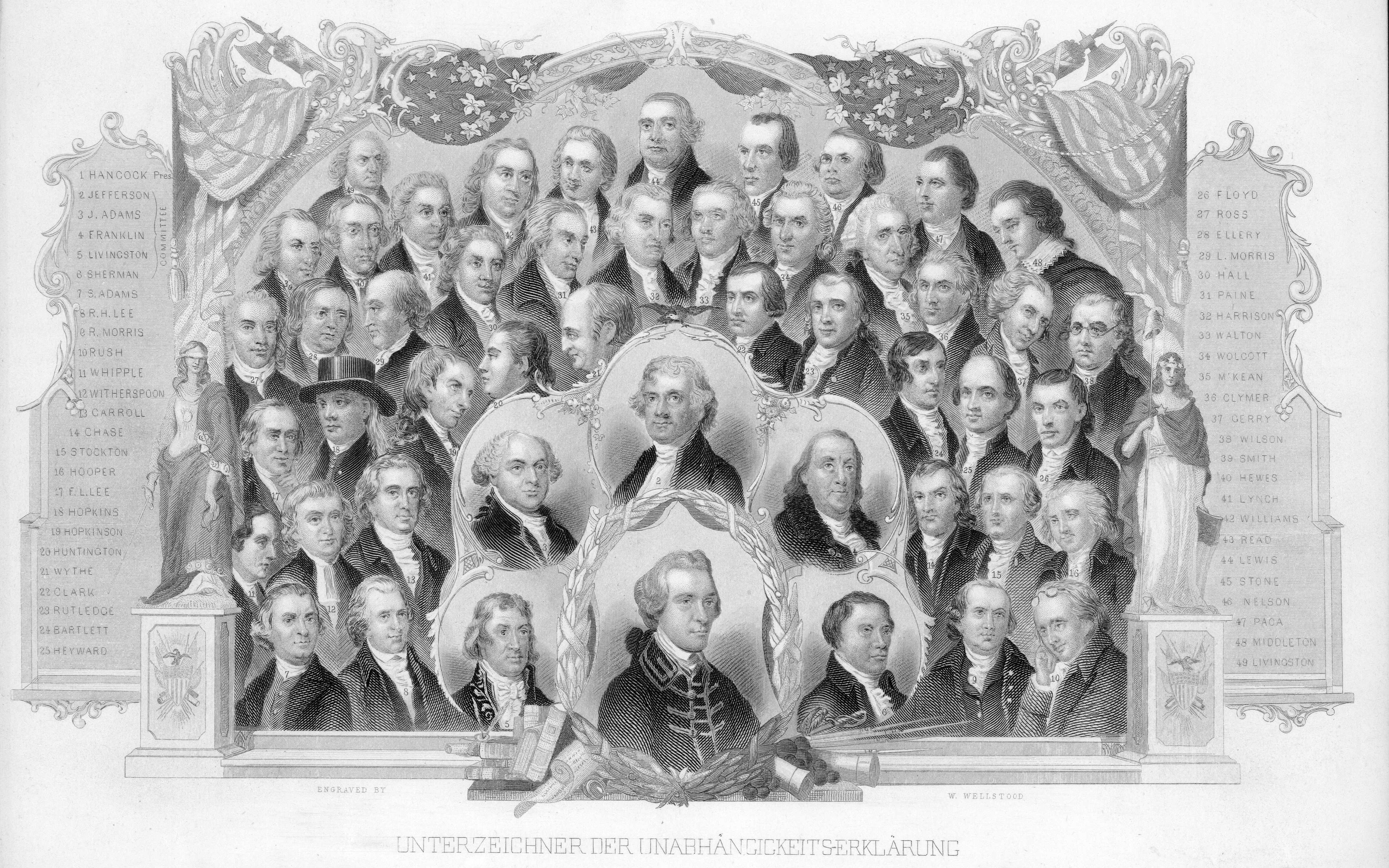 Engraved portraits of the signers of the U.S. Declaration of Independence, including John Hancock, president of the Continental Congress, and two future presidents; Thomas Jefferson and John Adams, on July 4th 1776. (Kean Collection/Archive Photos/Getty Images)
The Wealthy Merchant-Turned-Statesman
John Hancock made his fortune the old-fashioned way; he inherited it. However, he also had a talent for making money on his own. At the time of the American Revolution, Hancock was one of the richest men in the 13 colonies due to a thriving mercantile business inherited from his uncle.
When Hancock was 7, his father died and his mother sent him to live with his paternal uncle, Thomas Hancock and his wife, Lydia. Thomas Hancock made his fortune importing manufactured goods from England and exporting timber, rum, whale oil, and fish. Thomas and Lydia were childless and raised John as their own. He graduated from the Boston Latin School at age 13, then enrolled at Harvard. In 1754, he graduated with a Bachelor of Arts degree at age 17.
After graduation, Hancock returned to his uncle’s mercantile firm, the House of Hancock, where he did clerk duties, managed shipments and corresponded with London suppliers. In 1760, he was sent to London to represent the House of Hancock in business negotiations and spent a full year there learning about transatlantic trading.
By 1763, his uncle had promoted Hancock to equal partner in the firm, granting him more responsibility in company decisions and profit-sharing. Upon his death in 1764, Thomas Hancock left the entire proprietorship to his 27-year-old nephew. The inheritance included the House of Hancock trading house, real estate, ships, and inventory valued in the tens of thousands of pounds. Young Hancock rebranded the firm John Hancock & Co and continued to expand the firm’s growth and influence.
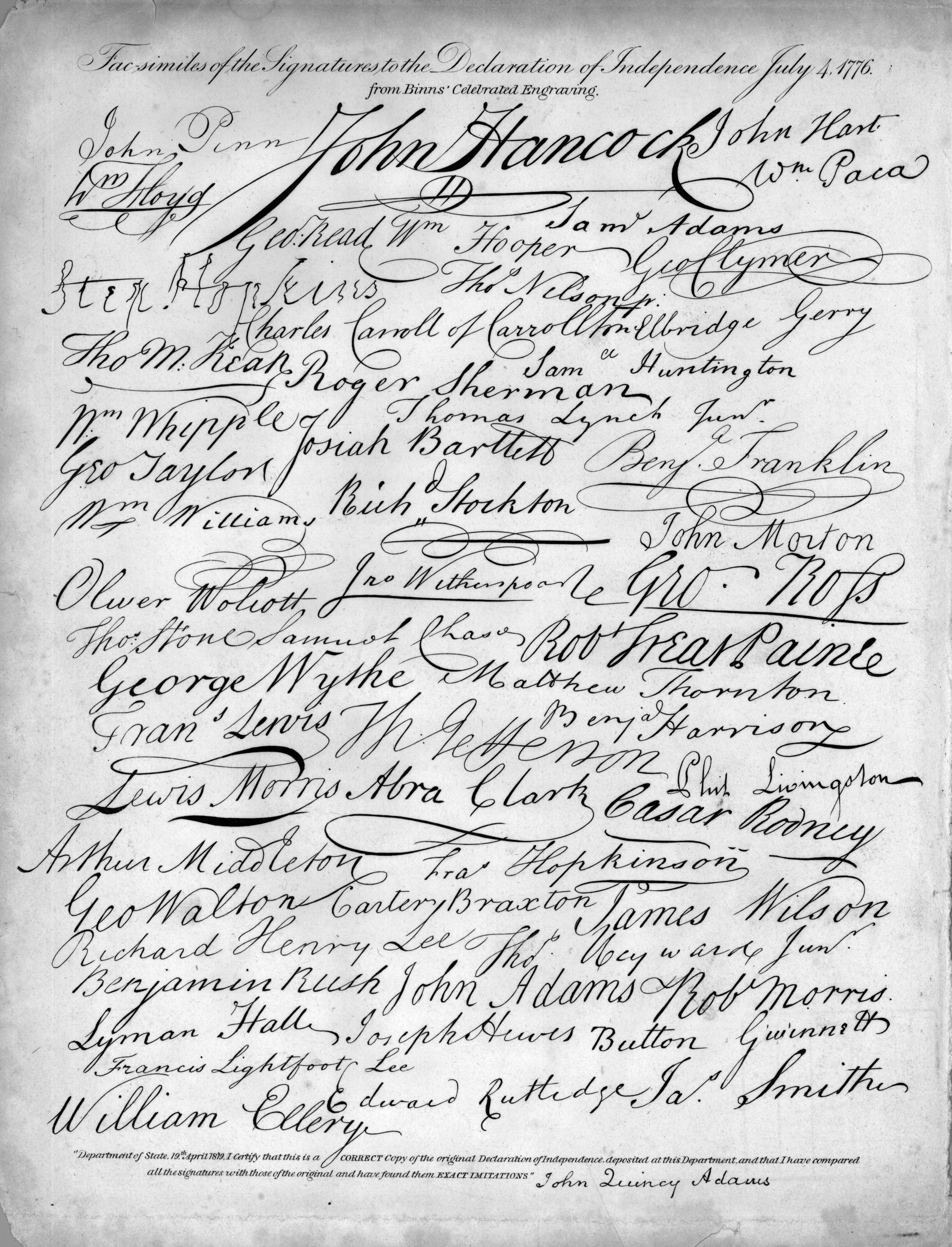 The signatures on the Declaration of Independence. (Hulton Archive/Getty Images)
The 1765 Stamp Act was the catalyst that prompted Hancock’s involvement in politics, though it wasn’t his first run-in with the British affecting his shipping business. The Stamp Act was the first internal tax levied without colonial assent. It led to widespread protests across the colonies, organized by groups like the Sons of Liberty, an organization that included Hancock, Samuel Adams, Paul Revere, James Otis, and others.
Hancock’s popularity with colonists only grew with his financing and public participation in colonial resistance activities, smuggling goods aboard his ships to evade British taxes, and a popular speech he gave on the fourth anniversary of the Boston Massacre. He was elected to the Massachusetts House of Representatives in 1766 and as a delegate to the Continental Congress in 1774. One year later he was elected the third President of Congress at age 38.
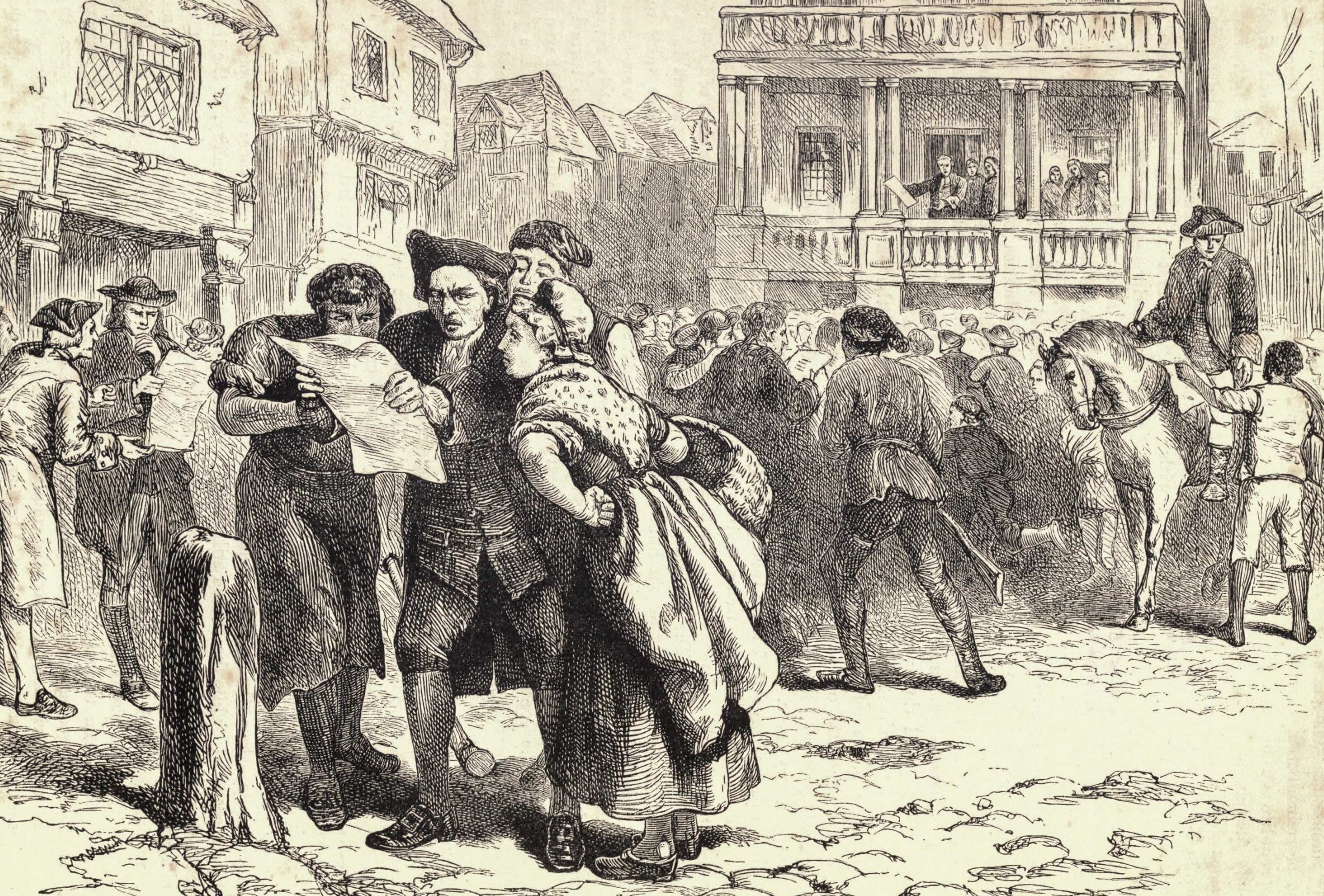 “Bostonians Reading the Stamp Act,” an illustrated leaf from “Cassell’s History of the United States” by Edmund Ollier, 1874–1877. (Public Domain)
First and Second Presidential Terms
Hancock’s first term as President of Congress spanned nearly two and a half years, the longest continuous presidency of the Continental Congress. Within the first month of leading Congress, he helped create the Continental Army. He also named George Washington as its Commander-in-Chief. In his second month, he presided over the passage of the Declaration of Independence.
Hancock also spearheaded the issuance of continental currency to fund the war effort and chaired a Marine Committee that created a small fleet of frigates to battle the British Navy.
Hancock’s second term, which ran from Nov. 23, 1785 to June 5, 1786, produced no tangible accomplishments due to the weakness of the Articles of Confederation, chronic absenteeism by delegates, and public frustration with Congress. Hancock was also frequently absent since he suffered from gout.
Although he wasn’t directly involved with drafting or voting on the act, Hancock was the nominal head of Congress when the Land Ordinance of 1785 was first implemented. That act set rules for the orderly settlement of the western territories acquired by the United States after the Revolutionary War.
Hancock’s primary contribution in his second term as president of Congress was lending his name and reputation to that body. It helped provide continuity and respectability to a young government struggling to find its way before the passage of the Constitution a few years later.
What arts and culture topics would you like us to cover? Please email ideas or feedback to features@epochtimes.nyc