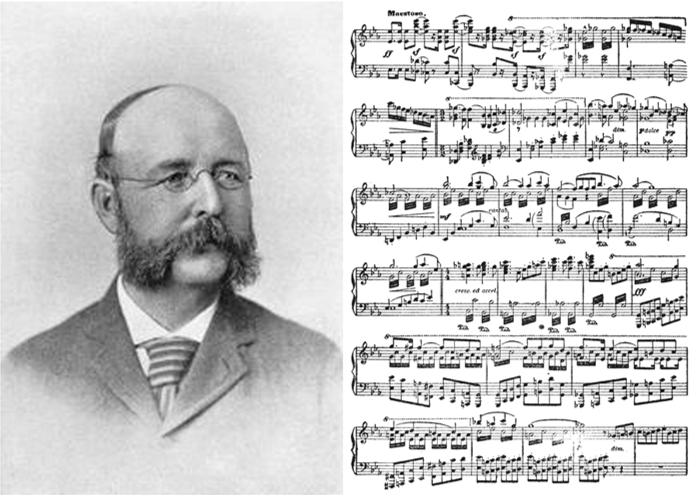
Many Americans have distinguished themselves in fields of industry, science, and invention, creating technology around the world. On the more intellectual side, since long before the American Revolution, thinkers of the New World have produced literary works, both fiction and nonfiction, which are celebrated around the globe.
However, when it comes to classical composers, the list of celebrated Americans is shorter. Only a handful of American composers are usually recognized, most of whom are mid-20th century composers who embraced modernist trends.
The musicians in the 19th century built the world of classical composition, education, and performance; this is where American musicians flourished. They dedicated their lives to demonstrating that America and its people have a place alongside Europe in classical music. The first pioneer in this field was John Knowles Paine (1839–1906).

New England Roots
John Knowles Paine was the oldest member of a group of composers eventually called the Second New England School or the Boston Six. As the first American composer to write major compositions, his roots were deep in New England’s musical traditions.
Born on Jan. 9, 1839, in Portland, Maine, Paine came from a highly musical family. His grandfather was an instrument maker who built the first pipe organ in Maine. His father owned a music store and, along with his brothers, was a music teacher. One of his uncles was a composer and another an organist. Both his grandfather and father led the local band.
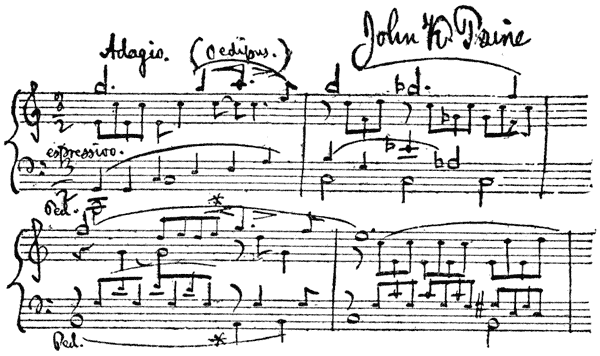
Paine began his musical studies at a young age from a German immigrant musician and composer, Herman Kotzschmar. Studying piano and organ technique as well as the compositional tools of harmony and counterpoint, Paine showed great musical talent as a boy. He composed a string quartet at age 16.
From Germany to Harvard
But tragedy struck the Paines when the Great Fire of Portland destroyed the family business in 1856. Paine’s father died shortly thereafter. However, the resourceful teenager found a way to continue his musicianship by giving organ recitals in 1857, which were received with acclaim as far away as Boston.
He became organist of a Portland choral group, the Haydn Society, and he accompanied a performance of George Frideric Handel’s “The Messiah” on organ. With these organ concerts, he raised enough money to continue his musical studies in Europe.
For the next few years, Paine studied tirelessly in Berlin and expanded his skills. He studied organ, voice, composition, and orchestration, meanwhile giving organ recitals in Berlin. Then, he went on a concert tour of Europe before returning to the United States in 1861.
He settled in Boston. There, at the age of just 22, he put his refined organ skills on display with a series of organ recitals and lectures. He quickly received the position of organist at Boston’s socially prominent West Church.
Six months later, he was given the newly created position of university organist and choirmaster at Harvard College, in charge of music at the school’s new Appleton Chapel, following the previous choirmaster’s sudden death.
America’s First Music Professor
Paine’s appointment at Harvard was noteworthy for a number of reasons. Firstly, Paine was teaching at a university although he had no college degree. Secondly, Harvard’s fledgling music department was the first academic music program in America.
A clever strategist, Paine used opportunities like the installation of a new Harvard president to demonstrate his compositional skills in performances by the university’s choir and orchestra. His talent quickly made up for his lack of a formal degree.
In 1869, Paine was granted an honorary A.M. degree by Harvard’s next president, Charles William Eliot, so he could officially be appointed to the faculty. In 1875, he was the first, and for a while, only, professor of music in the United States.
In Paine’s early days as a music instructor at Harvard, his students received no academic credit for his classes. Nevertheless, during his long tenure there, Paine was able to shape his instruction into an ordered music program.
His own conservatory studies in Germany and his observation of what would work at an American school inspired him. His curriculum focused on the great European masters. The results proved the basis for all other American academic music programs.
Composer
During Paine’s more than 40 years teaching at Harvard, he had ample time between classes to pursue his own compositions. He became the first American to gain recognition as a classical composer.
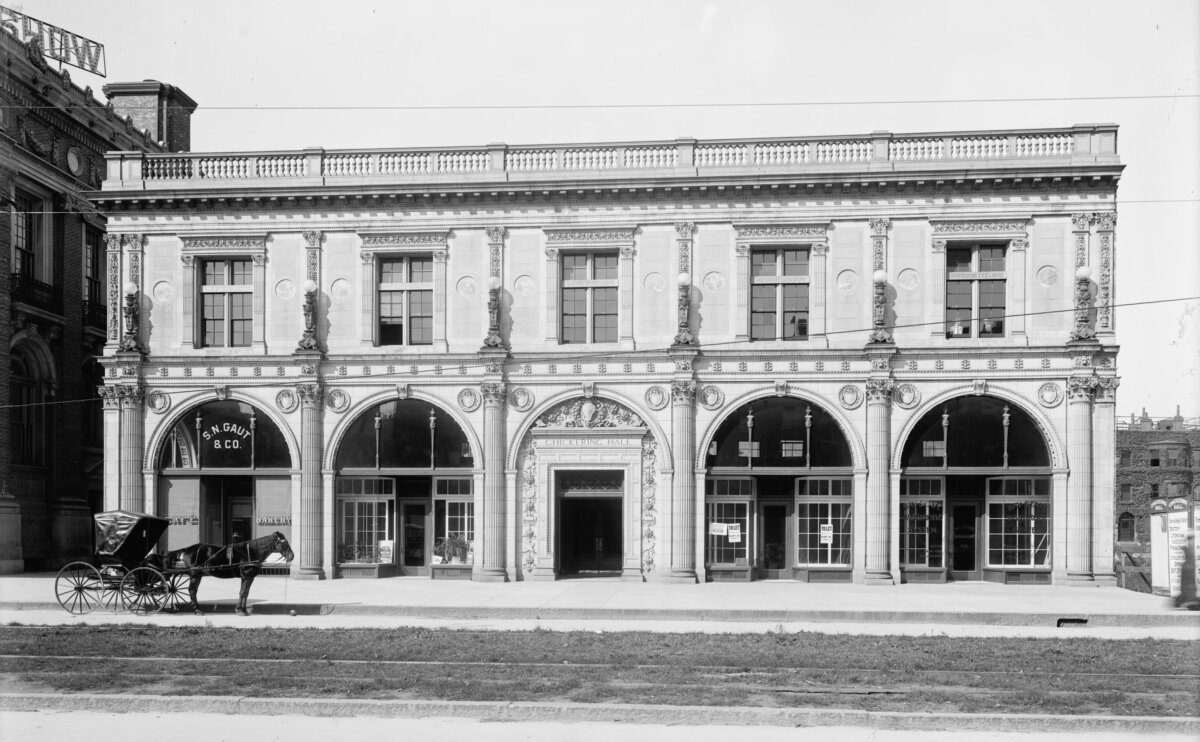
It wasn’t easy. While some Europeans were prejudiced because he was a Yankee, many of his grander compositions were better received in Germany than in America. He returned to Germany in 1866 in hopes of having his new composition, the Mass in D Minor, performed and published there. When he was unable to find any group interested in performing his composition, he assembled his own choral group. The performance was received with rave reviews by Berlin’s critics, but no one would publish the composition. This European success gained him acclaim in America, but he never secured the funding for a U.S. performance of the Mass in D Minor.
Despite the challenges, Paine was a trailblazer for serious composition who elevated American musical standards. He established the American symphonic tradition by writing America’s first symphony. He would write two symphonies in all.
He also wrote the first American oratorio, “St. Peter,” in 1872. His orchestral work “Centennial Hymn” was performed as the opening of the 1876 Centennial Exposition in Philadelphia. His “Columbus March and Hymn” opened the Columbian Exposition of 1893.
Paine spent the last 15 years of his life writing his magnum opus, a single opera called “Azara.” This three-act work was based on a story of the Crusades. It was slated for performance at the Metropolitan Opera in the 1905–1906 season, the year he retired from Harvard.
The performance was eventually cancelled because the Italian opera singers refused to learn English to sing it. Although the music has been published and performed in concert, the opera has never been performed.
Paine’s Legacy
The name of John Knowles Paine is virtually unknown today, even among classical musicians. However, in his day, Paine’s music was in demand with American audiences. His compositional output was vast to meet this demand.
Meanwhile, through his teaching at Harvard and the New England Conservatory of Music, he inspired a chain of excellent composers who would stretch for generations into the future.
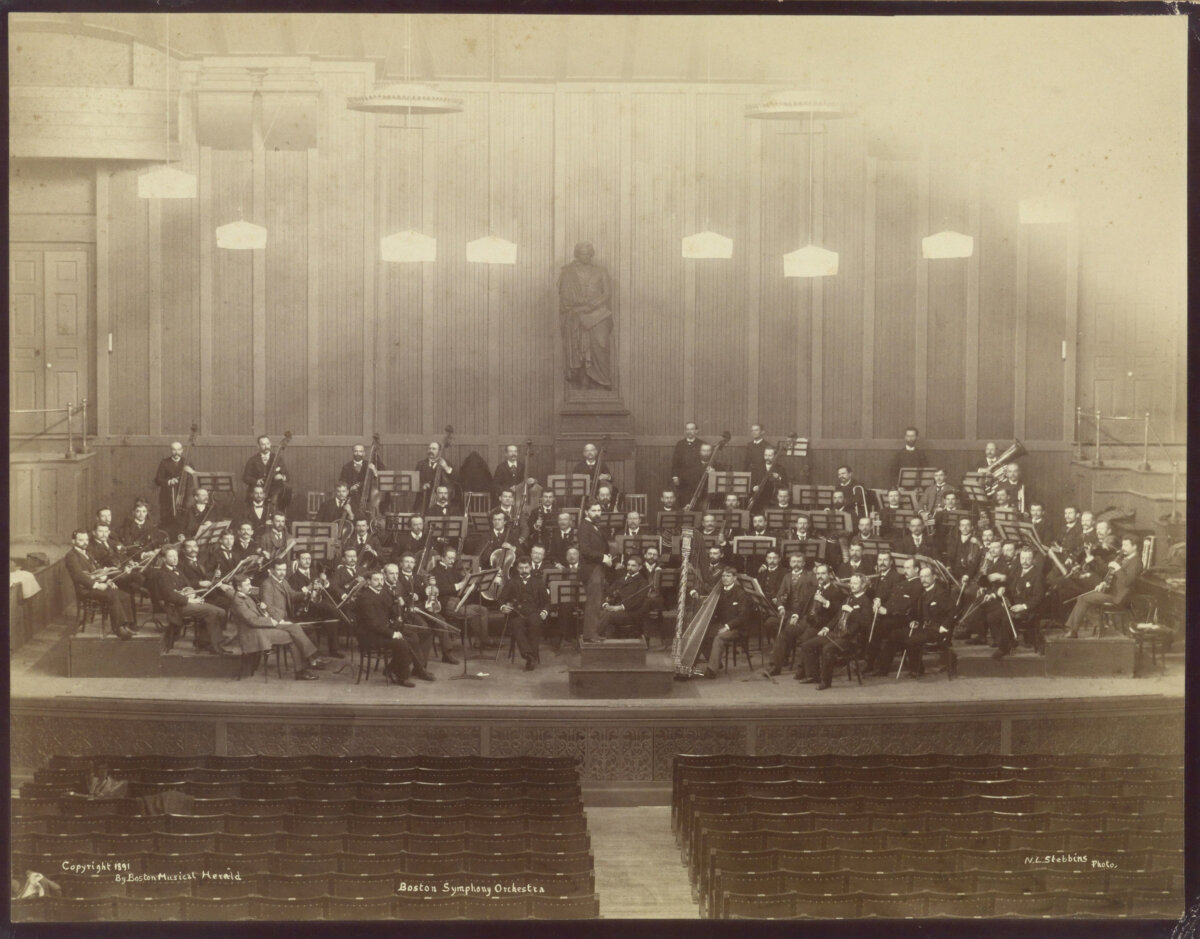
As guest conductor of the Boston Symphony Orchestra in its first season’s final concerts, Paine delighted listeners by conducting his own compositions. Ever the innovator, he made one of the first musical recordings on wax cylinder with inventor Theo Wangemann in 1889. He remained a devotee of organ music and was one of the founders of the American Guild of Organists.
In 1998, Paine was in the first group of inductees to the American Classical Music Hall of Fame, and deservedly so. It’s high time for this American musical genius to be rediscovered by all lovers of beautiful classical music.
Let’s join his 19th-century admirers in requesting his music to be played by great American orchestras, as expressed in this poem by a Boston Symphony Orchestra patron:
Let no more Wagner themes thy bill enhance
And give the native workers just one chance.
Don’t give the Dvorak symphony again;
If you would give us joy, oh give us Paine!
What arts and culture topics would you like us to cover? Please email ideas or feedback to features@epochtimes.nyc.