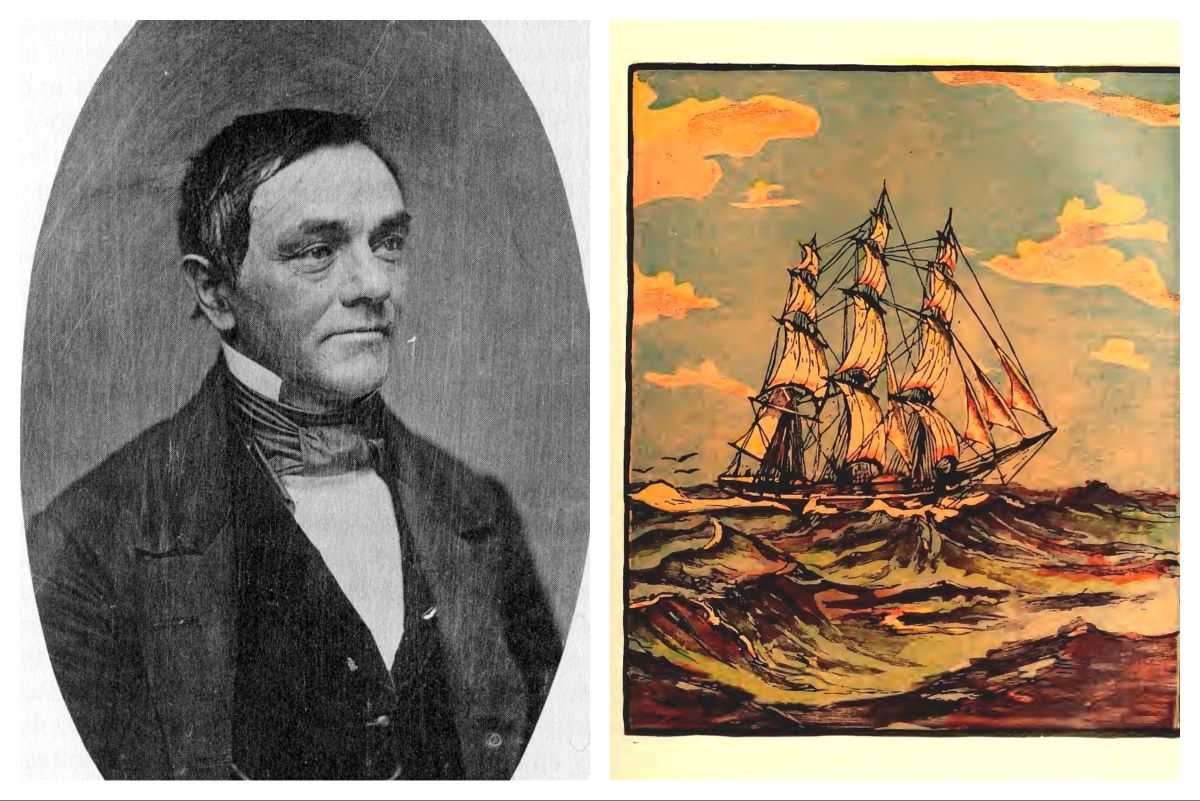
Large merchant vessels had long been a commonality along the world’s sealanes. Though companies and nations aimed to increase tonnage and increase speed, one had to be sacrificed for the other. As the 19th century began, global maritime traders looked for ways to increase the speed of their ships, even if it meant less tonnage. Longer trips, like England’s treks to Australia or America’s to China, required quicker turnarounds, especially for commodities that were relatively light. In New York City, a young shipwright believed he had devised a ship that would dramatically decrease the time it took for lengthy journeys.
John Willis Griffiths (1809–1882) was born to a shipwright in New York City. He received a regular public education, but his education in carpentry and shipbuilding was of an elite level. He worked in the shipyards of New York, as well as Portsmouth, Virginia. Griffiths’s contribution to shipbuilding was not relegated to physical labor only. By the middle of the 1830s, he was making a name for himself through writing maritime articles.
A New Design
Griffiths believed that combining elements of packet ships, such as its length-width ratio, the typical horizontal keel, and the lately used sharp bow and curved lines of the Baltimore vessels (like the Ann McKim clipper ship) would produce a new line of vessels perfect for lengthy trade routes that didn’t require massive cargoes. By the 1840s, he began working to create such a ship.
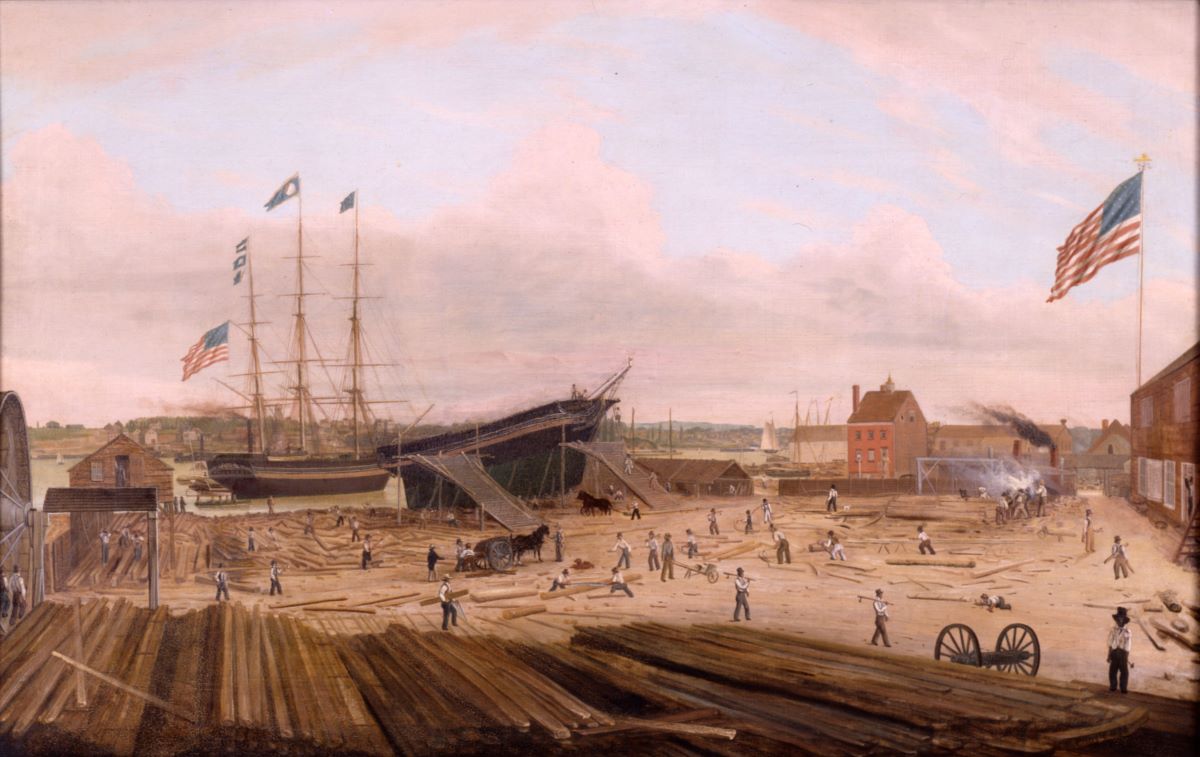
Griffiths’s new vessels were called “extreme clipper ships.” Soon, he had a design fully laid out and sent the building plans to the New York shipwright company, Smith & Dimon. The maritime visionary had a good relationship with the company, as it had employed him in earlier years. By 1845, the company had completed the Rainbow, a 159-foot-long, 750-ton extreme clipper ship with a breadth of 31 feet and depth of 18 feet. By the start of the year, it was ready to launch.
While other leading nations had been trading with China for centuries, America had only begun to trade in 1782. That first independent trade encounter with China took place while America was conducting peace negotiations with Britain and France. The New York-to-Canton route seemed to Griffiths a most appropriate and demanding trial run.
The run proved a major success both ways. Rainbow reached Canton in 105 days—about 20 days faster than any previous vessel—and its return was even faster. A journey that typically took about a year was completed in seven months and 17 days.
Major Contributions
Griffiths’s unmitigated success was about to be one-upped. He designed what became his masterpiece: the Sea Witch. This 908-ton extreme clipper ship launched in 1846, eventually setting a Macau-to-New York record of 74 days and 14 hours—a record never broken among single-hulled ships.
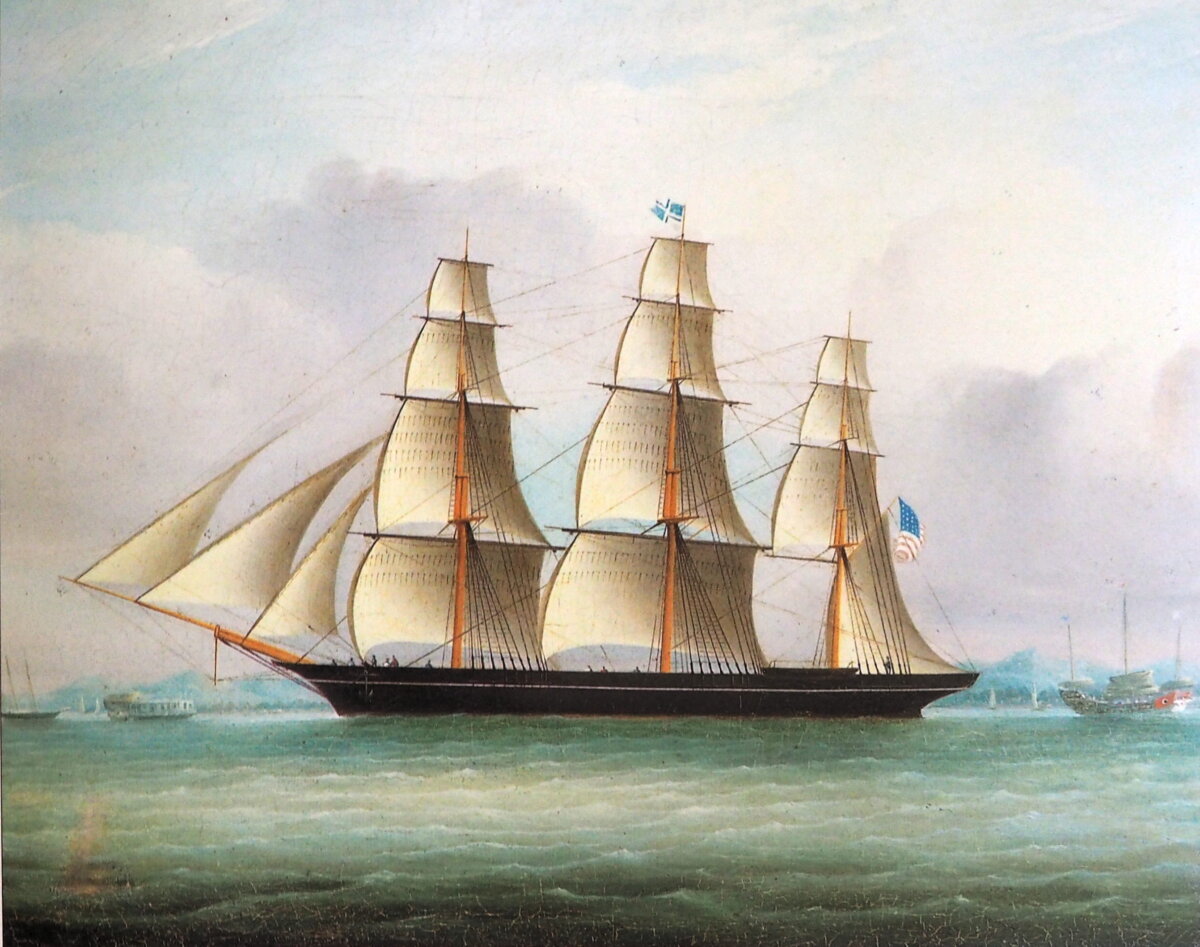
Indeed, the creation of such fast ships was ideal and timely for American trade. The extreme clipper ships became the vessel of choice for runs between the East Coast and San Francisco during the California Gold Rush. The ships also proved pivotal for England when gold was discovered in Australia in 1851.
In 1849, Griffiths did more than just design ships. He explained his method in his groundbreaking “Treatise on Marine and Naval Architecture, or, Theory and Practice Blended in Ship Building.” Scholars consider the book to be a work of cultural importance. Griffiths wrote two other books: “The Shipbuilder’s Manual and Nautical Referee” and “The Progressive Ship Builder.” Between the decade of 1843 and 1853, the United States built 270 clipper ships. This was the Golden Age of the Clipper Ship, and Griffiths was the era’s King Midas.
Steamship Developments
The clipper ship era, however, was rather brief due to the building of the Suez Canal, the Panama Railroad, and later the Transcontinental Railroad and the development of the steamship. Griffiths, however, contributed substantially to the development of the steamship, too. In 1851, at the London Exhibition, he displayed a model steamship that he designed. Edward Collins, the American shipping magnate, adopted the design for his mail steamers.
In 1858, Griffiths wrote to the Secretary of the Navy Isaac Touncey about how to improve the U.S. Navy’s gunboats. Touncey approved of his design ideas and requested that Congress finance the project. Congress agreed and Griffiths was contracted to oversee the development of the 1,533-ton double-screw SS Pawnee.
Forgotten and Remembered
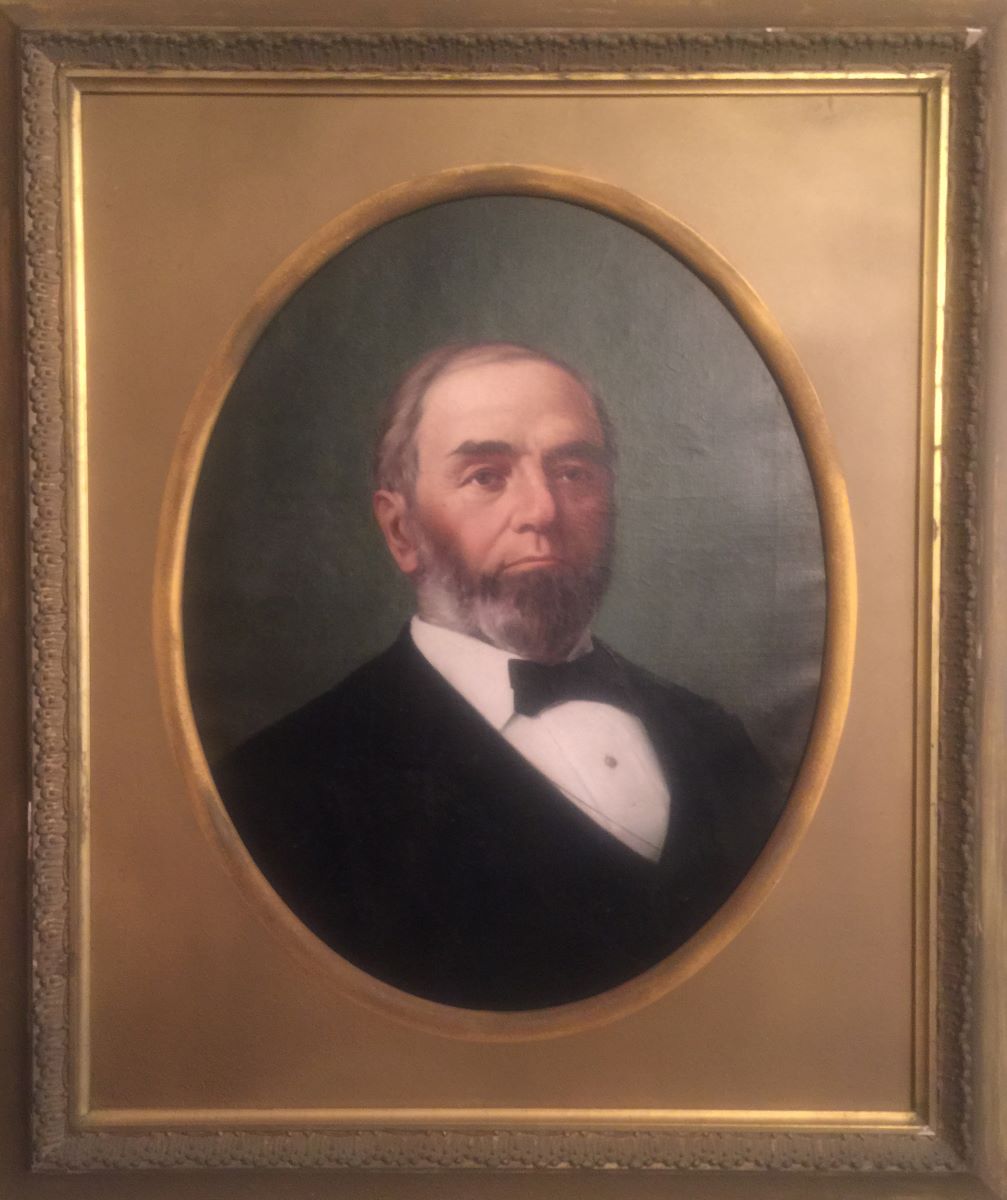
Griffiths contributed to the maritime industry with several inventions, including a machine that mechanically bent timber for boat builders. Sometime after his death, this giant of the maritime industry slipped from the collective American memory.
In a 1923 letter to the editors of The New York Times, Richard McKay, the grandson of legendary clipper builder Donald McKay, complained “that certain authorities will endeavor to snatch from John W. Griffiths the honor of being America’s premier designer of clipper ships. And the twin and triple screw greyhounds of today are the posthumous children of John Griffiths.”
Griffiths, however, remained a distant memory, if not a forgotten one. Never was this more evident than when Capt. Matt Carmel sought the grave of Griffiths. After investigating, he discovered the grave at Linden Hill United Methodist Cemetery in Queens; it sadly did not have a headstone. It was brought to the attention of maritime historians and enthusiasts, and an effort began to purchase a proper headstone. The effort received a significant boost in 2013, when Adam Brodsky wrote an article for the New York Post entitled “Grave Injustice for NY Ship Hero.”
On July 23, 2016, the National Maritime Historical Society unveiled the headstone. At its bottom is a quote from Donald McKay: “You are a Master of your Profession, have no Superior in it.”
What arts and culture topics would you like us to cover? Please email ideas or feedback to features@epochtimes.nyc