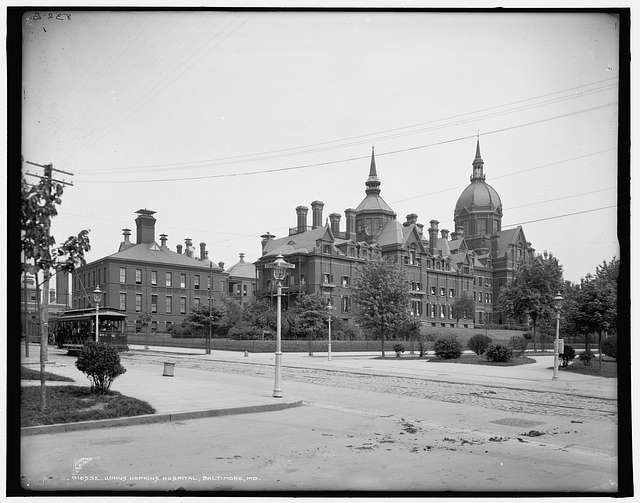
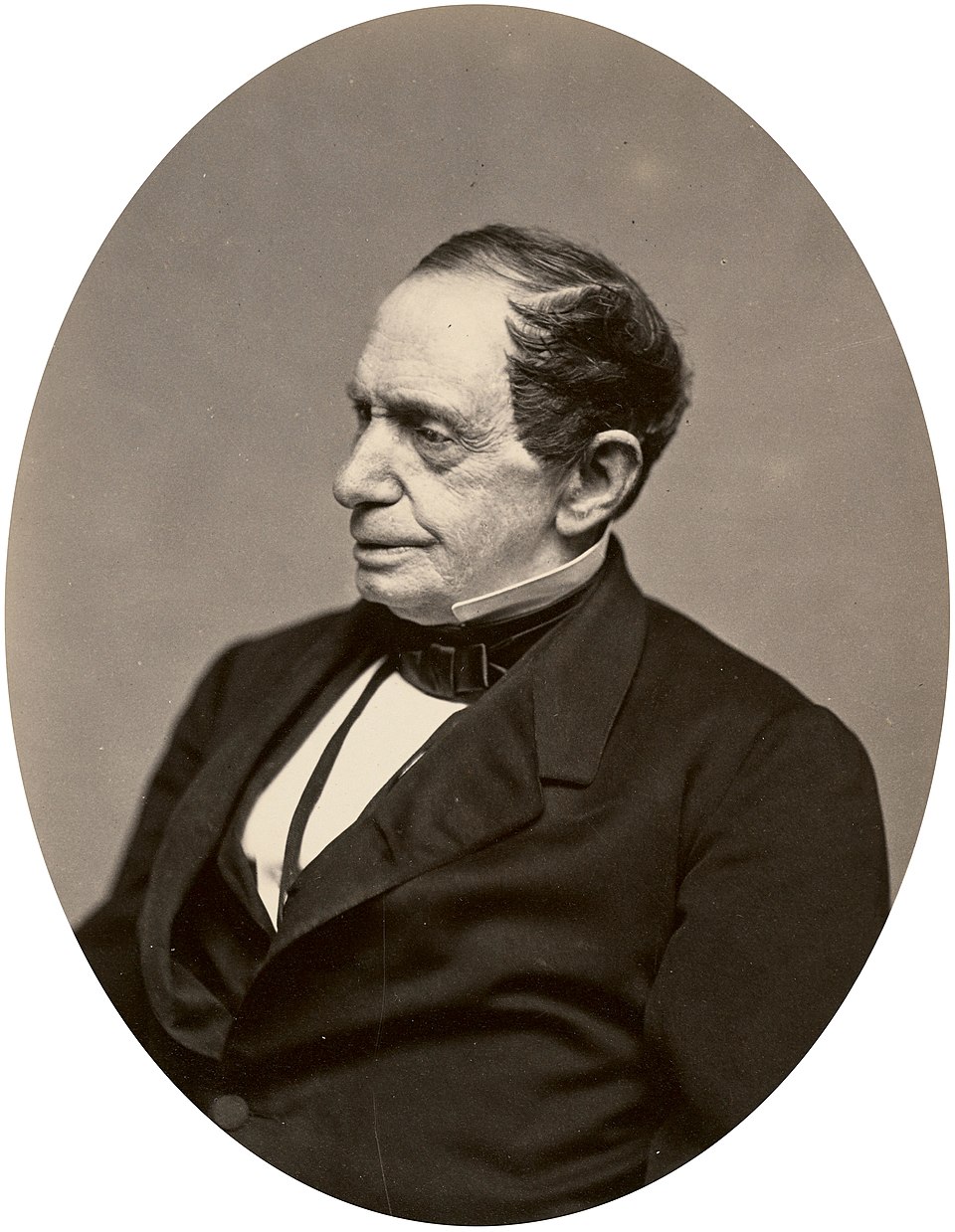
By the time Johns Hopkins died in 1873, he had accumulated a fortune that made him one of the wealthiest private citizens in the United States. However, he remained a notably private man, neither a politician nor a public personality. His influence emerged after his death, through institutions that changed how medicine is taught and practiced in America.
Born in 1795 in Anne Arundel County, Maryland, to a Quaker family, Hopkins was shaped by principles of discipline, modesty, and social conscientiousness. One of 11 children, Hopkins, still a boy, was pulled out of formal schooling to work. That early interruption to his education stayed with him, and helps explain his later interest in building institutions devoted to learning.
From Merchant to Visionary
As a young man, Hopkins moved into business through an apprenticeship in Baltimore. Capable and steady, he eventually established himself as a successful merchant, dealing in wholesale groceries, tobacco, and provisions. He later expanded into banking and and made consequential investments in the Baltimore and Ohio Railroad, one of the nation’s earliest and most important rail lines. By middle age, he had secured both financial independence and a reputation for careful, conservative management.
Despite his wealth, Hopkins lived without extravagance. He never married and had no children, and he spent little on personal display. His attention turned instead to what his money might accomplish after his death. Unlike many contemporaries whose philanthropy tended to be local or narrowly focused, Hopkins thought in systems.
In his will, he directed $7 million—an immense sum in the 1870s, roughly equivalent to $150-$175 million today—to establish both a university and a hospital in Baltimore. The pairing was deliberate: Hopkins believed education and medical care should inform one another, an idea still rare in American medicine at the time.
Integrating Education, Research, and Care
Johns Hopkins University opened in 1876, three years after his death. It was among the first U.S. institutions to systematically emphasize advanced research and graduate education, drawing inspiration from German universities. Rather than focusing solely on undergraduate instruction, it encouraged original scholarship and helped shift the center of American intellectual toward research and discovery.
The companion institution, Johns Hopkins Hospital, opened in 1889, designed not simply for care but for study. Physicians would treat patients while also observing, recording, and analyzing disease. The goal was to connect scientific inquiry directly to clinical practice.
That vision reached fuller expression with the founding of the Johns Hopkins School of Medicine in 1893. Admission standards were unusually high for the time, requiring prior scientific education, and emphasizing laboratory work alongside bedside training. The model departed sharply from the looser, often inconsistent medical training common in 19th-century America.
Several early figures at Hopkins helped translate this approach into practice. William Osler (1849–1919) advanced bedside teaching, bringing students into direct contact with patients. Surgeon William Stewart Halsted (1852–1922) established one of the first formal surgical residency programs, creating a structured path for training specialists. In nursing, reforms aligned with those of Florence Nightingale (1820–1910), who emphasized professionalism and patient care standards. Together, these developments shaped modern medical education.
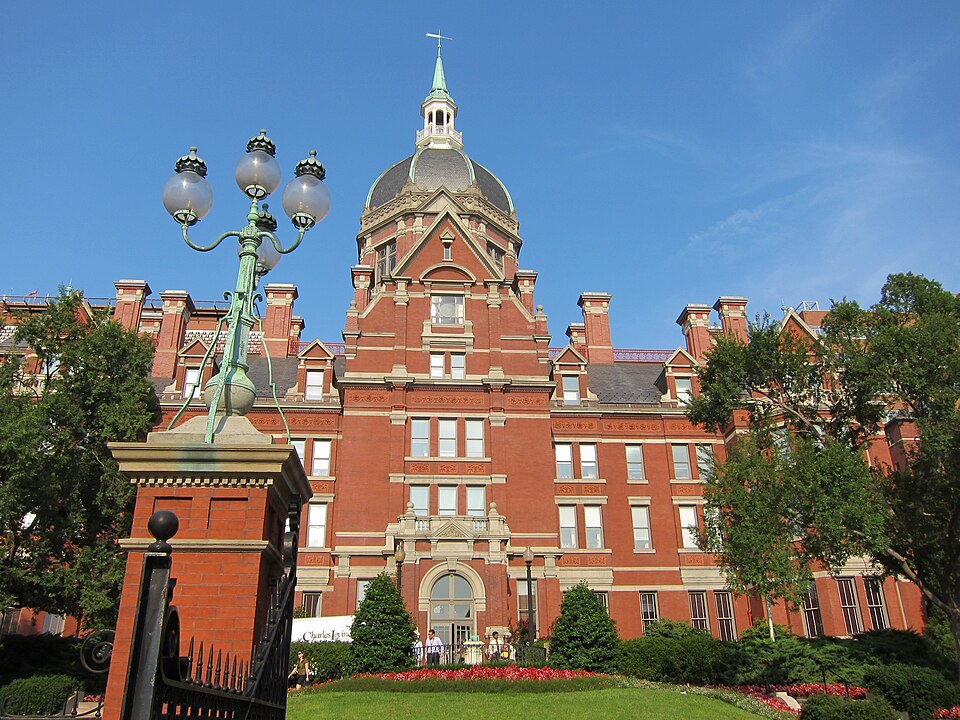
The Hopkins model extended well beyond Baltimore. The 1910 Flexner Report, which assessed U.S. medical schools, held up the Hopkins model—scientific grounding, rigorous admissions, and clinical training—as a benchmark. Many schools restructured along similar lines, bringing greater consistency and higher standards to the profession.
Hopkins did not live to see any of this. When he died on Christmas Eve in 1873, he left no detailed blueprint for daily operations, but his intent was clear: build institutions that would improve over time. He also insisted that the hospital serve the public broadly, including those unable to pay—a reflection of his Quaker background and understanding of public health.
Hopkins’s distinction lies less in scale than in design. He did not endow a single cause or temporary crisis. Instead, he created a model in which education, research, and patient care reinforced one another. That structure still underpins leading medical institutions today.
Johns Hopkins worked largely out of public view, yet the institutions he founded remain at the center of American medical life. More than 150 years later, his quiet vision endures—not as a historical relic, but as a living standard.
What arts and culture topics would you like us to cover? Please email ideas or feedback to features@epochtimes.nyc