



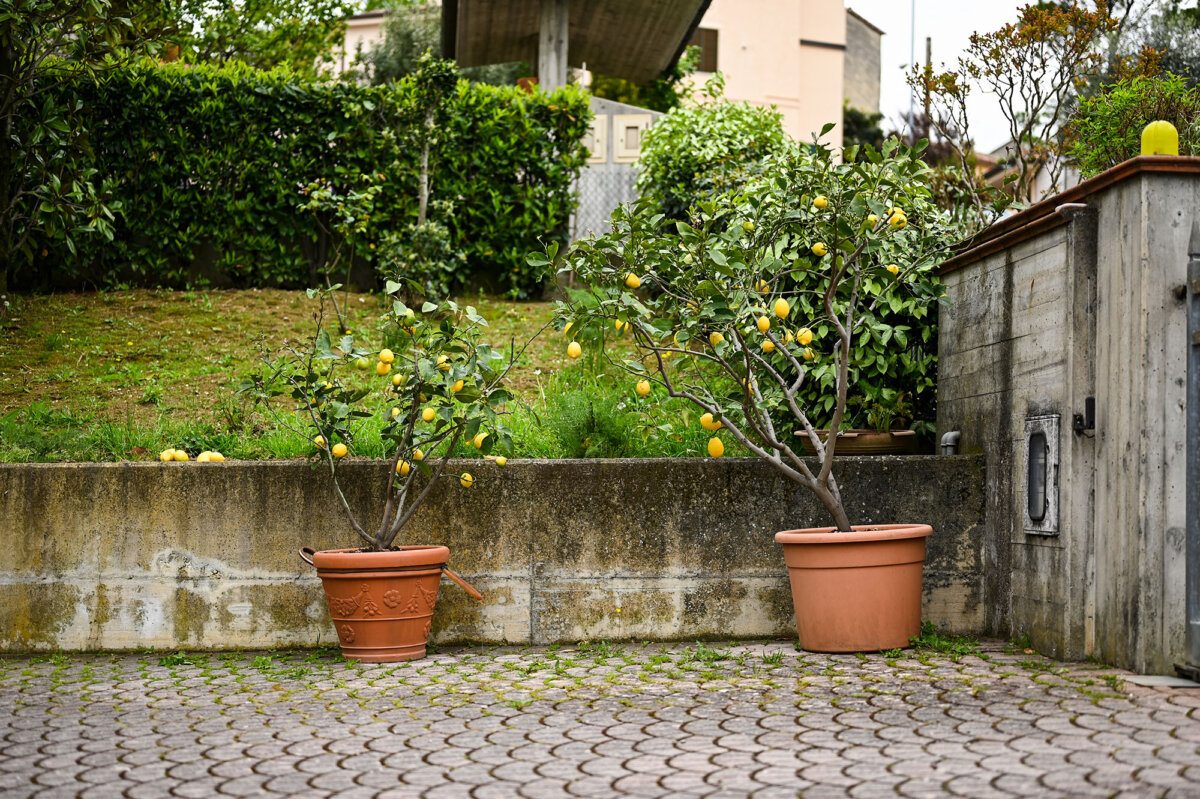
A neighbor in my old Seattle neighborhood was wheeling a rather unusual houseplant out of her garage one fine March morning. It was a small tree, about six feet in every direction, in a large, black, plastic tree-nursery pot. The pot was resting steady on a thick-wheeled movers’ cart, and as she steered it carefully to the side of her driveway I took a closer look. Dozens of what looked like ripe lemons decorated the tree, whose stately passage to outdoor freedom was brightly lit by early spring sunshine.
She noticed me admiring the spectacle.
“My mobile tropical orchard,” she explained.
“Those are lemons?” I asked, awe-struck.
“Meyers. They’re super. Last me all summer. Nothing better than fresh lemonade,” she said.
“I gather the pot lives on that cart?” I said.
“Oh, no, I can lift it without even breaking a sweat,” she replied, grinning heartily at her joke.
“And the tree lives in your garage in winter, out here the rest of the year?” I asked.
She nodded and said, “That’s what garages are for, right?”
Indeed, I would estimate that only 14 percent of U.S. garages are used for actual vehicles. Otherwise, they are snooker dens, TikTok studios, and artisanal wineries. If you can fit family heirlooms going back three generations in a garage, a lemon tree is a breeze.
Welcome to the art of pushing the envelope with exotic fruits—this case being a wondrously inventive approach to growing the tropicals and semitropicals that most people think are confined to Florida, Arizona, and California, plus small corners of Texas and the Gulf Coast. Victorian homeowners used to treasure what were called orangeries, but their botanical inhabitants did not migrate outside in the summer. Now, warmer weather is bringing outdoor subtropical orchards farther north, and fruits once grown only in southern climes are being adapted to ever more northern latitudes.
The adaptations are usually more down-to-earth than garaging a lemon. Making use of sheltered south-facing sites enables horticultural adventurism that most gardeners would not suspect is possible. Taking care of ordinary horticultural needs is the other main element.
General rules include:
- Start with top-quality nursery plants; online catalog specimens aren’t usually as robust or reliable.
- Select the most protected location on your property: south-facing, lots of sun, wind-sheltered. Unless you live south of the equator, forget the north side.
- Lavish your plantings with care—good soil, ample water, room to grow, and mulch in the winter. Mature, well-grown plants better withstand occasional harsh weather.
- Protect when necessary. A simple blanket thrown over a young olive tree during an overnight hard freeze can make a huge difference.
- Remember that it’s all a semi-grounded but whimsical exercise, sort of like investing in commodity futures. If you use common sense, positive returns can be expected much of the time. And if harsh weather strikes down your dreams … you still have a couple dozen apple, pear, and cherry trees out there. I do, anyway.
First, Get in the Zone
The famous U.S. Department of Agriculture plant hardiness map divides the continental United States into about two dozen horticultural zones, based on a rough approximation of annual winter cold extremes. In northern Minnesota and Montana, batten down the hatches: In zone 3b, that’s minus 35 degrees Fahrenheit, or colder. In Brownsville, Texas, in zone 10a, that’s 30 degrees Fahrenheit, or higher. That’s why grapefruit does fine in Brownsville—and paper birch in Ely, Minnesota. It’s easy to find your zone by navigating to the Agriculture Department’s website and entering your ZIP code. My zone is 9a, with an average minimum low of 20 degrees to 25 degrees Fahrenheit.
That’s a broad-brush approximation. Many, many local variations create microclimates in which a few degrees make all the difference in the horticultural world. There’s a tropical fruit farm in Florida where mangoes and bananas grow, just a few miles from other locations where cultivating such fruits is almost impossible. For years, a very enterprising orchardist grew bananas on an ultra-protected shoreline slope near Santa Barbara, California.
But nature loves surprise, and microclimates are unreliable: My farm is on a west-facing slope just 200 yards from the seashore, and everyone assured me that a truly hard freeze was impossible. Then came a bitter December wave of Arctic air from Canada, and I lost two young olive trees when it hit 5 degrees Fahrenheit. Wait! Not supposed to happen in my zone!
For years, on trips to Alaska, I’d be enchanted by two palm trees growing in a super-sheltered location in Sitka. Then one year brought a killing freeze, and zap! Fun while they lasted.
For gardeners west of the Great Plains, a much finer-detailed hardiness map is included in the peerless “Sunset Western Garden Book,” which takes into account mountain range sheltering, prevailing winds, aridity and humidity, snow cover, and all of the many other factors that determine plant survival. Similar regional guides can be found for the rest of the United States.
Citrus
Citrus varieties range from fragile to formidable. Of the popular fruits, oranges are the most delicate, Meyer lemons and Mexican limes the hardiest. Some citrus such as grapefruits must experience chill-times to ripen properly; and mature trees subjected to deep-freeze temperatures below 10 degrees Fahrenheit may lose their fruit, but survive to try again next year. Local nurseries can tell you what trees are best to try, but keep in mind that fickle weather occasionally strikes much of the United States.
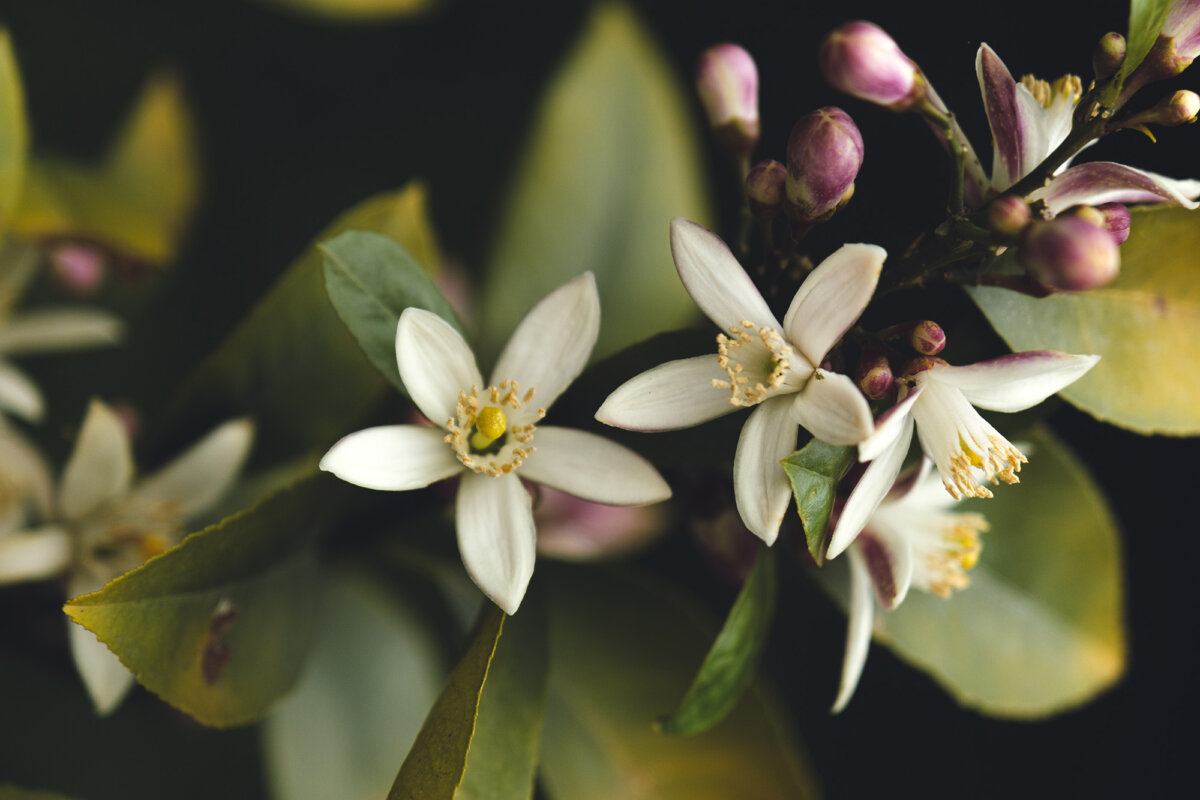
My sister had a wonderful Meyer lemon tree in her Houston backyard (and sent me a box of fruit each year at Christmas) until the notorious freeze a few years ago broke the Texas power grid and did her tree in. She didn’t replant, but could have, and might have enjoyed another 20 years of lemons. Rumor has it that adventurous gardeners are growing hardy lemons now on Vancouver Island. Maybe it’ll work for a while, maybe forever. Who knows? Readers who can predict the weather’s future, please contact me with commodity futures trading tips; thanks.
That said, we can all be sure that Meyer lemons aren’t going to live outside in Fargo, North Dakota.
What about indoor citrus?
I once grew an 8-foot grapefruit tree from a seed. It wound up in a 3-foot pot in a small atrium, and was a handsome tree with lovely blossoms … but no fruit (no pollination, duh) and it was subject to scale, a wicked houseplant disease best cured by moving the plant outdoors each summer. That’s a massive chore for a tree that big, and I couldn’t just hoist it on a mover’s cart. But if you have a home layout that allows for that … why not? Do you really need garage space for your great-aunt’s 1952 Life magazine collection?
Olives
Orchardists in Mediterranean climes have long offered the following meme: Plant grapes for your children—and olives for your grandchildren. So why would anyone in our instant-attention-span society choose to plant an olive tree?
First of all, the saying is overblown: Well-grown olive trees can bear ample fruit within 10 years. That’s longer than most tree fruits (five to six years for apples, cherries and pears, for instance) but it certainly fits into the agenda for anyone who has property where they plan to spend a lifetime.
Second, olives are hardier than commonly thought. The toughest varieties for northerly climates can survive brief temperatures near or even below 10 degrees Fahrenheit, especially if they are mature trees. Arbequina and Frantoio are the most common hardy types, and they are even grown in the North in protected locations. There is a small olive farm in Canada’s west coast Gulf Islands whose oil has a distinctly fruity, fresh flavor.
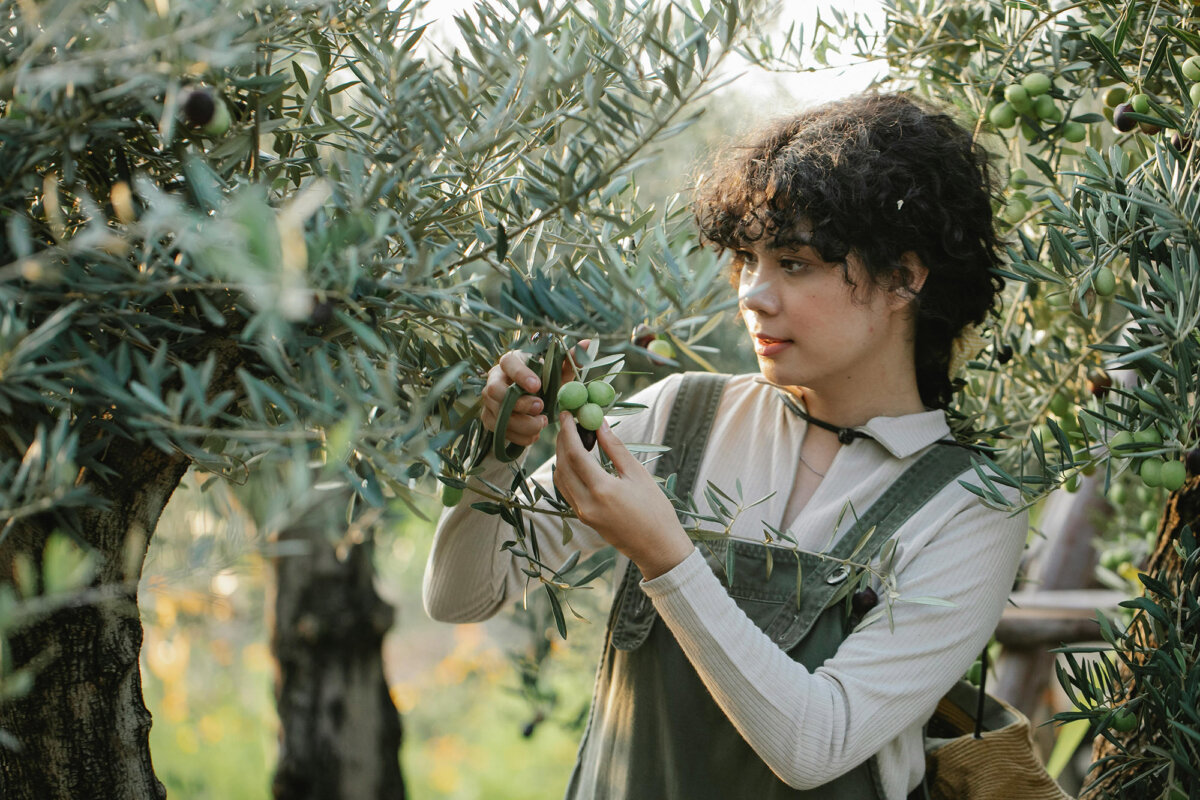
The fact that you have olives doesn’t mean that you can serve fresh-baked olive bread tomorrow, though. The fruit must be either brined (leached of bitterness in salty vinegar water) before eating; or pressed for the oil. The latter is an exacting, time-consuming, multi-step process that requires patience, sturdy kitchen tools, and several attempts. The result will not only cosmically please your inner food-artisan soul, it will amaze all who partake. Your own homegrown olive oil!
It’s much easier to just brine and store the olives, however. After a month or so in storage, then you can have olive bread.
Whatever you do, olives are robust, handsome, silver-leaved specimen trees that look splendid with very little care, are long-lived (near a millennium in some Mediterranean locales), and definitely not the standard boring landscape trees you see up and down the street.
Pomegranates
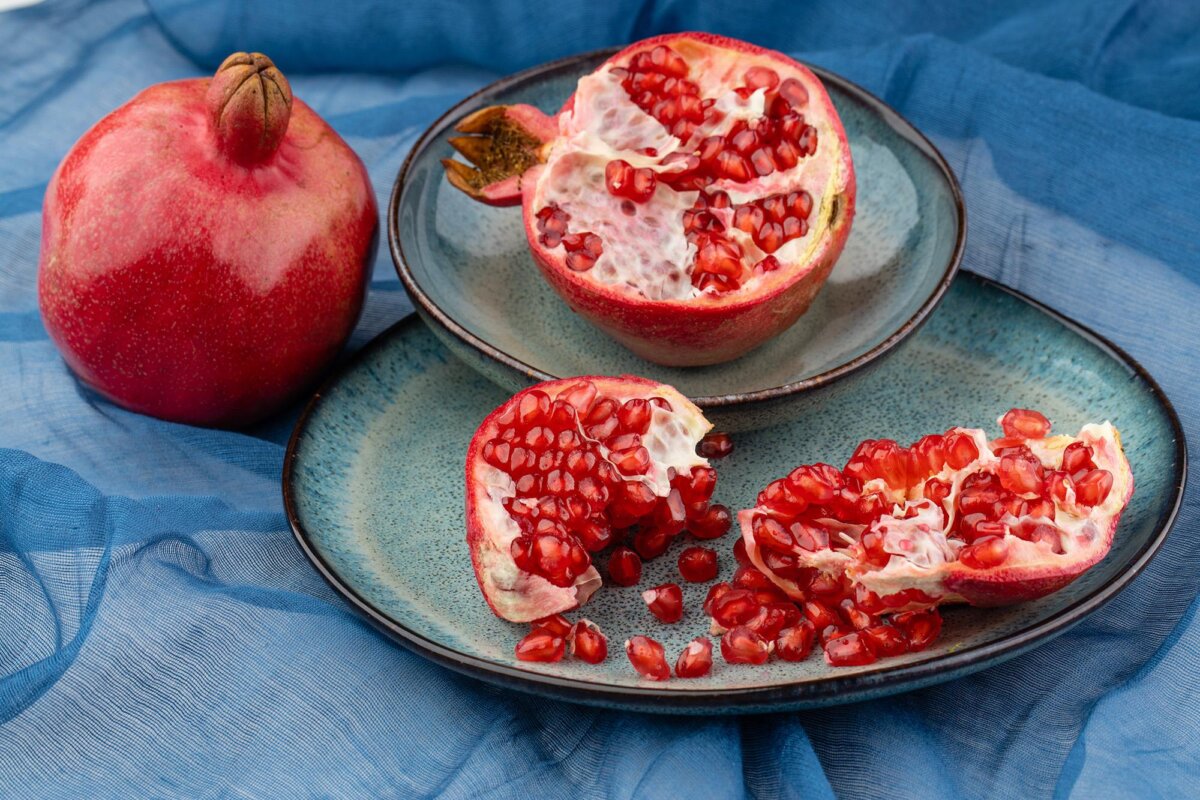
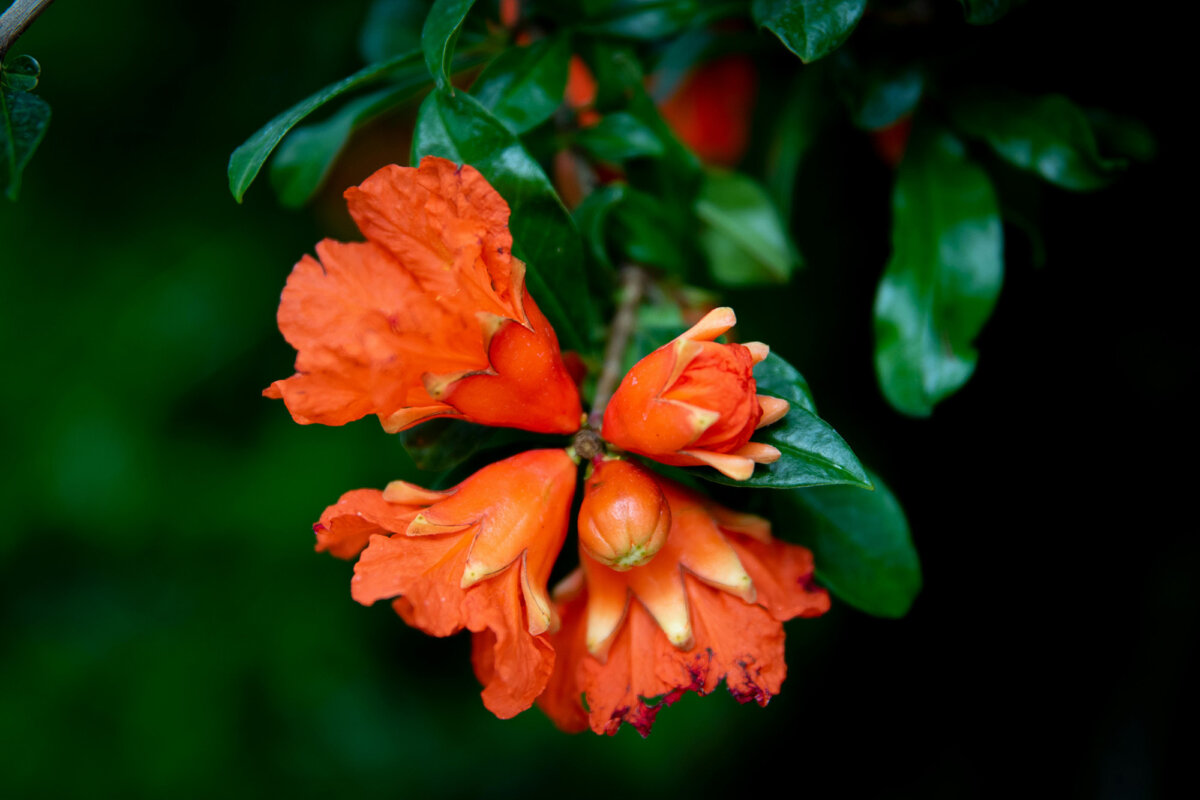
In hot, long-summer climates such as in much of California and southern Arizona, pomegranates are an ideal small-yard decorative tree. They require little care, are handsome ornamentals, and yield sensible amounts of the handsome, delicious winter-treat fruits. It just takes heat and time. Like olives, they are grown as far north as lower British Columbia.
But most pomegranate tree owners will never ripen fruit. So why plant them? They are beautiful landscape plants with vivid titian-colored blossoms, graceful form, pretty leaves, and exotic flair, perfect to frame against a stucco wall. As with all such species, a south-facing wall in a protected location might just someday bring you fruit. If not, it’s horticultural art.
Kiwi
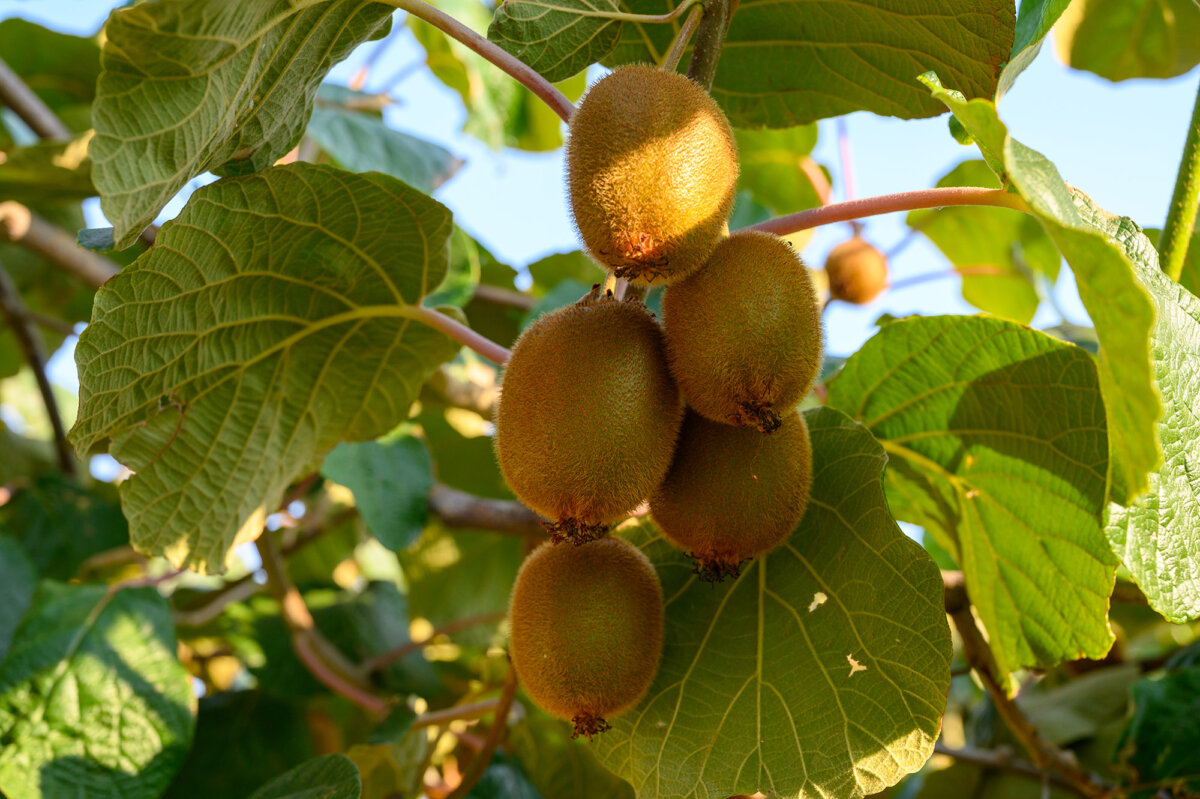
Despite the name, these small vine-grown fruits have nothing to do with New Zealand—they originated in China, which is still the world’s leading producer, with Italy second. Among other things, that tells you they’ll do fine almost anywhere table grapes grow.
They require a fair amount of engineering, though. Like cane berries, a trellis is needed. And like cane berries, they bear fruit on year-old wood. But unlike cane berries, vines that have borne fruit don’t necessarily die, so you’ll rapidly have an overgrown jungle with more foliage than fruit unless you tend to zealous pruning.
These vines can be grown in most coastal locations and the U.S. interior as far north as Arkansas. A related fruit, known as kiwiberry, is hardy much farther north, and has similar environmental requirements.
Coffee, Tea, and Exploring the Cabinet of Curiosities
There are several coffee plantations in Southern California now, and a tea plantation on Canada’s Vancouver Island. Adventurous gardeners may be able to stretch their wings this far in central California, Florida, the Rio Grande Valley in Texas, or maybe the Phoenix metro area.
But surely it’s impossible to grow enough coffee or tea to supply your own needs? Coffee demands some rigorous processing—harvest, drying, removing the fruit “cherry,” as it’s called, then roasting.
All true. But the tree’s glossy green leaves and vermilion berries are wonderfully attractive. And what a conversation starter for garden parties!
Other potential backyard fruits include loquat, a soft fruit similar in taste to the native pawpaw of the Eastern U.S. woodlands; passionflower, a vigorous vine whose small fruits are related to the tropical passionfruit of legend; and jujube, small berries that dry into sweet treats. If you’re in California, Florida, or south Texas, the world of possibilities is infinitely broader: mangoes, longans, avocados, guavas, dates, and more.
Is all of this just foolhardy adventurism? Is it worth it to go to the extremes of my Seattle garage-lemon neighbor? You’ll never know until you try, and she was right about one thing—you can’t beat fresh-squeezed, homegrown lemonade.
