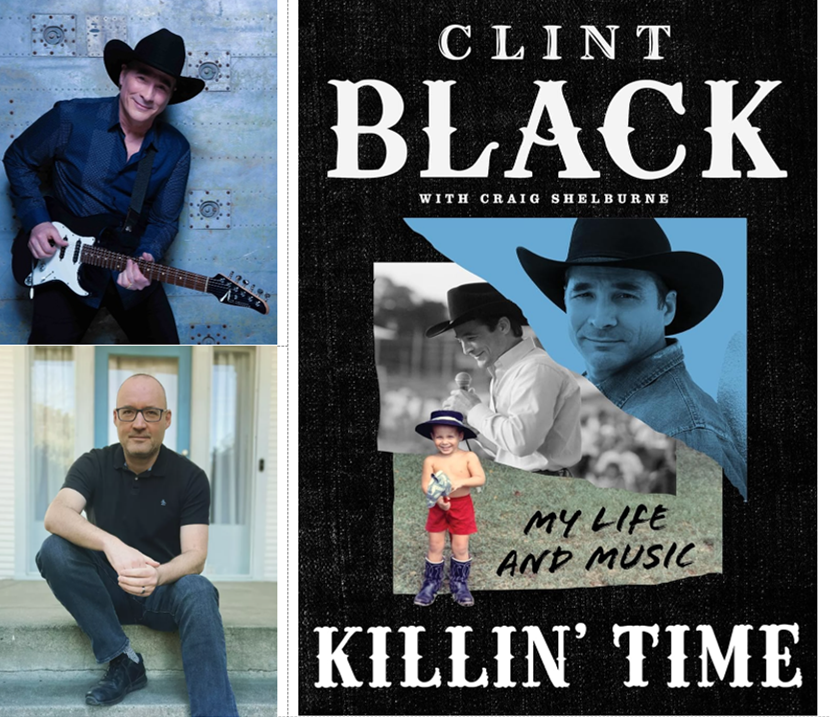
Clint Black is one of the most successful American country music stars. To date, he has produced 22 No. 1 and 31 Top 10 singles, sold more than 20 million albums, and earned enough awards to crash a mantelpiece from their sheer volume.
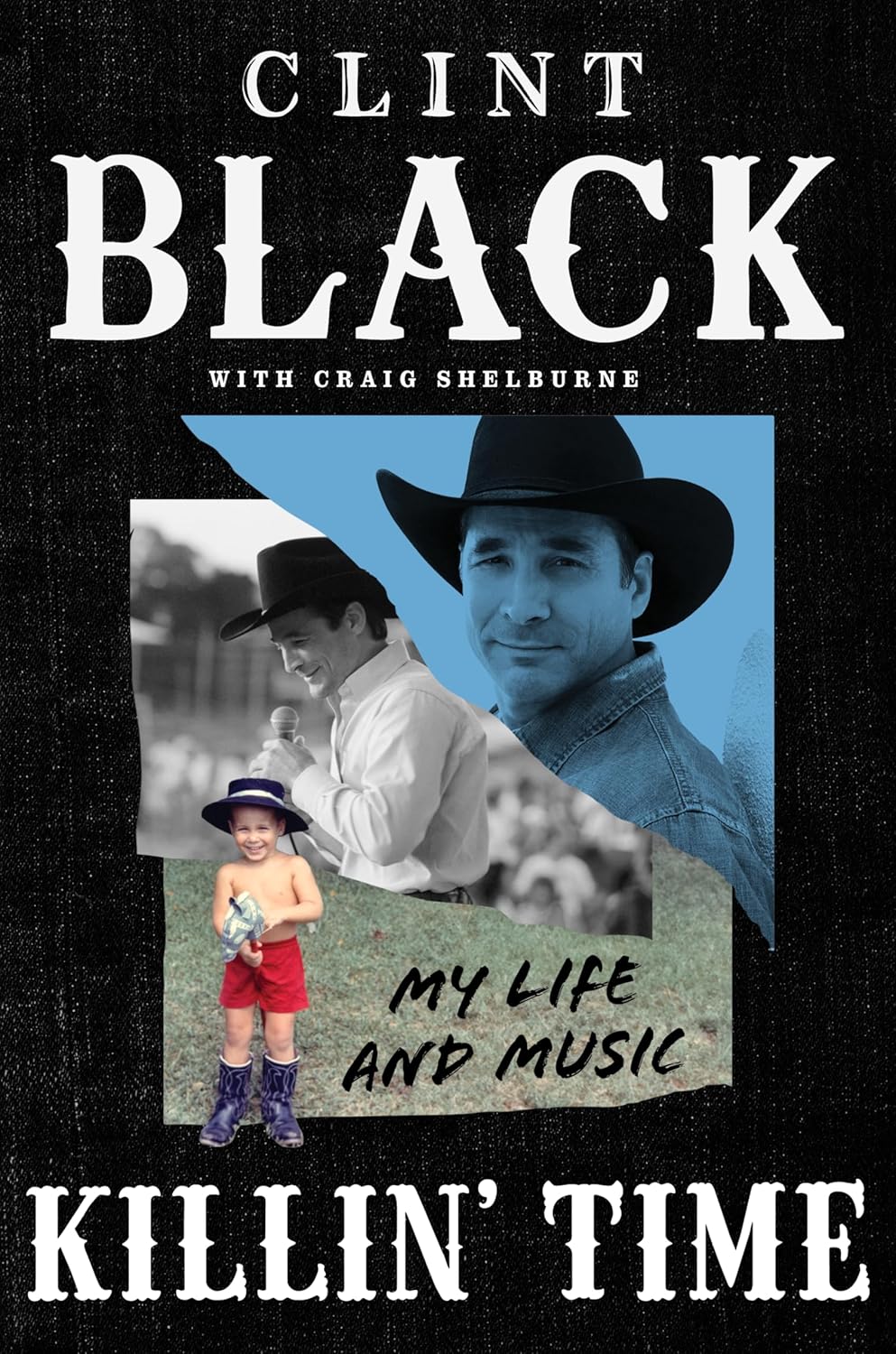
Now at 62, Black recalls his life in an autobiography written with Craig Shelburne: “Killin’ Time: My Life and Music.” Black is a grand raconteur, offering generous servings of memorable stories.

A Texas Upbringing
Black was born in Long Branch, New Jersey, on Feb. 4, 1962, but jokes that he “didn’t have a chance to pick up the Jersey accent” because his family relocated to the Houston area when he was six months old.
The best part of “Killin’ Time” covers Black’s formative years. He discovered performing at age 13 when he was given a harmonica while recovering from a broken wrist. His first guitar was a $10 item that broke when its back came unglued.
He lacked interest in school, repeating the ninth grade and later dropping out during his senior year of high school. He had more enthusiasm for making money and enjoyed success selling subscriptions for the Houston Post.
At 16, he joined a band consisting of one of his brothers and their friends. By 18, he was able to perform in bars.
The strangest incident of his youth came at 18 when Black and his bandmates were arrested and jailed on suspicion of running a drug manufacturing ring. The charges were later dropped, but only after he was behind bars for nine days. The book’s most entertaining segment involves Black’s sharing a cell with a friendly weirdo who insisted he was Jesus Christ.
Black spent most of the 1980s in low-paying gigs across Texas, teaming with musician Hayden Nichols to write songs for his act. The work was unrewarding at multiple levels. At one gig, a bartender turned on a television positioned above the stage while he was performing.
The Fine Print
By the time he reached 25, Black gained a connection to the Houston-based impresario Bill Ham, who was best known for guiding ZZ Top and Point Blank to stardom. This turned out to be both a blessing and a headache.
On the plus side, Ham opened doors for Black, resulting in a record deal with RCA that sped him to stardom with his 1989 single “A Better Man.” But Ham forced Black to sign contracts that took financial advantage of him. The author belatedly realized he should have been more careful in reviewing these deals.
“They were unconscionable because Ham was taking 20 percent as manager, 50 percent as executive producer, and 100 percent of my publishing,” Black recalls about his contracts with Ham. “This was far beyond anything considered normal in the record business.”
A flurry of lawsuits and countersuits resulted in an out-of-court settlement in Black’s favor. It also enabled him to have a direct contract with RCA; previously, Ham’s company acted as the middleman between the performer and his label.
A Star’s Life
Black shows himself to be a gentleman by refusing to engage in personal attacks on Ham (who died in 2016) and other entertainment industry figures who didn’t act in his best interest. But that’s not to say he wouldn’t annoy people who annoyed him.
When the Hollywood Reporter ran an incorrect story that his marriage to actress and singer Lisa Hartman was failing, Black called the article’s author demanding to know his source. The reporter refused to divulge the source; Black make it a habit of calling every year for the next four years to remind the reporter he was still happily married while asking again for the source of the wrong information.
As his popularity grew, Black moved in the company of show business royalty. He was shocked to discover that country music legend Merle Haggard wanted to open for him in a concert, and he was ecstatic to meet and play for George Harrison (whom he refers to as “George the Beatle”).
In his autobiography, Black is sometimes inconsistent in recalling his achievements. He goes into great depth regarding his work with Mel Gibson and Jodie Foster on the 1994 film “Maverick,” but skims over his performance at the Super Bowl XXVII Half-Time Show in 1994 and his work on Donald Trump’s “Celebrity Apprentice” in 2009.
While he received countless awards, including a star on the Hollywood Walk of Fame, he was bemused that the Grammy Award that had eluded him for years finally arrived for the 1999 song “Same Old Train,” a commercially unsuccessful duet with Marty Stuart.
In contrast to his enthusiasm in delivering his glossy show business stories, Black is much more reserved in sharing a few of the more painful parts of his life story. This includes the suicide of his father at age 78 and Black’s recovery from a 2004 mountain biking accident that required spinal surgery and threatened to end his singing career.
Ultimately, “Killin’ Time” is time well spent. Black’s fans will appreciate experiencing the humor, patience, and sincerity that fueled his well-earned success.
‘Killin’ Time: My Life and Music’
By Clint Black with Craig Shelburne
Harper Influence: May 19, 2026
Hardcover, 288 pages
What arts and culture topics would you like us to cover? Please email ideas or feedback to features@epochtimes.nyc