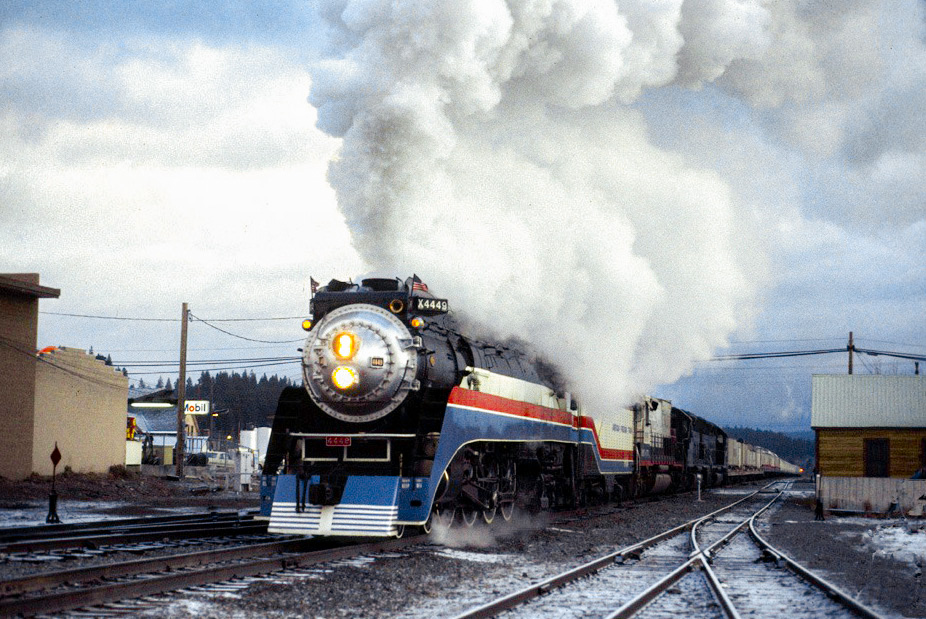
With celebrations marking the United States’ 250th anniversary set to begin, let’s revisit the 1976 Bicentennial American Freedom Train as well as the original Freedom Train that inspired it.
Freedom Trains have been a powerful symbol of the United States’ shared heritage. Soon after World War II, these trains began “bringing the nation’s history to the nation.” Historical artifacts and documents traveled to cities across the United States, reigniting a sense of national pride. From the original Freedom Train to the Bicentennial American Freedom Train in 1976, the goal has been to both educate Americans and instill a sense of pride in their shared heritage.
The Train That Started It All
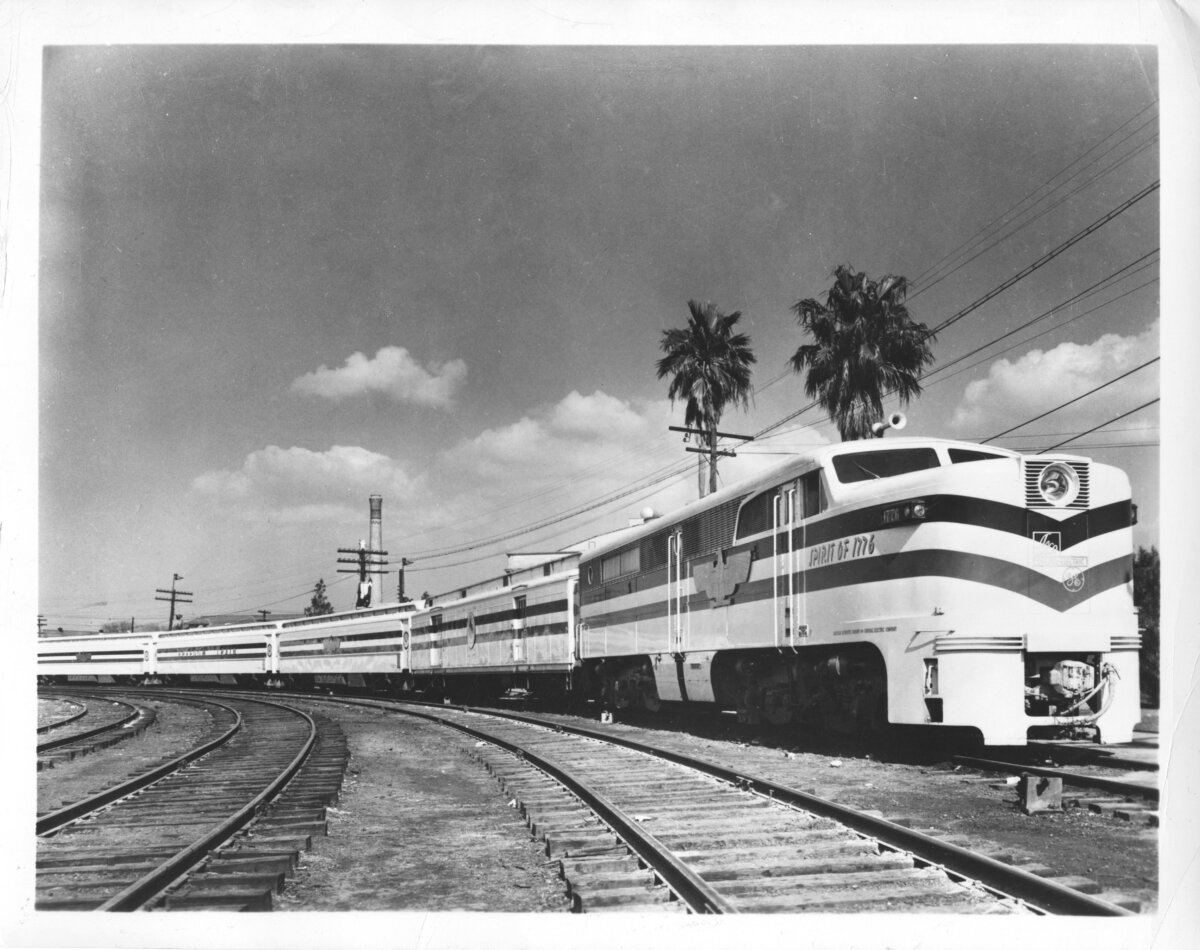
In the wake of World War II, the first Freedom Train sought to rekindle patriotism in a country wearied by war. By showcasing the United States’ foundational documents—such as Thomas Jefferson’s draft of the Declaration of Independence and George Washington’s copy of the Constitution—the train reinforced that the nation’s sacrifices had not been in vain. Americans could be inspired by their unique place in history and appreciate how their personal struggles had preserved a nation.
The gleaming red, white, and blue Freedom Train was christened in Philadelphia in September 1947. At that event, Sen. Edward Martin (R-Pa.) labeled the train “America’s best weapon against communism.” Not unlike events today, the christening was not without protestors: A group calling itself the Philadelphia Committee for Amnesty to All War Objectors marched with picket signs.
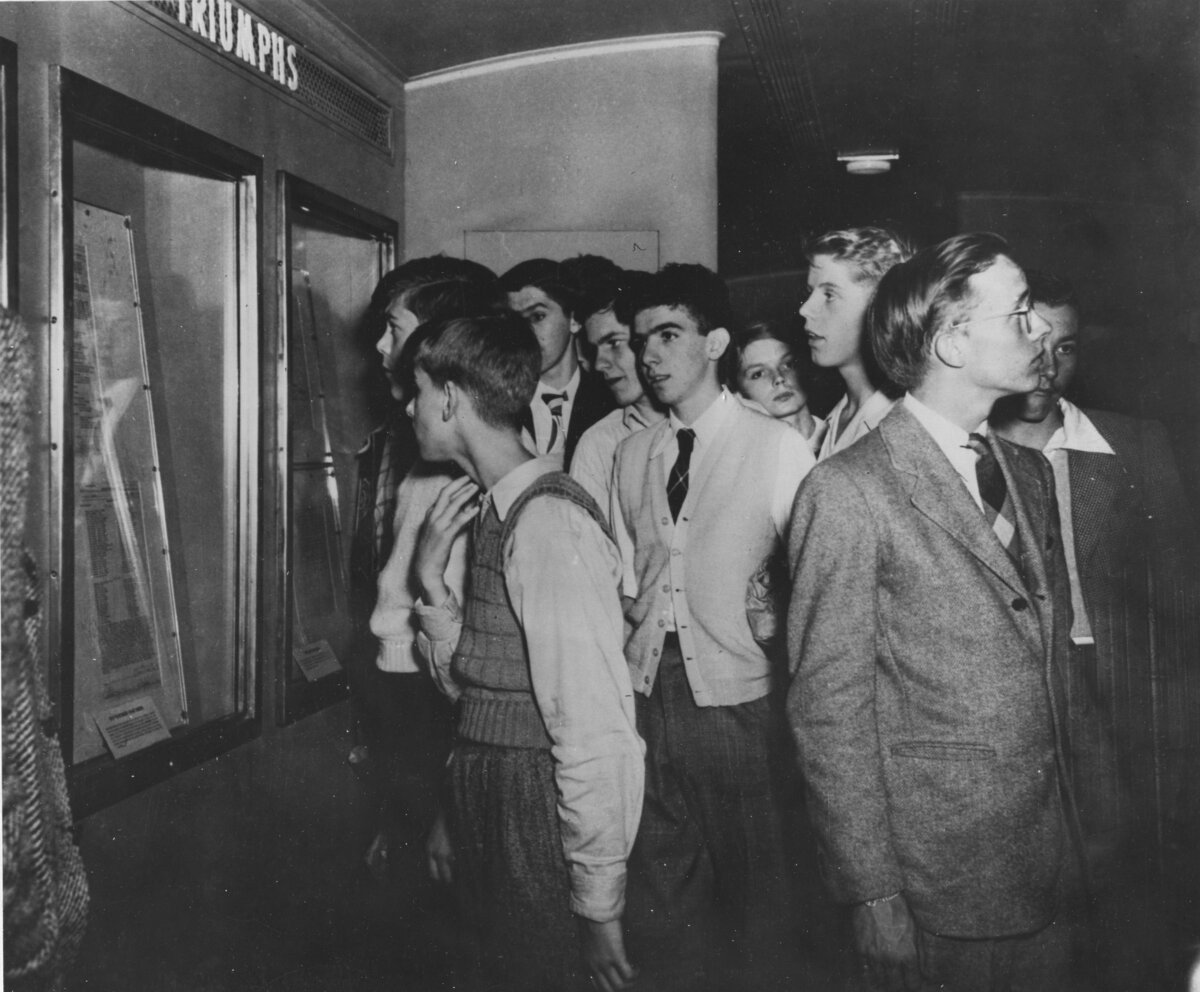
Seven cars long, the train began its journey in Philadelphia. Over the next 16 months, it visited more than 300 cities across all 48 contiguous states. The “shrine on wheels” carried more than 100 priceless artifacts, including the Bill of Rights and the Emancipation Proclamation. It was protected by U.S. Marines day and night.

Behind the scenes, switches were checked, tracks were examined, and handpicked men were assigned to watch the train’s progress as it neared each station. Sometimes, a “pilot” train would precede it to its next destination as a precaution.
More than 3.5 million Americans boarded the viewing cars. Millions more people could only watch the train roll by, but they considered it an honor just to see it pass through their town.
A search of newspapers from that time confirms that it was a huge deal. Banner headlines read “Freedom Train Coming to Town” or “Freedom Train to Pass By.” Many of our parents and grandparents remember that first train. My mother was 14 years old when the train came by, and throughout her long life, she could be heard recalling, “I saw that with my own eyes on the Freedom Train!”
One of the many exciting stories born of the train’s journey occurred in Gettysburg National Cemetery at the 85th anniversary of President Abraham Lincoln’s Gettysburg Address. The Freedom Train arrived there to a meticulously detailed reenactment of the event, complete with a replica of the 1863 speaker’s platform. Each of the original dignitaries on the platform was represented, and a man portraying Lincoln read the address.
Attorney General Tom C. Clark, credited with bringing the Freedom Train to fruition, was the principal speaker. There was a 50-piece Army band and an even bigger choir from Gettysburg College. Many high-ranking officials attended.
The Gettysburg Times reported that a squadron of state police was assigned to handle the crowds and a detail of Reading Railroad police guarded the train. Thirty Marines, all combat veterans, stood duty aboard the train, accompanied by members of the Boy Scouts and Girl Scouts. The entire program was broadcast on radio stations across the country via the Mutual Broadcasting System.
The original Freedom Train tour concluded on Jan. 22, 1949, in Washington, after a final public display in Havre de Grace, Maryland. The Freedom Train’s legacy lived on for a short time through a National Archives exhibit.
The Bicentennial American Freedom Train
The Bicentennial American Freedom Train brought the “Spirit of ’76” across the country. To those of us who remember that year, especially those of us who were children at the time, it was a great time to be alive. The slogan “Spirit of ’76” was everywhere, and it seemed like we were constantly learning U.S. history, both in school and at home. There were ongoing parades and celebrations and my entire wardrobe was stars and stripes. All of us kids wanted to join the fife and drum corps.
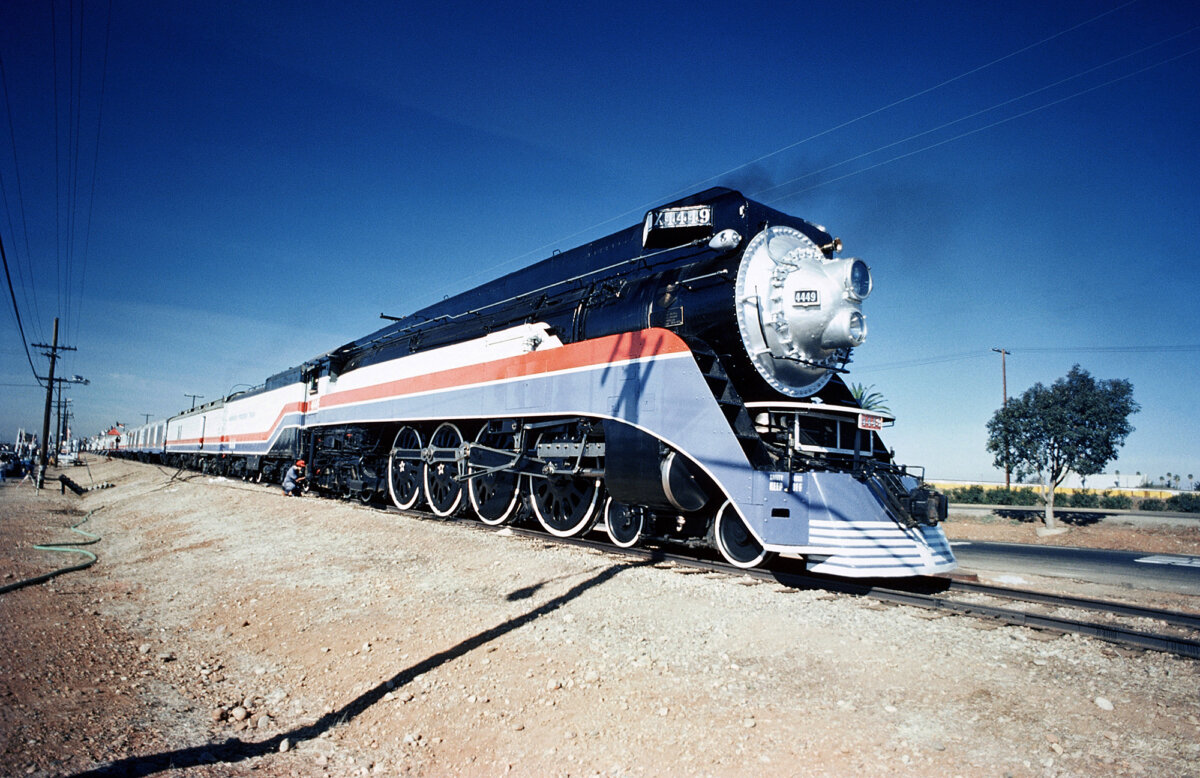
The American Freedom Train took to the rails from April 1, 1975, to Dec. 31, 1976. Conceived by Ross Rowland Jr., a steam locomotive enthusiast and businessman, the 26-car train was a more impressive undertaking than its 1940s counterpart. It was powered by three restored steam locomotives, each pulling the train through different regions. The locomotives—again painted in patriotic colors—became symbols of the United States’ industrial heritage.
The train carried more than 500 items, blending historical documents and cultural treasures. Visitors saw items such as the Declaration of Independence, a lunar rover, a replica of the Liberty Bell, Judy Garland’s dress from “The Wizard of Oz,” and even a moon rock. It traveled more than 17,000 miles, stopping in roughly 76 cities across all 48 contiguous states. Ten million Americans toured the exhibits, with moving walkways accommodating up to 1,800 visitors per hour. About 40 million more people watched it pass.
The steam-powered train’s journey was a logistical marvel, with highlights including a festive Christmas stop in Pomona, California, where No. 4449 was adorned with a large Santa Claus. Despite challenges—a slight derailment in Chicago and the need for diesel locomotives on certain routes—the tour was a resounding success. It not only helped the country celebrate the bicentennial, but it also revitalized interest in steam locomotives and railroad preservation.
PeriscopeFilm has preserved a short film titled “All Aboard America,” which documents the experience of the American Freedom Train, including footage of the onboard exhibits.
What’s Planned for the 250th Birthday of the US?
This Memorial Day, May 26, will launch a year-long celebration culminating on July 4, 2026. First up—mark your calendars for Flag Day, June 14, 2025, when President Donald Trump’s Task Force 250 will host a grand military parade to honor active-duty service members and veterans.
And for all those reminiscing about the trains, a key component of the 2026 celebration includes the restoration of the Bicentennial American Freedom Train No. 1, which is set to begin in June 2025 at the B&O Railroad Museum. Supported by a federal Save America’s Treasures grant, the cosmetic restoration is expected to be completed by December 2025, with live cameras allowing the public to follow the process. The restored locomotive will symbolize the continuity of the Freedom Train’s mission.
Igniting the Spirit of 2026
From postwar inspiration to the bicentennial’s celebration of shared heritage, these trains have transcended mere exhibits, becoming rolling ambassadors of democracy and shared identity. As the nation prepares for its 250th anniversary, let’s start sharing our own stories and memories to inspire the next generation of American patriots. Let’s make it a “Spirit of 2026” to remember!