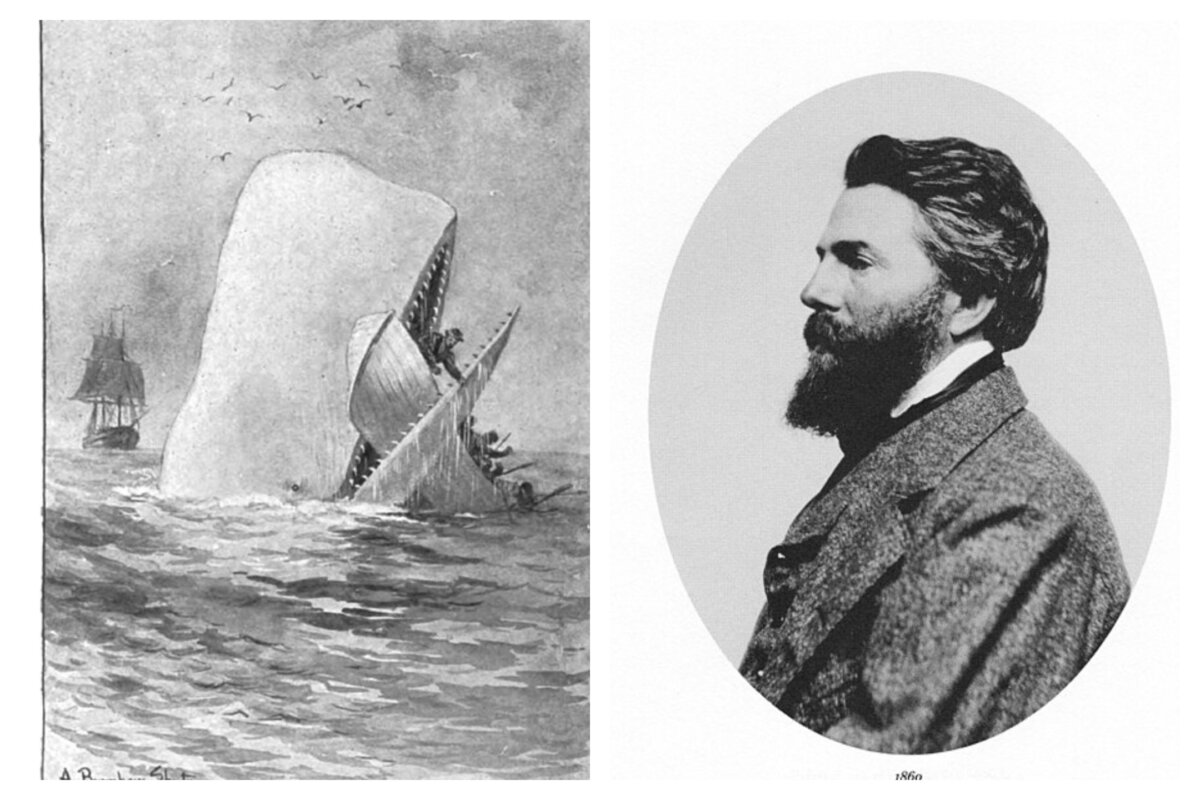
Many names in the canon of Western literature today were lost in obscurity during their lifetime. The road of artistry is often a lonely, frustrating road, tangled with briars and rocky ascents, and several writers, who are now considered titans in the field, died thinking themselves failures. They never reached the peak of fame from which to survey all they had accomplished. Their stories tell us that genuine human achievements are not wasted, even if their effect isn’t immediately visible. Every good tree will bear fruit in due season, even if that season comes after the planter has passed away.
These writers’ stories also speak to the transtemporal power of art. Sometimes, a work of art has to age like a wine before it can be fully appreciated. The searing beauty and truth of a masterpiece may go down to the cinders of obscurity for a time, but the flame of genius will eventually cause it to rise, phoenix-like, from the ashes.
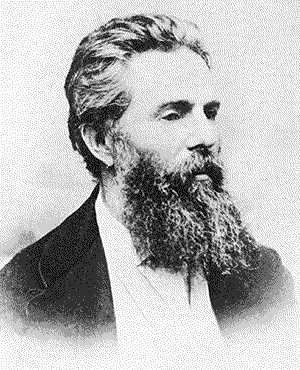
Herman Melville
The name Herman Melville (1819–1891) has become synonymous with American literature. His masterpiece, “Moby Dick,” is generally considered one of the greatest American novels ever written—perhaps even one of the greatest novels of any country. But it was not always so.
As a young man, Melville struggled to find consistent work in any field, hopscotching from one job to another. He eventually went to sea; a notable voyage to the South Seas in 1841 and 1842 aboard the Acushnet led him to write his first novel, “Typee.”
Melville went on to write other seafaring adventure stories based on his experiences and began to enjoy a measure of success. Yet the public had pigeonholed him as an adventure writer of entertaining stories, the equivalent of the spy thrillers at grocery store checkouts today—lots of action, not a lot of substance.
Melville, however, inspired by the profundities of Shakespeare and the moral complexities of Hawthorne (with whom he developed a friendship) wanted to go deeper. The result was “Moby Dick.” The Encyclopedia Britannica describes the work this way:
“Captain Ahab pursues the white whale, Moby Dick, which finally kills him. At that level, it is an intense, superbly authentic narrative of whaling. In the perverted grandeur of Captain Ahab and in the beauties and terrors of the voyage of the ‘Pequod,’ however, Melville dramatized his deeper concerns: the equivocal defeats and triumphs of the human spirit and its fusion of creative and murderous urges. In his private afflictions, Melville had found universal metaphors.”
But this book, into which Melville poured his soul and his creative energies, was a critical and commercial failure. His next book, “Pierre,” which was another attempt to write authentically and deeply about the human experience, was another failure in the public’s eyes. The 33-year-old Melville’s career lay in shambles. Despite hardships and setbacks, including the death of two sons, Melville kept writing, but he had effectively disappeared from the literary scene. Only with the “Melville Revival” in the 1920s—long after the author’s death—was Melville’s literary genius finally recognized.

Emily Dickinson
An innovative and utterly unique poet who wrote brief, haunting lyrics using unconventional punctuation and grammatical constructions, Emily Dickinson lived a quiet, secluded life in Amherst, Massachusetts, during the 19th century. Only about 10 of her nearly 1,800 poems were published during her lifetime.
Dickinson excelled in school and was educated at Amherst Academy and, briefly, at Mount Holyoke Female Seminary. Dickinson never married, remaining at home with her sister, with her married brother living next door.
She began writing as a teenager after being inspired by Emerson’s poetry. Even Dickinson’s siblings were not fully aware of the extent of her poetic corpus and the dedication with which she pursued her craft.
Later in life, she became increasingly secluded, and scholars have debated the precise reason for her growing solitude. Theories include the idea that she suffered from agoraphobia, depression, anxiety, or that she was simply too busy caring for her ailing mother. Whatever the case, Dickinson remained sequestered at the family Homestead, letting her imagination venture far afield in her place, with the result being a huge body of fascinating and sometimes bizarre poems.
It was only after Dickinson’s death that her sister, Lavinia, discovered the hundreds of poems Dickinson had written. Upon their publication, Dickinson was quickly hailed as one of the greatest American poets ever to put pen to paper.
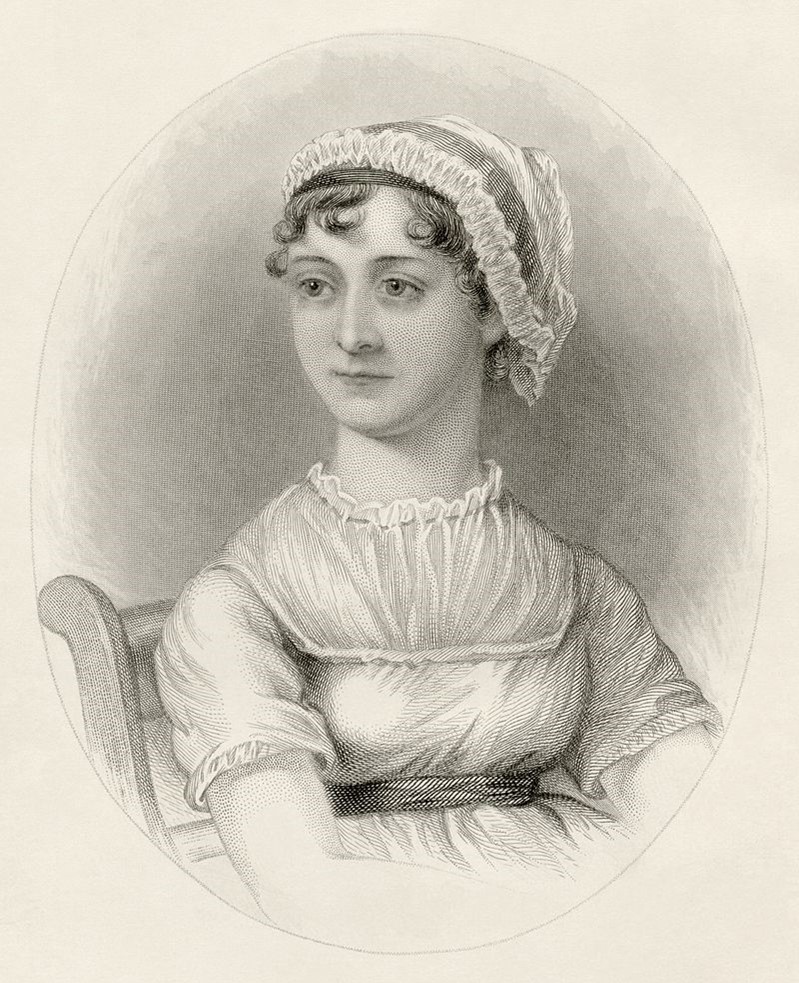
Jane Austen
Like Dickinson, Jane Austen never married, living a relatively quiet life in provincial England. She’s known for developing the modern novel, which deals with the ordinary events of people’s lives, rather than the grand accomplishments of heroic figures.
Austen grew up in an energetic and affectionate family, where stories and acting were the prime forms of entertainment. Like Dickinson, Austen began writing when she was quite young. Our knowledge of her adult life is somewhat limited by the fact that her sister, Cassandra, destroyed or censored the vast majority of Jane’s letters. Rumors of Austen’s own romantic interests are thus tantalizingly unsubstantiated.
At the time Austen was writing, there was a stigma on female authors. For that reason, Austen published her work anonymously, crediting it simply to “A Lady.” Her name was not attached to any of her works until after her death, when her brother finally identified her in a biographical statement he wrote for “Northanger Abbey” and “Persuasion.”
Austen enjoyed moderate financial and critical success during her lifetime, but, of course, very little fame since her name was not attached to the works. Moreover, the critical and commercial success of her lifetime was nothing compared to the explosion of interest in Austen’s work after her death, particularly after successful film adaptations of her novels in the 1990s.
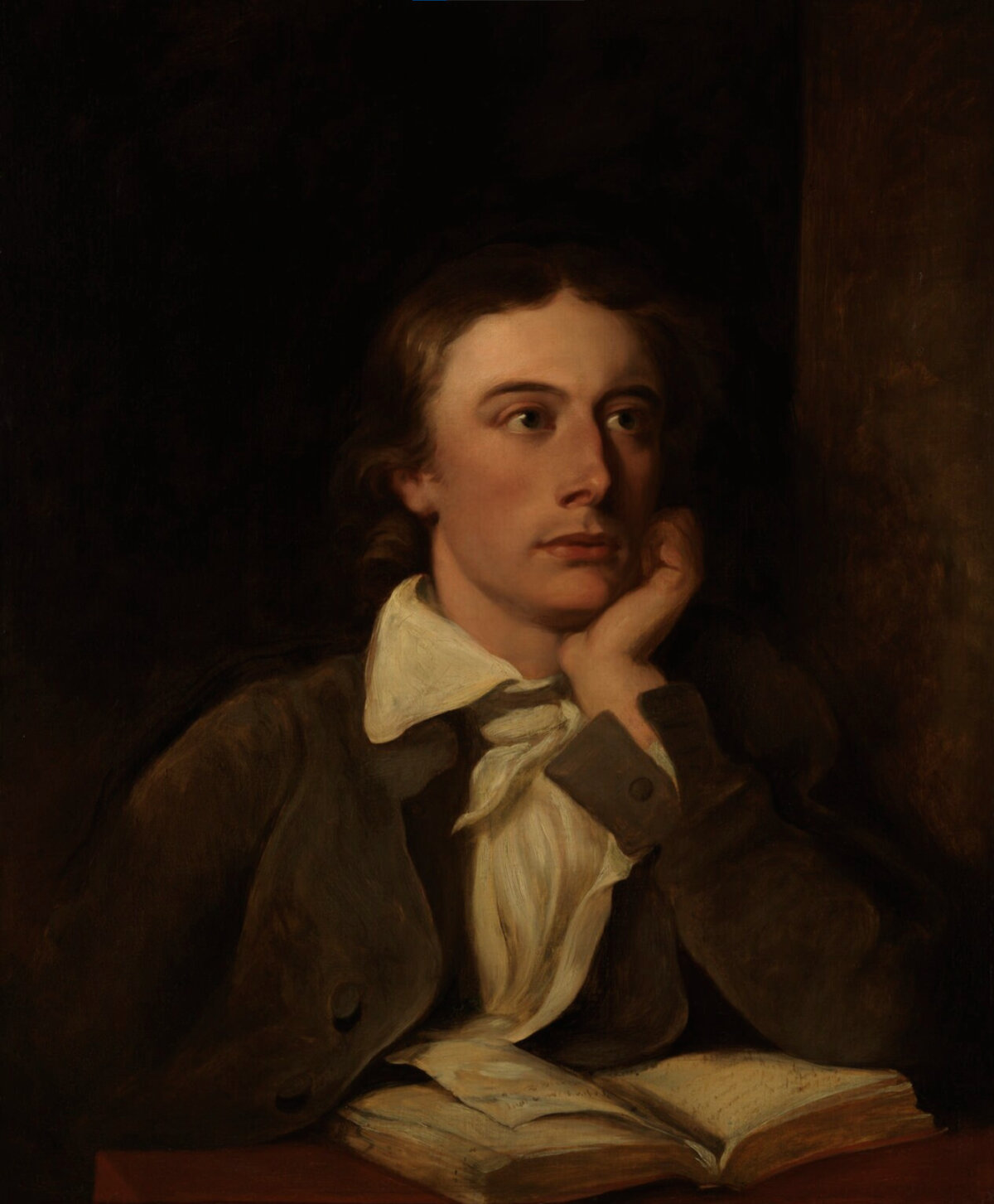
John Keats
One of the most tragic figures of literary history, John Keats lived a brief, sorrow-haunted life. He died at the age of just 25 after bequeathing the world a series of exquisitely beautiful and poignant poems.
Keats was born in 1795 in London, the oldest of four children. Both Keats’s parents died when he was young. The death of Keats’s father cast the family into difficult financial straits. His mother’s second marriage failed, and she died of tuberculosis in 1810. Confronted by tragedy almost at the daybreak of life, Keats began to wrestle early with the fragile beauty of the human condition.
Keats studied at Enfield Academy, where he became close to the headmaster, John Clarke, who served as a surrogate father and encouraged his literary pursuits. Keats left the school to study medicine, but his real passion was poetry. Keats made connections in the literary world that led to the publication of his first volume of poems in 1817, followed by a long narrative poem, “Endymion,” the following year. These publications were met with ruthless criticism from the literary establishment, with one critic referring to the “imperturbable driveling idiocy of Endymion.”
Keats kept writing poetry—and theorizing about it—however. At the same time, he was caring for his dying younger brother, Tom, and developing a doomed romance with a young woman named Fanny Brawne. This seemed to bring a surge of inspiration, for in the spring of 1819, he wrote a string of staggeringly powerful odes, full of rich sensory detail and emotional depth, the genius of which, alone, would give the poet a right to stand among the greatest writers of the English language. Among them was his famous “Ode to a Nightingale” and “Ode on a Grecian Urn.”
But later that year, he contracted tuberculosis, and his health quickly declined. He traveled to Rome in hopes that the climate would help him recover, but he died there in November of 1821. Keats feared that his work would be forgotten after his death. But that proved untrue as his reputation grew posthumously. Some of his friends published memoirs and biographical sketches along with more of his poetry. The Keats’s biography, written by the respected Richard Milnes, further raised his status.
By 1857, Alexander Smith wrote in the eighth edition of the Encyclopedia Britannica of Keats:
“With but one or two exceptions, no poet of the last generation stands at this moment higher in the popular estimation, and certainly no one has in a greater degree influenced the poetic development of the last thirty years.”
Today, Keats’s poems are among the most anthologized in the English language. Like the other authors listed here, his literary works gave him a belated reward, a form of immortality that he could scarcely have imagined during his earthly exile. It is a testament to both the skill of the writer and the power of art that these writers were able to transcend the obscurity in which they lived.
What arts and culture topics would you like us to cover? Please email ideas or feedback to features@epochtimes.nyc