



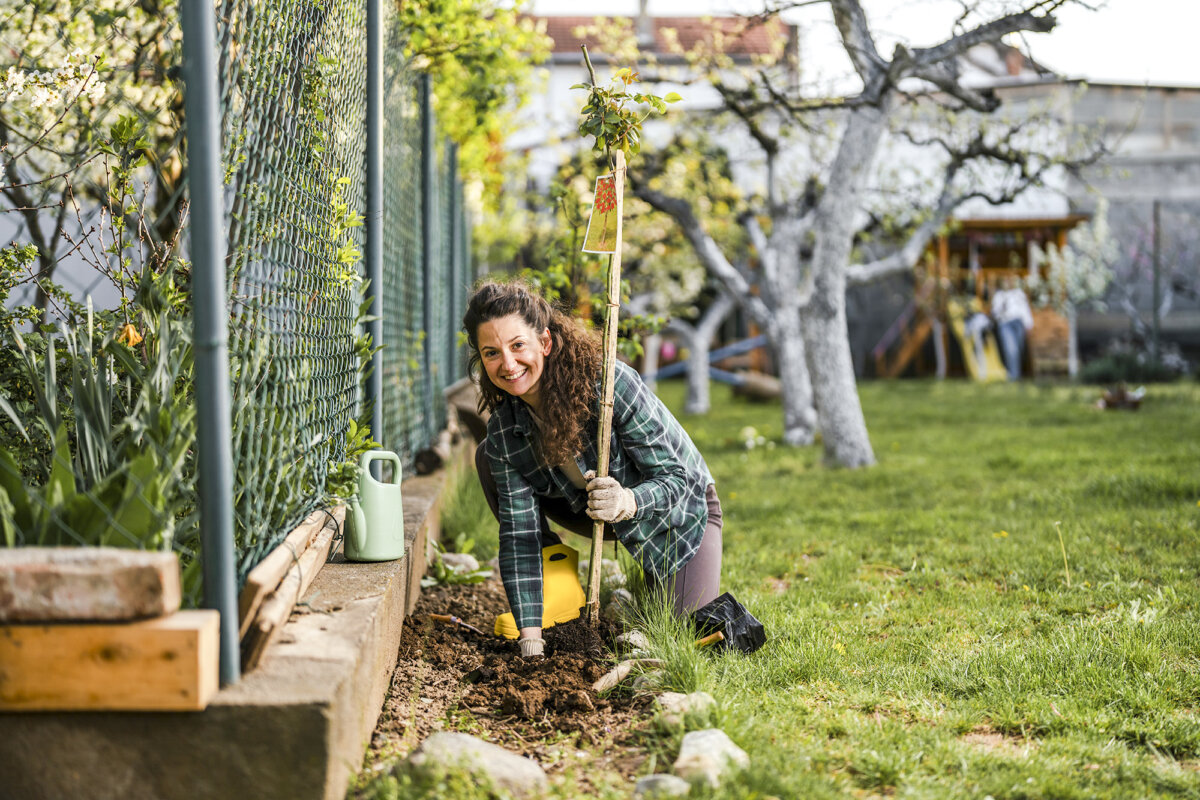
The nursery slogan “Fall is for Planting” is much more than a clever marketing gimmick to move out remaining stock. In fact, anytime after Labor Day is prime time in many regions for planting trees and giving them a head start on next year.
Many deciduous trees, including oaks, maples, crabapples, redbuds, hackberries, hawthornes, honeylocusts, and lindens, can be planted successfully in the fall. Evergreens such as pine and spruce need to get into the ground in early fall when the soils are warmest, typically before the end of September, because they will lose water through their needles during the winter.
Ultimately, the goal is to get trees planted at least six weeks before the first frost so they have time to begin establishing sufficient roots before the winter freeze.
Bare-Root Tree Stock
At the most cost-effective end of the spectrum, bare-root trees are just what they sound like: dormant trees dug out of the ground and shipped without any soil around their roots. This ability to be shipped efficiently increases the availability at local nurseries. They’re easier to plant as they weigh less than their balled-and-burlapped or container-grown counterparts. However, since they’re dormant when planted, they may take four to six weeks to show signs of new growth. Their planting window during this season is mid-to-late fall.
To increase the chance of success, handle them carefully to avoid root injury. Keep them moist. “Packaged” bare-root trees are shipped in moisture-retaining materials such as hydrogel to keep the roots hydrated. Soak the root zone in water for three to six hours before planting. If they’re the old-fashioned bare-root style, the gardener has the option of dipping them in hydrogel until planting or wrapping them in wet burlap or newspaper. Keep them well watered after planting; it’s essential that their roots don’t dry out.
Balled and Burlapped
The balled-and-burlapped (B&B) method of transplanting significantly reduces transplant shock. These trees usually adapt faster than bare-root varieties thanks to their larger root balls. Always move a B&B tree by the root ball, never the trunk; handling it by the trunk will loosen and potentially damage the root ball. Also, resist the temptation to unwrap the burlap and take a peek before planting. Keep the tree well watered until planting, which should be done in a timely fashion. If the tree has a wire “basket” around the burlap, position the tree in the hole before removing as much of the wire as possible and cutting away the upper layers of twine and burlap.
Container Simplicity
Simply put, container trees are just a bigger (often much bigger) version of houseplants in a decorative pot. Since roots were not disturbed during the selling process, they don’t have to be planted as fast as with the two methods above. They’re easier to water in the meantime, too. But remember, the countdown clock is ticking on the coming first frost. If the nursery allows, pull the plant up slightly or remove the container and check to see if the root ball is root-bound. Ideally, it’s not, but if the price is really good and it’s not too badly root-bound, the roots can be gently separated at planting. Alternatively, you can make shallow, vertical cuts with a knife to loosen the exterior root “net.”
Best Roots Forward
Now it’s time to play in the dirt. Start by digging a hole two or three times the width of the root ball. You want it to be wide enough for the roots to spread without bending or circling. Slope the sides of the hole inward towards the base of the hole so that it’s wider at the top. This will give the roots plenty of loosened soil in which to spread outward.
Dig the hole to the depth of the root ball or bare roots and no deeper. The trunk flare—where the trunk widens and roots emerge—should be level with or slightly above the surrounding grade. Loosening the soil below the root mass can cause the tree to ultimately settle too deep and is one of the most common tree-planting mistakes.
Large B&B and container trees may involve inviting a few friends over to ensure careful, proper placement. Plan ahead and have fun.
___________________________
Tree Tender
In many areas of the country, fall actually has more rain than spring. Just another great reason to plant now.
Thirst Quencher
To give the roots a direct hydrating boost, start watering halfway through backfilling the planting hole. Let it drain, top up the soil to grade, and water it in well. Next, water 1 to 2 gallons per inch of trunk diameter daily for the first two weeks.
Keep Them Moist
After the second week, water 2 to 4 gallons per inch of trunk diameter twice a week for the next 10 weeks or until the ground freezes. The exception is when there’s 1 inch or more of rain. To be even safer, invest in a moisture meter and test to a depth of 6 to 8 inches.
Final Touches
A 2- to 3-inch layer of organic mulch helps conserve moisture. Mound up the outer edge to create a handy watering trough. Keep the mulch at least 4 inches away from the trunk and root flare. Consider a soaker hose for deep-penetrating, hands-free watering and perhaps a timer to make things worry-free. Just remember to disconnect them before winter hits to prevent freeze damage.
