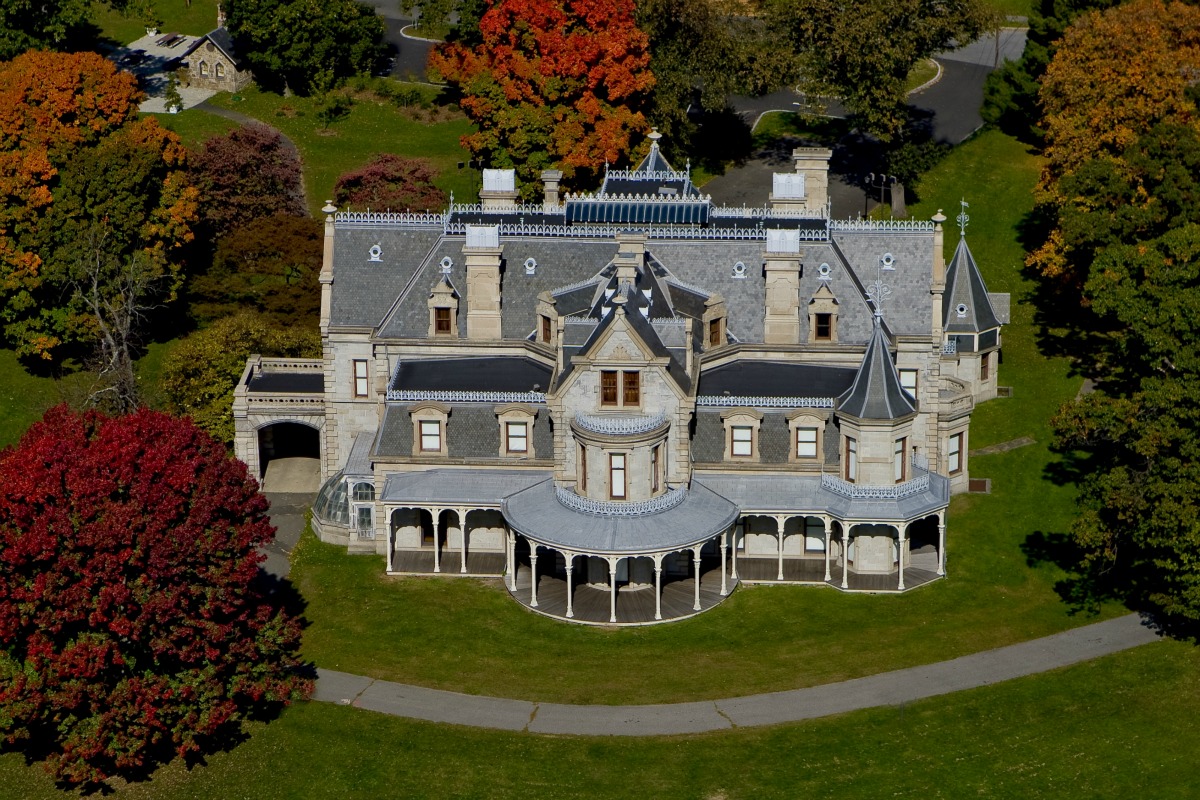
The Lockwood-Mathews Mansion is one of America’s earliest and most significant Second Empire style mansions. This grand, 44,000-square-foot landmark features the architectural style’s identifiable characteristics, including a mansard roof (double sloping roof) with dormer windows, ornate window and door hoods, iron cresting on the roof, triangular cupolas, and a columned porch. (David Scott Parker/Lockwood-Mathews Mansion Museum)
Overlooking Long Island Sound, the Lockwood-Mathews Mansion in Norwalk, Connecticut, was designed to showcase financier and railroad magnate LeGrand Lockwood’s wealth and status. A Norfolk native, Lockwood (1820–1872) purchased 30 acres in his hometown to build an opulent summer house for himself and his wife, Anna Louisa Benedict (1823–1882).
Constructed between 1864 and 1868, the mansion was designed by the German-born and French-trained architect Detlef Lienau (1818–1887). A founding member of the American Institute of Architects, Lienau was credited for introducing the French Second Empire style (Napoleon III style) to the United States. The architectural characteristic associated with this style, which incorporates Victorian Gothic and Italianate elements, is the mansard roof (double sloping roof) with dormer windows. Second Empire architecture became so popular during the United States’ Civil War era that it was sometimes called the “General Grant style.”
The house, which features 62 rooms, was designed in the shape of a Greek cross and built with ashlar-dressed granite blocks. At the time of its construction, the mansion featured state-of-the-art gas lighting and indoor plumbing, as well as one of the earliest central heating systems and domestic security systems (a battery-powered window alarm) installed in a U.S. private residence. The mansion also showcased one of the earliest private bowling alleys ever constructed in a domestic setting.
A connoisseur and patron of the arts, Lockwood employed Italian stonemasons and wood carvers, who brought Florentine marble and rare woods to Connecticut. In addition to the inlaid woodwork, parquet floors, and ornamental plasterwork, Lockwood’s extensive art collection adorned every room of the house. His pièce de résistance was Albert Bierstadt’s “The Domes of the Yosemite,” which Lockwood commissioned in 1867 for $25,000 (about $657,000today). Bierstadt’s largest known painting—a colossal 10-foot-by-15-foot canvas—has been housed at Vermont’s St. Johnsbury Athenaeum since 1873.
The home was designated a National Historic Landmark in 1971 and has since become Norwalk’s crowning jewel. On June 4, 2025, the Lockwood-Mathews Mansion Museum reopened its doors following a two-year, $18 million restoration project.
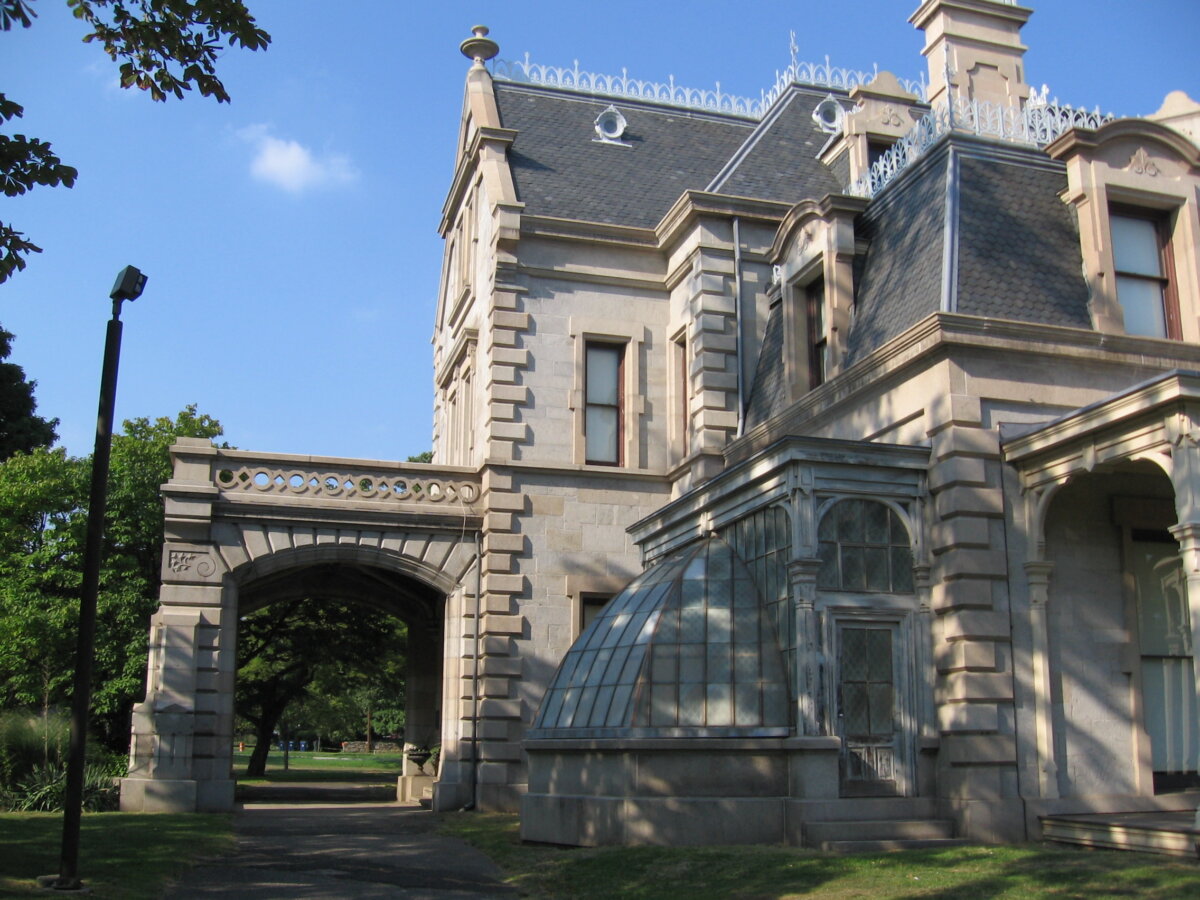
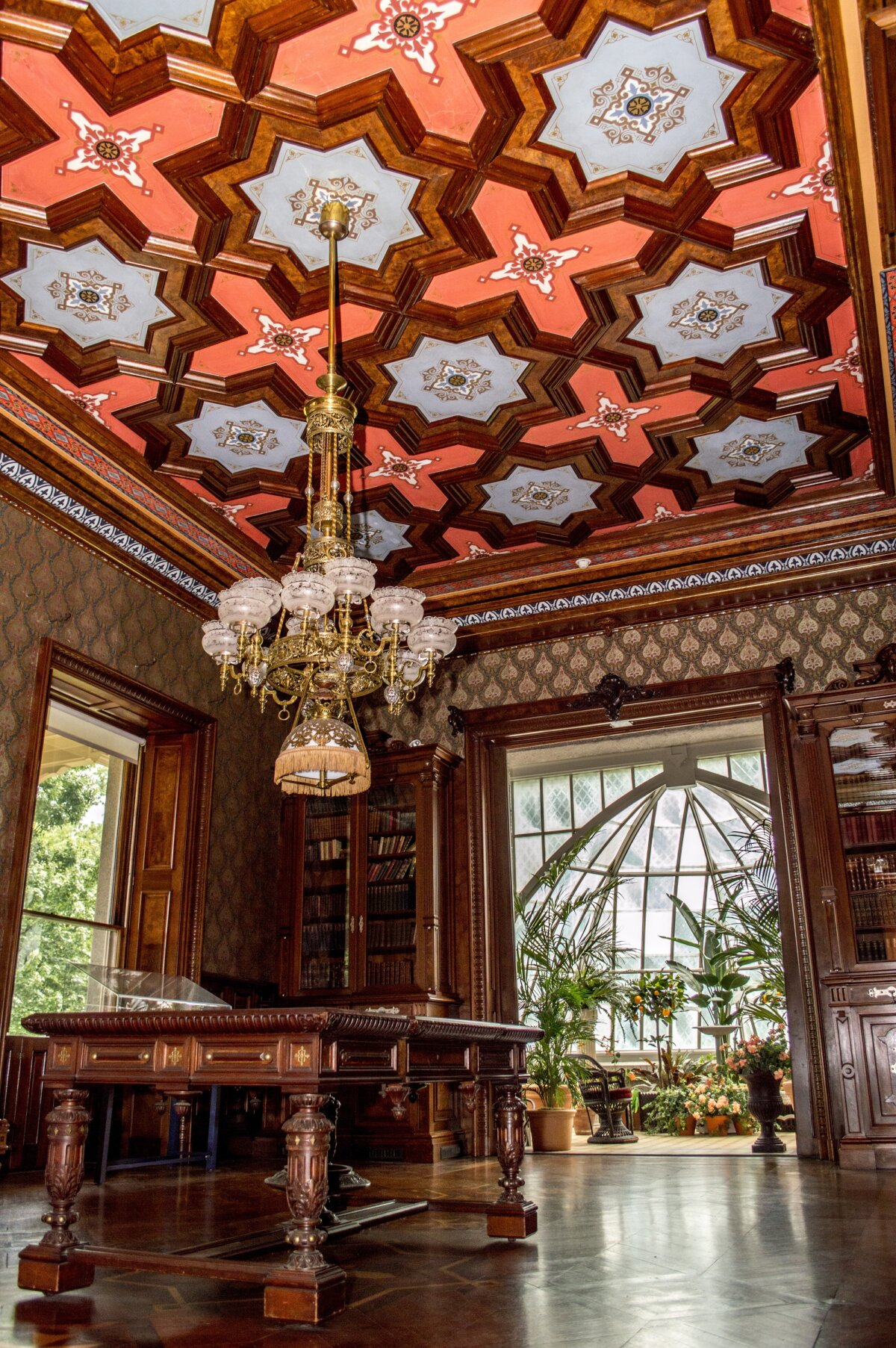
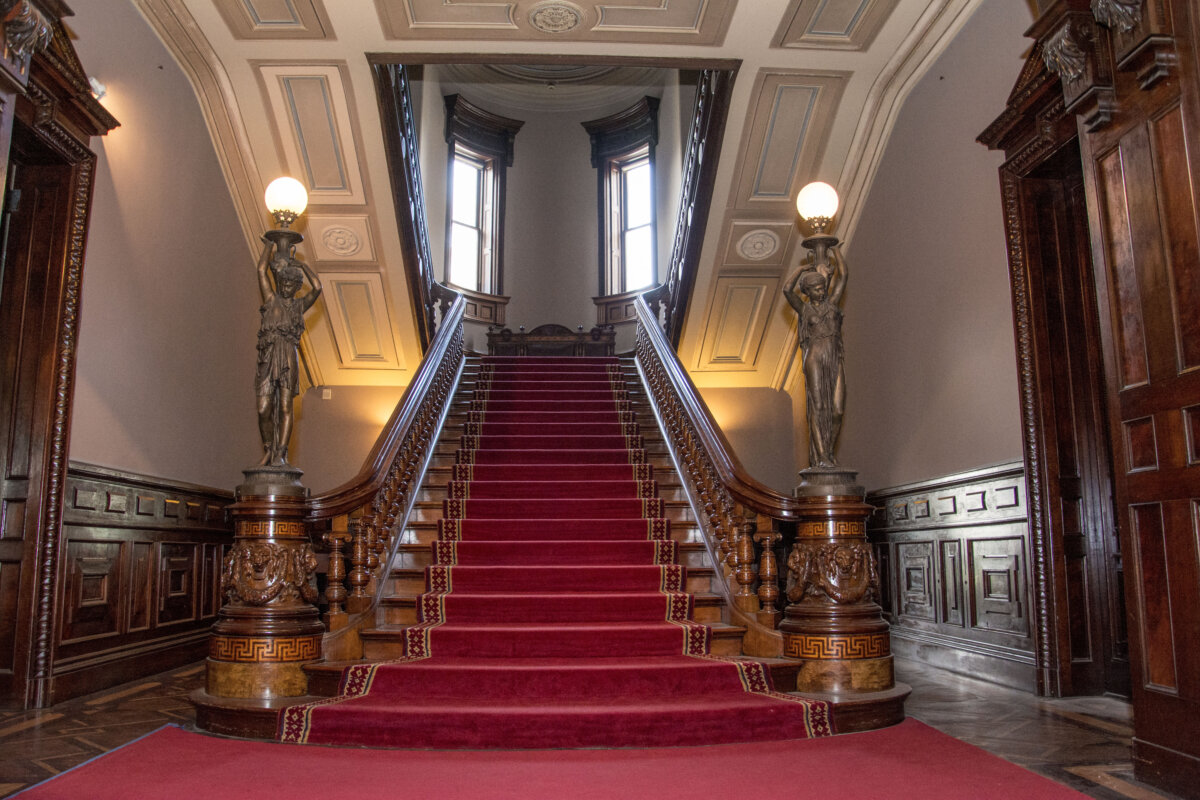
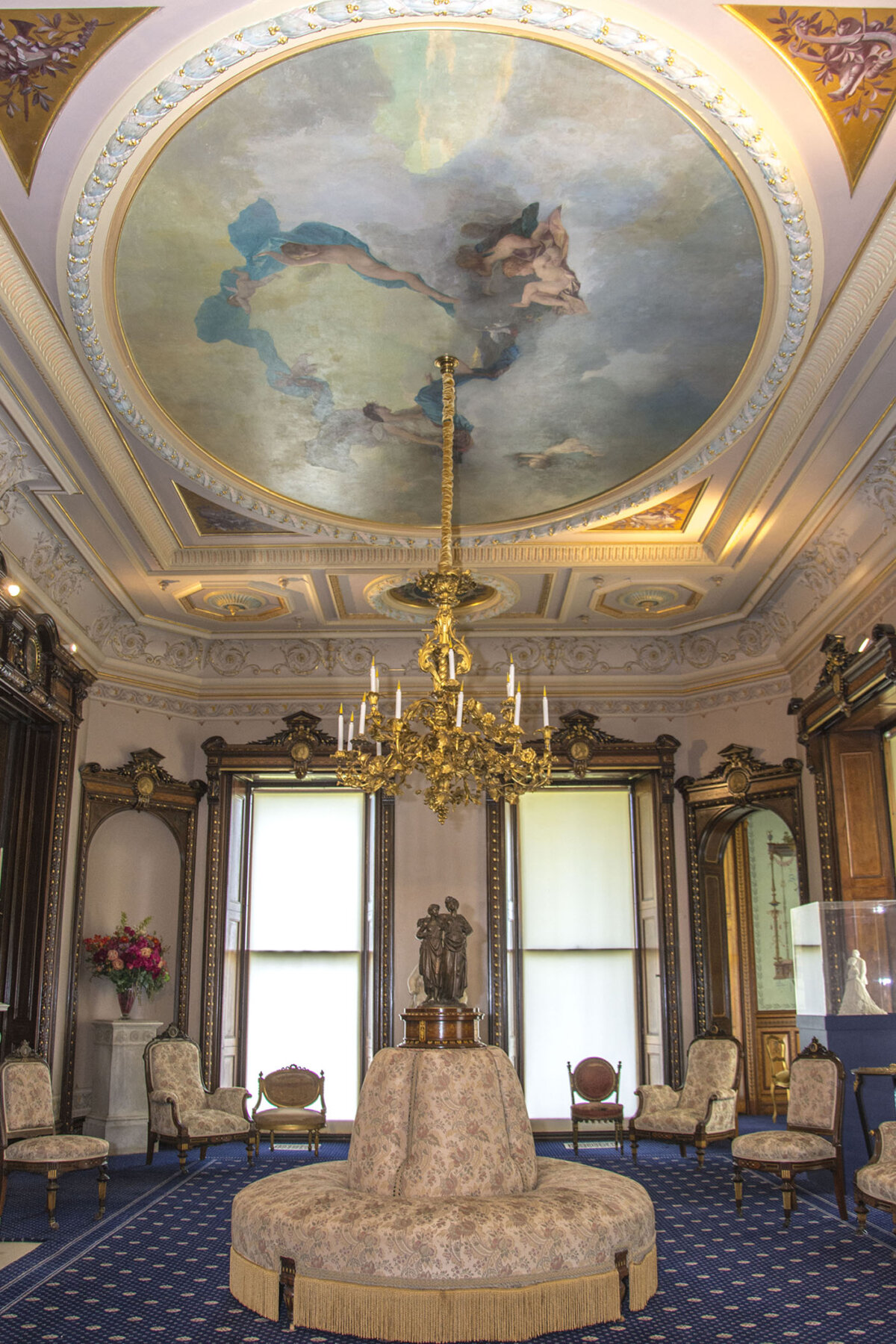
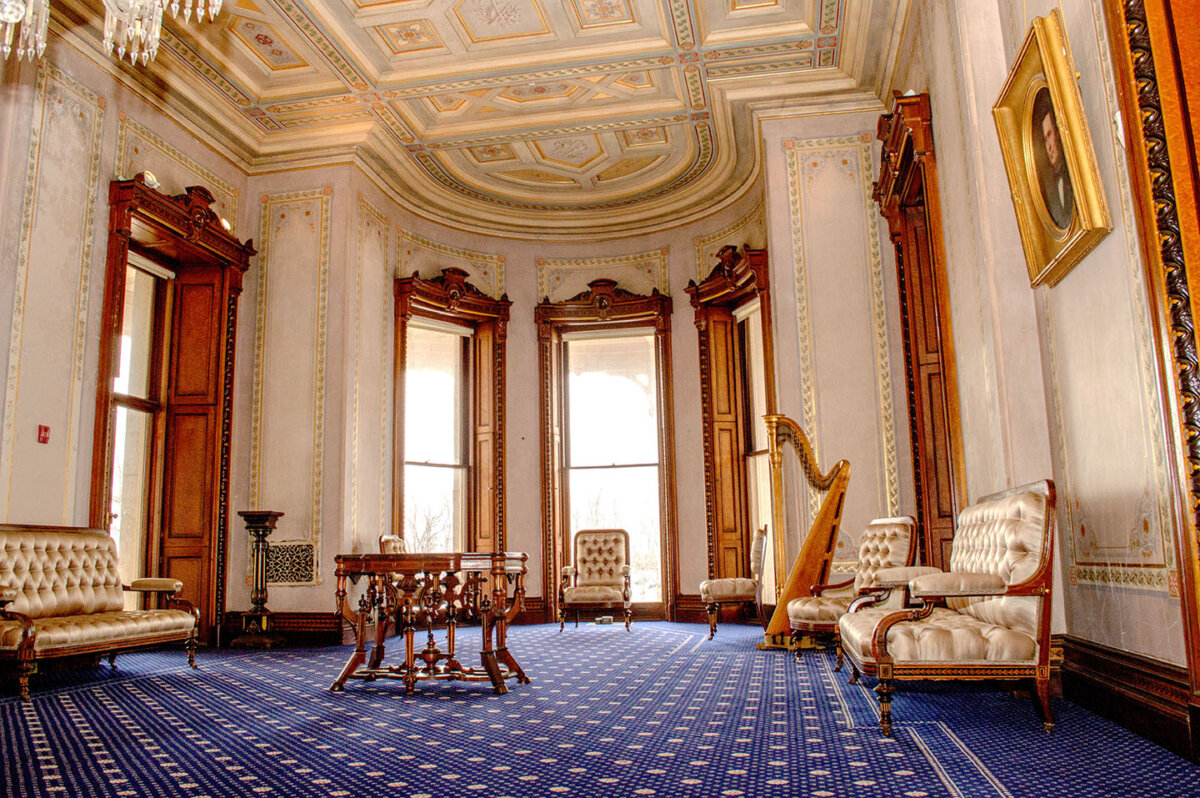
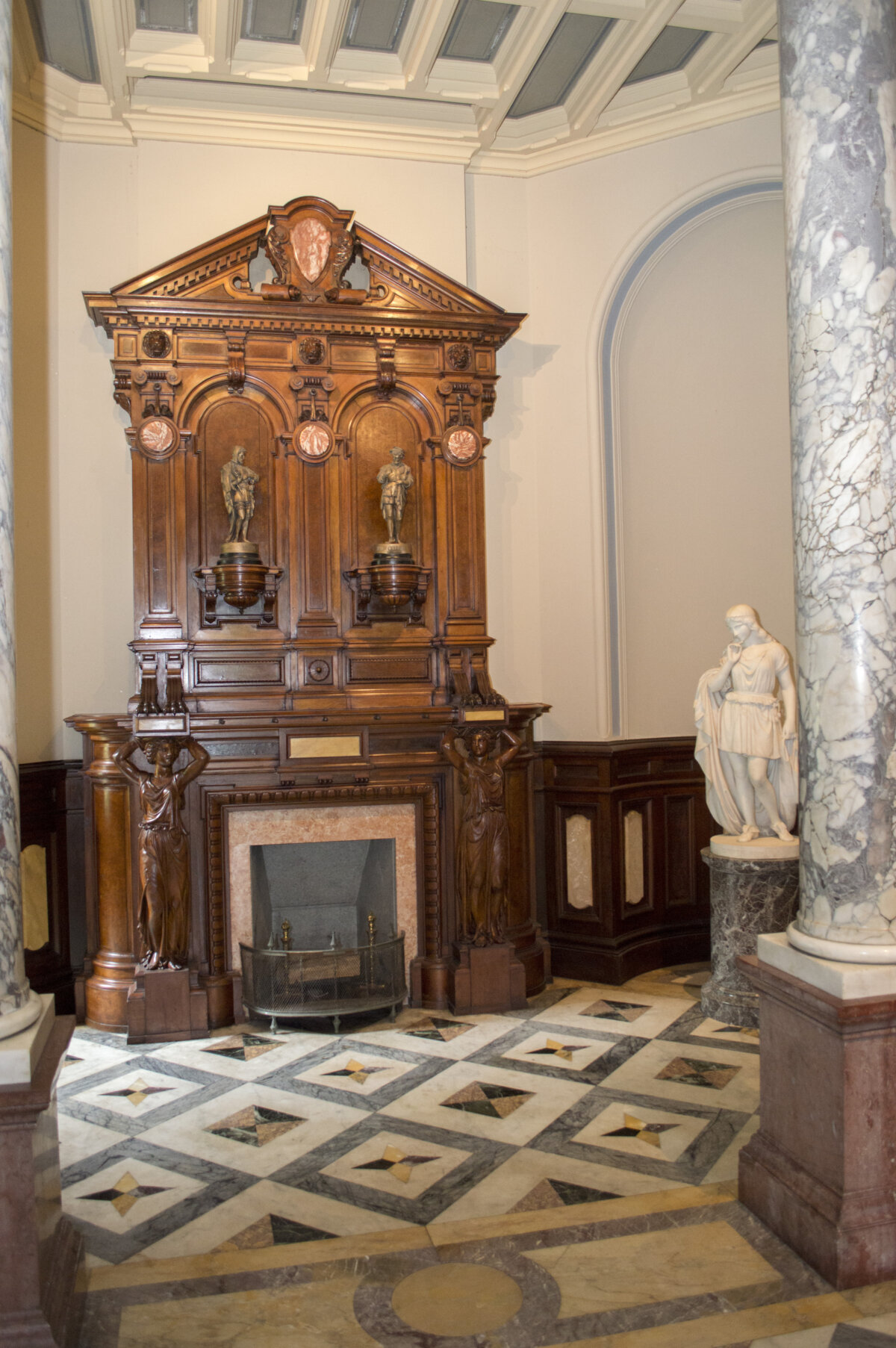
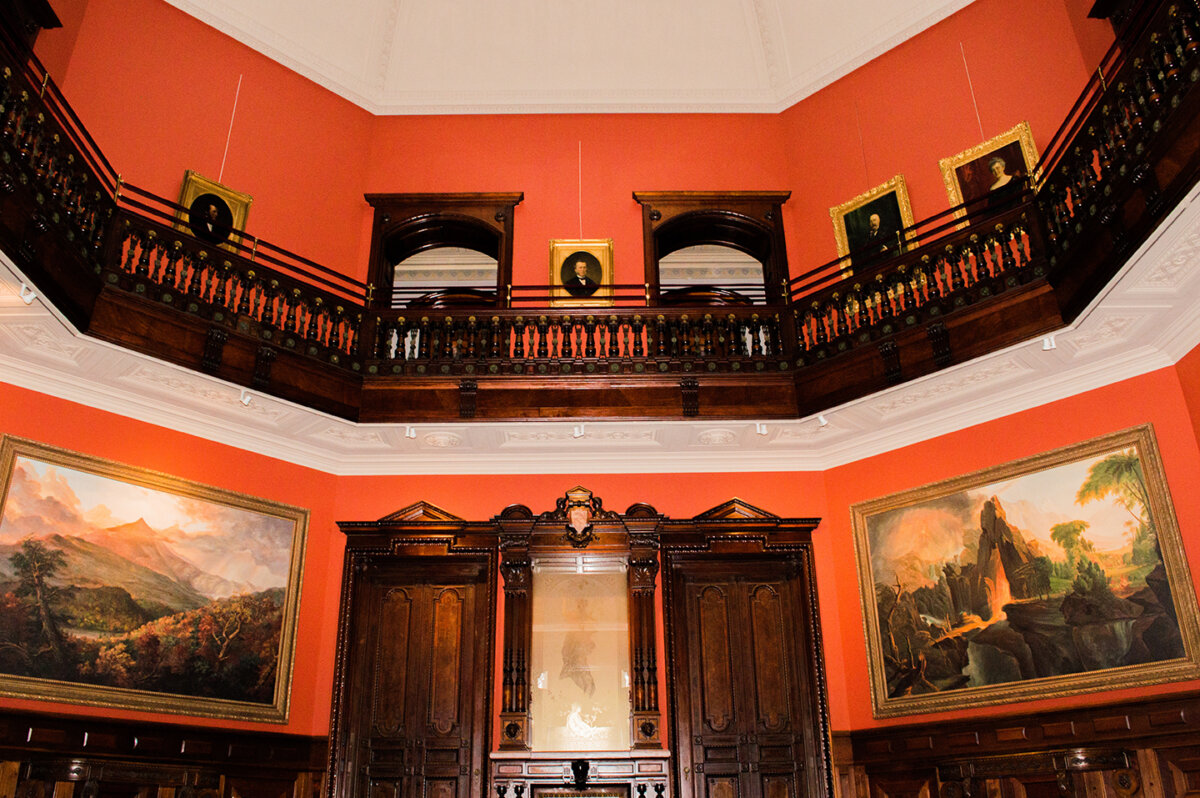
On the west side of the Lockwood-Mathews Mansion is the porte cochere, or covered carriage gate, where visitors enter the home through the groin-vaulted vestibule. The conservatory, with its ribbed glass half-dome, is an excellent example of early Gilded Age greenhouse architecture. (Noroton/CC BY-SA 3.0) One of the most magnificent first-floor rooms, the library was designed and furnished by Léon Marcotte, one of New York City’s most noted interior decorators during the 1860s. The room boasts hand-carved black walnut door frames, bookcases, and coffered ceiling panels as well as parquet floors made from five types of wood. The library’s original embossed wallpaper was reproduced by the French fabric manufacturer Scalamandre. (Sarah Grote Photography/Lockwood-Mathews Mansion Museum) The Grand Staircase, which dominates the north side of the rotunda, was designed by the Herter Brothers firm in New York City. Made primarily of black walnut inlaid with satinwood, the imperial staircase features newel posts that are carved with lion heads and garlands. The rails and balusters are inlaid with boxwood and feature a Greek key and palmette pattern. (Sarah Grote Photography/Lockwood-Mathews Mansion Museum) The Grand Salon’s sumptuous interior was designed by the Herter Brothers and features gilded moldings, Louis XV furniture, and rosewood woodwork inlaid with boxwood, ebony, and cedar of Lebanon. The highlight of the room is the exquisite ceiling fresco of “Venus at Play with Her Cupids” by French artist Pierre-Victor Galland (1822–1892). (Sarah Grote Photography/Lockwood-Mathews Mansion Museum) Despite the music room’s featured 19th-century harp, the room’s name originated from its decorative designs: Instruments are painted in the original 1868 paneled ceiling and inlaid in boxwood in the pocket doors. The current carpet was installed by Paramount Studios for the 2004 film “The Stepford Wives,” starring Nicole Kidman and Matthew Broderick. (Sarah Grote Photography/Lockwood-Mathews Mansion Museum) The hall features plaster walls and ceilings, four Florentine marble columns on bases of porphyry containing feldspar crystals, star-patterned marble flooring, and a carved, black walnut mantel with a marble fireplace. “The Wept of Wish-ton-Wish,” a statue by Joseph Mozier (1812–1870), which was carved to portray the heroine in James Fenimore Cooper’s tale, stands in one of the corner niches. (Lockwood-Mathews Mansion Museum) The rotunda, which features a 42-foot cove ceiling topped with a double skylight, is the focal point of the mansion’s interior. LeGrand Lockwood displayed his collection of paintings and statuary—most notably, Bierstadt’s colossal Yosemite landscape—in this central, octagonal court. The bedroom suites are located off the second-story gallery that encircles the rotunda’s court. (Sarah Grote Photography/Lockwood-Mathews Mansion Museum)
What arts and culture topics would you like us to cover? Please email ideas or feedback to features@epochtimes.nyc
Jennifer Schneider is a classically trained artist who specializes in 19th century art and architecture. She has a Bachelor’s degree in Studio Arts and studied Imaginative Realism full-time at Georgetown Atelier in Seattle. She is a freelance photographer and an arts editor for The Epoch Times and American Essence (AE) magazine.