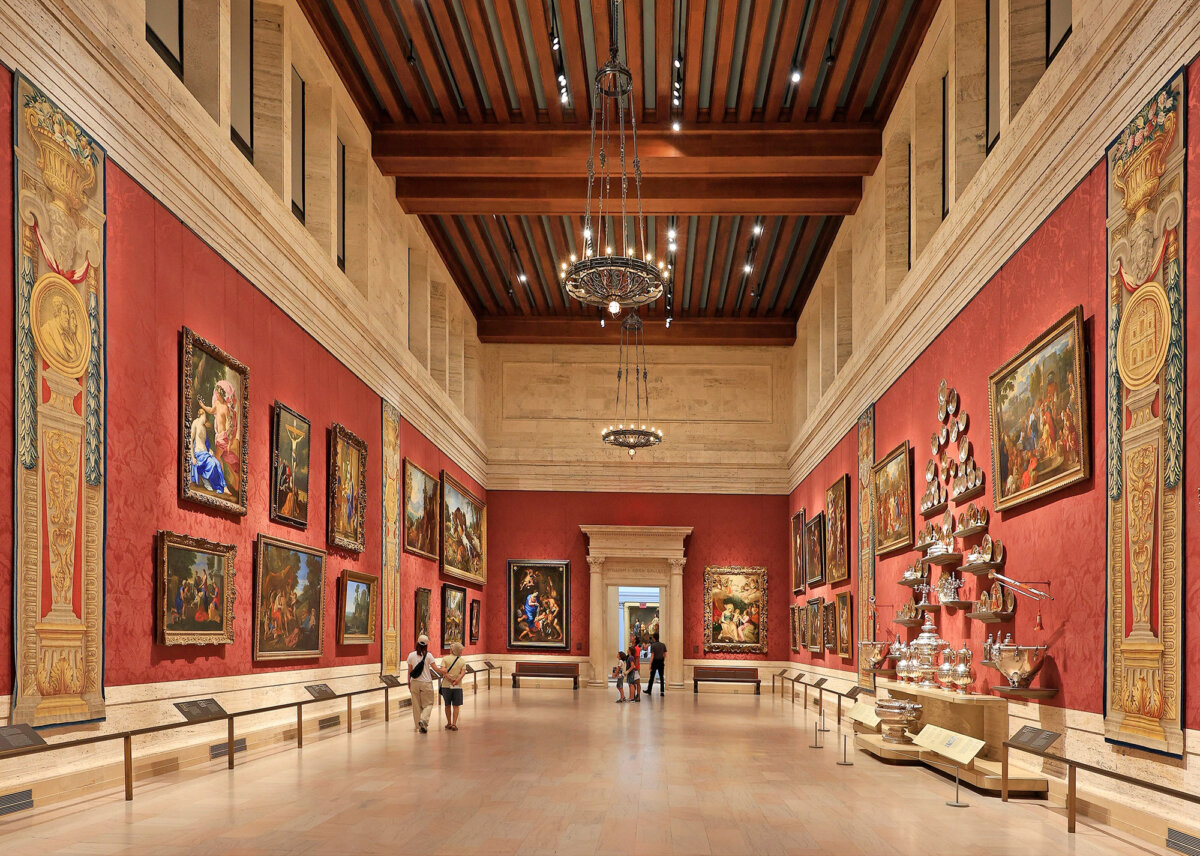
My love for art museums may have something to do with the fact that I fell in love in an art museum. Not only was an art museum the site of one of the first dates with my now-wife; it was also the place where I recognized that this woman had captured a part of me that I couldn’t get back even if I wanted to.
Falling in love is a little like an avalanche. There’s a long, slow buildup, a softening, a thawing, a stirring under a seemingly stable surface. Then, all at once, one is swept away.
I don’t know exactly when the avalanche broke upon me, but by the time I visited the Minneapolis Institute of Art with my future wife, something had definitely changed. Something had given way. After a cautious beginning to our courtship, I was now carried along in a euphoric flood of first love—giddy, excited, bewildered, besotted.
The lovely works of art that we strolled past—lush Renaissance paintings, idyllic Greek statues, ornate suits of armor—seemed to reflect her beauty in a thousand different ways. It was the perfect place to be in love. Beauty steeped in beauty.
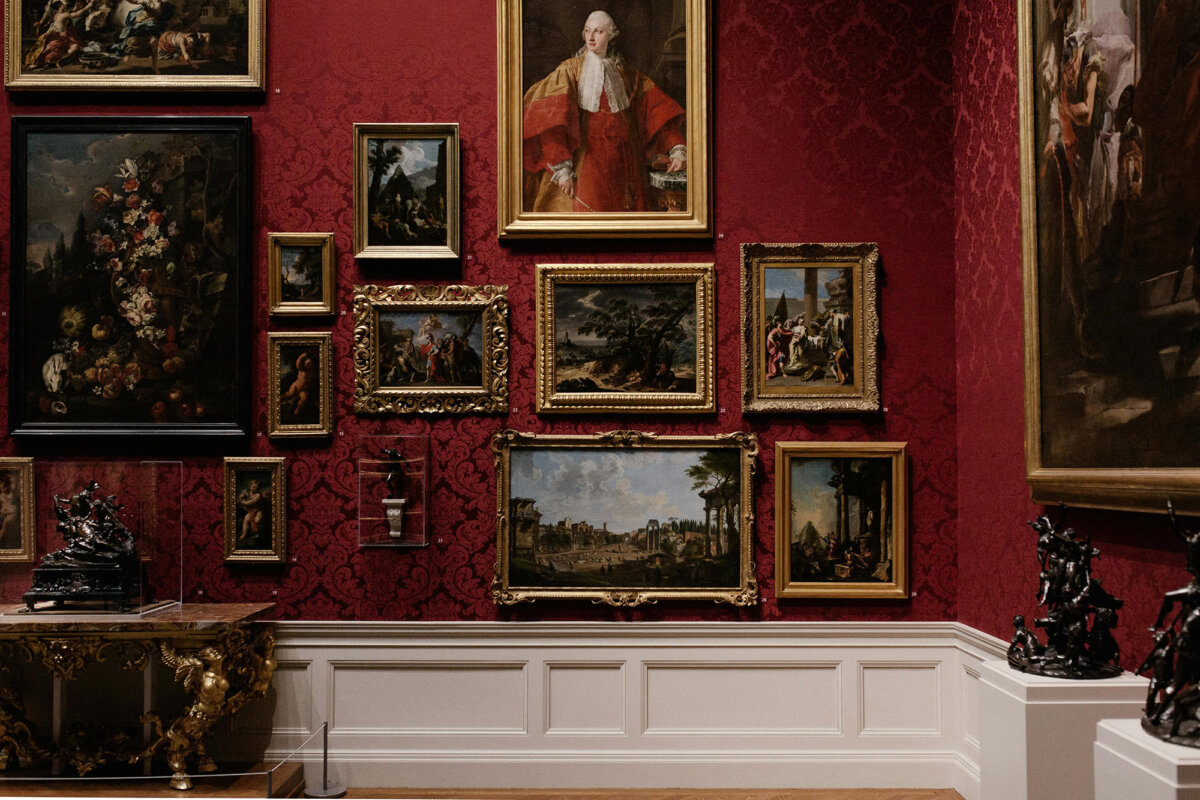
Art museums and galleries are places of love. Platonic, familial—not just romantic love (although partly that, at least in my experience). They speak of all the loves that have bewitched the human heart throughout the centuries. That’s what the best art is: an expression of love and admiration—for nature, for the human form and the human drama, for creation as a whole, for the divine author of that creation. Josef Pieper wrote in “Only the Lover Sings”:
“If the disposition of acceptance and love is absent, not only can there be no feast, but no song either! C’est l’amour qui chante, love alone knows how to sing. The term ‘song’, of course, is used here in an all-encompassing sense, including all the areas of the fine arts: poetry, music, dance, and sculpture.”
The greatest artists produce masterpieces because they love their subjects. In all its varied forms, love gives the artist the profound insight that permeates a work of art, making it more than a mere copy of external features. Pieper commented:
“Art flowing from contemplation does not so much attempt to copy reality as rather to capture the archetypes of all that is. Such art does not want to depict what everybody already sees but to make visible what not everybody sees.”
The artistic process isn’t unlike romantic love. The lover sees his beloved more clearly than anyone else does; his insight into her goes deeper because he looks with the eyes of love. He recognizes qualities, potential, and mysteries in her that are hidden from common view. The same occurs when an artist crafts a masterpiece. Because he looks with eyes of love and contemplation, he sees into the essence of his subject matter. It’s this essence he seeks to capture and transmit through artistic representation.
The artist also aims to clarify his audience’s vision. Museumgoers will get the most out of the art if they come to it with a spirit of love and appreciation and docility.
“There is a world of difference between viewing a work of art and really seeing it—the difference between sight and insight,” Carol Strickland wrote in “The Annotated Mona Lisa.” The same might be said of creating a work of art—or falling in love.
The casual observer views a tree, but the artist sees it and has insight into it. The acquaintance looks at a woman, but her lover sees her and has insight into her that is not meant for anyone else. To have insight means to see within or see into, to grasp the essence of something. When we grasp something’s essence, it most truly belongs to us.
The Gift of Art
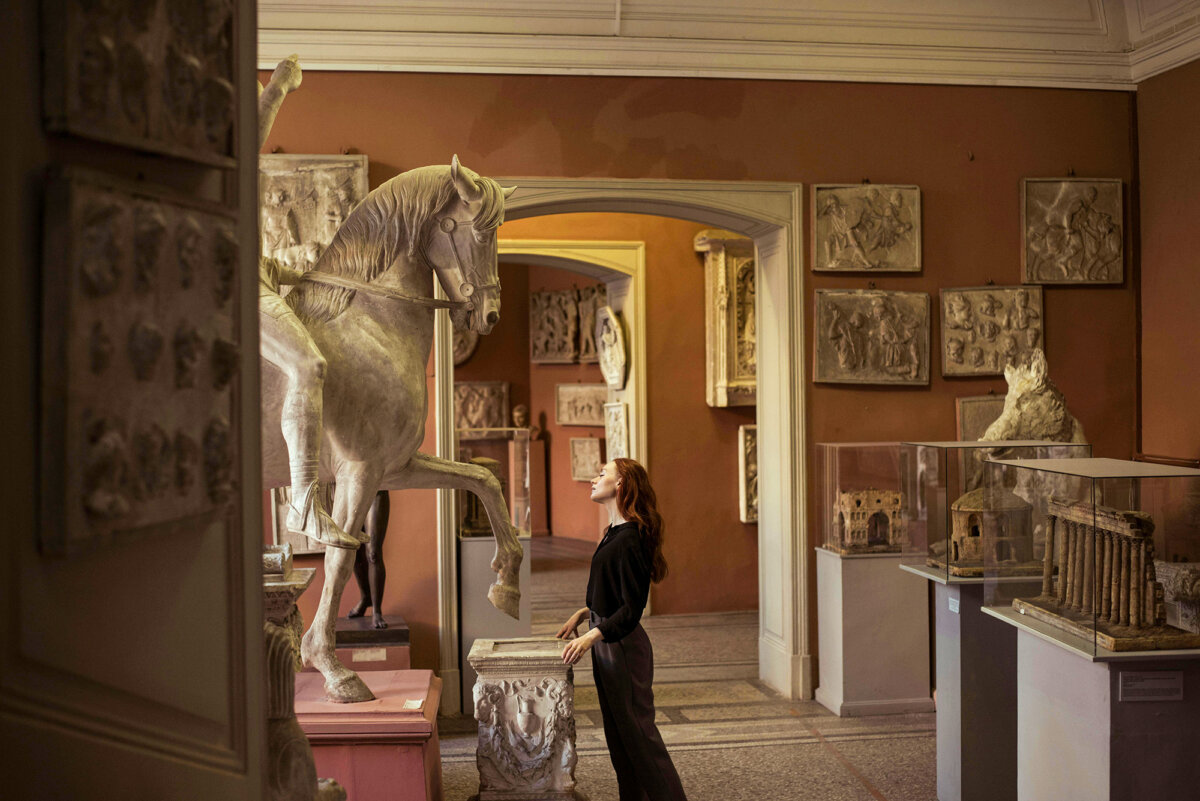
This is the great gift of art and art museums—they give us the world. By expressing in color and form the mysteries of the world, they reveal to us essences that we might struggle to grasp otherwise. The result is that we leave the gallery with a deeper and more complete possession of the world.
This past September, my pregnant wife, our 2-year-old daughter, and I traveled to Lucca, Italy. In this ancient, walled city, we made our way to an art museum. It featured art and artifacts from the Tuscan era all the way to the late Renaissance. We had the place mostly to ourselves, and the three of us wandered as if in an enchanted forest. Around every corner, a new wonder emerged: ancient sword hilts once gripped by a warrior facing down death; stately columns that were once covered with vines on the terrace of a Roman villa where, perhaps, two lovers talked; gilded medieval icons and altarpieces that are windows to a world of divine love, breaking in like lightning upon the paganism of old.
It’s a great thing to receive such a jolt of reality, of what really matters. That’s what the best art museums provide.
Walking alongside my wife and me—and occasionally causing her father moments of panic when he thought she would touch or damage a work of art—was our toddler daughter. It wasn’t her time, yet, to understand the meaning of the art, nor the museum, nor how they had helped establish her own family.
Someday, when those golden curls have darkened to brown, and when she’s all grown up, I might explain it to her—as much as words can explain such wonders. I might tell her how her origins are there, among the broken statues and flecks of paint in an old art museum, and how her story began when her father once looked up and saw beauty steeped in beauty.