One hundred and sixty five years ago, while scanning the night sky from his home in New York, Alfred E. Thatcher saw an object with an apparent diameter three times the size of the planet Jupiter approaching the sun.
What he saw was a comet. It flew by Earth, swerved around the sun, and then exited the solar system, never to be seen again. But scientists analyzed its trajectory and orbit, and estimated that this comet, now called Comet Thatcher, will return about every 415 years.
Since it won’t return again until around 2283, people in our lifetime will never see Comet Thatcher, but we have the honor of witnessing its legacy faithfully every year.
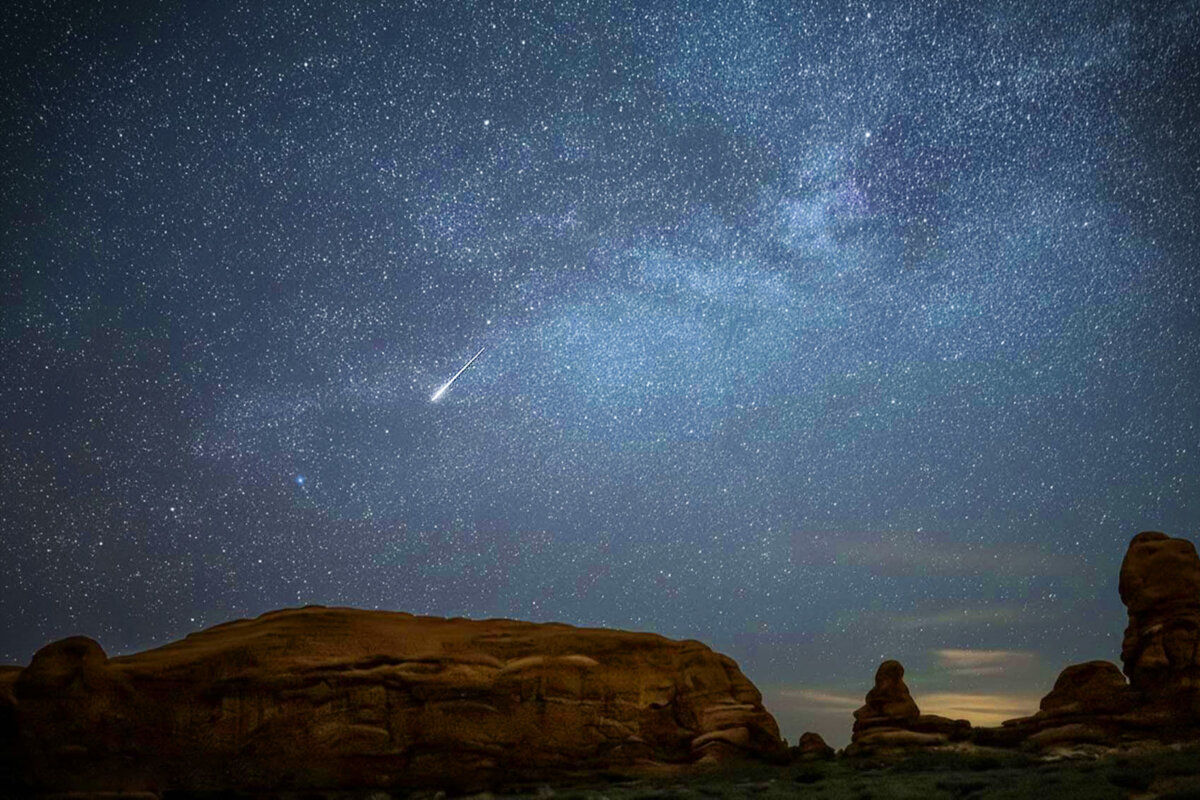
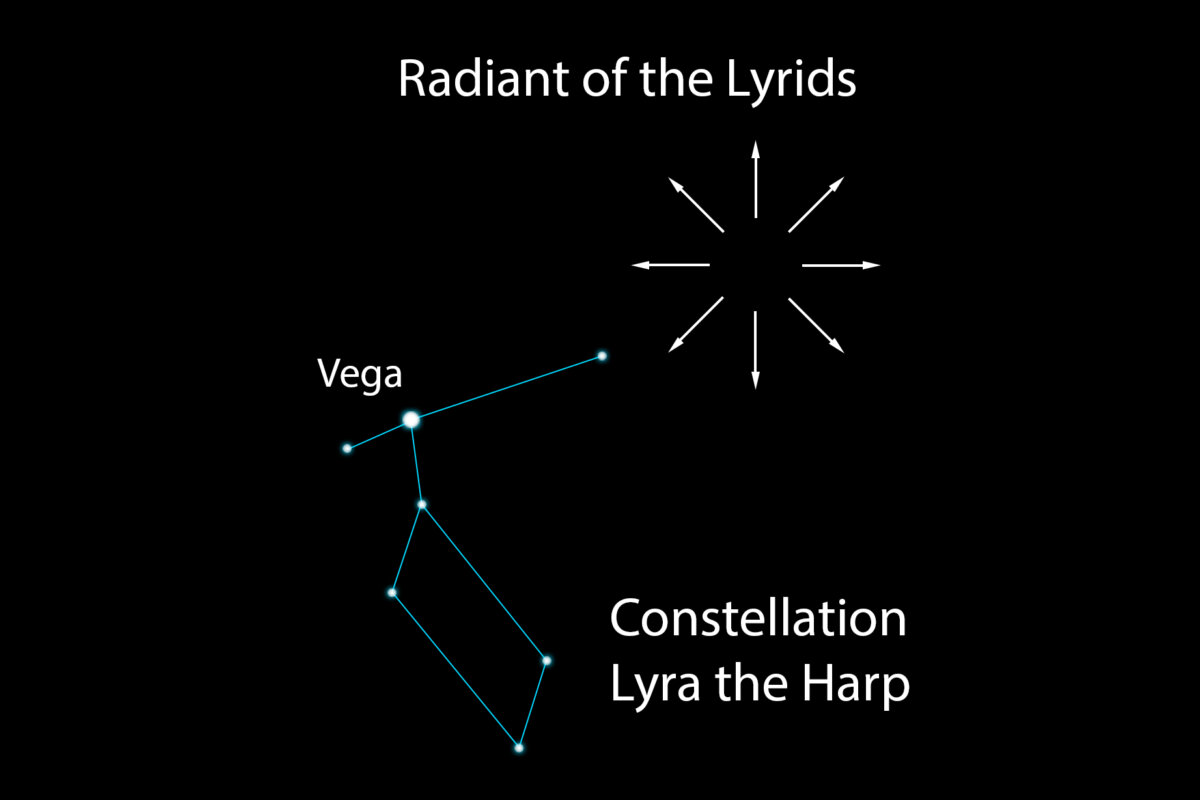
In late April, chunks from Comet Thatcher’s vast debris stream burn up in the atmosphere to become a yearly meteor shower—the Lyrids. The shower is so named because the point from which the Lyrids appear to emanate, their radiant, is located in constellation Lyra the Harp.
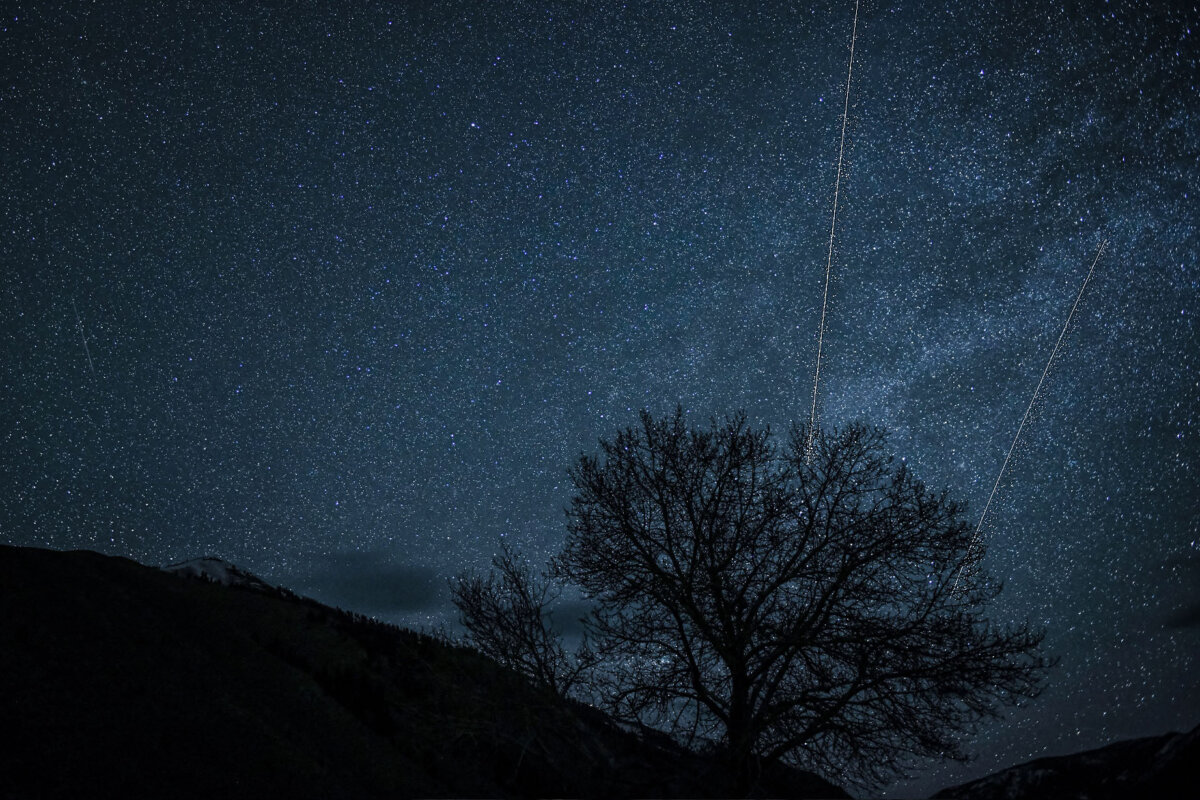
This year, from April 15 to 29, we can expect shooting stars. That’s when Earth’s orbit will carry us through the path of the Lyrids’ meteor stream, but unlike other meteor showers their window for viewing is narrow. While many showers ramble on for weeks, the Lyrids will peak dramatically after midnight, before dawn, on April 22. At least, that’s what experts are predicting; meteors are notoriously chaotic in their timing.
What we know for sure is the Lyrids will end the annual meteor drought that befalls Earth after the Quadrantids wind up in early January. Relatively few meteors will fall between then and late April.
We also know that when the Lyrids hit they sometimes drop spectacular fireballs that can occasionally outshine even the morning star, Venus. Under dark skies with no moon, we might expect 10 to 15 meteors an hour. Although the Lyriads are famous for their outbursts of up to 100 per hour, those only occur about every 60 years and aren’t expected any time soon.
Astronomers think the planets are behind these sporadic spurts; they disturb the meteor stream with their gravitational fields as they orbit the sun, making the meteor field clumpy.
How to View the Lyrid Meteor Shower
For anyone hoping to watch the Lyrids, astronomers want you to know where to look—or, rather, where not to look. The radiant point of the Lyrids is located near bright star Vega in constellation Lyra, to the northeast, and will rise above the horizon around 9 or 10 p.m. your local time. If you rewind them backward in space, that’s where they will seem to emanate from, but don’t expect to find any meteors there; you won’t find them at the radiant point.
Since the Lyrids fan out in all directions, their long tails will be far more visible in the surrounding sky. So it’s wise to lie back on a blanket or lawn chair and scan the widest panorama possible.
When there is moonlight, it can often wash out meteors from sight. But fortunately, the Lyrids will coincide with a waxing crescent moon that sets after midnight, making for ideal dark skies. You will want to escape city lights to the greatest extent for optimal viewing.
The Lyrids are bright and colorful meteors that can sometimes streak with very long tails. These streaks are popularly called fireballs though the technical term is “persistent trains.” This is caused by ionized gas glowing in the wake of a meteor burning up in the atmosphere. The Lyrids are famous for dropping a few every once in a while.
Origin Story of the Lyrids
The bright star Vega might seem to be the birthplace of the Lyrids, since they radiate from it, but their backstory is actually much closer to home. A meteor begins as a lump of cosmic dust floating in space, a piece of something that broke apart from a larger object, an asteroid or a comet perhaps. Astronomers believe the Lyrids were part of Comet Thatcher, an object orbiting the sun that isn’t anywhere near bright star Vega, which shines some 25 light years away.
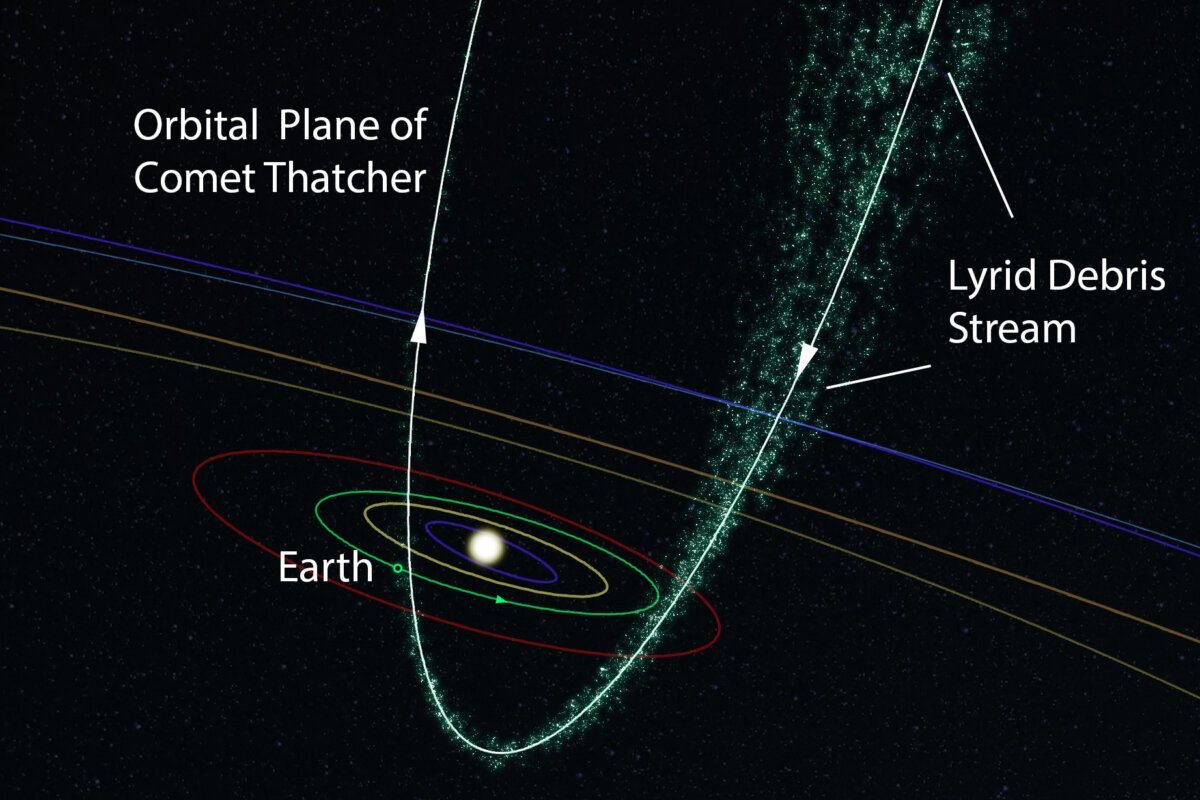
When Alfred E. Thatcher discovered the comet in April 1861 it was seen hurtling from constellation Draco the Dragon, far up north. Viewing it with his 4.5-inch-diameter refracting telescope, magnifying it 30 times, the comet was invisible at first. It began to glow as it neared the sun while solar radiation caused it to become volatile. It started jettisoning material, as comets tend to do, leaving a vast particle trail in its wake: the debris stream of the Lyrids.
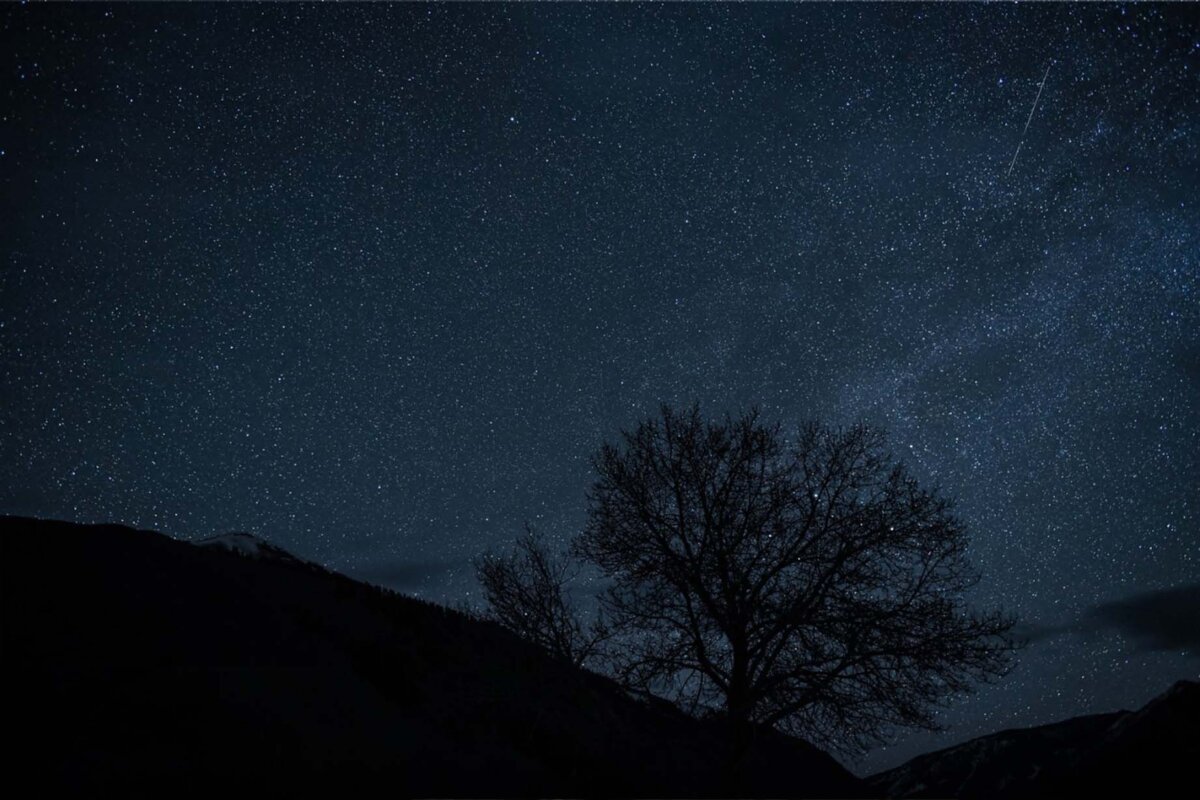
So their birthplace isn’t beyond the solar system, though there’s a good reason their radiant lies fixed near Vega. That’s the trajectory to which the Lyrids point along their fixed orbit; all the meteors will forever shoot in the direction that Comet Thatcher travelled so many decades ago. And Earth will faithfully intersect that meteor shower the same time each year.
Comet Thatcher will reach its furthest point from the sun by about 2070, with another two centuries until its next return. Meanwhile, its legacy—the Lyrids—will visit our night sky every late April.