



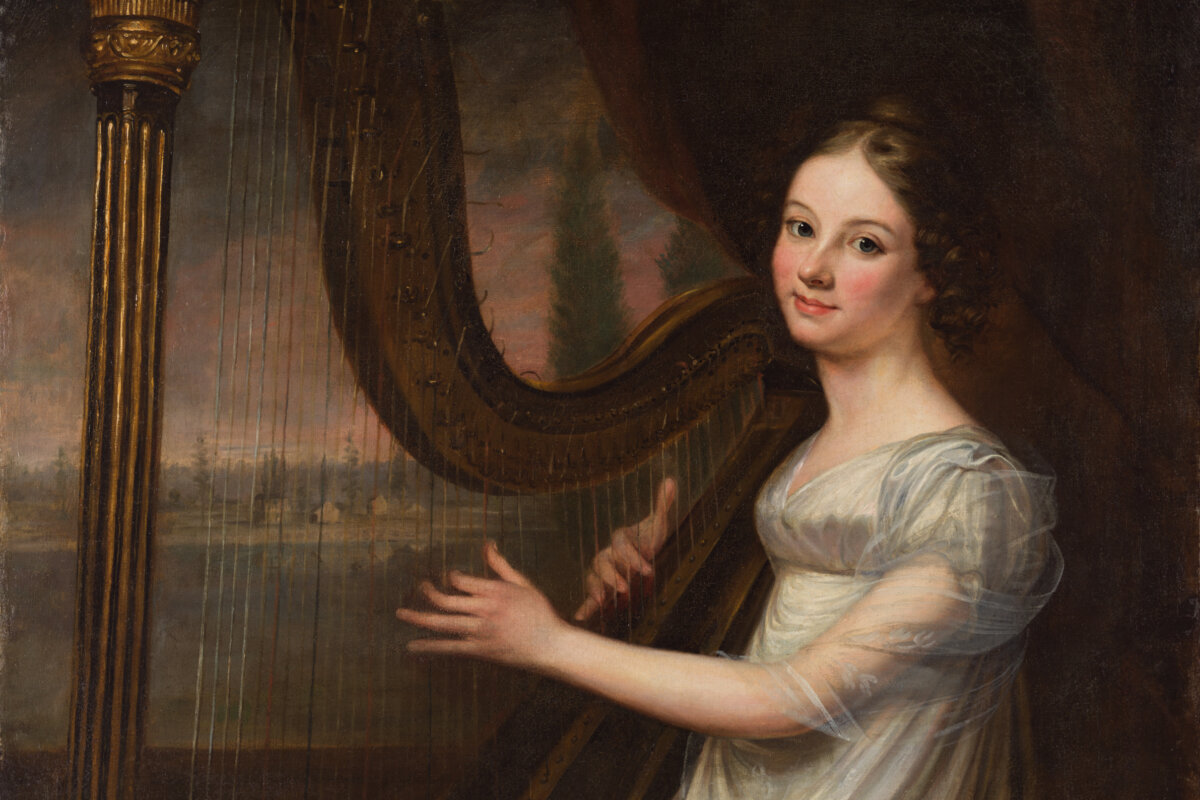
In the 18th century, Williamsburg emerged as one of the colonies’ vibrant trading hubs. The blossoming capital of Virginia wasted no time becoming a flourishing cultural center as well. A popular exhibition at the Art Museums of Colonial Williamsburg, “Making Music in Early America,” features some of the country’s adored and unique instruments from her formative era.
Even in the country’s earliest days, the musical landscape and the music-makers who shaped it created an environment full of captivating melody and striking craftsmanship. As far back as the 1700s, America was as artistically alive as it is today.
The Wind Plays the Harp
From the outset of American history, music was a core part of daily activities, whether one was tending to land, attending church, or celebrating a special occasion. “It was part of everyday life,” the Art Museums of Colonial Williamsburg’s website states.
“Music was a large part of people’s experience and helped foster a sense of community whether it was accompanying the organ in song at church or an impromptu concert at home to show off their talents to friends.”
One form of leisurely entertainment came from a remarkable stringed instrument, the Aeolian Harp, nicknamed the “wind harp.”
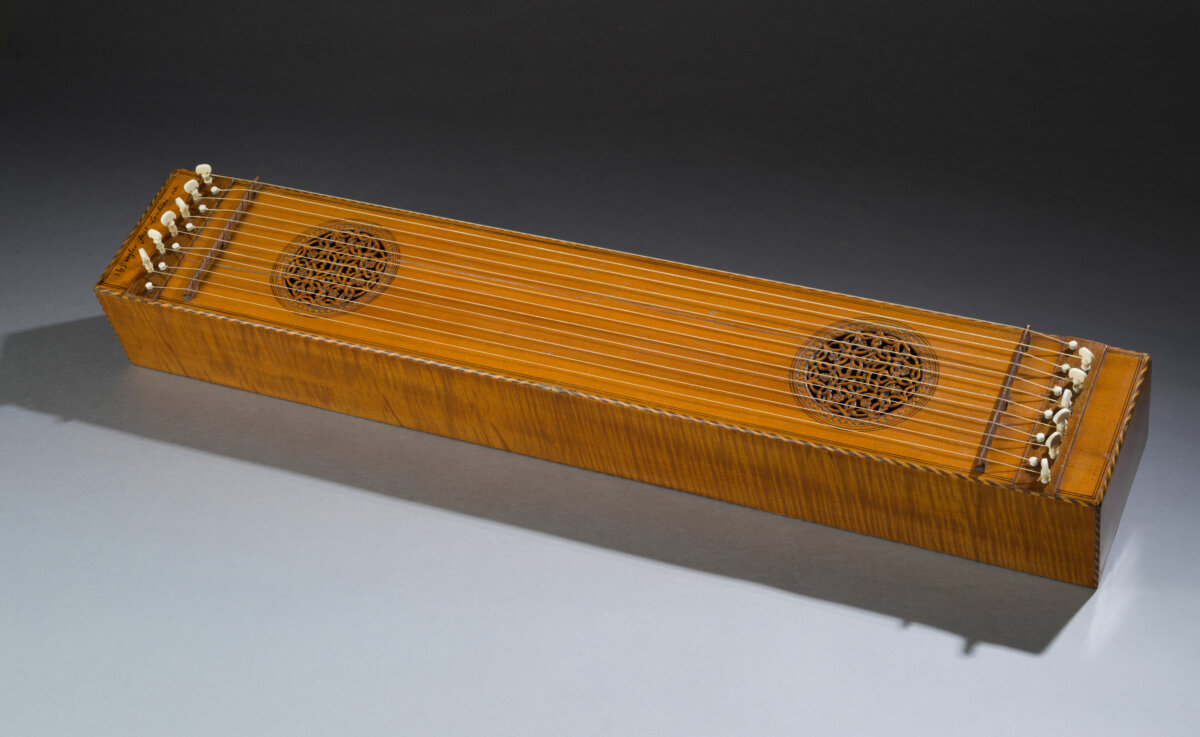
The historical version of the instrument on display features sound holes, a long and narrow box shape, and strings that aren’t played by man, but nature. The Aeolian harp gets its nickname from the very thing that causes its melody: wind. The tuning is how the magic happens. Its various strings are all tuned to the same pitch. Left outside during a breezy day, its angelic, ephemeral tone wafts with the circulating air, creating waves of harmonies that blend seamlessly with the environment.
The Aeolian Harp was one of the Romantic period’s popular instruments in England. As Europeans increasingly populated America, they incorporated its sublime tones into their new homeland. Because it is stirred by natural forces, people believed the instrument represented transcendence—making it an ideal musical addition to a young nation building a new world unlike any other.
A Teardrop-shaped Guitar
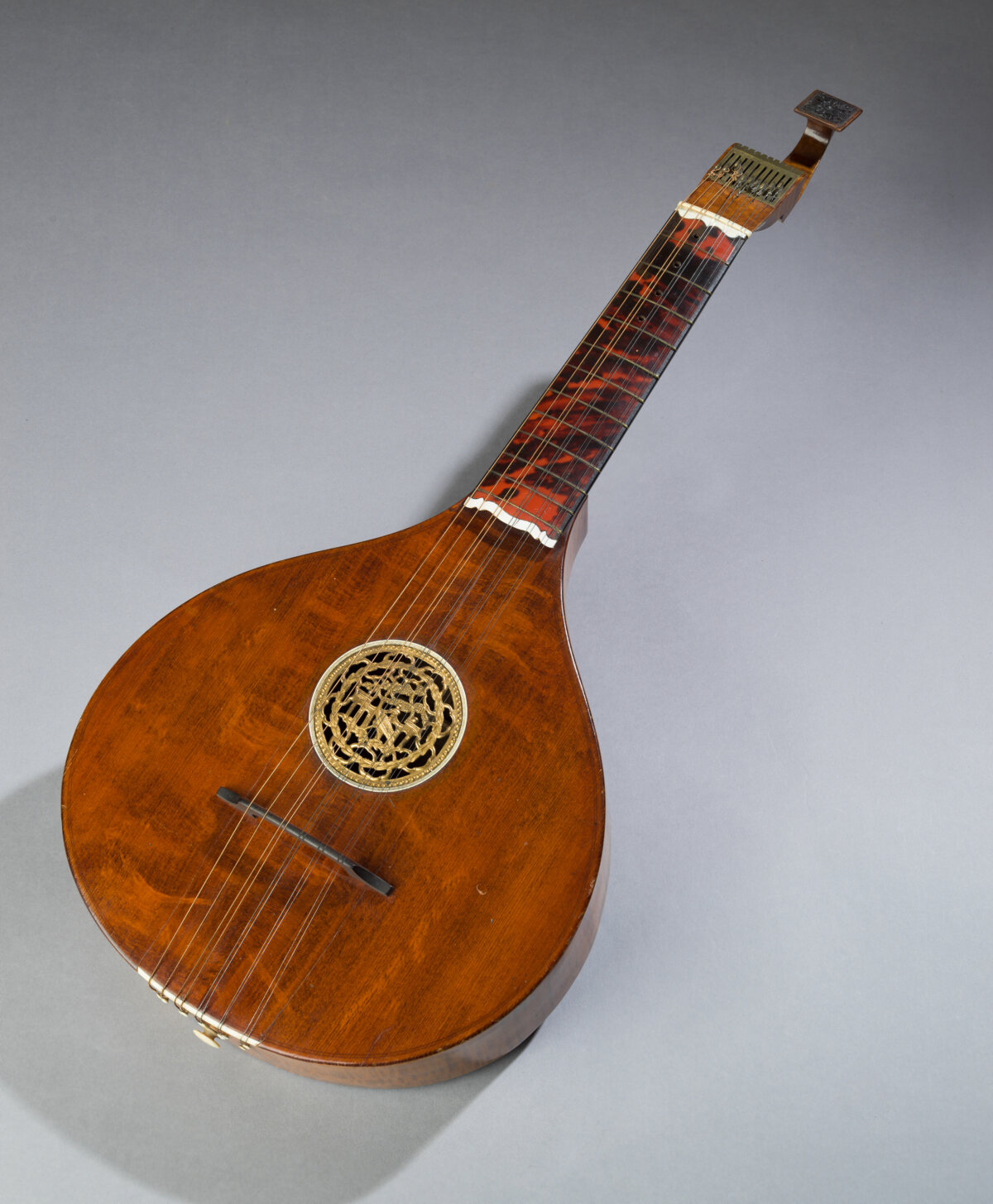
Though not as popular as other instruments of early America, the guitar had a presence among affluent families. Due to its smaller size, it was a preferred instrument for parlor music and domestic settings, making it the perfect choice for women. A guitar featured in the collection at the Art Museums of Colonial Williamsburg is shaped differently than the standard modern guitar. Known as an English guitar, the instrument is teardrop-shaped and features 10 strings meant to be plucked instead of strummed.
As its name suggests, the English guitar originated across the pond and traveled along with families to the founding colonies. The guitar featured in the exhibition was made by the premier English luthier James Preston, known as J.N. Preston, between 1765 and 1775, just before America gained independence.
America’s Founding Fathers were especially taken with the English guitar. Benjamin Franklin and Thomas Jefferson both added the instrument to their personal collections, and Franklin played it as well. One of Jefferson’s notebook entries gives a human air to an otherwise near-mythic figure. In 1776, he took a short break from attending the Second Continental Congress in Philadelphia to buy guitar strings, most likely for his wife, Martha, a skilled musician. He later recorded his visit to the music store in his journal.
A Pocket-sized Violin
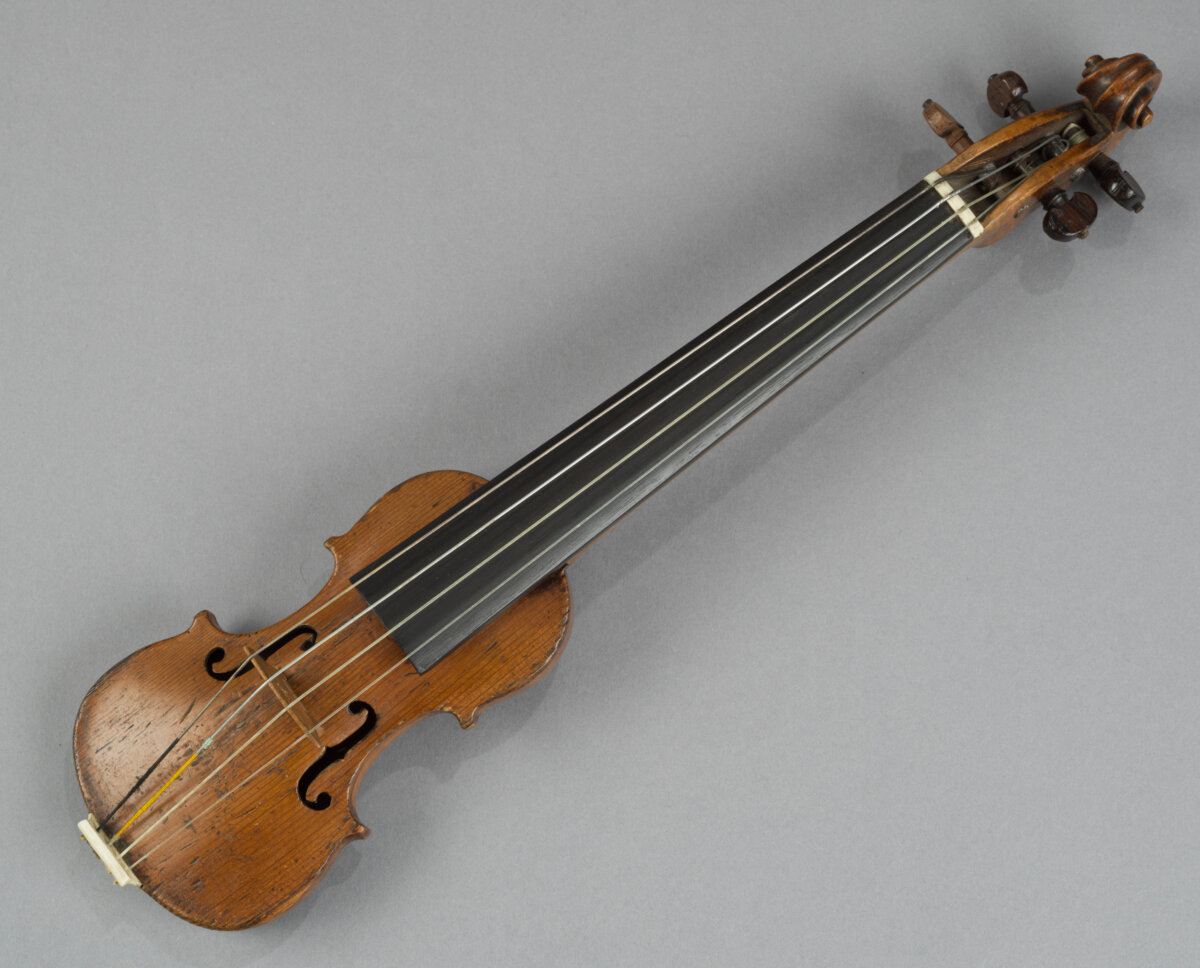
Another unique stringed instrument of early America was made with functionality in mind rather than melodic tone. The kit violin, or “kit” for short, was a miniature violin perfect for travel. Measuring just over a foot long and only a few inches wide, the compact violin was used by dance teachers, a sought-after occupation in the 18th century as formal dance was an integral part of affluent children’s upbringing and ceremonial occasions.
Often traveling to various areas as a gigging musician does today, these instructors, called “dance masters,” would take the pocket violin from their coat and play to help students with their timing. The petite violin created “a rhythm clear enough for dancers-in-training to hear with a beat provided by the player to get the bodies sliding and feet delicately pointing,” Strings Magazine notes.
Also referred to as a “pochette” (French for “little pocket”), kit violins in America were often made by another English luthier, Henry Jay. The historic luthier’s stringed instruments were a mainstay in English culture, but his kit violins crossed the Atlantic Ocean only occasionally, making the one on display for “Making Music in Early America” even more intriguing.
An Organ for Birdsong
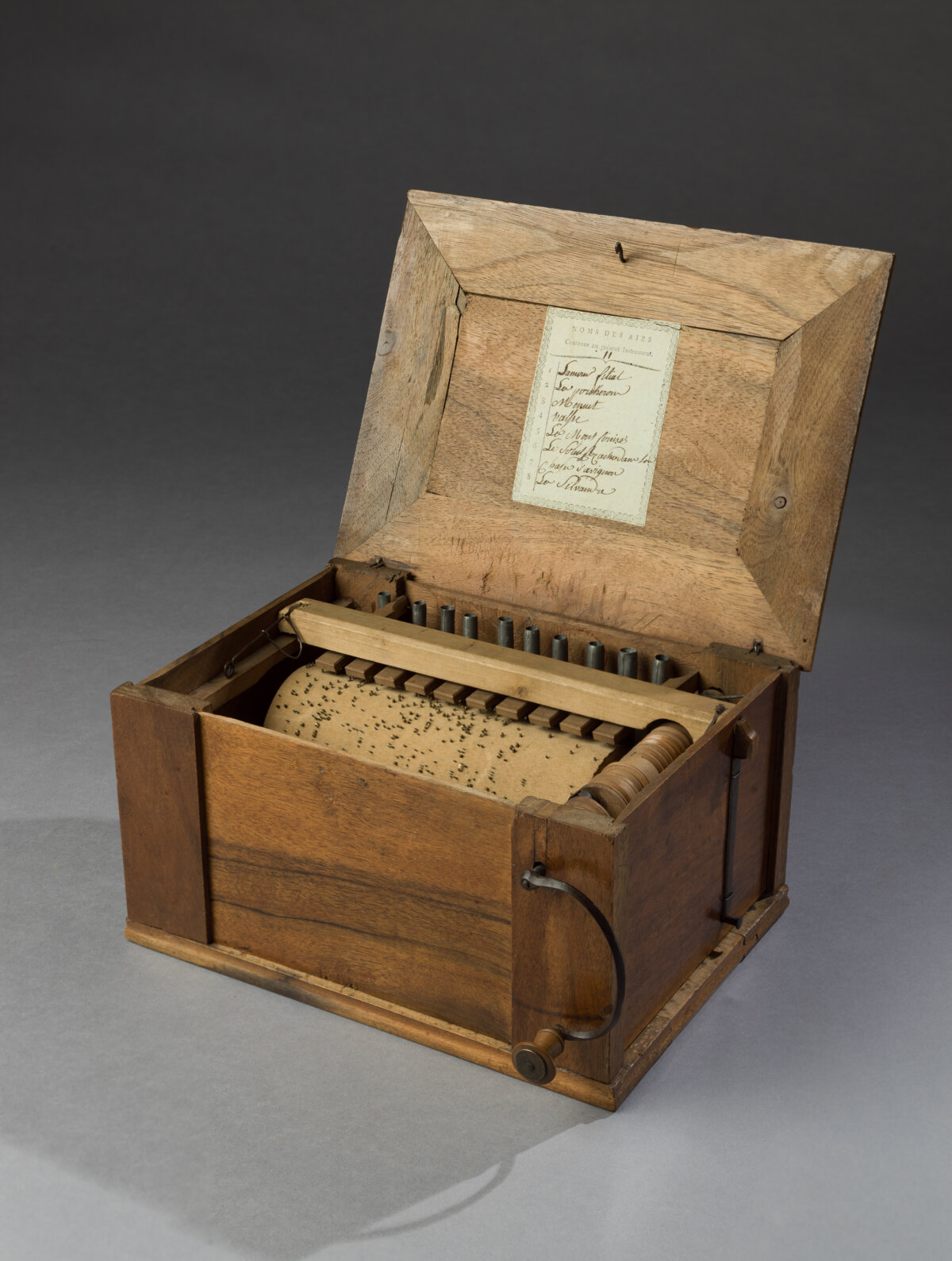
Like the Aeolian harp, the ingenious French serinette was historically used in tandem with nature. In colonial times, a serinette was a small barrel organ housed inside a portable box that opened and could be played to encourage birds to sing. The serinette originated in France and was used for common birds like finches and canaries (“serin” is the French word for canary). A hand crank on the side of the instrument was turned to push air through tiny metal pipes that emitted a high-pitched sound mimicking birdsong.
In America, these inventive devices became known as “bird organs” and could generally play around eight different songs. Folk tunes and waltzes were common styles included with the serinette. The small size of birds and their relatively low upkeep made native species like cardinals, mockingbirds, and parrots a popular choice for American pet owners during colonial times.
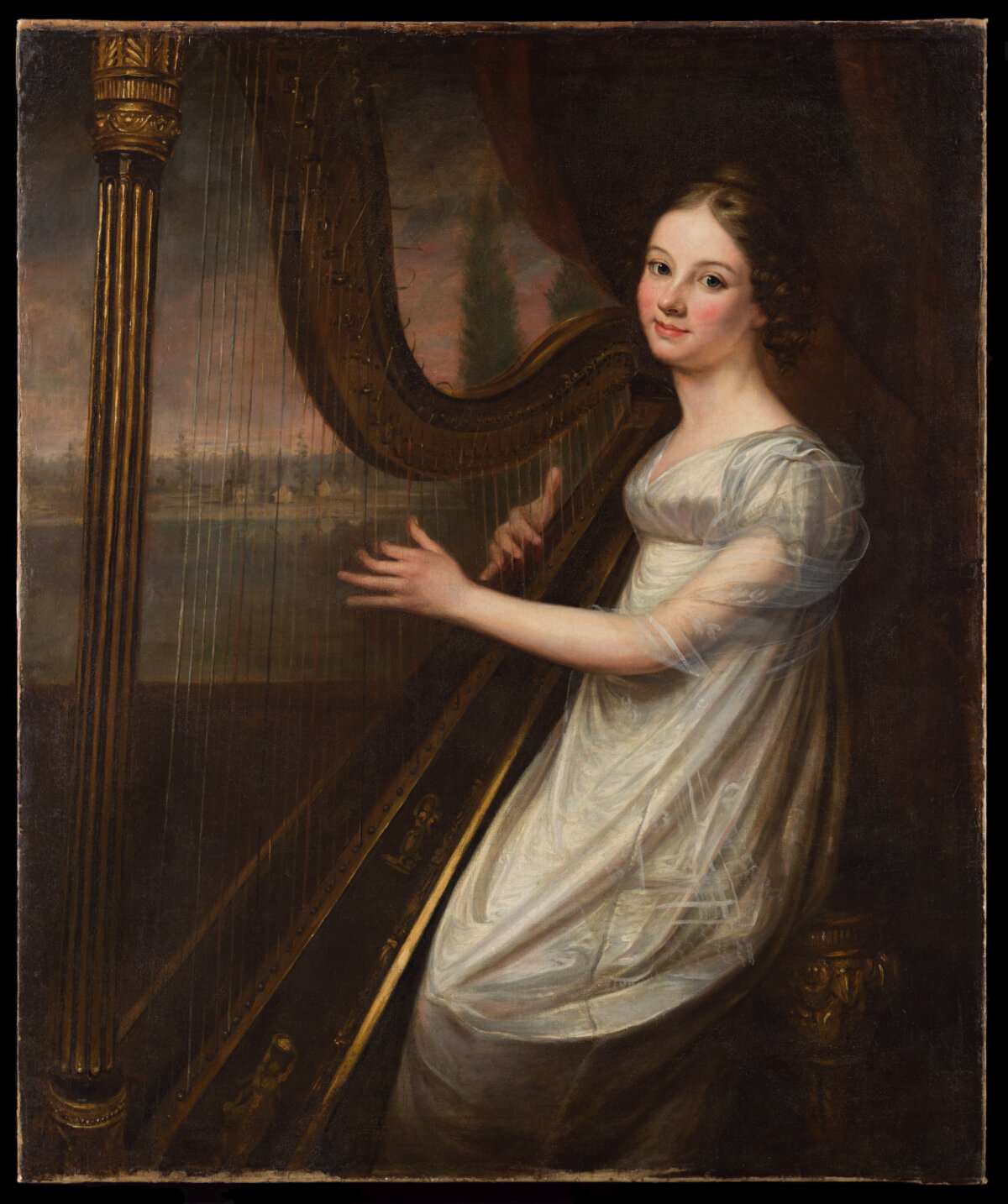
Other instruments in the “Making Music in Early America” exhibition include a German flute, a viola originating from Italy, and an American-made zither from Pennsylvania, which has a makeup resembling a modern lap steel guitar.
Various paintings are available to view as well, including influential American artist William Dunlap’s portrait of young Norfolk harpist Ann Taylor Roberts, completed in 1820.
Through their illuminating collection, the Art Museums of Colonial Williamsburg showcase how even America’s earliest generations were dedicated music-lovers. They developed a lively musical tapestry that has transformed into a fascinating legacy of the Western canon centuries later.
“Making Music in Early America” exhibition is on view in the Mark M. and Rosemary W. Leckie Gallery at the Art Museums of Colonial Williamsburg, Virginia. To learn more, visit colonialwilliamsburg.org.
What arts and culture topics would you like us to cover? Please email ideas or feedback to features@epochtimes.nyc
