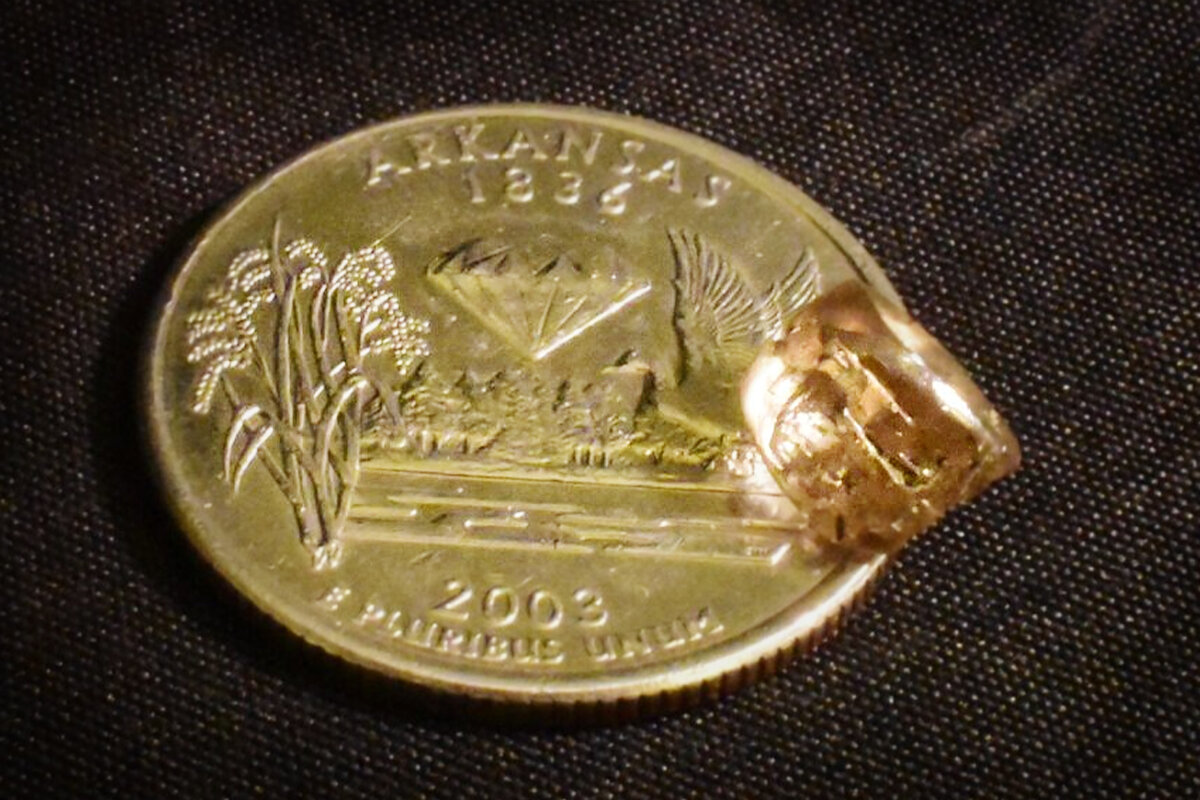
“Thank you, Jesus!” were the first words that resounded from Dewy White of Paoli, Indiana, after he spotted a glimmering stone in his dirt-filled shovel.
Visiting an extinct volcanic crater in Arkansas during a fall road trip with his wife, White unearthed one of the countless diamonds the geological formation is known for yielding in its regularly-tilled topsoil. Crater of Diamonds State Park is the world’s only diamond mine open for the public to dig and sift for the precious stones.
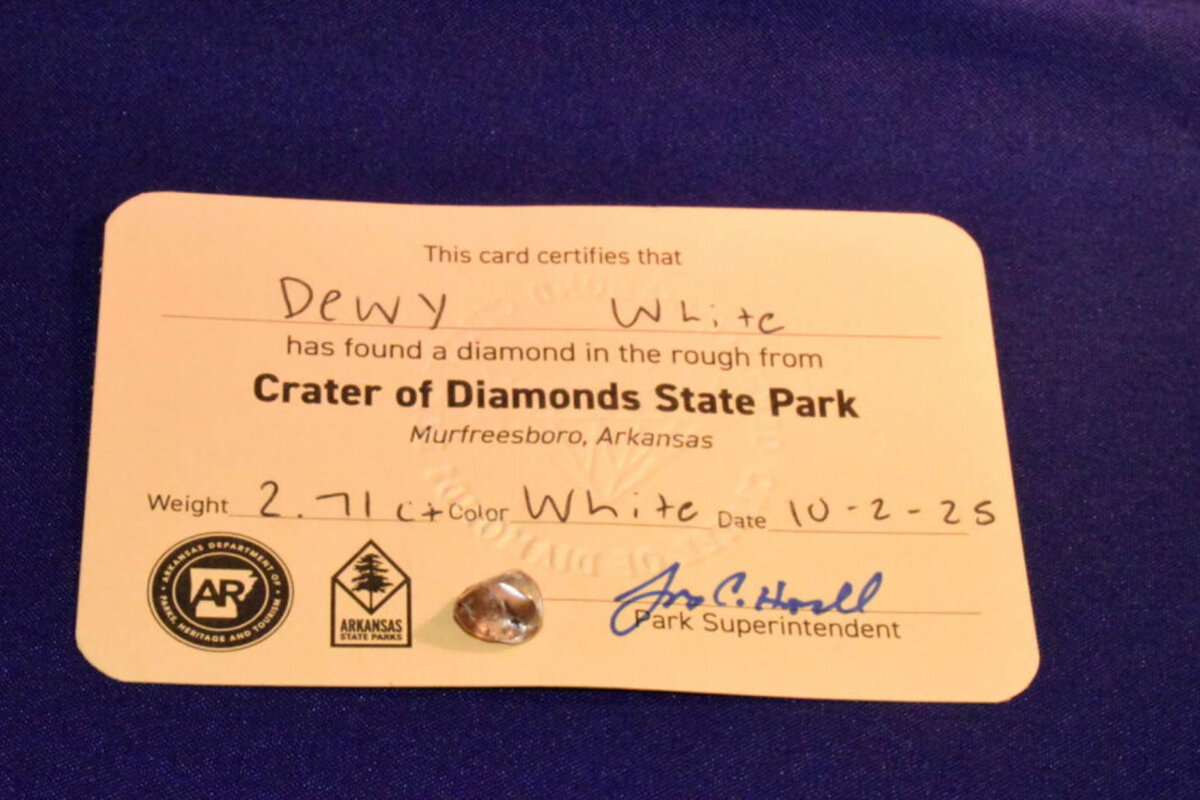
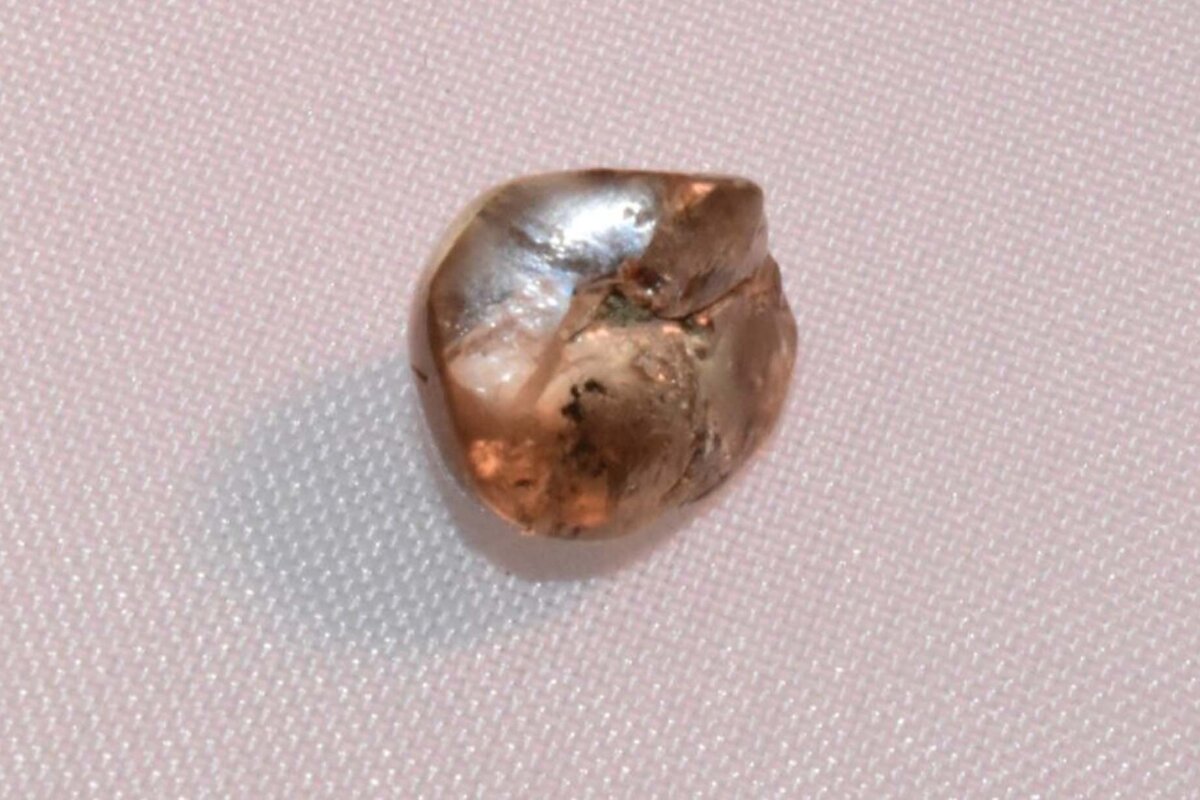
Holding the shiny stone in his hand, White hoofed it to the park’s visitors’ center where staff at the rock and mineral identification table measured and verified it as a white 2.71-carat diamond about the size of a pea. He described it as looking like nothing he had seen before.
“It looked like a metal piece of glass,” he said in a park press release. “The minute I saw it in my shovel, I knew.”
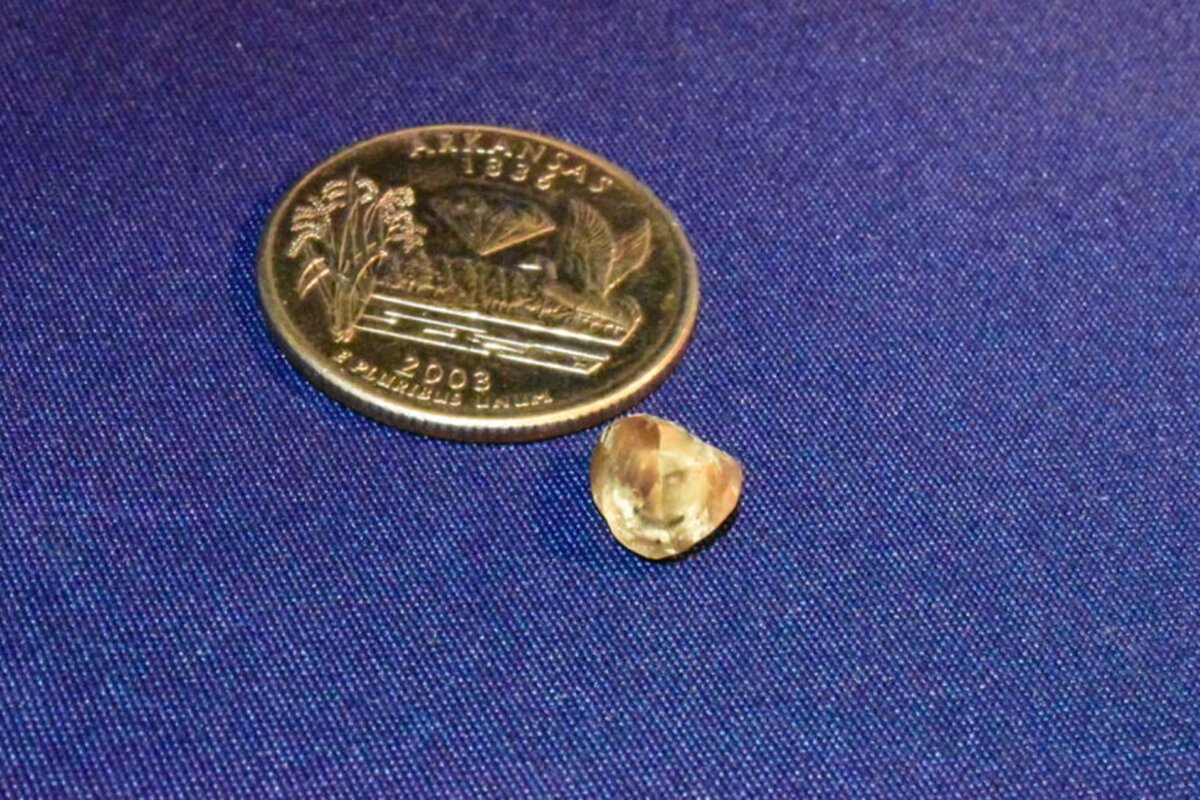
White and his wife had made Crater of Diamonds the first stop of their road trip and spent two days digging for diamonds, but without any luck. Then after completing the remainder of their driving vacation, they decided to return to the park for a second excavation, spending a further three days shoveling and sifting soil.
On Oct 2, White finally struck pay dirt at Canary Hill, by the park’s south washing station.
“A very nice gentleman I met on my first day out here suggested that area,” White said. “He seemed like he knew what he was doing, and it looked like a nice, shaded spot.”
Having spent most of the day sifting out sparking quartz, he spotted a rock that looked different from the rest—the diamond that park staff soon verified. Visitors to Crater of Diamonds have a long tradition of naming their diamonds, and White followed the custom, naming his the Hope Diamond—simply because he’d hoped he would find one.
“White’s Hope Diamond is the fourth-largest diamond registered this year,” the park stated. “As of this publication, 414 diamonds have been registered at Crater of Diamonds State Park this year.”
The name conjures the splendor of the historic Hope Diamond from India, a deep blue 45.52-carat gemstone that was brought to France to be cut before becoming a French crown jewel. It was stolen in 1792, though it resurfaced and eventually fount its way to the Smithsonian Institution in Washington, D.C.
White’s diamond follows several sizable finds the park has seen over the spring and summer. In July, Jennifer Freitas from Florida plucked a blueberry-sized 3.36-carat white diamond, the second largest of the year, from the volcanic soil while in May David DeCook found the largest, a 3.81-carat brown diamond.
Since the the first precious gems were found here by farmer John Huddleston in 1906, a total of 75,000 diamonds have emerged from the Crater of Diamonds. Huddleston owned the land until it became a state park in 1972, after which nearly 40 acres were opened up to public prospectors to seek their fortunes.
“The largest diamond ever discovered in the United States was unearthed in 1924 during an early mining operation on the land that later became Crater of Diamonds State Park,” park staff stated, speaking of the famous Uncle Sam diamond. This white gemstone with a pink cast weighed 40.23 carats before it was cut into a 12.42-carat emerald shape. It also sits in Smithsonian’s mineral and gem collection.
The lesser-known but fairly recent Strawn-Wagner Diamond as found at the park by Shirley Strawn from nearby Murfreesboro in 1990. “This 3.03-carat white gem was cut into a round brilliant shape weighing 1.09 carats,” the park stated.
Graded as both colorless and flawless, the diamond was set in a platinum and 24-carat gold ring before being purchased by the state for $34,700. It now sits on permanent display in the park’s visitor center.