



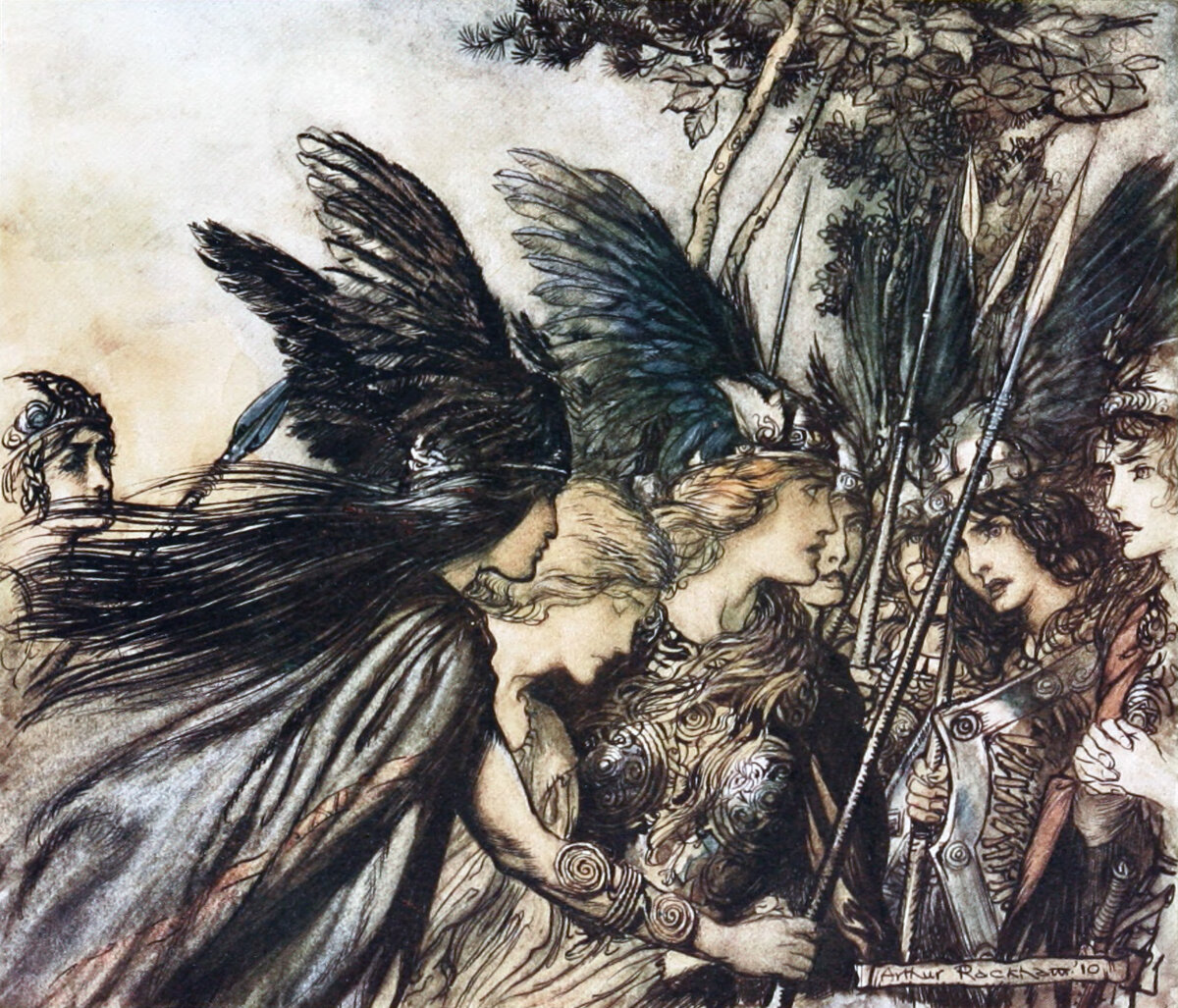
The summer of 2026 will mark the 150th anniversary of Richard Wagner’s four-part opera cycle, “The Ring of the Nibelung,” better known as the “Ring Cycle.”
Valkyries, giants, dragons, and the pantheon of Norse gods will be filling many grand stages, including those at Berlin, Dresden, Paris, London, Prague, Salzburg, Los Angeles, and, of course, Bayreuth, where it all started in August of 1876.
The season will include celebrated conductors Christian Thielemann and Kent Nagano and a host of today’s greatest Wagnerian voices.
Inspired by the German epic poem written circa 1200, the story depicts the legendary events which set in motion the fall of the age of the gods and the beginning of the age of man. For European audiences at the 1876 premiere, the “Ring Cycle” marked the beginning of a new age of musical and theatrical innovation.
By 1876, Wagner had already premiered “Tristan and Isolde,” which, after Beethoven’s Ninth Symphony, is still considered the most influential musical work of the 19th century. Wagner was already hailed across Europe as a living legend, worshiped as a musical genius, and reviled as an insufferable egotist and swindler. Yet, all his previous triumphs and scandals would pale in comparison to the milestones and notoriety attached to the premiere of “The Ring.” Not all in attendance appreciated Wagner’s lengthy and heavy-handed storytelling, but all acknowledged that they’d experienced a premiere of historical significance.
Lord and Legacy of the Ring
Roughly 3 percent of American adults have attended a live opera performance, and only a small fraction of that statistic includes a complete viewing of “The Ring of the Nibelung.” Yet there is no aspect of modern entertainment—whether music, theater, cinema, or literature—that has not felt the ripples of its enduring cultural impact.
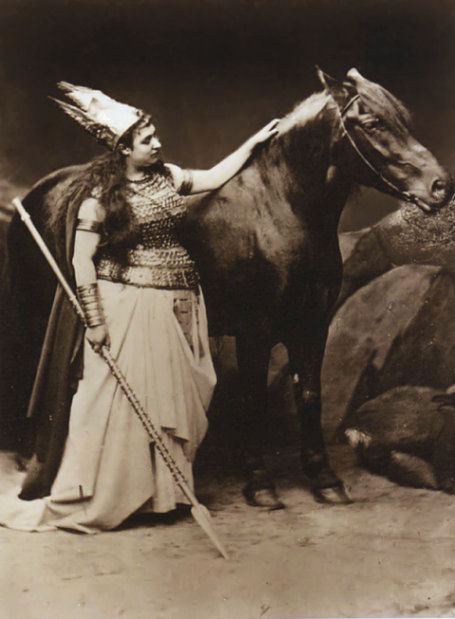
Today’s most iconic, or rather cliché, images of opera singers and Vikings with their massive horned and winged helmets all stem from the “Ring Cycle.” To date, there is no historical evidence to suggest Vikings ever wore such helmets. It’s entirely due to the vision of Wagner’s costume designer, Carl Emil Doepler, that these representations have become not just commonplace but definitive.
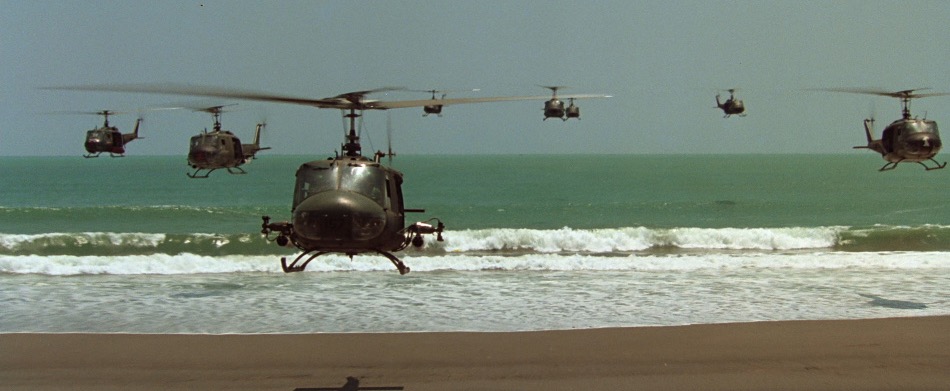
Many Americans will recall the scene in Francis Ford Coppola’s classic “Apocalypse Now” where the swarm of helicopters descend on the Vietnamese village to the tune of Wagner’s “Ride of the Valkyries.” It remains the most recognizable of the “Ring Cycle’s” melodies.
Fans of J.R.R. Tolkien’s “The Lord of the Rings” trilogy will recall the many scenes in which Bilbo, Frodo, and Isildur all tenderly hold up the ring, gazing longingly under its spell as their companions beg them to give it up. However, few realize how closely these scenes mirror Wagner’s dramatization of Wotan and Brünnhilde possessed by the same spell nearly a century earlier. Though Tolkien claimed the similarity was coincidental, its persistence from scene to scene is impossible to deny.
The End of Opera as Then Known
Wagner did not label the “Ring Cycle” or any of his works after 1848 as operas. The German word, “Gesamtkunstwerk,” translates to “total work of art.” For Wagner, using this term was no superficial distinction.
Listen to any opera written by Mozart, Verdi, or any composer up to that time and notice the clearly defined structure in the action’s pacing. Scenes alternate between gloriously orchestrated ensembles and solos to sparse, perfunctory dialogues to fill in plot points. Many operas in this style are still referred to as “numbers operas,” referring to how straightforward each scene is that is listed in the scores’ table of contents.
Wagner’s opera “Lohengrin,” conducted by none other than Hungarian romantic composer Franz Liszt in 1850, was lauded for its unity of structure and seamless dramatic and musical conception. By this time, Wagner had long broken away from typical operatic structure in favor of a more immersive experience. With the “Ring Cycle,” he solidified the revolutionary manifesto in his sense of style.
The Italian tradition of applause and sudden shouts of “Bravo! Brava!” constantly interrupting the show is nonexistent in the context of Gesamtkunstwerk. Wagner’s works are generally referred to as music dramas.
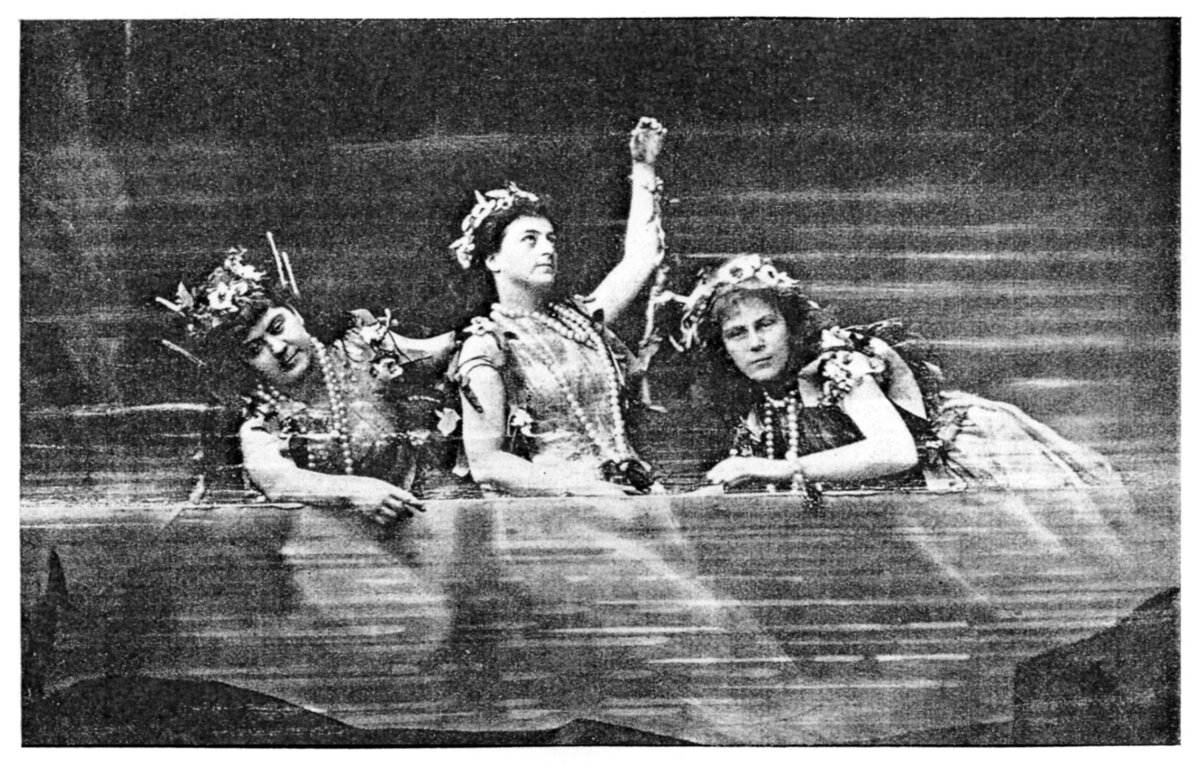
Opening Night, Aug. 13, 1876
The premiere of this genre-breaking event was attended by royalty from across the globe as well as by the greatest artists and thinkers of the day, including Liszt, Tchaikovsky, Friedrich Nietzsche, and Leo Tolstoy. The attendees’ anticipation was twofold: In terms of its scale, the “Ring Cycle” was leaps and bounds beyond any theatrical or musical attempt to date. The total running time of the four parts ran over 15 hours, not including intermissions.
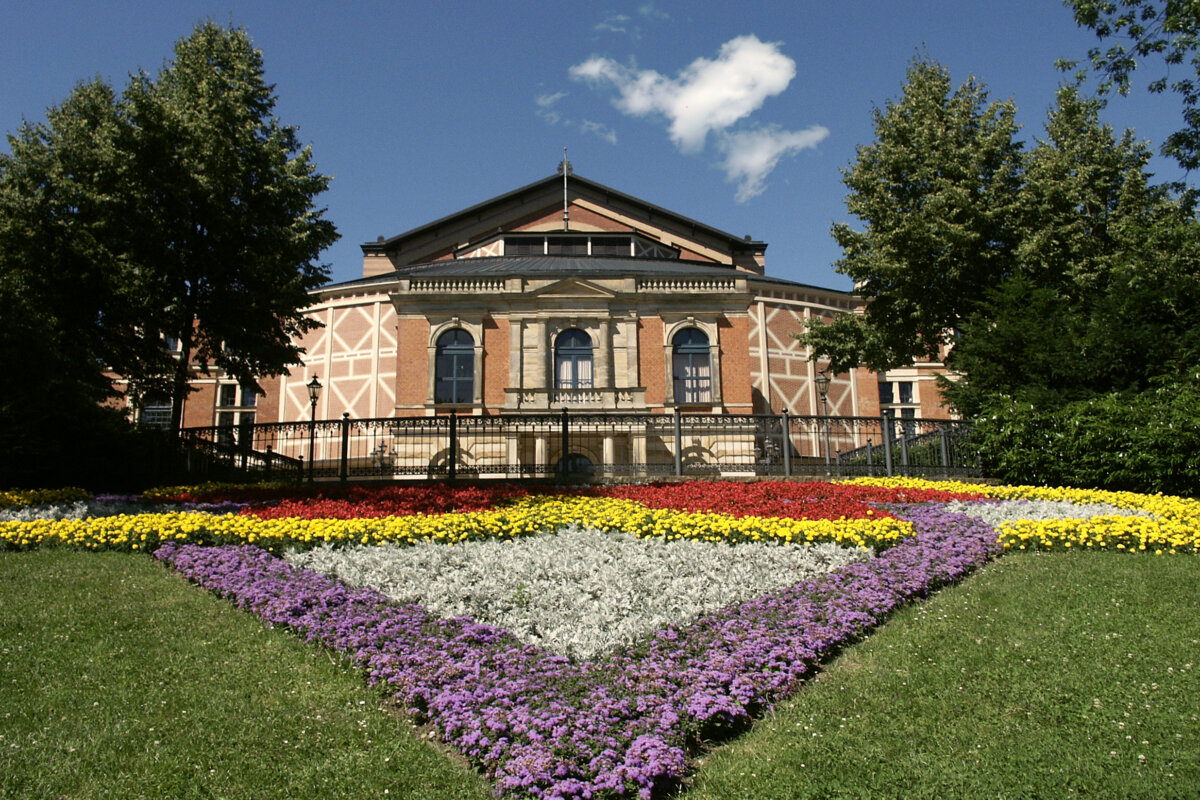
The second reason for the unprecedented anticipation was the fact that Wagner had designed and built a new theater in Bayreuth in east-central Germany specifically for this premiere. The Walt Disney of his day, Wagner’s vision as a media mogul reached far enough beyond the pen and paper as to completely reimagine the relationship between the audience, the orchestra, and the stage.
His design buried the conductor and the instrumentalists out of view of the audience and completely enclosed them in a shell beneath the stage. This design projected the music onto the stage and singers first before reflecting back out to the audience.
This resulted in a more blended balance between the voices and instruments. It also kept the audience’s attention solely on the stage and drama with no conductor’s flapping arms to distract them. Wagner’s design here aligned with his more immersive, seamless compositional structure and made clear that the “Ring Cycle” was in every aspect a complete evolution in German musical and theatrical culture.
The Town That Means Wagner
Why the city of Bayreuth? Out of all possible cities, how did this provincial Bavarian town become the Wagnerian mecca it is today? For Wagner, the reasons were personal, professional, practical, and political.
The isolation of the small town guaranteed the theater would have no competition in its programming. That isolation also provided Wagner’s audiences the experience of a quasi-religious retreat, an additional level of immersion into his music and storytelling.
Most importantly, however, Bayreuth being situated in Bavaria ensured the continued financial support of Wagner’s greatest patron: the Swan King of Bavaria, Ludwig II. This arrangement guaranteed Wagner’s artistic future and shielded him from the fallout of his two disastrous exiles from Dresden and Munich.
Reviving the Roots
For this seminal anniversary season, different opera houses are taking radically different approaches to their production concepts. Bayreuth plans a digital AI backdrop merging 150 years of historic and theatrical imagery into a psychedelic tapestry.
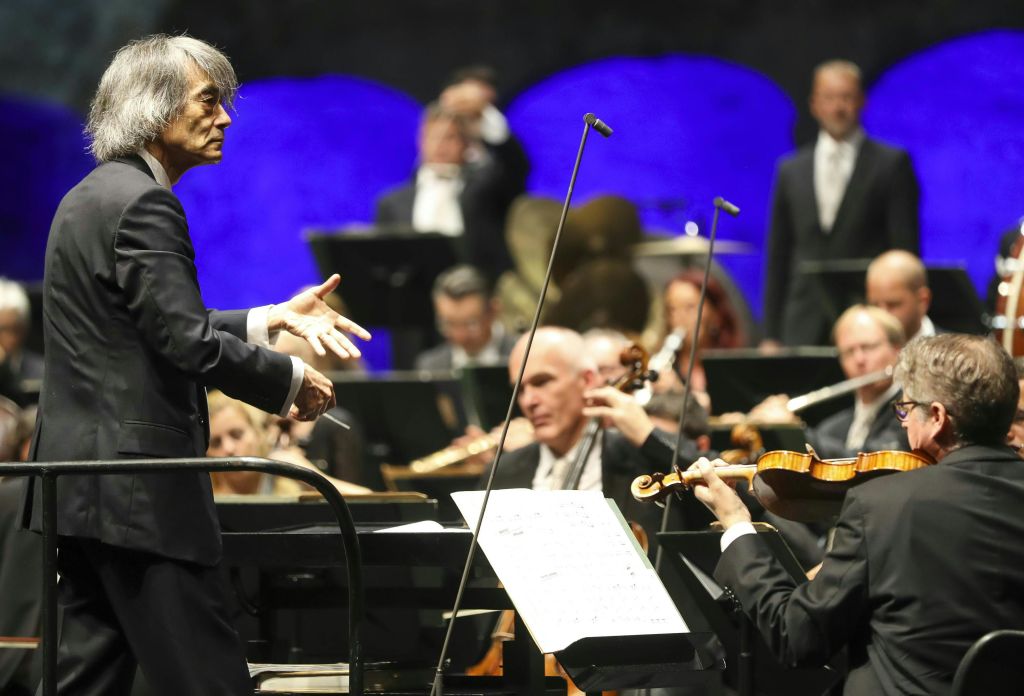
Dresden is going back to the earliest source materials and stagecraft. Maestro Nagano has been in rehearsals since 2023 to take both the instrumental and vocal stylings back to the performance practices of 1876.
What is referred to in classical music as “historically informed performance” is often a more academic endeavor to recognize the challenges of playing on crudely constructed but historically authentic instruments. In Dresden’s case, a fresh look at the instruments of Wagner’s time includes instruments that Wagner himself helped design.
What Beethoven did for the piano, Wagner did for the orchestra. It is thanks to Beethoven’s vision and artistic demands that pianos today consist of 88 and not 61 keys. Wagner followed suit in not only increasing the number of players in his orchestra but also filling in the timbre with incredible innovations in instrumentation.
He commissioned a new bassoon design with an extended lower range, combined a tuba and French horn into what are now known as Wagner tubas, and added not only six harps but also 18 anvils to the score as percussion instruments to evoke the sounds of the Nibelungs forging their weapons. To perform the “Ring Cycle” as Wagner intended requires at least 90 musicians playing 121 instruments.
In terms of vocal stylings, a return to the 19th-century standards involves singing with more straight tone and less vibrato, which is a stylistic choice to gently and rapidly pulse or vibrate the pitch throughout a longer-held note. At the turn of the 20th century, with the invention of recording technology, there was the possibility of a mistake being immortalized on a record. This prompted both singers and string players to constantly vibrate each long note to not only carry and color the sound but also soften any slightly inaccurate intonation.
Maestro Nagano’s musical direction promises not only a return to the more pure and powerful sound of the straight-tone singing, but also to theatrical and visceral expressions more spoken than sung.
For both its performers and audiences, this 150th anniversary season will hold many surprises. If you’ve never experienced Wagner’s music but are tempted to venture beyond Middle Earth and into Valhalla, the journey awaits you.
What arts and culture topics would you like us to cover? Please email ideas or feedback to features@epochtimes.nyc

