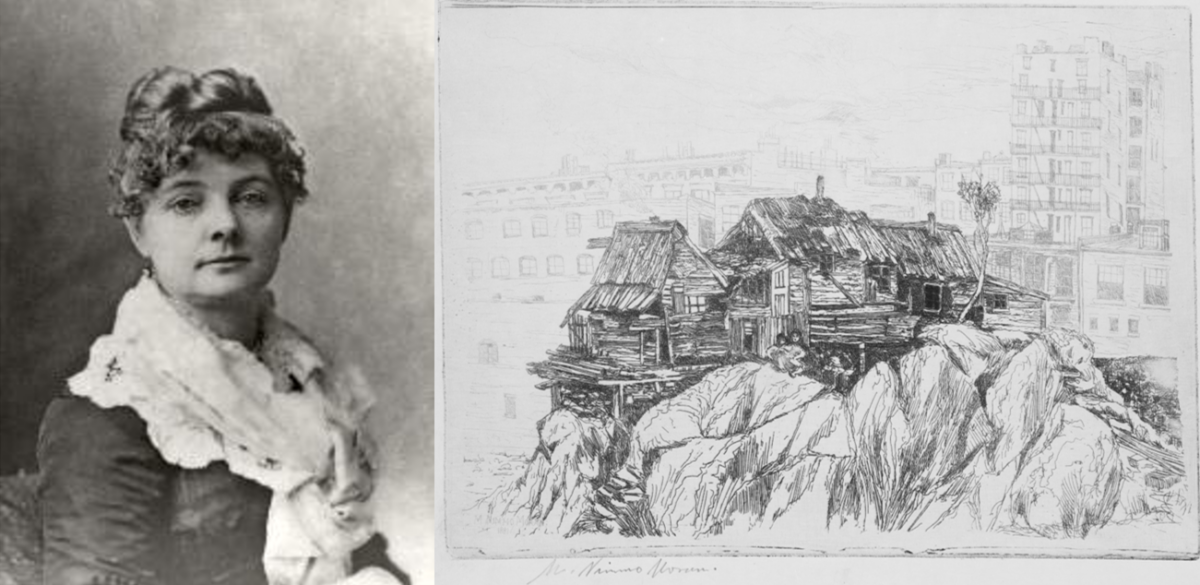
In the 19th century, many wives worked in the arts alongside their husbands while caring for their homes and children. One such woman was introduced to the visual arts by her husband, a renowned painter. Throughout their marriage, they worked side by side, encouraging each other in their artistic pursuits as they shared their passion for art. This woman is Mary Nimmo Moran (1842–1899).
Like her future husband, Thomas Moran (1837–1926), Mary Nimmo wasn’t born in America, but in the British Isles in Strathaven, Scotland, on May 16, 1842. Her family did handloom weaving.
When she was 10, her widowed father emigrated to the United States with her and her brother. Six years later, they settled in Crescentville, Pennsylvania, a neighborhood in Philadelphia, next to another immigrant family of weavers, the English Moran family.
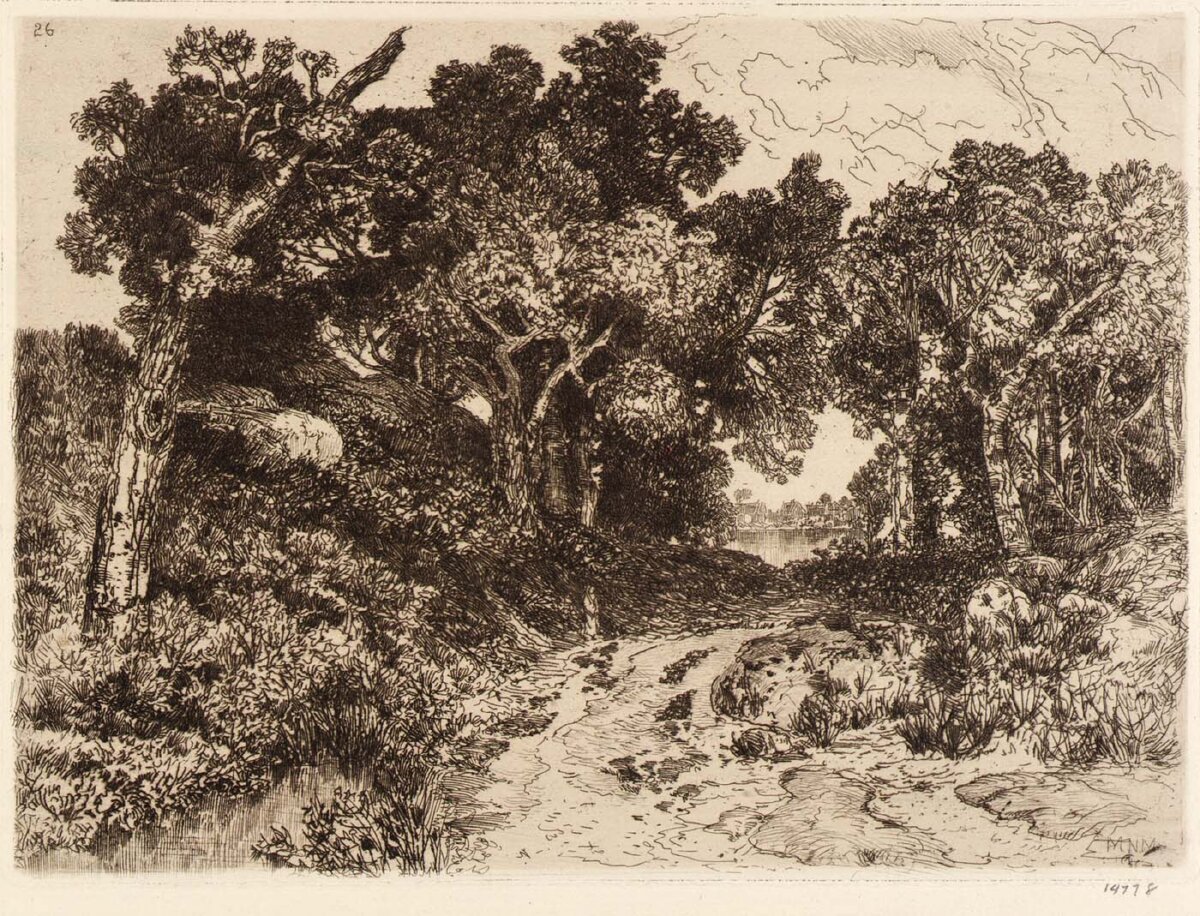
Living next door to each other, the two families grew close. Mary grew to know the Moran children, especially the third brother Thomas. She had no particular interest in art during her childhood, but that changed at age 18.
Becoming an Artist
In 1860, Mary enrolled at the Pennsylvania Academy of the Fine Arts, where she studied sketching and painting with Thomas Moran. By this point, he’d left his apprenticeship as a wood-engraver to pursue painting and sketching full-time. He became an assistant to his older brother Edward, who was also a painter.
Mary and Thomas found a shared passion for more than art, and they were married two or three years later. Marriage often ended the wife’s artistic pursuits, but not so with the Morans. Mary continued her studies in watercolor and oil painting. The young couple settled in Philadelphia, where their first child was born two years later.
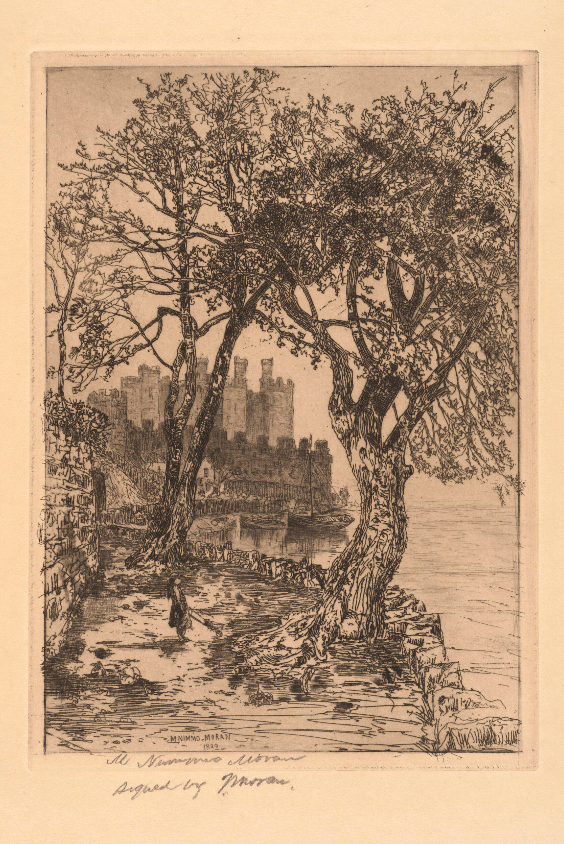
In 1866, the young artists and their 2-year-old son sailed for Europe. They started a grand tour in England, where they studied the work of landscape painter J.M.W. Turner.
They went to France, where they took a studio in Paris for nine months; this allowed them to draw inspiration from the city’s colorful scenery and take sketching trips to other areas of the country. They then traveled north through Italy and over the Alps before returning to Paris, sketching along the way.
In 1868, they returned to Philadelphia, just in time for their second child, a daughter, to be born. Their third child, a second daughter, was born in 1870.
In 1872, the young family moved to Newark, New Jersey, where Thomas worked as an illustrator for Scribner’s Monthly magazine. Their younger daughter, Ruth, later recalled the joyous family life of her youth in Newark:
“There was always music and laughter. Working most of the evening as well as day, they still had time with their friends and the ‘clan Moran’ all of whom were fair musicians, for wonderful evenings of plays and poetry and song.”
Lady Etcher
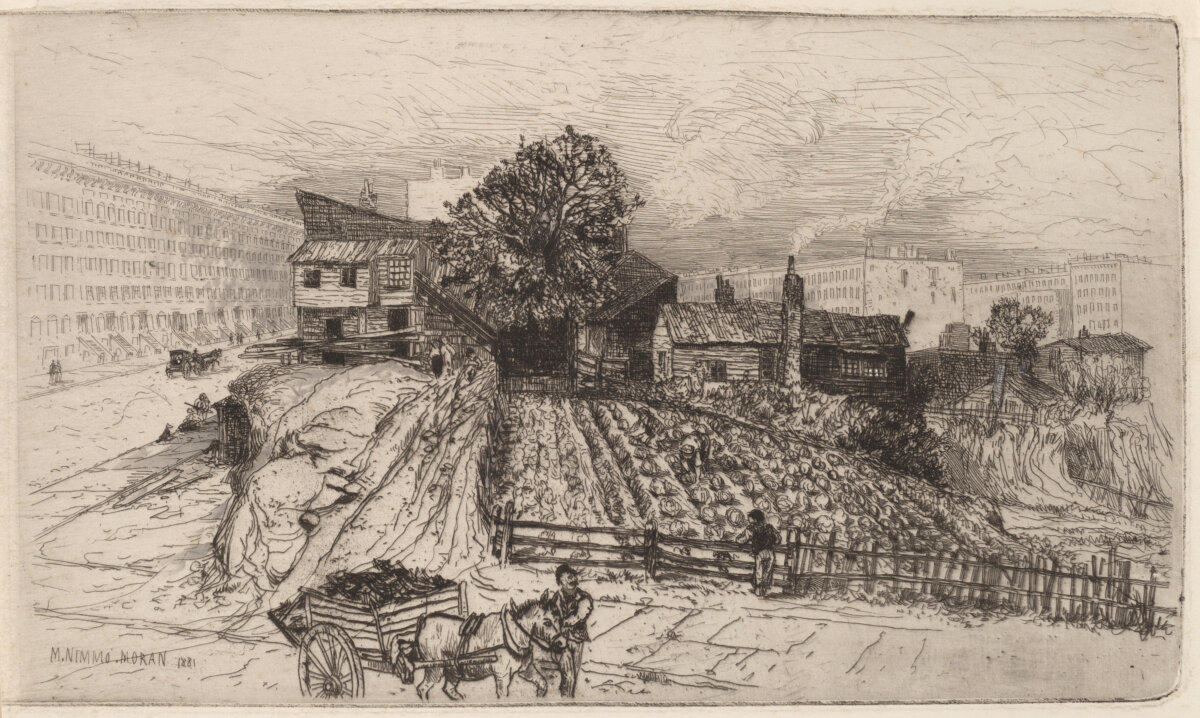
Throughout the 1870s, Mary’s paintings were occasionally displayed at the National Academy of Design, the Society of American Artists, and the Pennsylvania Academy of the Fine Arts. She painted so she could accompany her husband on his sketching trips. However, in 1879, Thomas introduced her to the medium that would become her specialty: etching.
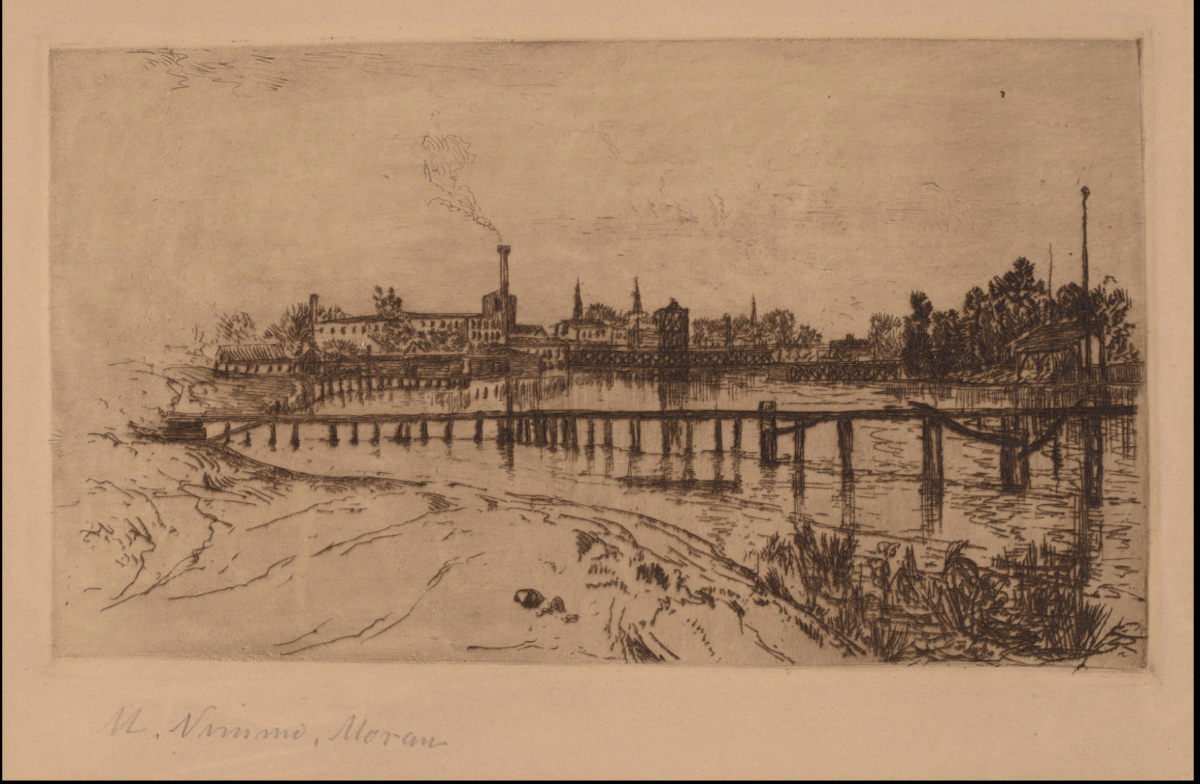
This process of printing dates back to the 16th century. It involves scratching a drawing into a metal plate, which is then etched into the metal with acid. The etched piece of metal becomes the plate in a printing press, where it can be filled with ink and used dozens or hundreds of times.
Mary’s first attempt at etching was done on her copper calling card plate, which she coated and used as the canvas for her rendering of a Pennsylvania river on a summer’s day. She took to etching because it was easy to do with limited time and allowed great flexibility of location. She loved going into nature to capture the scenery surrounding her home, often accompanied by her children.
The timing couldn’t have been better, as America was beginning to experience an etching revival, as the obscure art form gained popularity. Mary was at the foreground of the movement as one of the first Americans to explore the medium.
The same year she took up etching, she was elected to the New York Etching Club. She often exhibited her work with the American Society of Painter-Etchers. In 1879, she and Thomas were both invited to join the Royal Society of Painter-Etchers and Engravers of Great Britain. They exhibited their work in the first showing, making her the only woman in the group’s original 65 fellows. She was a prolific etcher, producing many award-winning prints, and her work was collected by notable figures.
Landscape Etchings
Some of May’s best work was produced at The Studio, a house she and Thomas built in 1884 on a Long Island estate they had purchased the year before. This charming abode gave them plenty of room to work, indoors and out, as well as a place to entertain their numerous friends.
The musical parties they threw reflected their sociable natures and helped establish East Hampton as an artists’ colony. The natural setting around them was a perfect inspiration for each: for Thomas as a landscape painter, and Mary for her etchings of landscapes.
Mary was acclaimed as an artist in her lifetime. She has been called the first woman to prove that “marriage and family were not insurmountable to success.” Her etching style was so bold, distinct, and strong in its lines that it defied notions that women’s art could instantly be recognized by its delicacy.
Nevertheless, she never let her artistic pursuits distract her from her domestic duties. She cared for the children and ran the family’s household whether her husband was working close to home or away on the expeditions out West, which gave him the material to produce his most successful paintings.
Mary added acclaim to the prestigious Moran family into which she married. She likely received instruction and encouragement in etching from her sister-in-law, Emily Kelly Moran, the wife of Thomas’s youngest brother, Peter.
In 1893, Francis Benson wrote of this impressive art family:
“The Moran family is the most famous one in the part of the country for the extent and variety of the divine gifts lavished upon it by the custodian of genius. There are 16 members of it who are painters, etchers and illustrators, and an even dozen of these are so near the head of their class that they are known at the Twelve Apostles.”
Mary was one of the foremost of these apostles.
What arts and culture topics would you like us to cover? Please email ideas or feedback to features@epochtimes.nyc