



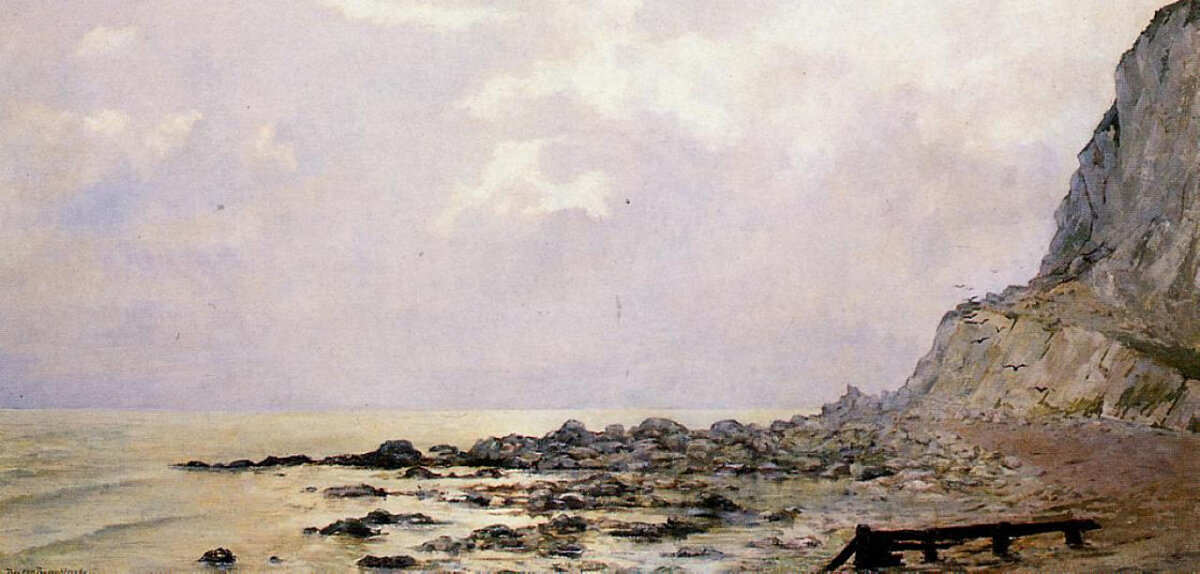
In the year 1851, the Romantic dream of poetry seemed all but dissipated, replaced by Victorian reality. Imagination and poetry gave way to pragmatism, utilitarianism, and material progress. Wonder at the sublime in nature was replaced by marvel at technological advancements.
It was difficult to live as a person of faith when science provided life’s answers. It was difficult to conceive of a use for art, when its benefit couldn’t be measured.
Perhaps even so many years later, the world looks much the same as it did to English poet Matthew Arnold, who found beauty and wisdom in the works of the ancients. He spent his life teaching the classics while watching with alarm how society walked away from the faith expressed in those texts.
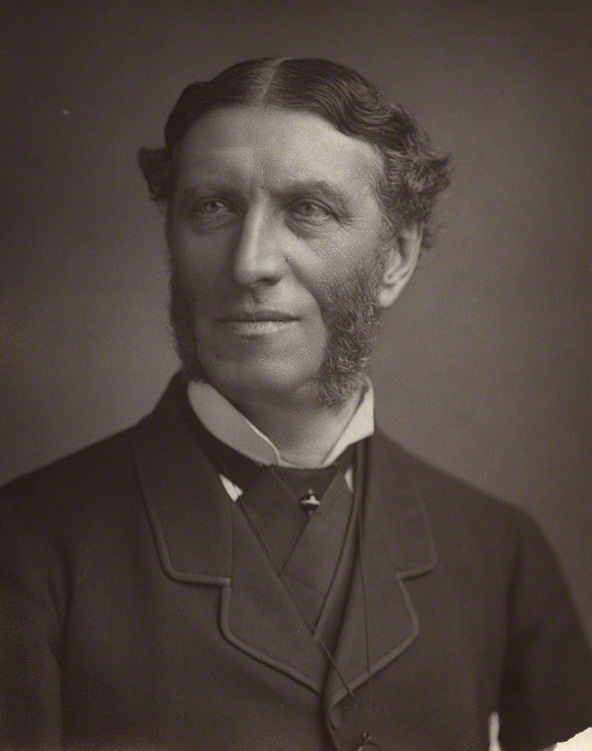
Arnold is said to have written his poem “Dover Beach” while on his honeymoon in 1851. As the speaker in the poem watches the ebb and flow of the waves upon the shore, he reflects on the recession of the “Sea of Faith” in his time.
For the moment, in his own individual life, the speaker notes that all seems calm; the night is beautiful, and he is with the one he loves. Yet in the sound of the waves washing upon the sand, mimicked by the repeated “s” sounds as Arnold describes the “tremulous cadence slow,” there is a note of melancholy in the song of the waves.
Antigone
It is the same note that Sophocles heard centuries before. Arnold references the Greek tragedian in the second stanza:
Sophocles long ago
Heard it on the Aegean, and it brouht
Into his mind the turbid ebb and flow
Of human misery.
These lines reference the play “Antigone,” which deals with the tensions between state and individual, justice and mercy, and family and office. Antigone’s two brothers, Eteocles and Polynices, were heirs to the Theban throne and had agreed to rule alternately for one year at a time. However, Eteocles refused to yield the throne at the end of the first year, so Polynices led an army against him, and both brothers were killed in the civil war. Their uncle Creon then assumes the throne and decrees that Polynices will be held in public shame and, as a traitor to the state, will not be buried.
This is an outrage against human dignity. His body is not only left to be desecrated by wild animals, but it also prevents his soul from proceeding into the afterlife; it is an outrage against the gods. Antigone is left to either defy the law of the state or the law of the gods.
Not taking sides in their political interests, she sees her brothers only as equals in misery and now wants them to receive the same honor. She defies her uncle’s wishes to follow the dictates of her own conscience, saying, “I was born to join in love, not hate—that is my nature.”
The lines of the play that Arnold references are spoken by the chorus after Creon declares Antigone must die for her crime of defiance in giving Polynices the proper burial rites. They say:
“Blest are they whose days have not tasted of evil. For when a house hath once been shaken from heaven, there the curse fails nevermore, passing from life to life of the race; even as, when the surge is driven over the darkness of the deep by the fierce breath of Thracian sea-winds, it rolls up the black sand from the depths, and there is sullen roar from wind-vexed headlands that front the blows of the storm.”
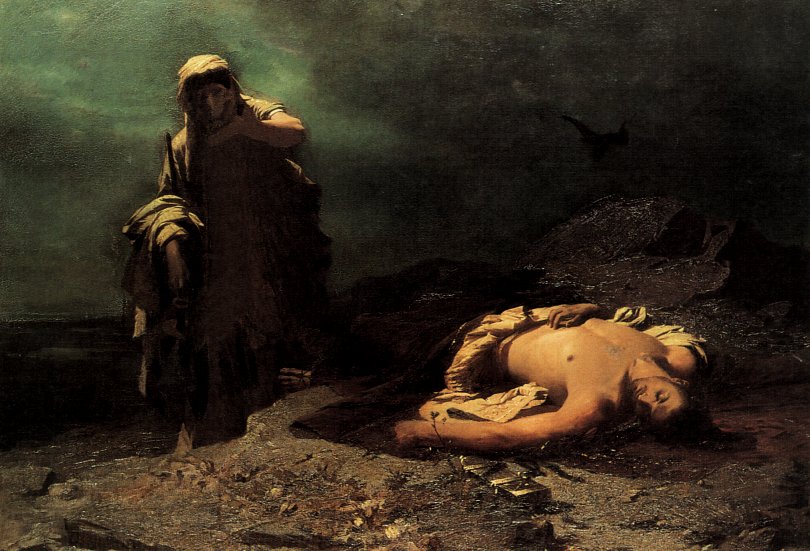
Creon ignores the pleas of his son Haemon (betrothed to Antigone) and the warnings of the prophet Tiresias, who says that Creon’s stubbornness is an offense to the gods. He allows his pursuit of justice and rigid loyalty to the state to overshadow concern for his family.
Creon allows his role as a figurehead to eclipse his identity as an individual, making treason an unforgivable offense in his eyes and leading him to pursue justice to the exclusion of mercy. In consequence, he loses his family, and he repents too late: Antigone dies, Haemon kills himself out of grief, and Creon’s wife kills herself out of grief for her son. Creon’s reward for his loyalty to the state is that he keeps the throne which he prized above all else, but it loses its value because all else is lost.
Sophocles heard the same sorrowful strain in his time as Arnold heard within the Victorian age. It was the sound of the waves against one who feels like an island, a lone bastion of faith beset by the storms of a faithless world.
Without faith, the individual is left in the dark, “Swept with confused alarms of struggle and flight,/ Where ignorant armies clash by night.” The state loses its anchoring in God; the individual loses his anchoring in his culture and nation. The foundations on which these things were built seem eroded, tumbled like the pebbles on the beach as the tide goes out.
Connection to Past
The poet still holds to this connection to the past, this understanding that the tide rises and falls just as faith was restored after a time of faithlessness long ago. Within the present, amid this disorder, Arnold says the individual can only root himself in his personal loves.
In an age that does not recognize Truth but only facts and empirical evidence, the poet says, “Ah, love, let us be true/ To one another!” To the newlyweds, in such a society, theirs seems the only love recognized by a world that sees the love of God as folly and the love of art as fruitless. The speaker continues:
For the world, which seems
To lie before us like a land of dreams,
So various, so beautiful, so new
Hath really neither joy, nor love, nor light,
Nor certitude, nor peace, nor help for pain.
Even to the faithless, such statements are universally agreed upon. The world does not offer any sort of lasting joy or peace. The solution to the problem of suffering is only found in the faith which the world has discarded.
In such a time, the individual is forced to carry the torch of faith alone, like Antigone, even in the face of great opposition. Even if this sometimes comes at great personal cost, even a small, singular witness can turn the tide of the culture.
Arnold is right to say that we must hold fast to our loves and convictions, but we are also called to something greater than loyalty. As Sophocles shows, we are called to hope and endurance, carrying the light of faith into the future knowing that even if we don’t live to see it, the tide will come in again.
What arts and culture topics would you like us to cover? Please email ideas or feedback to features@epochtimes.nyc
