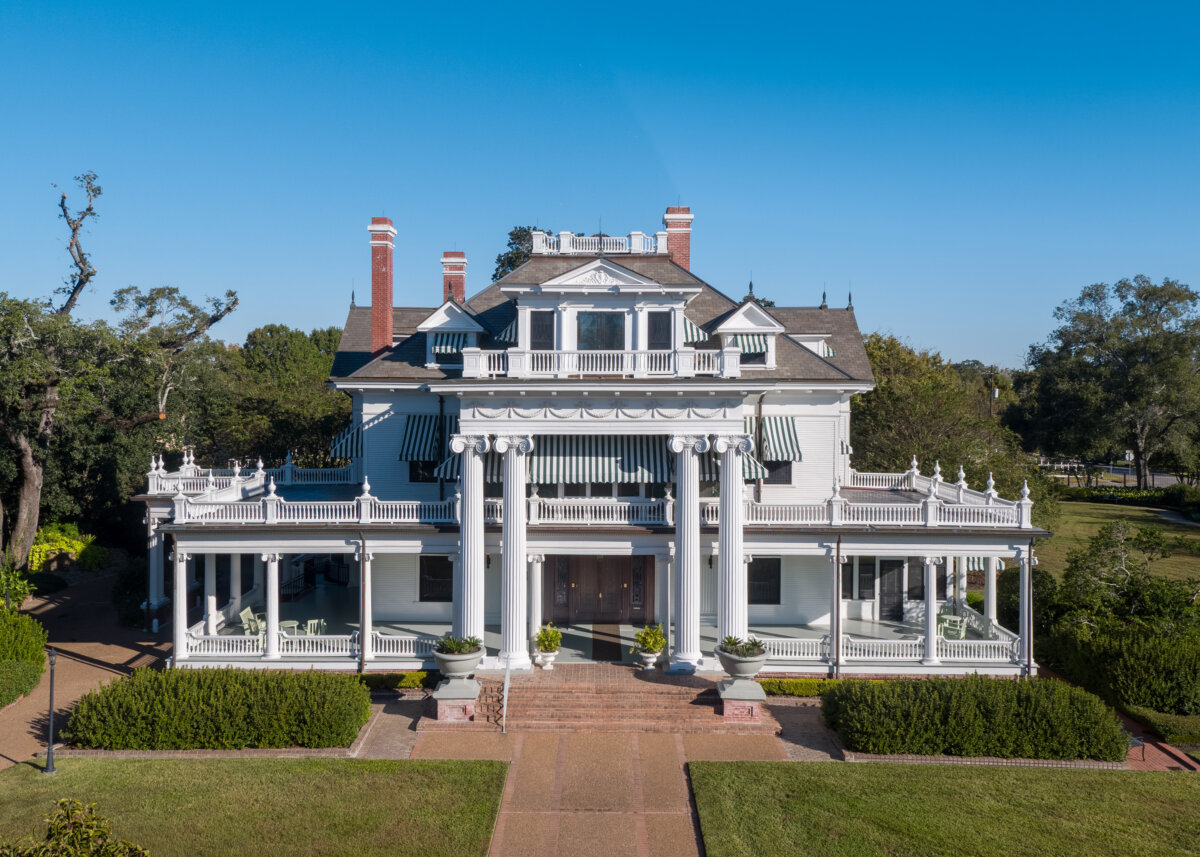
Oak and beveled glass front doors with fleur de lis patterns provide decorative contrast to the dominate white-painted cypress and yellow pine exterior of the McFaddin-Ward House. Its stately presence is due to the pairs of double, fluted columns with ionic capitals flanking the entryway portico. Supporting a second level of wide porches are one-story, smooth, round columns. Cornices distinguish third-floor windows. A square widow’s walk surrounded by a railing with square columns sits at the very top of the mansion. (McFaddin-Ward House)
In 1906, architect Henry Conrad Mauer completed an immense and extravagant home for the highly successful McFaddin family in Beaumont, Texas. The McFaddin–Ward House is a reflection of the architectural aesthetics of Beaumont’s affluency that arose from the oil boom of the early 20th century. The family’s own fortune was made in agriculture, livestock, oil, and real estate.
Mauer aimed for an exterior presentation of Southern Colonial style, which was influenced greatly by beaux arts as well as Greek Revival designs. Columns are a dominant architectural theme on the exterior and throughout the interior. Inside, the main-floor plan is Gregorian, with a wide central hall through which visitors access large square rooms, such as the parlor and dining room.
“The Colonial Revival was a national phenomenon that was inspired both by nationalism and a change in taste,” Timothy Matthewson, a historian at the McFaddin–Ward House, wrote in the East Texas Historical Journal. “By the time of the Centennial, many American architects … had set for themselves the goal of creating a distinctive national style of architecture.”
In the South, particularly Alabama, Mississippi, Louisiana, and Texas, this meant a modification of Greek Revival designs. “In these states it was identified with two-story, block-like structures of gabled or hipped roof of low pitch with cornice lines emphasized by a wide band of trim, but even more important, it was linked to the great, two-story portico with colossal order columns or pillars, ” Matthewson wrote.
The 12,800-square-foot mansion is decorated with items collected over several decades. Most of the family’s original furnishings, accessories, art, china, lighting fixtures, and more still adorn the two dozen rooms spread over three floors.
Owners W.P.H. and Ida McFaddin’s only daughter, Mamie McFaddin, married Carroll Ward, and the couple established residency in the home; hence, the hyphenated name of the site. Before she died in 1982, Mamie McFaddin Ward set up a foundation to restore the mansion, which is now a museum.
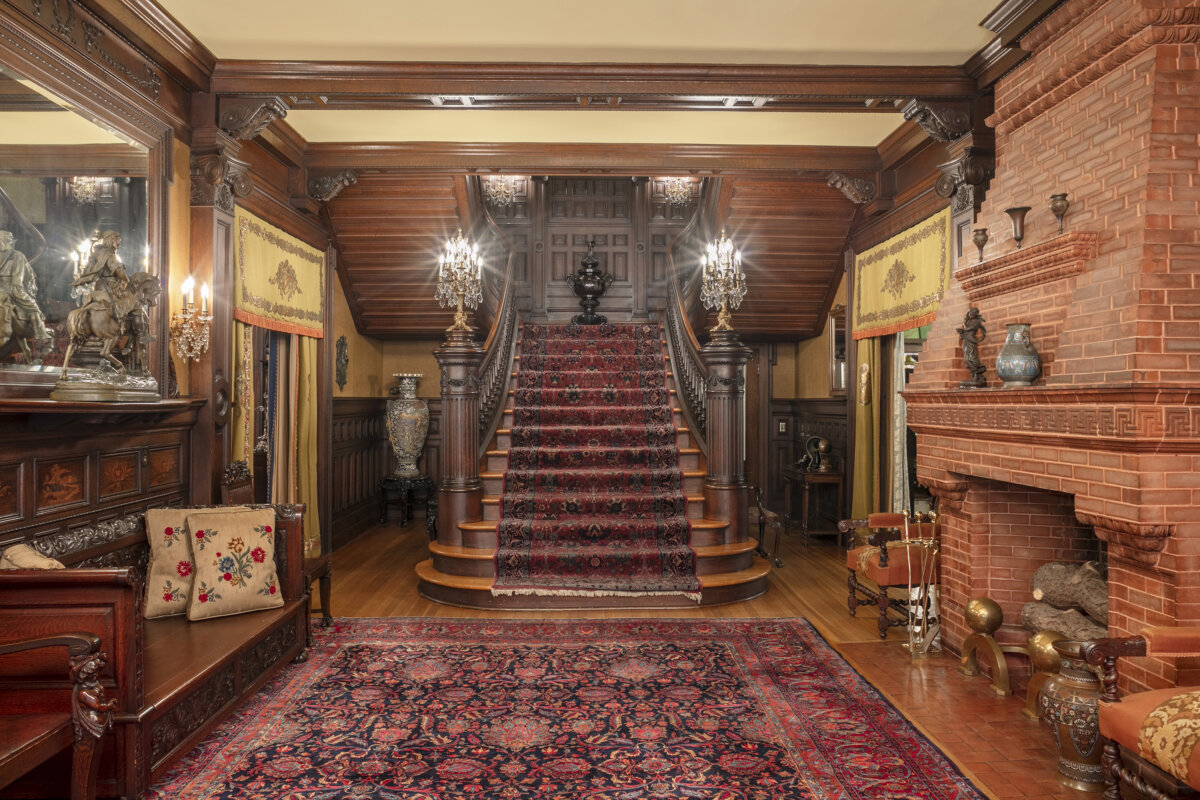
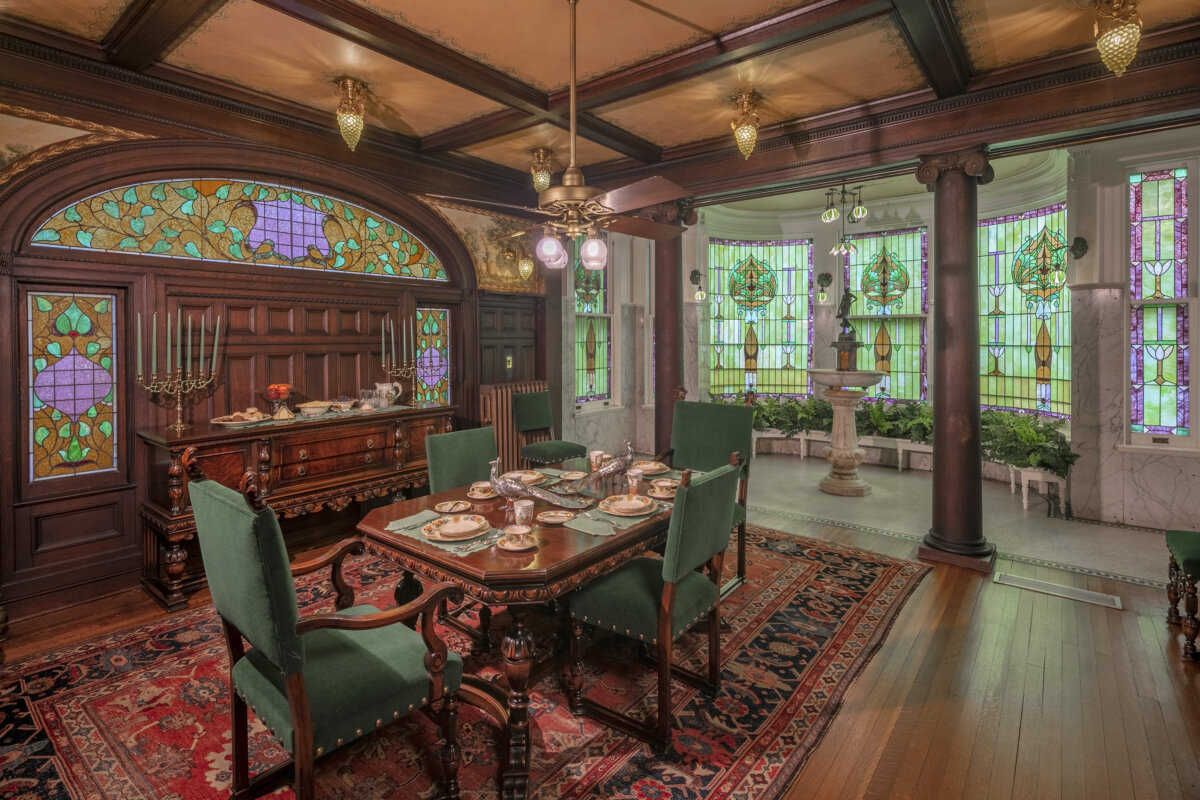
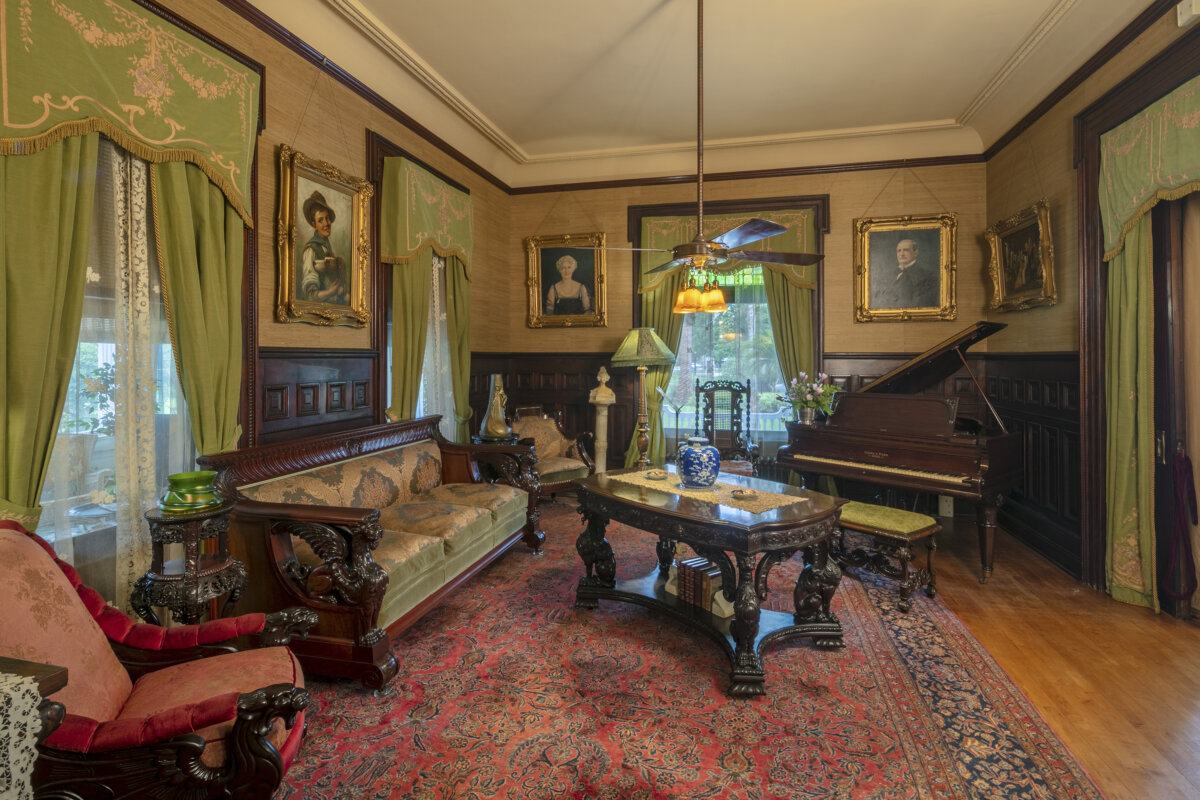
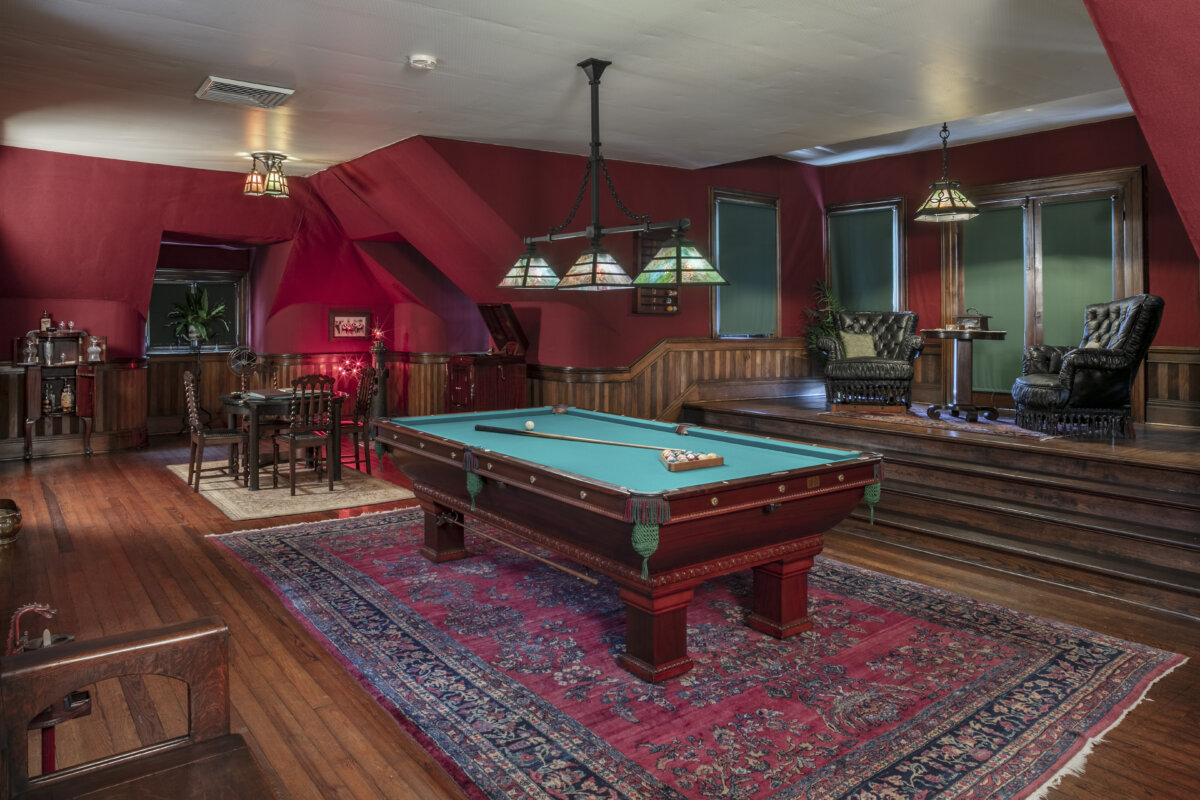
The entryway central hall’s focal point is the wide oak staircase with ornately carved newel posts with attached candelabras. Distinctively, a red brick fireplace is part of the hall. In the 1800s and early 1900s, a wide entry hall could serve as a “room” if necessary, and the fireplace provided heat to anyone congregating in the hall. The hall’s wood paneling, corbels, and ceiling trim are all carved of oak. (McFaddin-Ward House) A more casual dining space, deemed the breakfast room, was an addition to the house in 1907. Dominant in this room and the adjoining conservatory are colorful, floral-motif glass in the Art Nouveau style that emerged in the late 1800s. In the middle of the conservatory space is a marble fountain of a bronze maiden pouring water from a pitcher. The sound of water envelopes these rooms. The unique metal and glass lighting fixtures in the shape of grape clumps are in the breakfast area, while a pond lily-shaped fixture is over the fountain in the conservatory. The paneled ceiling, columns, and floors are all oak, while the walls surrounding the art glass in the conservatory are white marble. (McFaddin-Ward House) A Neoclassical-style chandelier most likely manufactured in France hangs from a brass chain over the dining table. The chairs exhibit both Elizabethan and Rococo revival styles with carved wood turnings and a crest-back. Stained-glass accents the windows, while the dark mahogany-stained birchwood columns, trim, and ceiling panels coordinate with a lighter maple floor—covered primarily by a decorative rug. Grasscloth is on the wall over the glass china cabinet. (Public Domain) The mansion’s music room features a mahogany grand piano, manufactured in Boston. Reproduction green-hued, tasseled window draperies sport lyre images intertwined in a floral garland; hanging from the fabric cornice are lace curtains. A high, carved birchwood chair railing gives way to grasscloth on the walls. Hanging from the tray ceiling are gilt-framed portrait paintings. (McFaddin-Ward House) Decorated in the popular French rococo style, the parlor was a gathering space for family guests. It includes a 1912 Victrola in a Vernis Martin finish, which is a French-originated lacquer-type treatment with hand-paintings over gold leaf. This room’s walls are adorned with hand-painted canvases featuring climbing rose accents. Elaborate reproduction fabric cornices and draperies cover the windows, and from the ceiling hangs a wheel-cut glass prism crystal chandelier. (Public Domain) On the spacious third floor is a billiard room with a masculine ambiance expressed in the button-tufted leather chairs on the platform and the dark-stained wood furnishings. The Arts and Crafts-style, stained glass fixture over the chairs, billiard table, and card table provide some color to the room. The walls are covered in a burgundy burlap. Wood types in the room are oak, poplar, and maple. (McFaddin-Ward House) Atop the mansion’s majestic columns is an entablature decorated with a swag molding design. Contrasting significantly with the classical architectural elements of capital-topped columns is the white and black striped awning. (Public Domain)
What arts and culture topics would you like us to cover? Please email ideas or feedback to features@epochtimes.nyc
A 30-plus-year writer-journalist, Deena C. Bouknight works from her Western North Carolina mountain cottage and has contributed articles on food culture, travel, people, and more to local, regional, national, and international publications. She has written three novels, including the only historical fiction about the East Coast’s worst earthquake. Her website is DeenaBouknightWriting.com