



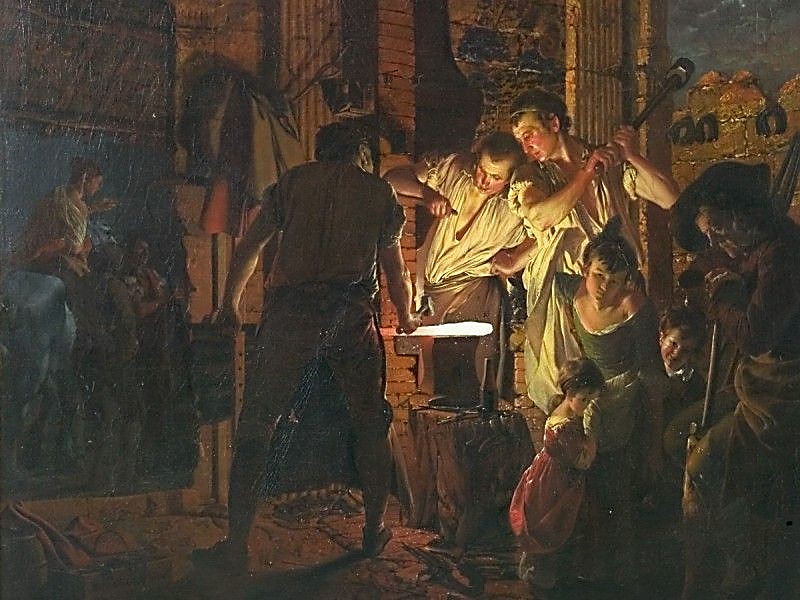
One day in Ancient Greece, as folklore has it, Pythagoras took a walk. And it wasn’t just any walk for the visionary Western philosopher, but one that would set in motion an entire field of study—music theory. Up until he took that fateful stroll, people knew they liked the way certain notes sounded together, but they didn’t know why.
But, as Pythagoras passed by blacksmiths at work, he began to figure out the answer. Their hammers were of different weights, and when they would strike them on various pieces of metal, some tones sounded good together, and some didn’t.
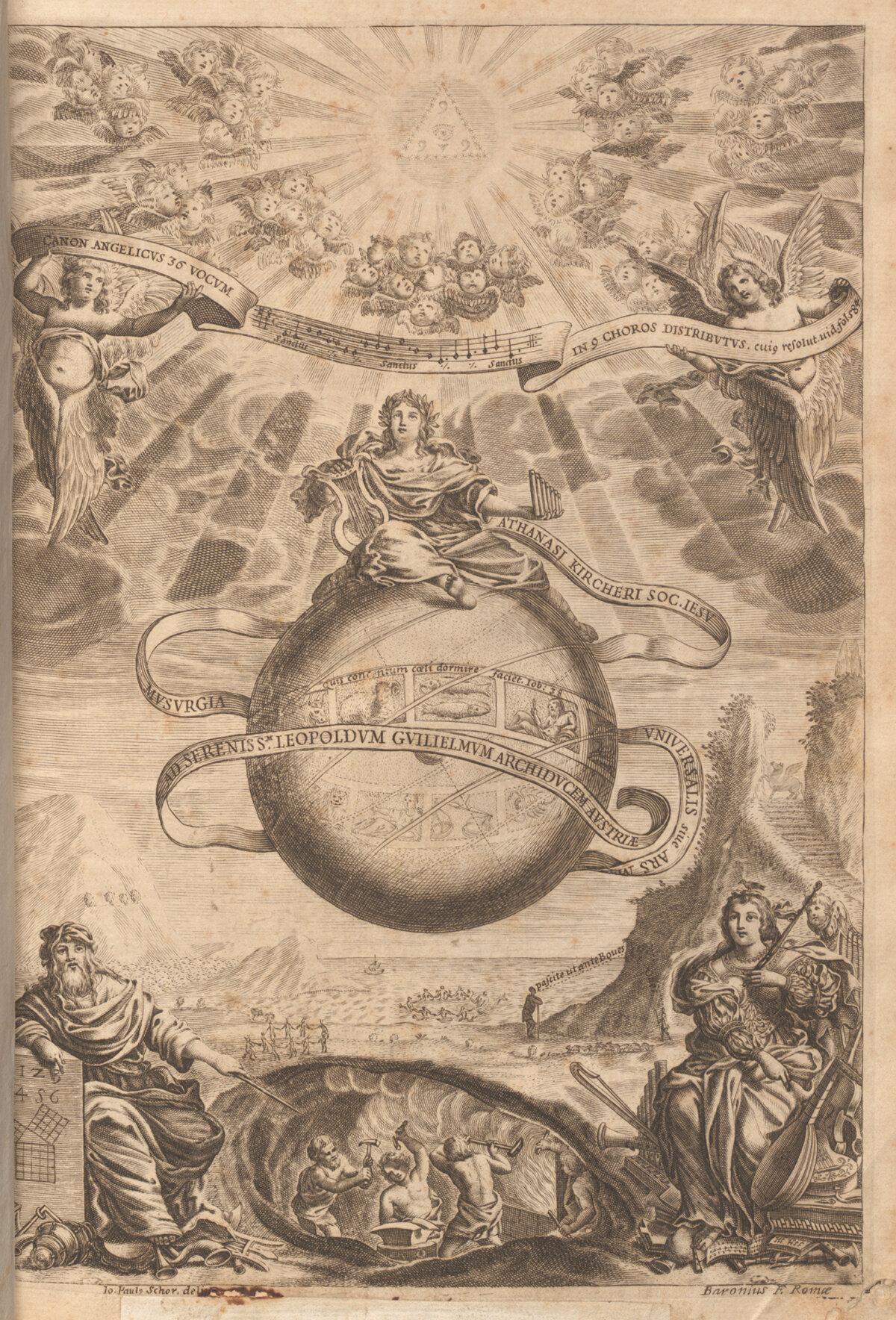
This observation would set Pythagoras on a course to make music’s earliest discoveries—discoveries that would go on to influence the whole of Western-style music.
Thanks to Pythagoras, we don’t just know when harmonies sound beautiful. We know how to create them ourselves.
Each Day Begins With Singing
Pythagoras (570 B.C.–circa 495 B.C.) was born on the Greek island of Samos near modern-day Turkey, but moved to Croton, a port city in southern Italy. Like other philosophers of his time, Pythagoras founded a school, and it was one of the most influential centers of thought for the dawn of Western civilization.
His pupils studied subjects like logic, grammar, astronomy, and geometry at what is now referred to as “the Pythagorean School.” They also studied music, and each day began and ended with singing.
“Pythagoreans gathered in a circle with a lead singer in the middle, often accompanied by a musician with a lyre,” according to music site Popular Beethoven. “In the morning they sang songs that helped to wake up and inspire for activities, in the evening those that were relaxing and supported resting.”
For Pythagoras and his followers, mathematics was the basis for everything, including music, and this principal theory influenced their experimental studies. The Pythagoreans were so devoted to numerical systems that the core principle of their school of thought has often been described as “all things are number,” or some form of the saying.
It was at his school in Croton, surrounded by his students, that he carried out experiments inspired by the blacksmiths he met on his walk that day.
Ancient Instrument for Measuring Sound
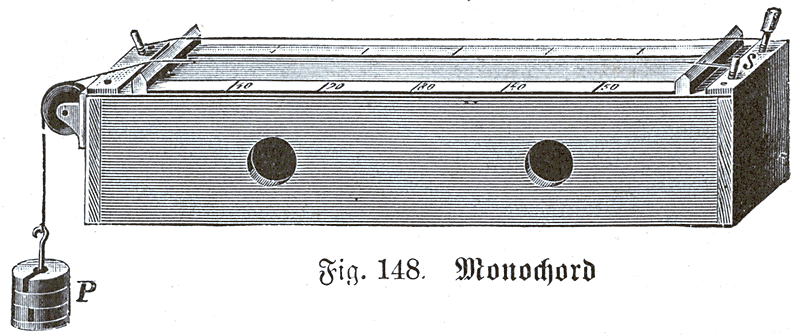
When Pythagoras heard the blacksmiths hammering, he noticed a piece of metal half the size of another produced a higher yet harmonious sound when struck at the same time, and he wanted to figure out why. For experiments at his school, he applied a more musical tool—an ancient instrument called a monochord. Instead of metal, he used different-sized strings, intending to show that string length corresponds to tone, or pitch.
“The monochord consists of a metal string stretched over a hollow resonating body. Using a movable bridge the string can be divided into two portions whose lengths may be set at any ratio to give various pitches and musical intervals when plucked,” the Whipple Museum of the History of Science explains.
Pythagoras figured out that specific, simple ratios sound consonant, or harmonious.
“According to tradition, the ancient Greek philosopher … discovered the correspondence between simple ratios of string length and consonant musical intervals. Dividing the string into sections in the ratios 2:1 or 3:2, for example, yields the intervals of a perfect octave and perfect fifth respectively.”
These pleasant intervals can be found in songs like “Here Comes the Bride,” which uses the buoyant yet stable sound of the perfect fourth ratio of four to three, or the open and balanced sound of “Twinkle, Twinkle, Little Star,” which includes perfect fifth intervals.
String lengths are a determining factor for pitch because shorter strings vibrate faster, creating higher pitches, while longer strings vibrate slower, creating lower pitches.
‘The Sphere of Thought’
Pythagoras’s work served as the foundation for music theory because it caused people to look at music in the form of an organized system. His proving an octave (the distance between a note and another of the same name spanning a musical scale) has a mathematical ratio of two to one set the stage for the Western musical system behind the classical music epoch and modern genres like pop. He showed musicians that music can be measured, simultaneously establishing order and the opportunity for creativity.
While tuning and various particulars of music have changed since Pythagoras’s studies, his discovery of notes and harmonies having measurable intervals underlies the basis of contemporary music theory used in Western music.
Philosopher and author Leonard Peikoff called Pythagoras’s work with music “a staggering discovery” in his book, “Founders of Western Philosophy: Thales to Hume.”
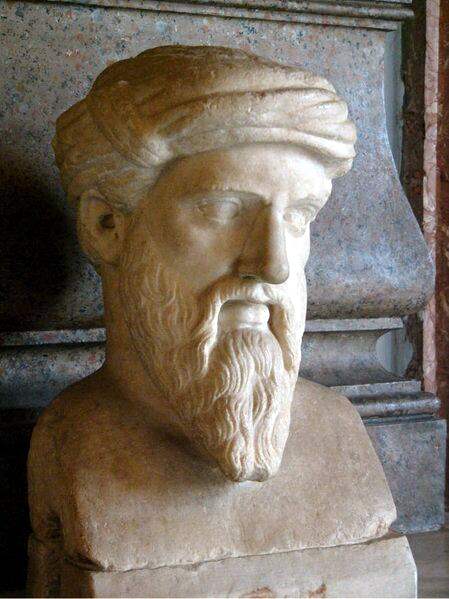
Aside from music, the Ancient Greek philosopher also made other foundational discoveries. His Pythagorean theorem is taught to high schoolers each year, along with its famous equation, a squared plus b squared equals c squared, which solves for the unknown length of a side of a right-angled triangle.
Contemporary philosophers have credited him as a key, inspirational figure. Bertrand Russell wrote about the significance of Pythagoras’s contributions in his book, “A History of Western Philosophy.” “I do not know of any other man who has been as influential as he was in the sphere of thought.”
What arts and culture topics would you like us to cover? Please email ideas or feedback to features@epochtimes.nyc
