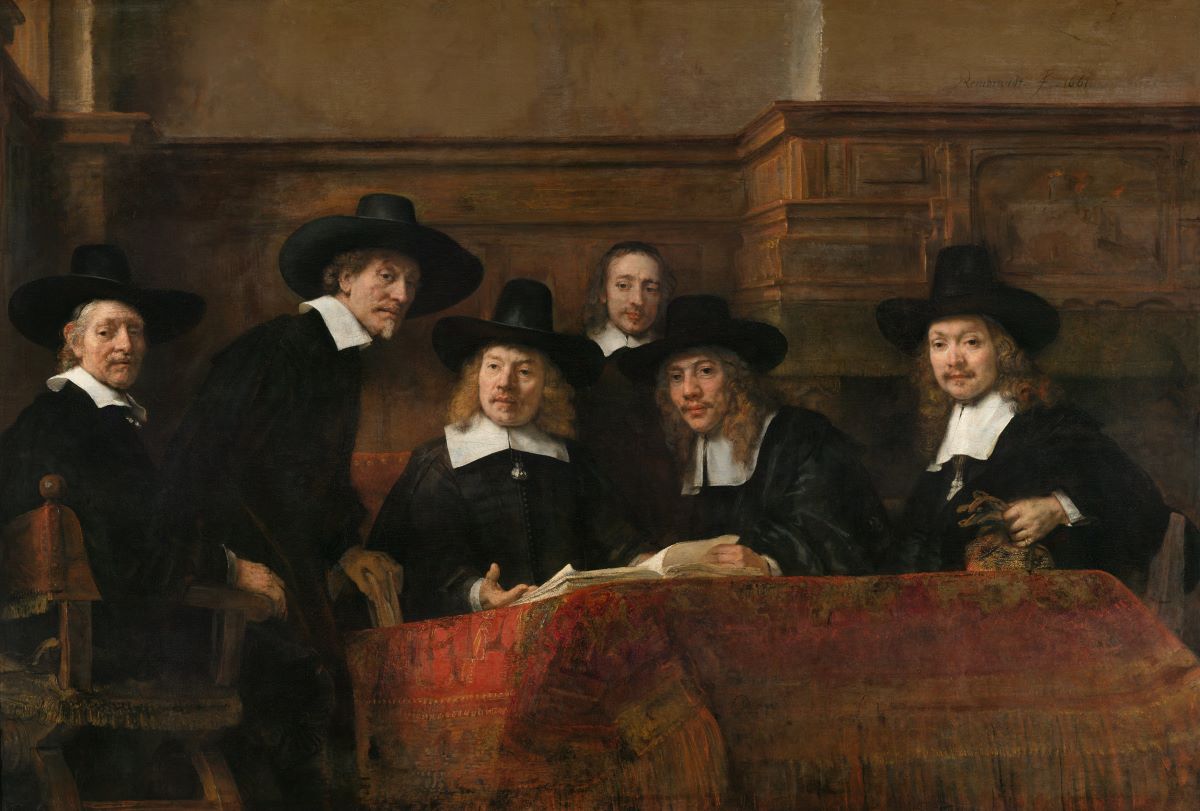
An agrarian economy dominated Europe during the stormy centuries after the demise of the Roman Empire, but in the 11th century, towns, trade, and industry began to grow—and with them, the guilds, which flourished until the 16th century. These workers’ associations carved for themselves a central place in medieval economic, political, religious, and social life, and managed, at least for a time, to maintain stability and quality in early forms of industry.
“Guilds had one essential purpose: protection against competition,” Paul Murray Kendall wrote in an essay in “The Age of Chivalry.” “Minute regulations, strictly enforced, laid down hours of work, prices, standards of quality, the number of apprentices and journeymen that a master might employ.” By maintaining standards of quality, rates of pay, workplace regulations, and limiting the possibility of competition, guilds aimed to form stable and just industries. “The ideal was stable conditions in a stable industry,” noted Henri Pirenne in “Economic and Social History of Medieval Europe.”
There were two main types of medieval guilds: merchant guilds and craft guilds. The merchant guilds developed first, as itinerant peddlers began to band together for protection and other common interests toward the end of the Dark Ages. These loose associations developed into more formal legal bodies that governed the trading activities within the town where they were located. Peddlers became merchants who employed agents to disseminate their wares on their behalf while they themselves settled into positions of power and prosperity in urban centers.
As the 1913 edition of the Catholic Encyclopedia explains, the merchant guilds left the right to buy and sell food open, but the trade of virtually every other kind of good became regulated. The merchant guilds clamped down on the exchange of whichever good the guild specialized in, fining those caught trading without being a part of the local guild.
Toward the end of the 11th century, guilds of artisans and craftsmen began to form as well, modeling themselves on the merchant guilds. These worker fraternities emerged from the pressure of two simultaneous factors: city governments’ desire to regulate industry within their domains and craftsmen’s desire to band together for mutual support, engaging in charitable works, and protection from competition. “The pressing necessity to stand by one another, so as to resist the competition of new-comers, must have made itself felt from the very beginning of industrial life,” wrote Pirenne. Thus, “the origin of gilds is traceable to the action of two factors: legal authority and voluntary association.”
The craftsmen’s guilds reserved for its members and only its members the practice of their particular craft. The guilds sought to protect the artisan not only from external competition, but also from internal competition among the local artisans. It set limits on the type, quality, and cost of the work an artisan could perform.
As Pirenne noted, the guild “reserved the town market exclusively for [local craftsman], closing it to foreign products, and at the same time it saw that no member of the profession grew rich to the detriment of the others.” Thus, the rigid regulation of the artisans’ work not only ensured the quality of the products but also preserved a relative equality amongst all the members of the profession.
These regulations were enforced by surprise visits from municipal overseers as well as the constant gaze of the public eye—guildmembers were required to work at their window, where they could be observed. Severe punishments were attached to acts of fraud or carelessness in work. Guilds operated their own court systems to try and fine, if necessary, guildmembers found guilty of fraud, poor workmanship, unfair competition, or other violations.
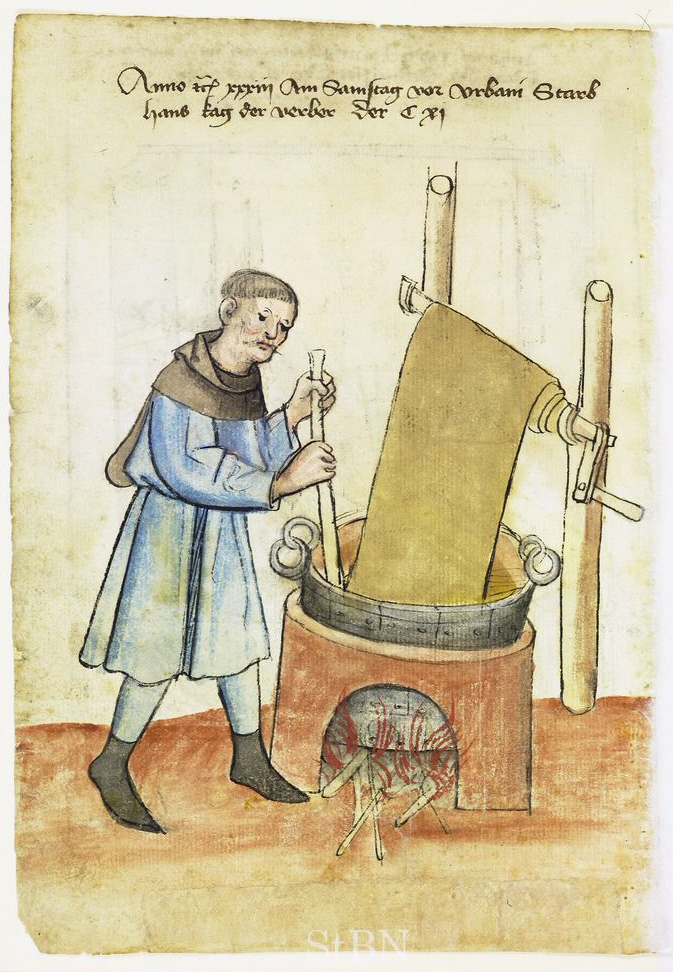
For virtually every medieval trade or craft, there was an accompanying guild: dyers, glassworkers, goldsmiths, pavers, cabinetmakers, chest makers, saddlers, and tailors, all had their guild.
These guilds helped form workers’ identities on more than just an economic level. Guilds often had guildhalls where banquets, events, and meetings were held. Guilds chose patron saints and might even have a designated chapel of their own for practicing devotions. On religious feast days, guilds marched together in processions under their unique banner or coat of arms.
Guilds fulfilled important social and charitable functions, offering a type of safety net to the poor or destitute. Guilds engaged in care of the sick and orphaned. Guildmembers could look forward to sick pensions, pensions for widows, and even burial costs all funded by the guild, as the Catholic Encyclopedia relates. Guilds labored to prevent such provisions being needed in the first place. Mining guilds, for instance, insisted on safe and humane working conditions for their members.
Some guilds wielded political authority as well, particularly in the merchant class. Some guilds became self-governing, and ,frequently, guilds placed members in important positions within local government in order to further their industries’ interests. Guild policy itself was determined by a handful of officials and a council of advisors.
In the guild system, it was rare for an individual artisan to greatly outstrip his fellow workers in wealth or status. As Pirenne put it, the guild system “gave [workers] a secure position and prevented them from rising above it.” A craftsman’s capital consisted of his own house, shop, and tools. He was strictly limited in the number of employees he could hire and the size of operation he could build.
Still, there were ways to rise through the ranks. Newcomers—often boys in their teens or even younger—began as apprentices, working under the tutelage of a master craftsman in the trade. Masters owned their own shops, materials, and tools, and were experienced and wizened workers, independent entrepreneurs who were part of a select inner circle known for their skill and social position. They might have one or two apprentices and a journeyman working for them.
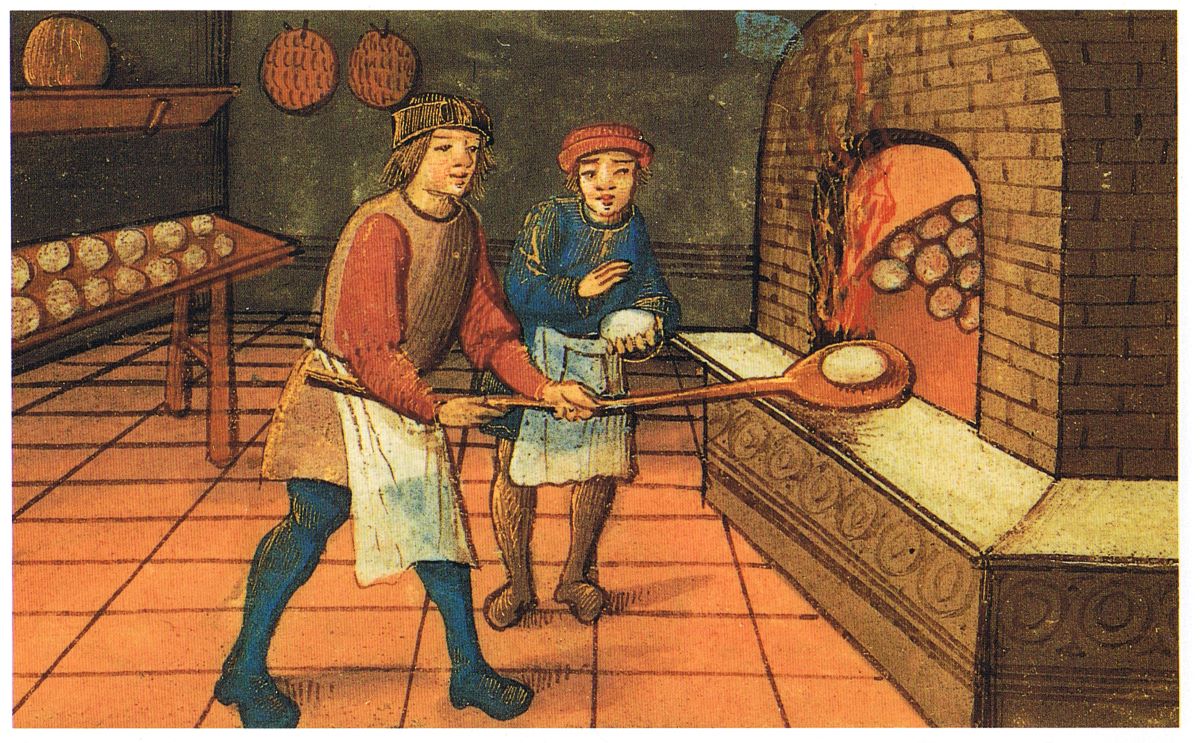
Between apprentices and masters were journeymen—paid laborers who had completed their apprenticeship but not yet achieved master status. Achieving that level required that the journeymen demonstrated their competency by producing a piece of work that the other guildmembers scrutinized and approved. This was known as the “masterpiece”—quite literally, the piece of work that allowed an aspiring artisan to move from journeyman to master, and set up his own shop.
As the Encyclopedia Britannica noted, “In their heyday from the 12th to the 15th century, the medieval merchant and craft guilds gave their cities and towns good government and stable economic bases and supported charities and built schools, roads, and churches.”
At the same time, the system tended to oppose technical innovation, since that could lead to inequalities among artisans. Over time, masters set unrealistically high bars for people to rise through the ranks, from apprentice to journeyman or journeyman to master. The system atrophied, becoming less workable and less just. It waned in influence and importance over the centuries, until, by the time guilds were officially abolished during and after the Enlightenment, they held much less sway than they once had.
Despite their flaws, guilds provide an interesting historical example of an economic entity that could, at its best, serve the interests of both producers and consumers. They curtailed the ravages of unchecked industrial or technological growth—with the exploitation of workers that often accompanies it—while still maintaining the freedom of workers and businessmen to advance and improve their situation, at least up to a point. Their religious and social dimensions further provided laborers with identity and community, while also supplying for their needs in times of hardship—without having to look for handouts.
The guilds took out an interesting middle ground in the eventual capitalism versus socialism debate. The guild system put the brakes on any individual business from achieving so much power and wealth that it put the others out of work or exploited masses of employees with inhumane working conditions.
In a guild system, the phenomena of companies as powerful as governments—such as we see now with Big Tech, for instance—could never occur. At the same time, the guilds didn’t hand the means of production over to the government or the collective. Individual workers retained ownership of their own businesses and some degree of freedom to improve their lot in life. They were not dependent on the government for their living, and though the guild required much of the worker, he was not enslaved to it. It provided as much for him as it demanded of him.
What arts and culture topics would you like us to cover? Please email ideas or feedback to features@epochtimes.nyc