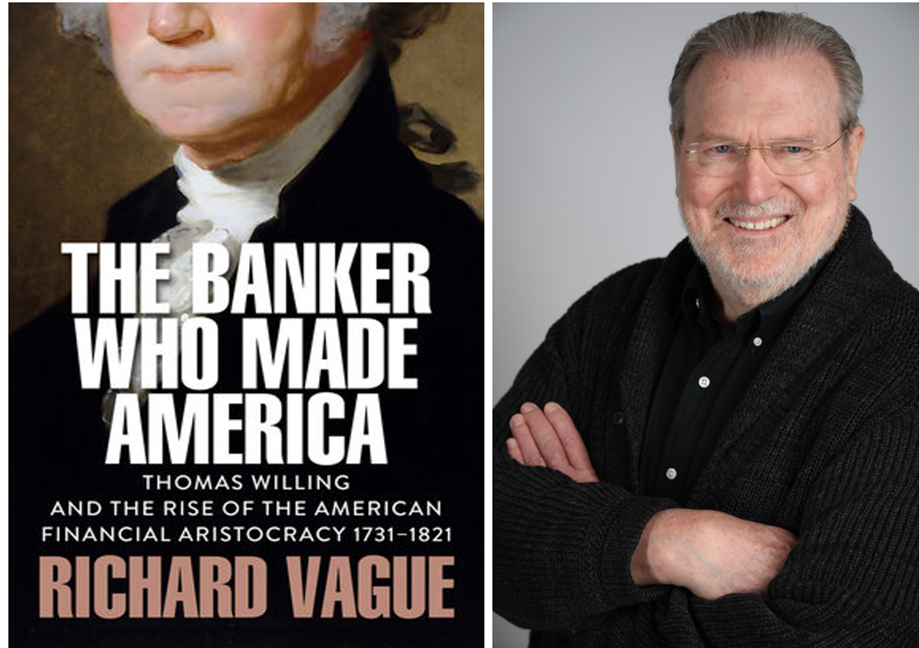
In the 1976 movie “All the President’s Men,” Hal Holbrook’s character Deep Throat advised investigative reporter Bob Woodward to “follow the money” to get the facts on Watergate. Author Richard Vague adopted that same philosophy in researching Thomas Willing, one of the most powerful figures in colonial times but a relatively unknown figure today—until now.
Willing may be unfamiliar to many, but as presented in Vague’s expansive biography, “The Banker Who Made America,” he was a financial visionary and one of the most influential political figures of the 18th century. Willing and Alexander Hamilton together helped establish a proper financial foundation in the early days of the Republic.
As the saying goes, “It takes one to know one,” the author is ideally suited to introduce history aficionados to the man who was respected by George Washington, Benjamin Franklin, and countless other Founding Fathers. Like Willing, Vague is a successful Pennsylvania businessman, banker, and a former government official widely respected for his experience in finance and economic commentary.
In a work that is thorough and revealing, Vague details the many vital offices and activities Willing was involved in. He was a powerhouse in Pennsylvania politics and a delegate in the Second Continental Congress, played a vital fiscal role in funding the Revolutionary War, and, appointed by George Washington, ran the country’s first two national banks.
Willing’s contributions are all the more remarkable considering he was one of two Pennsylvania delegates who voted against the Declaration of Independence, not once, but twice.
From Trader to Politician
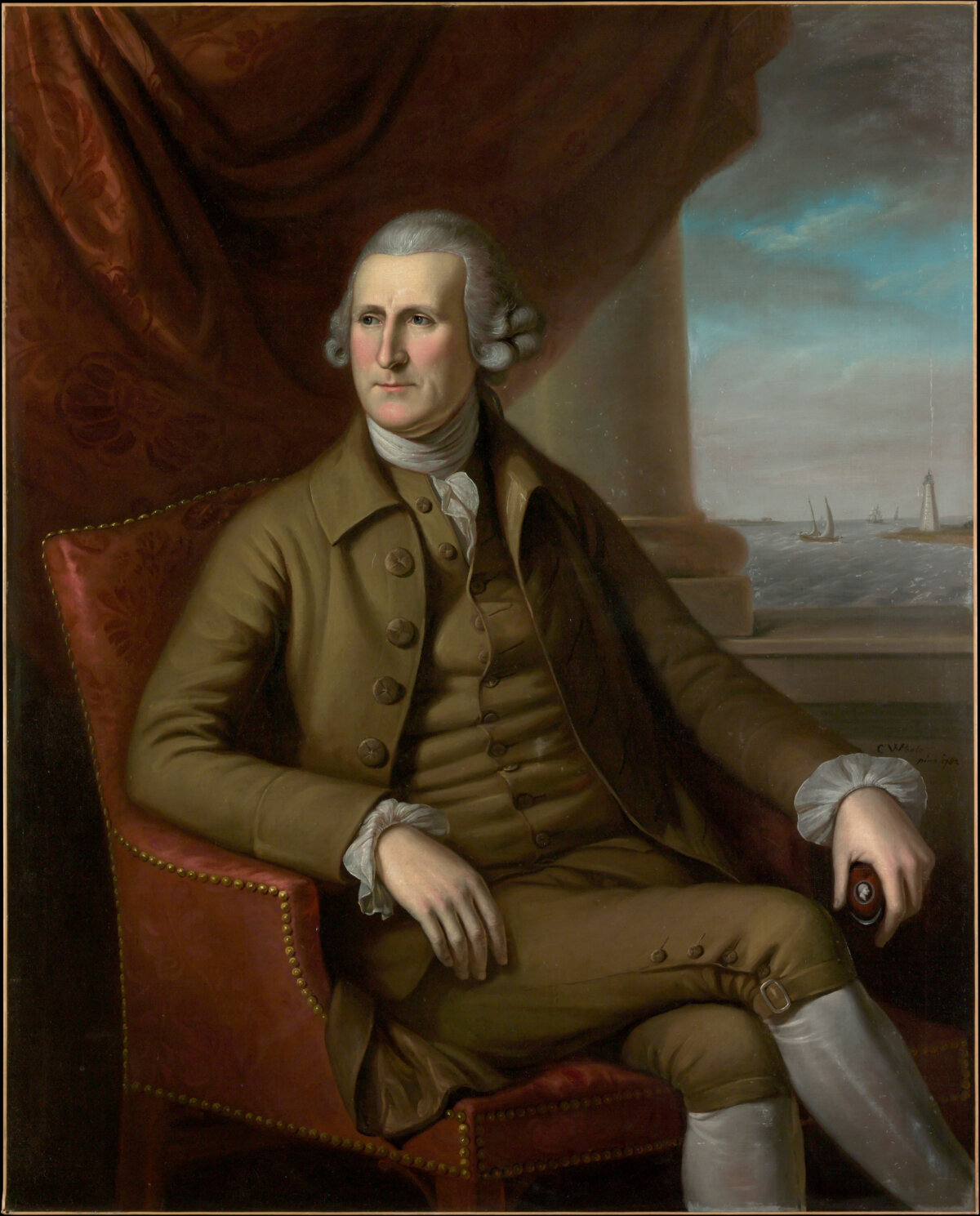
A personable, honest, and hard-working man, Willing inherited his father’s modest trading business in his early 20s. Over a span of decades, he grew it into one of the largest mercantile trading firms in the Colonies. A native Philadelphian, Willing partnered with Robert Morris, a signer of the Declaration of Independence, to create Willing, Morris & Co.
Willing’s rise to social and political prominence was aided by his success as a merchant and his prominent family tree. His father, Charles, had twice been mayor of Philadelphia, and his great uncle Richard first visited Philadelphia 30 years after William Penn founded it in 1682.
The author describes in minute detail why Willing was slow to accept the idea of independence. As a prosperous merchant with a keen business acumen, he saw little benefit in revolution and independence.
He had deep ties to British trade and believed both his prosperity and that of the Colonies required stability, not upheaval and uncertainty. Fueling the drive for independence in his state were political radicals. They seized power from the conservative mercantile class, supporting anti-authoritarian laws in their pursuit for an unfettered democracy.
Willing’s refusal to support American independence stripped him of his political power in Pennsylvania and Philadelphia, yet the author describes how Willing, Morris & Co. still played an indispensable role in the young Republic’s history.
However, Willing was a business pragmatist, not an ideologue. Once the Colonies voted unanimously for independence, he leveraged his firm’s merchant networks and credit sources to support Washington and the Continental Army. When the continental currency proved worthless near the end of the war, Willing used his personal wealth to help Washington secure the war’s end at Yorktown.
Challenges and Turmoil
Vague’s book is more than a comprehensive biography on Willing. It also offers insights on the economic challenges and political turmoil in the Colonies before the war, during the conflict when the British occupied Philadelphia, and in the uncertain post-war days before the Constitution was approved.
The economic challenges were daunting. States printed their own currencies and Congress had no authority to tax in order to fund the war effort. This presented difficulties in repaying loans to foreign countries, and paying interest to those who helped finance the war debt. Inflation ran rampant as both states and Congress printed currency that eventually was all but worthless.
“By mid-1779, Congress had authorized almost $200 million in currency, printing new continental dollars at a rate of $10 million per month, overwhelming an economy that measured on some $250 million in total size,” the author noted.
At times readers may forget they’re reading a biography rather than a political and economic history of that time, but one can assume that is because Willing was prominently involved in various facets of colonial history.
The political and culture challenges were also polarizing. There was a constant tug-of-war for control between two domestic groups: the wealthy colonists in areas like Philadelphia and New York City who made their livelihoods in overseas trading and those in the educated professions, and farmers and laborers in the western areas of the country. Those outside the cities felt economically neglected, unprotected from Indian raids, and they resented the privileged classes for their wealth and political power.
The author writes that Pennsylvania was ground zero for much of those clashes and Thomas Willing was the political moderate stuck in the middle. Prudent and fair-minded, Willing knew that politics was directly tied to money and debt and whether one was a debtor or lender largely determined one’s political orientation.
Political Redemption
To help the country get on the proper financial footing, Congress decided to create a national bank. This was decades before the federal government issued its own paper currency during the Civil War.
George Washington appointed Willing as one of the bank’s commissioners, and on Nov. 2, 1781 Thomas Willing was elected by a 12-member board as president of the Bank of North America, the country’s first chartered bank.
Vague wrote, “Thomas Willing’s selection as the bank’s president was an extraordinary honor and opportunity in light of the bank’s power.” His selection also helped him repair his reputation for opposing the Declaration of Independence.
His selection was very advantageous for the country. Willing served brilliantly as the national bank’s president for 10 years before George Washington appointed him again in 1791. This time, he was appointed president of the First Bank of the United States, a position he held for 16 years under three presidential administrations.
In the Washington administration, he worked closely with Secretary of the Treasury Alexander Hamilton and helped stabilize the federal government’s finances, managed its debt, oversaw currency and helped foster economic growth.
Some readers may find the book’s occasional descriptions of import and export figures, ship’s tonnage, bank drafts, and depreciating currency tedious reading; those are not unimportant details considering they were important data points for men like Willing entrusted for laying the building blocks for a stable and sustaining financial foundation.
“The Banker Who Made America” illustrates that while economic and cultural divisions have been with America since our founding, responsible fiscal policy combined with equal opportunity for all and a willingness to work hard has made our country a prosperous and capable nation for 250 years.
The Banker Who Made America: Thomas Willing and the Rise of the American Financial Aristocracy
By Richard Vague
Polity: Feb. 3, 2026
Hardcover, 448 pages
What arts and culture topics would you like us to cover? Please email ideas or feedback to features@epochtimes.nyc