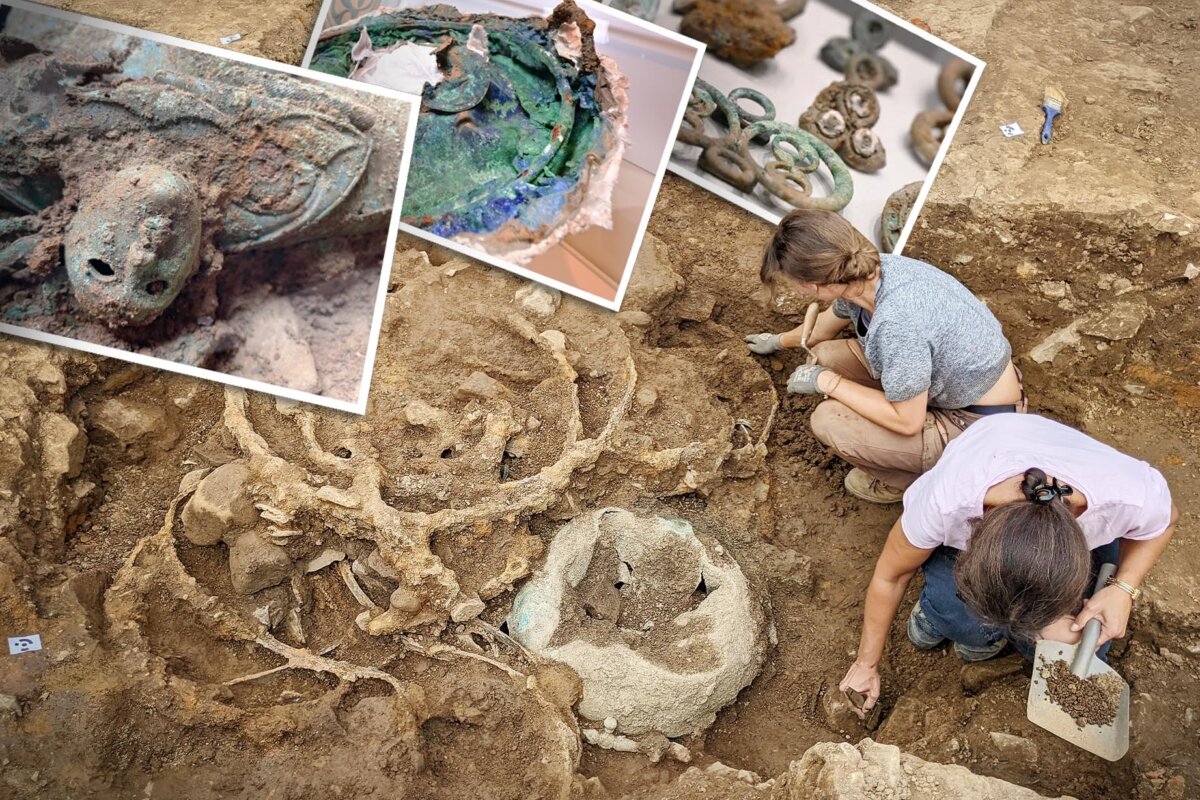
When Peter Heads’ metal detector sounded in a muddy field in late December 2021, he knew he had found something big. The amateur detectorist began digging near the village of Melsonby in North Yorkshire, UK, and soon uncovered the first fragments of a 2,000-year-old ritual deposit.
Grasping the importance of the find, Heads alerted Tom Moore, the head of the archaeology department at Durham University. The objects date back to the Iron Age, Heads told him. They knew looters would pose a very real threat, so the find had to remain a closely guarded secret.
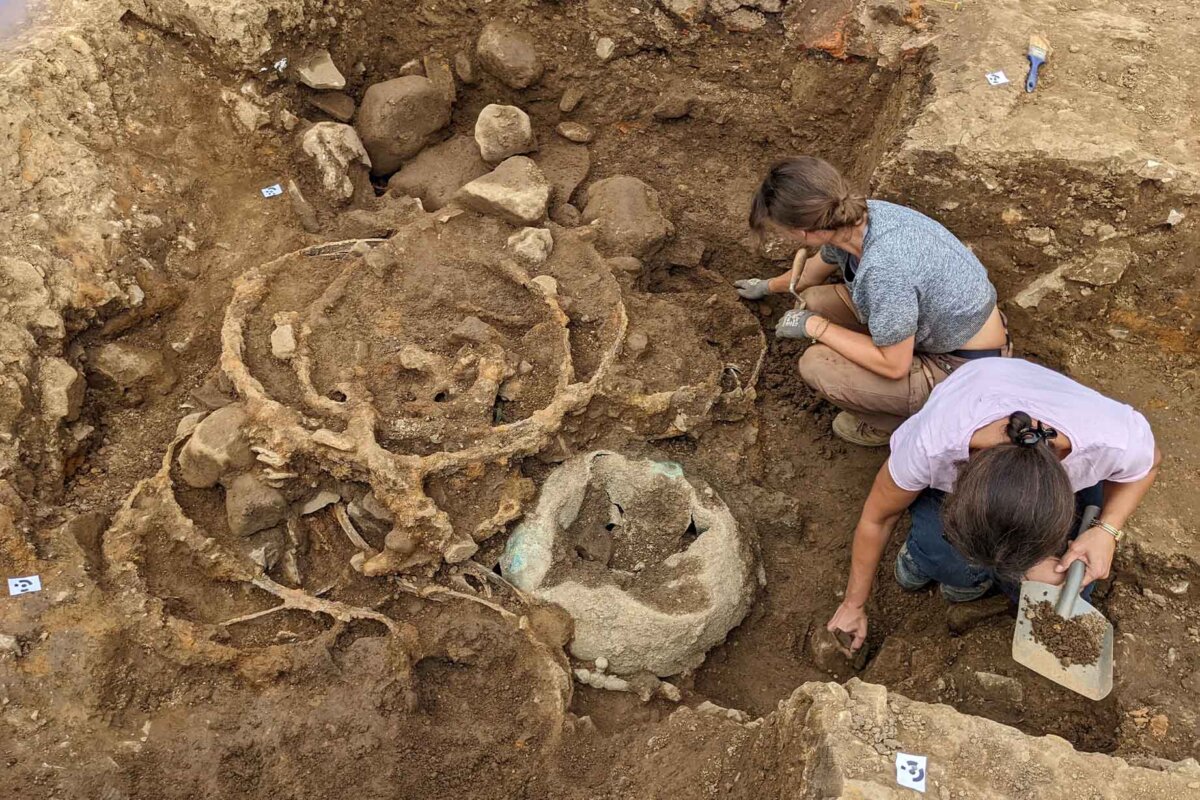
Moore then secured a 120,000-pound rescue grant from Historic England to fund a quiet excavation beginning in 2022. The multi-year project culminated in March 2025 when the researchers announced they had salvaged more than 800 artifacts. The find was dubbed the Melsonby Hoard.
“Quite simply, this is one of the most important and exciting Iron Age period discoveries made in the UK,” said Duncan Wilson, chief executive of Historic England, in a press release. “It sheds new light on Iron Age life in the north and Britain, but it also demonstrates connections with Europe.”
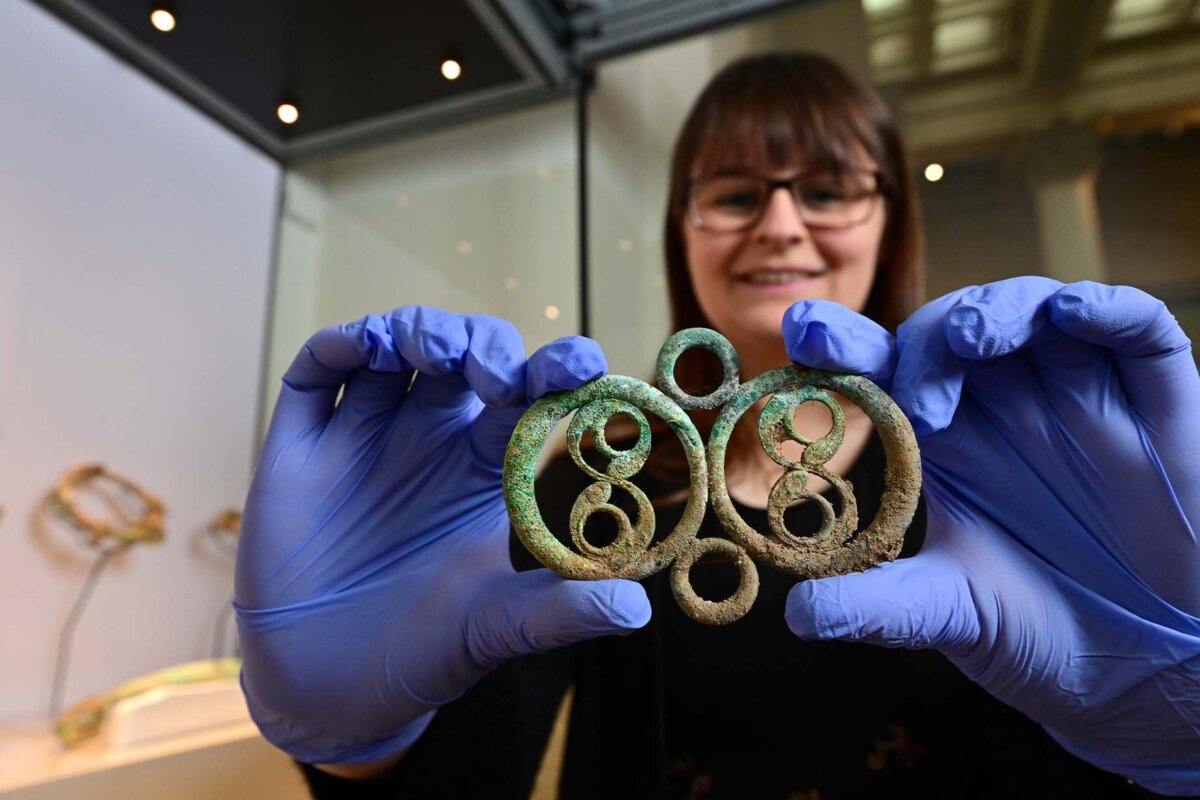
The announcement, however, triggered a race against time to keep the artifacts from being sold into private collections. Backed by the National Heritage Memorial Fund and a massive public crowdfunding campaign, heritage organizers raised 265,000 pounds to purchase the collection, securing its permanent home in Yorkshire.
This public acquisition followed the strict framework of the British Treasure Act 1996, which designates prehistoric base-metal finds of two or more related items as state property. Finders must report such findings within 14 days or face criminal penalties. Once a coroner declares a find “treasure,” it becomes Crown property to prevent its dispersion on the antiquities market.
This system rewards honesty, however; an independent panel valued the Melsonby Hoard at 254,000 pounds, and law then dictated the state’s purchase price be paid out as a tax-free financial dividend, split equally between the detectorist, Peter Heads, and the landowner.
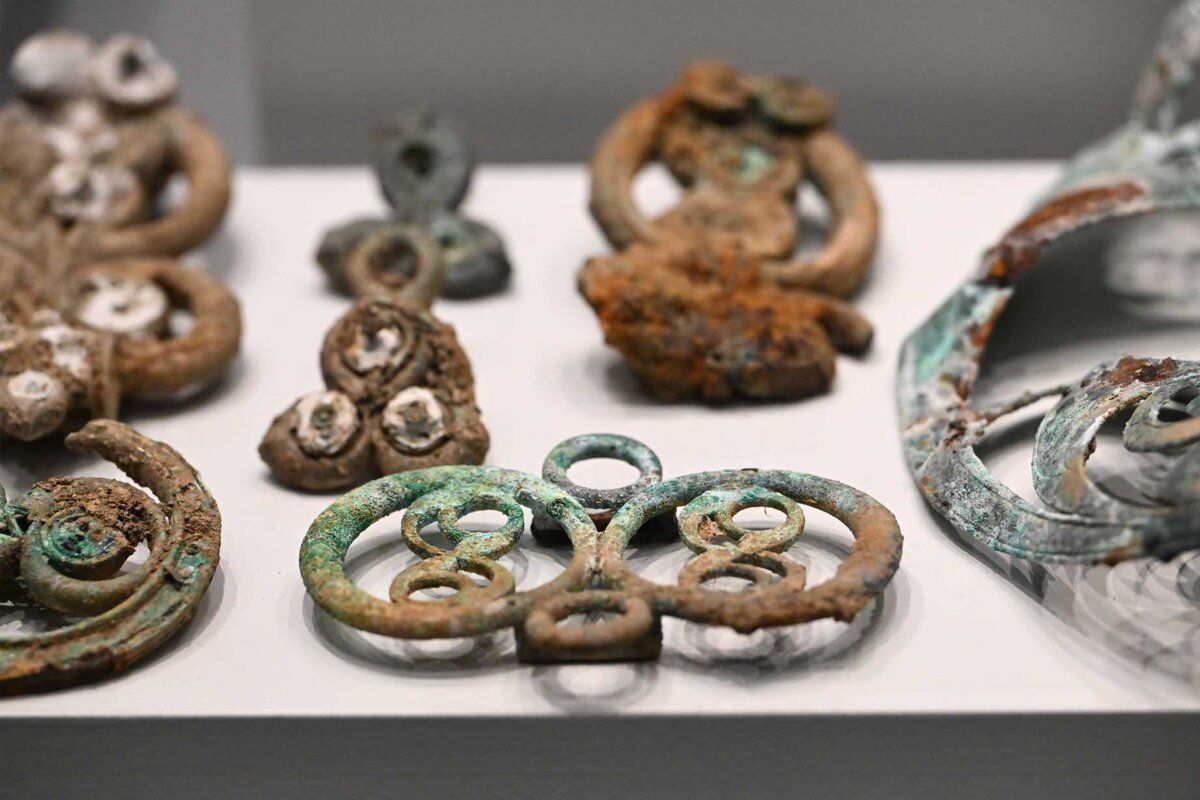
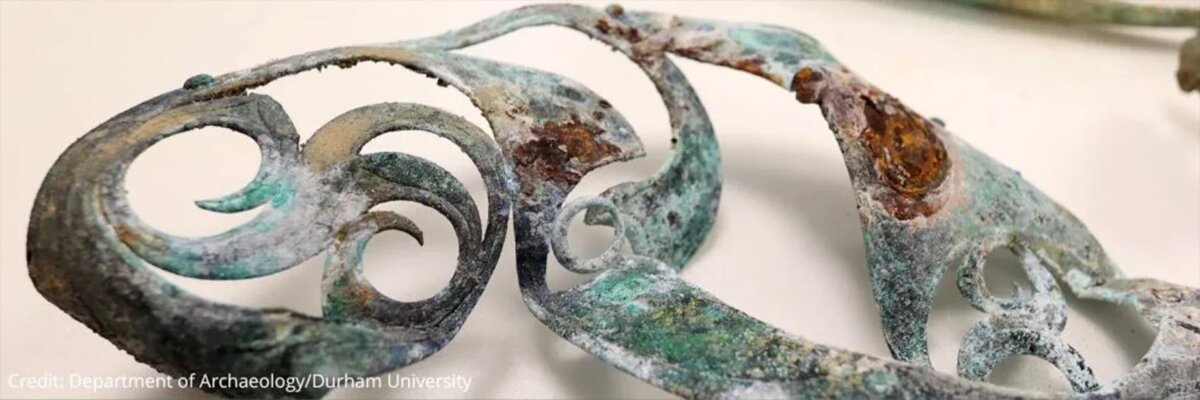
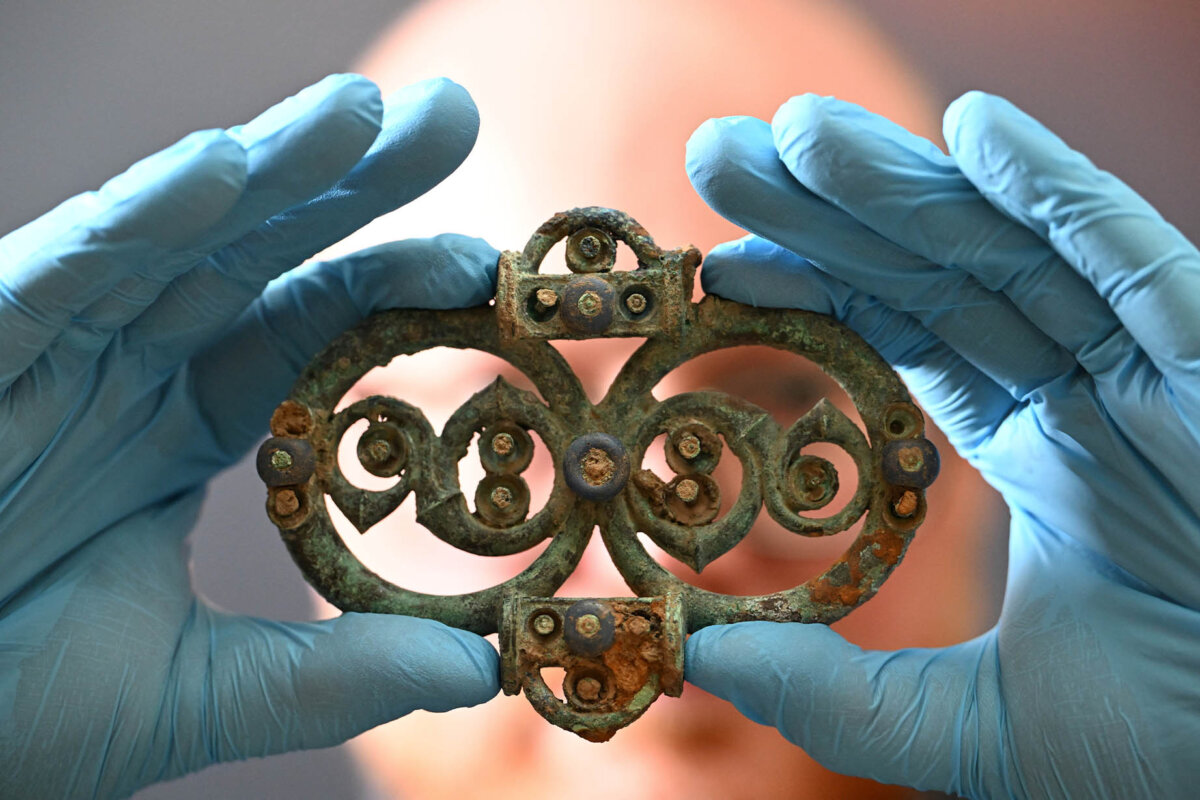
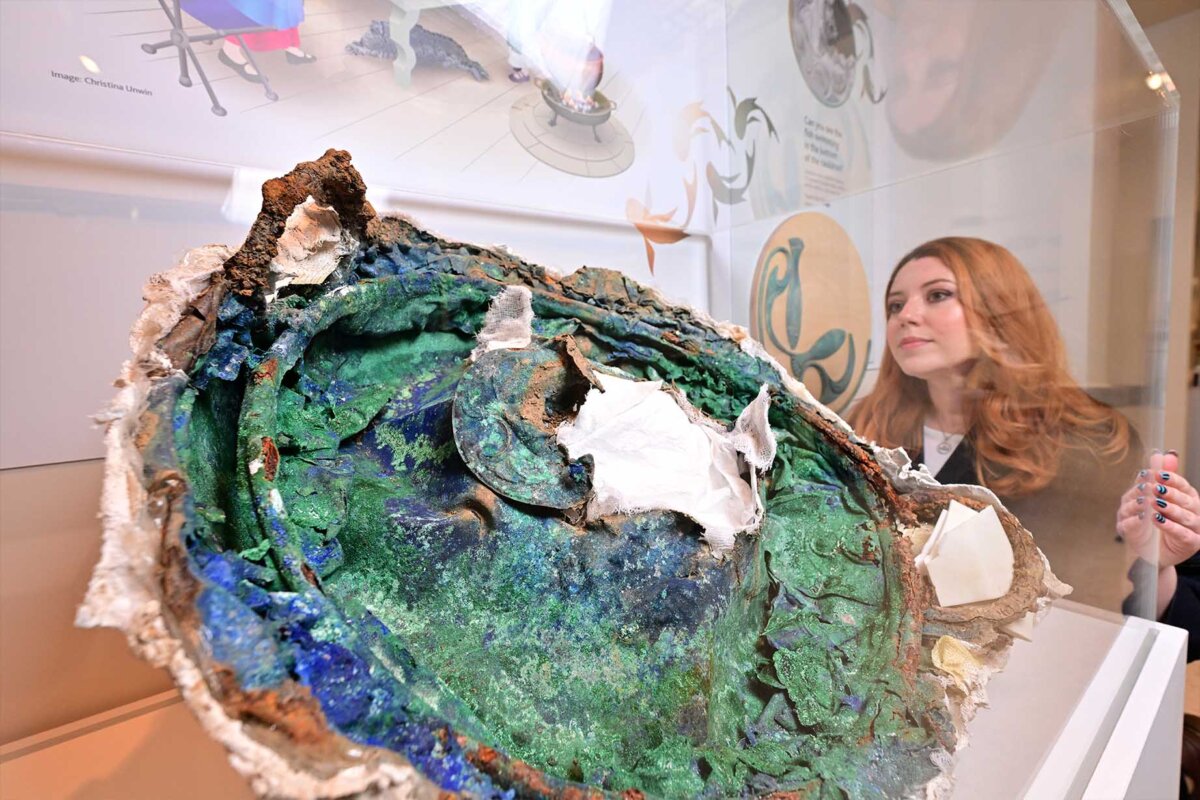
On May 15, the hoard finally went on public display when Yorkshire Museum officially opened its doors to the Chariots, Treasure and Power: Secrets of the Melsonby Hoard. The exhibit challenges long-held historical assumptions.
Dated to the Roman conquest of southern England in the first century A.D., the treasure is tied to the Brigantes tribe, famously led by Queen Cartimandua. Experts believe the hoard was a deliberate, ritual destruction of wealth by the ruling class where the elites of the period intentionally bent, broke, burned, and buried these valuable objects as a supreme demonstration of status. Although the burned remains suggest they may have been part or a funerary pyre, no human remains were found.
But the discovery suggests that the northern Iron Age society was far more sophisticated and interconnected with continental Europe than previously believed.
“The destruction of so many high-status objects, evident in this hoard, is also of a scale rarely seen in Iron Age Britain and demonstrates that the elites of northern Britain were just as powerful as their southern counterparts,” Moore said. “Whoever originally owned the material in this hoard was probably a part of a network of elites across Britain, into Europe and even the Roman world.”
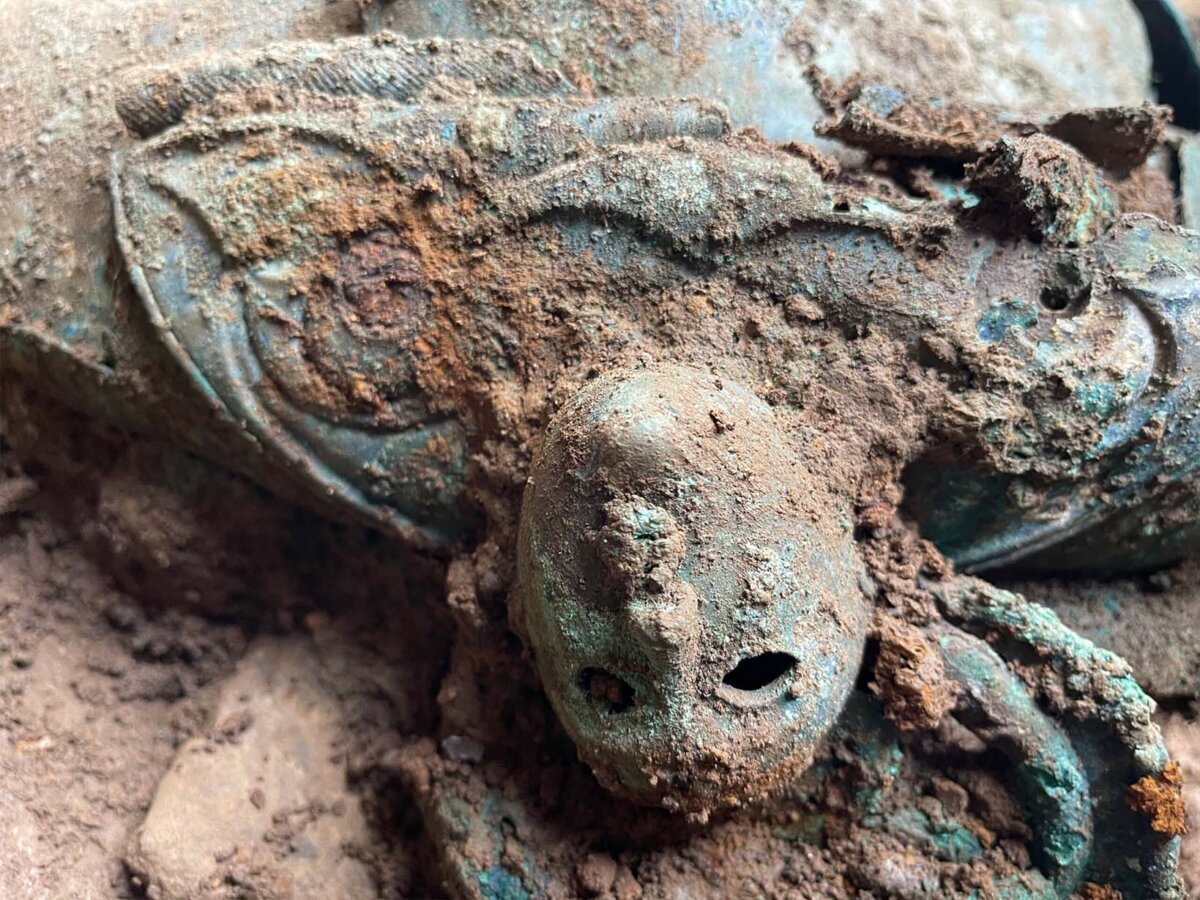
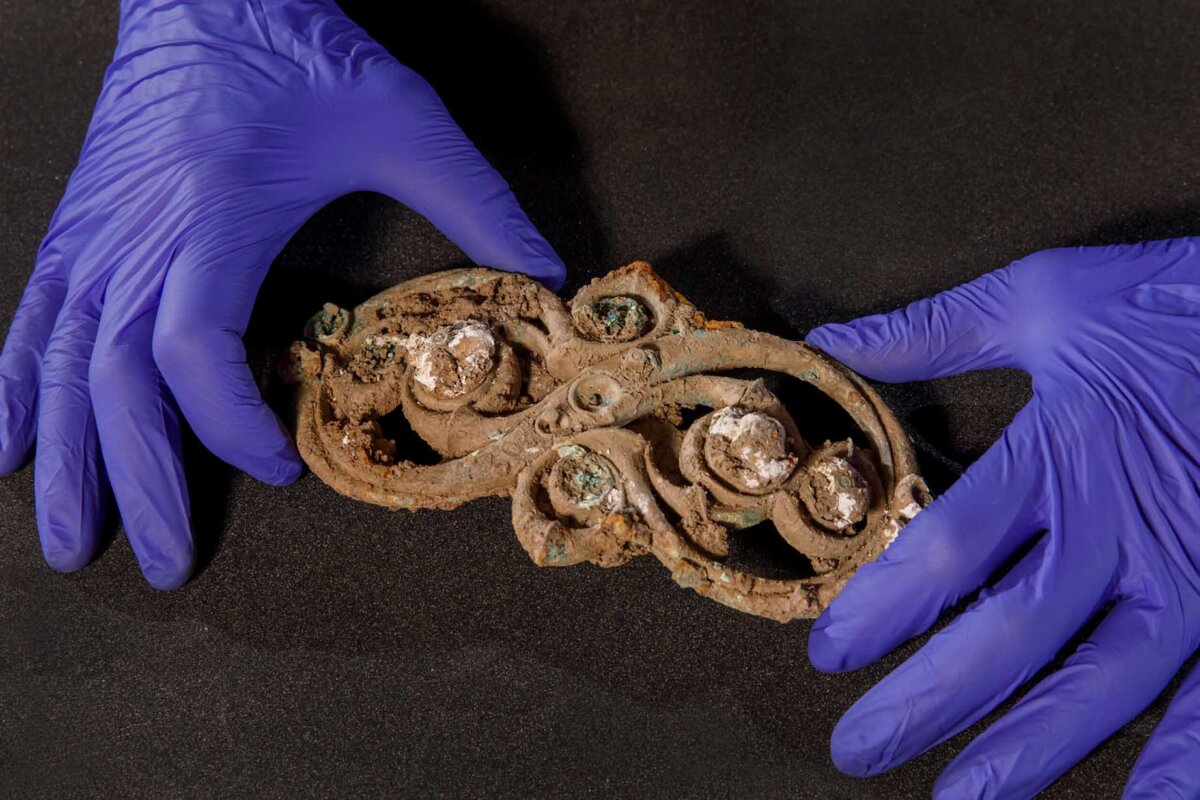
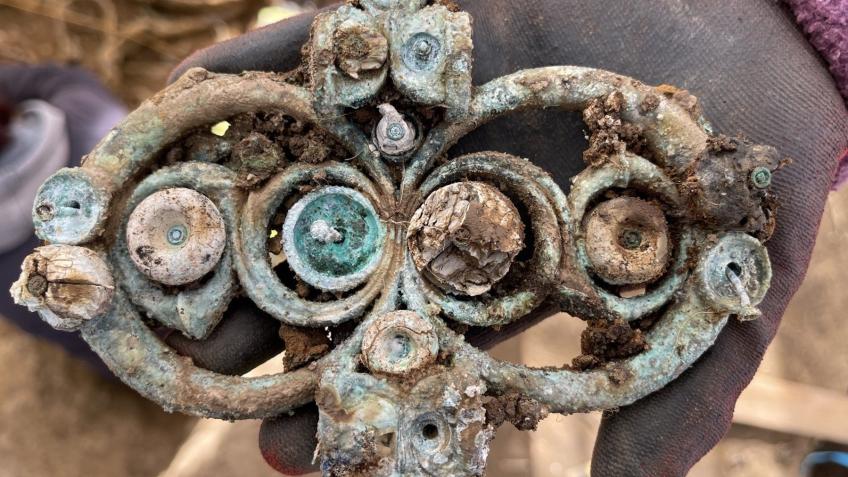
The exhibition pieces highlight the technological complexity of this society. Standout items include a cluster of 28 iron tires from horse-drawn vehicles—possibly chariots or wagons—that were found intentionally bent out of shape. These were discovered alongside cast-copper alloy bridle bits, linchpins, rein rings, and harness fittings for 14 ponies, some adorned with vibrantly colored glass and red Mediterranean coral.
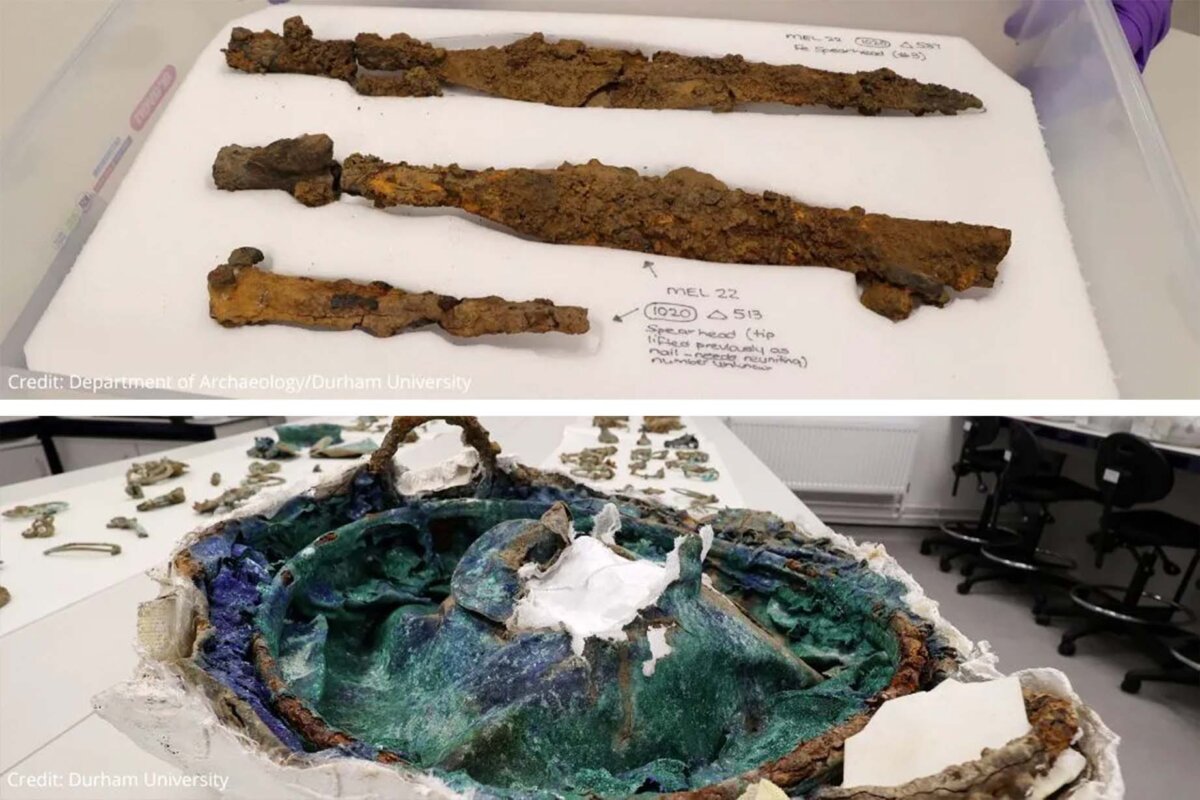
Other key objects include a large, heavily corroded iron mirror, ritual spearheads, and two ornate cauldrons—including a lidded vessel believed to be an ancient wine container—that were originally found buried up-side-down.
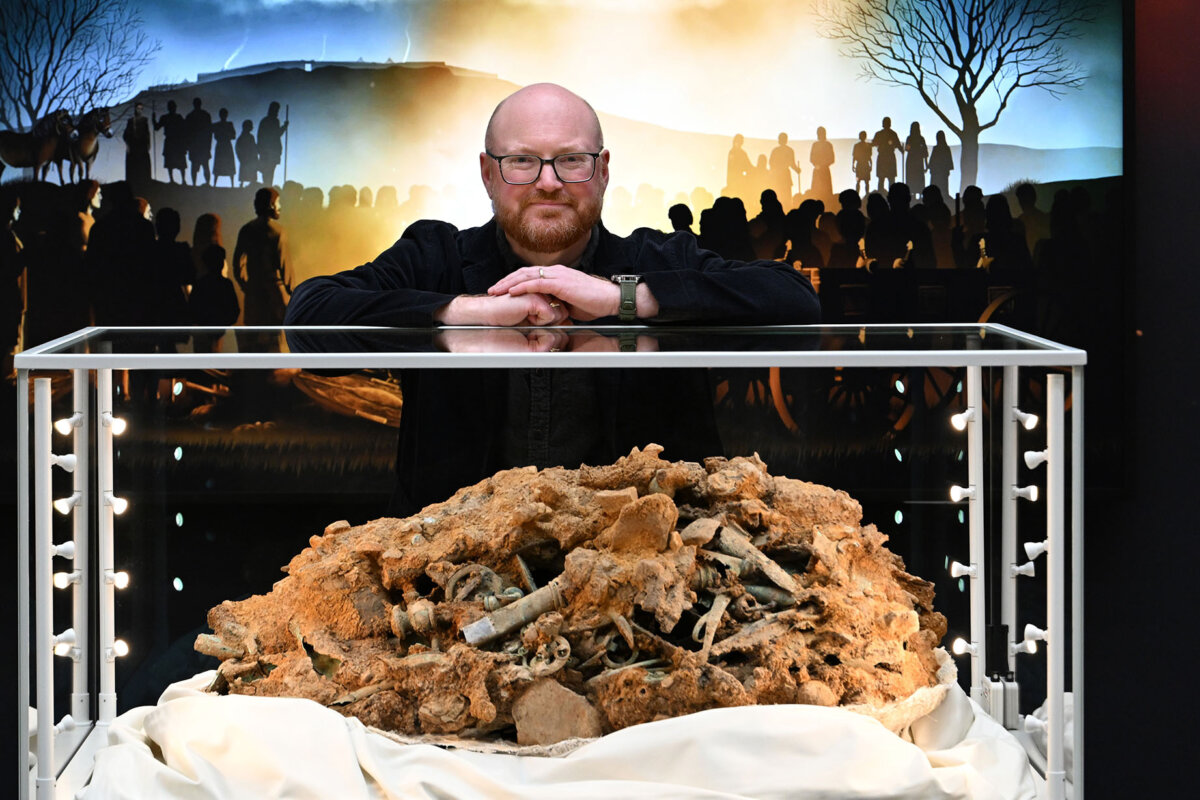
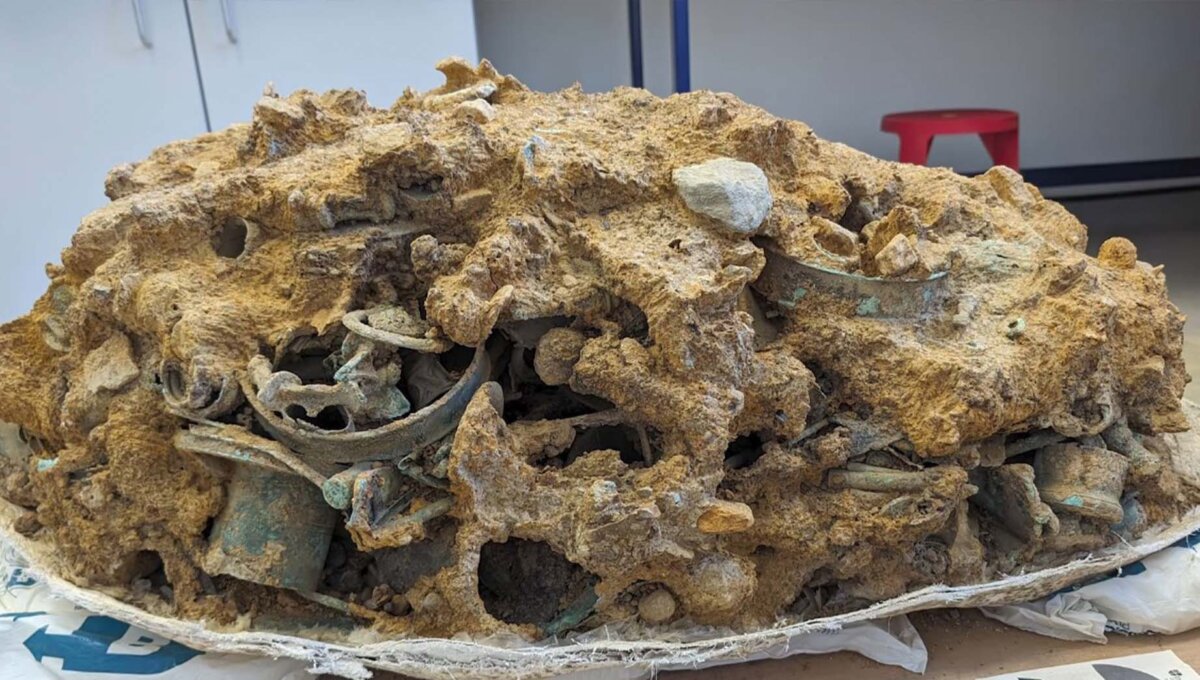
The collection’s most enigmatic piece, however, is a 330-pound “fused” block of earth and corroded iron fragments twisted together spectacularly. Found in a neighboring ditch, this had to be extracted with the aid of cutting edge X-ray and CT scanning technology to help scientists identify the embedded objects to avoid damaging them.
While the public can now marvel at the 2,000-year-old chariot wheels and wine cauldrons, the effort to understand the Melsonby Hoard and its society continues. For the scientists continuing to scan the bulk of the hoard behind closed laboratory doors, many secrets of that North Yorkshire field are still being uncovered.