Cocktails in the East often come with stories of characters from the West—movie or literary legends who famously downed their favorite drinks in their adopted homeland. Rudyard Kipling, Joseph Conrad, Noel Coward—if you find a place they once stayed, the bar is likely to serve a common drink named in their honor. For example, author Graham Greene’s preference for daiquiris is memorialized at the legendary Hotel Metropole in Hanoi. Clark Gable once taught the bartender at The Peninsula Hong Kong how to make a screwdriver.
With all the exotic appeal of Asia, however, why should the bar menu be so mundane?
First Mixed in Asia
No Asian cocktail is more famous than the legendary Singapore Sling. The recipe for this mixed drink has spread like gossip—everyone’s heard it, and it’s completely different from the original.
Credit for creation of the Singapore Sling is often given to Ngiam Tong Boon, a bartender who worked at the Long Bar of the Raffles Hotel in Singapore in the early 1900s. His mix, created sometime around 1915, was originally referred to as the Gin Sling, and the recipe, based on best-guess research, was likely even parts of dry gin, cherry brandy, and Benedictine topped with club soda and garnished with a lime peel. The Singapore moniker was added as the drink migrated around the globe.
A recipe for a Straits Sling in a 1922 book by Robert Vermeire claims the drink to be popular locally throughout the city. It gave no mention of the origin being the Raffles Hotel and added lemon juice, Angostura bitters, and orange bitters to the mix. Today, one can belly up to the Raffles’s Long Bar for a Singapore Sling, but it comes premixed with a recipe that now includes pineapple and lime juice, Cointreau, and grenadine. The truth of the Sling may be lost to history, but its relationship to Singapore is common knowledge.
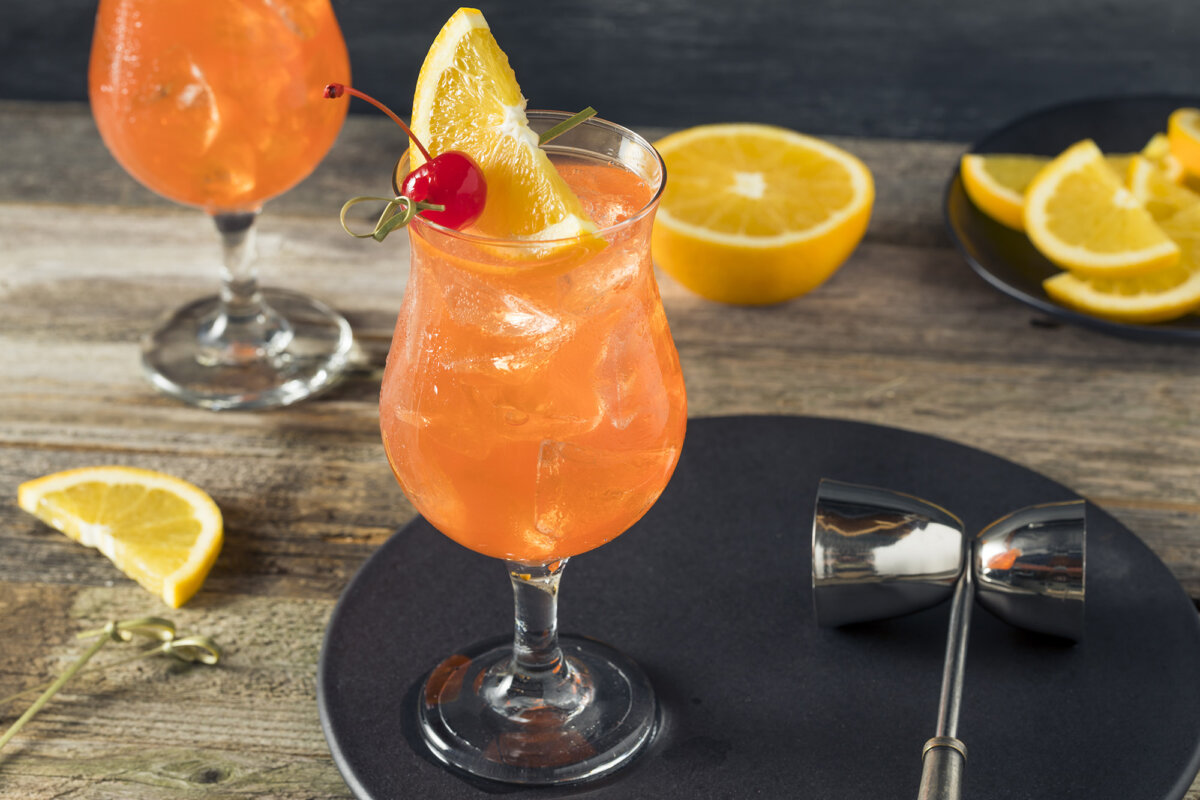
Not so commonly known, however, is the tropical origin of one of the most common bar drinks: the gin and tonic. One might give a nudge and a wink that the evening G-and-T was for “medicinal purposes,” but in this case it was the honest truth. Malaria was a serious killer in the steamy lands of the British Empire, and quinine, the only substance then known to combat the disease, was rather bitter. When mixed with carbonated water, it became known as tonic water, and gin was just the thing to help the medicine go down.
Fruity Originals
But modern mixology is going well beyond gin slings to ginseng. To the uninitiated, just a walk through an Asian market seems like fruit shopping on another planet. Mangos, of course, are familiar and find their way into margaritas and daiquiris. What’s a piña colada without your fresh local pineapple and coconut? But a number of lesser-known fruits are now on the drink menu.
Dragon fruit, though originally a Central American fruit introduced to Southeast Asia by the French, has become a major crop in places such as Vietnam and can be readily found throughout Asia. The exterior is bright and bold and appears a bit prickly, but it is anything but. The light, sweet flesh is healthy and goes well with other juices. The Dragon Fruit Greyhound starts with two ounces of vodka and adds the juice of half of a dragon fruit, some cranberry juice, and a bit of ginger ale. Bacardi even offers Dragonberry, a flavored rum that combines the sweet dragon fruit with strawberry.
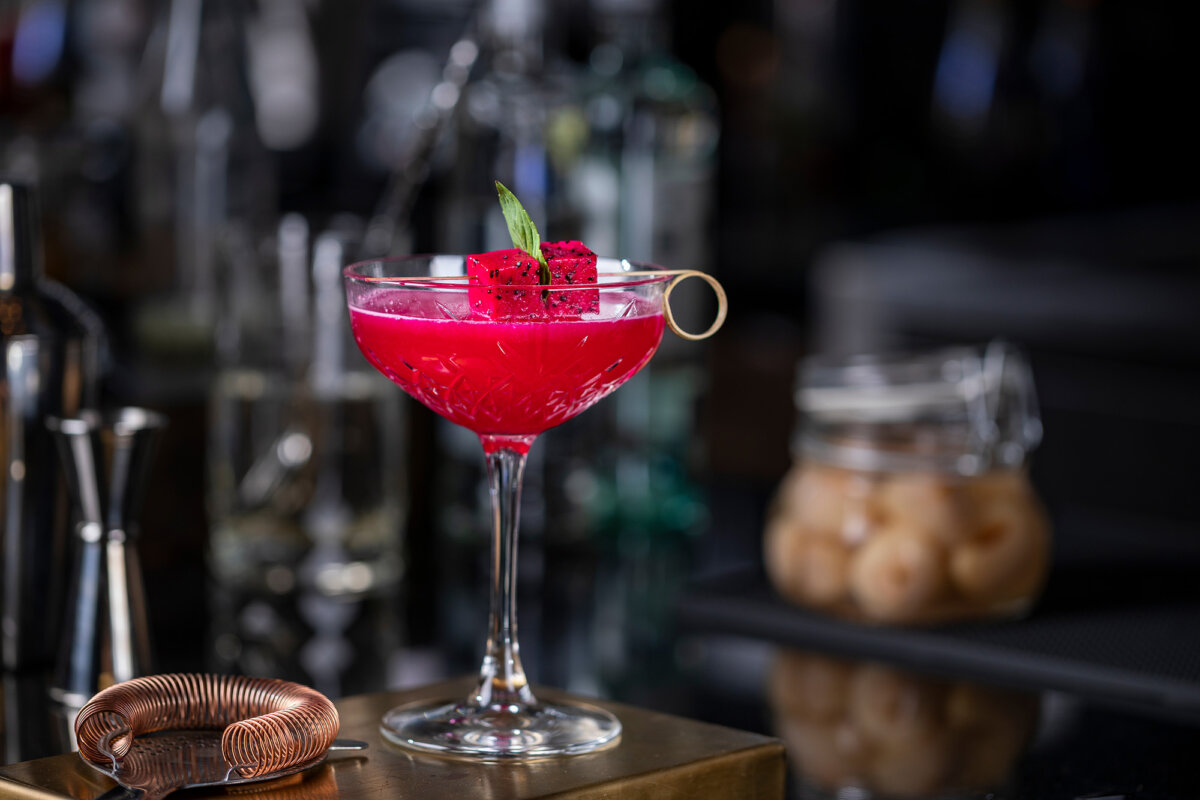
Another unusual fruit, lychee, has a rose-tinted, rough-textured rind concealing a sweet, translucent white flesh. Native to southern China, the actual fruit, fresh or canned, can be used in Asian twists on old-time drinks. A lychee-flavored liquor goes well with vodka and a dash of lime juice to make a lychee martini. Swap the lime for some cranberry juice, and you have yourself a Red Lotus.
Spirits
From lemongrass martinis to bits of ginger and ginseng muddled in, the Asian cocktail opens up a world of new flavors. And each country often has its own tipple to try. The Koreans love their soju (sort of like a sweet, weaker vodka), and Chinese people from the Fujian Province use cedar-smoked lapsang souchong tea to produce Qi Black Tea Liqueur.
Sake, the Japanese alcoholic drink brewed (not distilled) from rice, has also found its way into the cocktail world. With a lower alcohol content than the standard vodka, rum, or whisky—more akin to wine’s ABV—sake makes for some gentler mixes or can add a dry, earthy twist to the other more potent concoctions. Consider the Fuji Sunset, made with two parts sake and one part each maraschino liqueur, lemon juice, and orange juice, then shaken with ice, strained, and topped with a dash of grenadine. Or try something a bit greener, like an Eager Ninja: a half ounce each of sake, Midori, Malibu rum, and pineapple juice with a bit of Blue Curacao and raspberry cordial shaken in.
Sake isn’t just for Japanese drinks. Order up a Miss Saigon made with vodka and a muddled Asian pear with a dash of Saigon cinnamon shaken in a mixer. Pour this into a martini glass and float a shot of sake on it.
New Bars, New Flavors
Stylish bars in cities such as Bangkok, Shanghai, and Tokyo are the creative laboratories of libations, exploring new flavor frontiers. Check out Bangkok’s Bar Us’s mixes, which might include fish sauce or toasted rice, or the western ingredients mixed with shiso-infused liquors or miso-chili salt at Tokyo’s Bar Trench.
Culinary exploration is a big part of traveling, so why order just the same old, same old at the bar? A mojito with a bit of ginger? Lemongrass-infused sake with vermouth and olives? Sure, why not? We’re in Asia, after all!