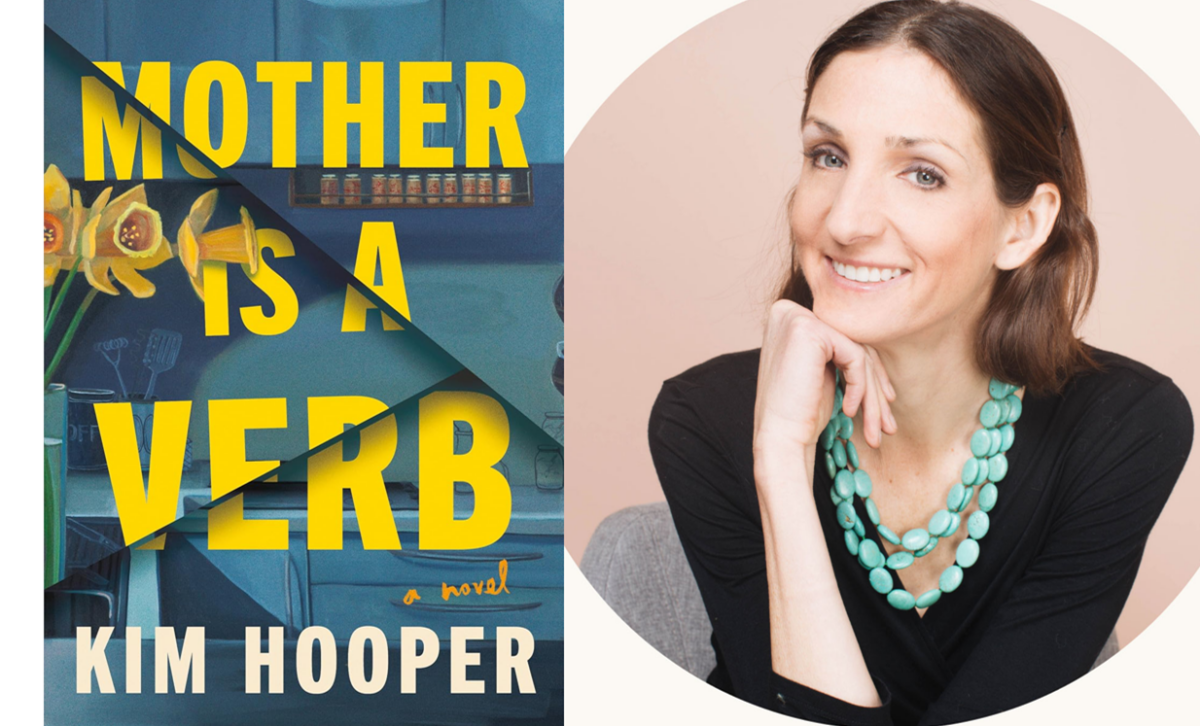
Following the stories of three women, Kim Hooper presents different outlooks on motherhood in her new novel, “Mother Is a Verb.” In the prologue, we meet Gwen Fisher, a 35-year-old woman from Seattle, who’s sitting in the Bainbridge Island Police Department with her 3-month-old daughter, June. Gwen was present at a shooting on Bainbridge Island, so she’s now being questioned by a detective.
She explains that she wanted to visit a woman named Angeni Luna, who lives with a group of people in—what should she call it? A “compound?” A “commune?” The detective asks whether she believes it’s a cult. “Not a cult, per se,” she replies.
When Gwen was an expectant mother, she followed Angeni’s social media channels almost religiously, heeding her suggestions to the letter and measuring herself against what she considered the ideal woman. Motherhood, however, isn’t working out the way Gwen thought it would.
Several months earlier, in Ballard, Washington, an ambitious, intelligent young woman named Sasha Robinson has mixed feelings about her half-sister Daphne’s pregnancy. Daphne has long been like a mother to Sasha. She’s cooked for her, helped her with homework, picked out her clothes, and cared for her while their mother worked long hours at two jobs. Sasha grew up resentful of her mother’s constant absence.
Sasha’s also worried that the new baby will take up so much of Daphne’s time that their relationship will never be the same. Her views on motherhood are framed by the lens of her academic work in feminist studies at the University of Washington.
It’s not surprising, then, that she’s uneasy about this Instagram account her sister adores. It’s full of homesteading-style content and attachment parenting posts, run by some flake named Angeni Luna.
However, like Gwen, Sasha finds that motherhood is nothing like she imagined.
Who Is Angeni?
At first glance, Angeni seems like the perfect mother living the perfect life. Her property, dubbed “The Land,” is an idyllic 11 acres of forest with trails, streams, and wild plants, tended by several adherents of her philosophy. Erik, Angeni’s husband, is handsome and fit. He adores his wife as if she were a queen. Everyone strives to create a vision of a utopian matriarchy, with Angeni at the top.
Angeni is also making a cartload of cash through her social media channels, where she presents herself as a kind of uber-earthmother. The response to her posts about her daughter Freya’s birth has led to a lucrative book offer.
Recently, she invited a young woman named Sitka to join their ranks, even though she hadn’t known her for very long. Sitka has the right image for her “brand,” and Baby Freya adores her. Angeni believes that Sitka’s presence is a blessing. But has she invited a snake into her neo-Eden?
Ideals Versus Reality
Since the rise of advertising, women have been subjected to an idealized version of themselves that has always been, by design, unattainable. Metrics of beauty and style, and even internal spiritual fulfillment, are bandied about as commodities. They’re proclaimed to be the ultimate yardstick by which women judge themselves and each other. Men also face the same kind of targeting, but I believe it hits women harder.
Motherhood, too, has been part of that marketing narrative. From the earliest moments of the modern women’s movement, the concept that you could “have it all”—a career and motherhood in perfect harmony—was put forth. For most women, it merely evolved into yet another reason to feel bad about themselves.
Kim Hooper’s “Mother Is a Verb” is a brilliant, well-structured story that’s full of dramatic moments, both big and small, along with a healthy dose of wisdom. More than just a riveting read, the book explores the idea of motherhood from several different perspectives.
What Is a Mother?
Gwen is the typical American mom. She sees the ideal of motherhood on her screens and, like any well-meaning mother, strives to match her perceived highest standards.
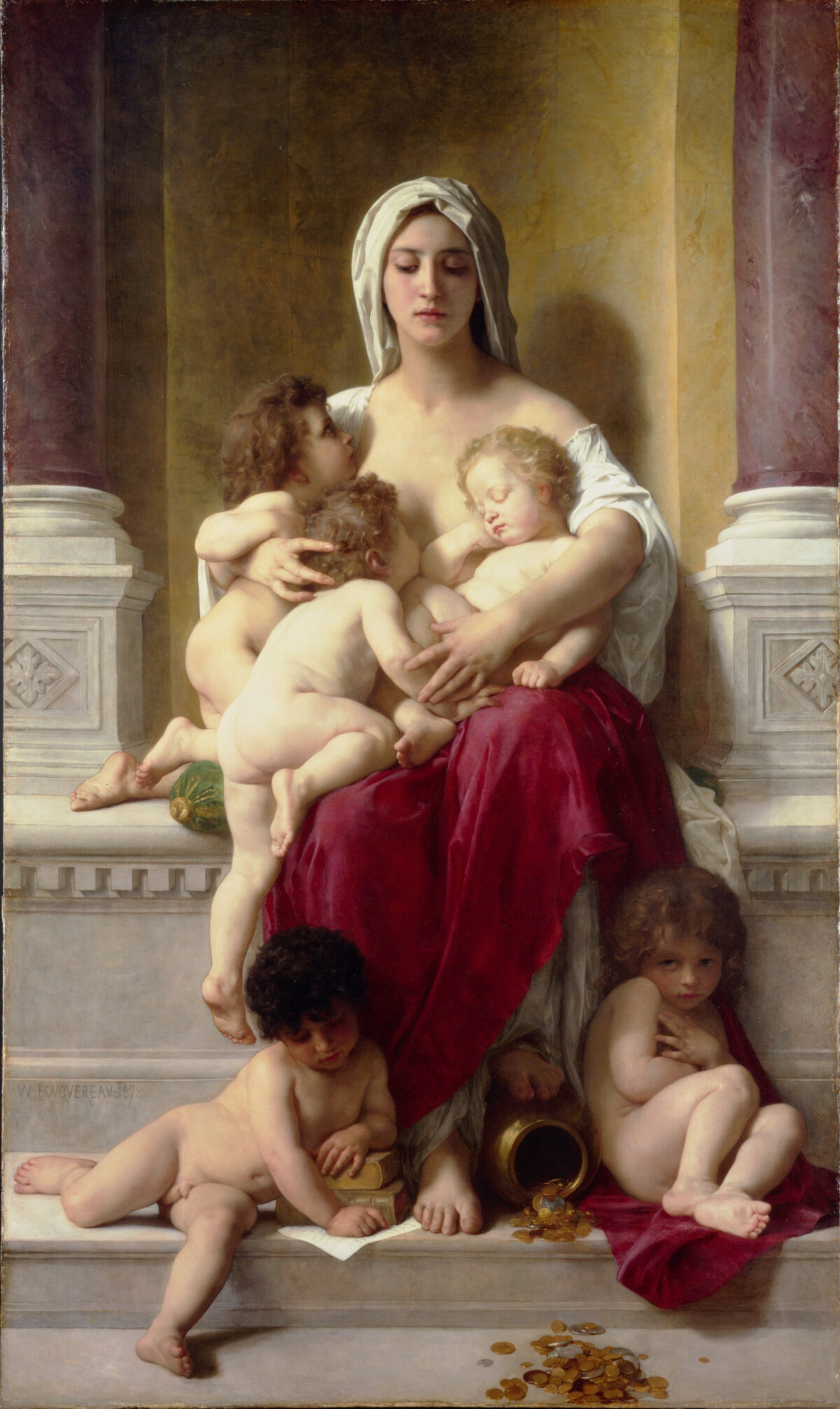
Angeni transforms motherhood into a performative act and is lauded for its “higher value,” measured by the volume of social media likes she receives. Angeni’s own mother, as we see in flashbacks, arguably failed her daughter at almost every level. Thus, Angeni’s best friend’s mother became the foundation of an entirely new identity and purpose.
Sasha, the modern progressive, views the #tradwife concept as oppression, brainwashing propaganda aiming to make women give up their personal ambitions. Nevertheless, she doesn’t grasp the irony of the fact that her own mother was forced to choose a career over motherhood. Sasha despises her for it, instead regarding her half-sister, Daphne, as her mother figure.
Many female writers today rely too heavily on fantasy and surrealist symbolism to tell stories by and about women. This often results in something more self-indulgent than insightful.
Fundamental aspects of motherhood ring false if viewed entirely through a soft, idyllic lens. On the other hand, neither should the physical realities overwhelm the bond that can be created between mother and child.
Hooper, thankfully, chose to use her considerable talents in a more grounded way, offering strong characters, tight writing, dramatic pacing, and, above all else, balanced realism. The results are excellent.
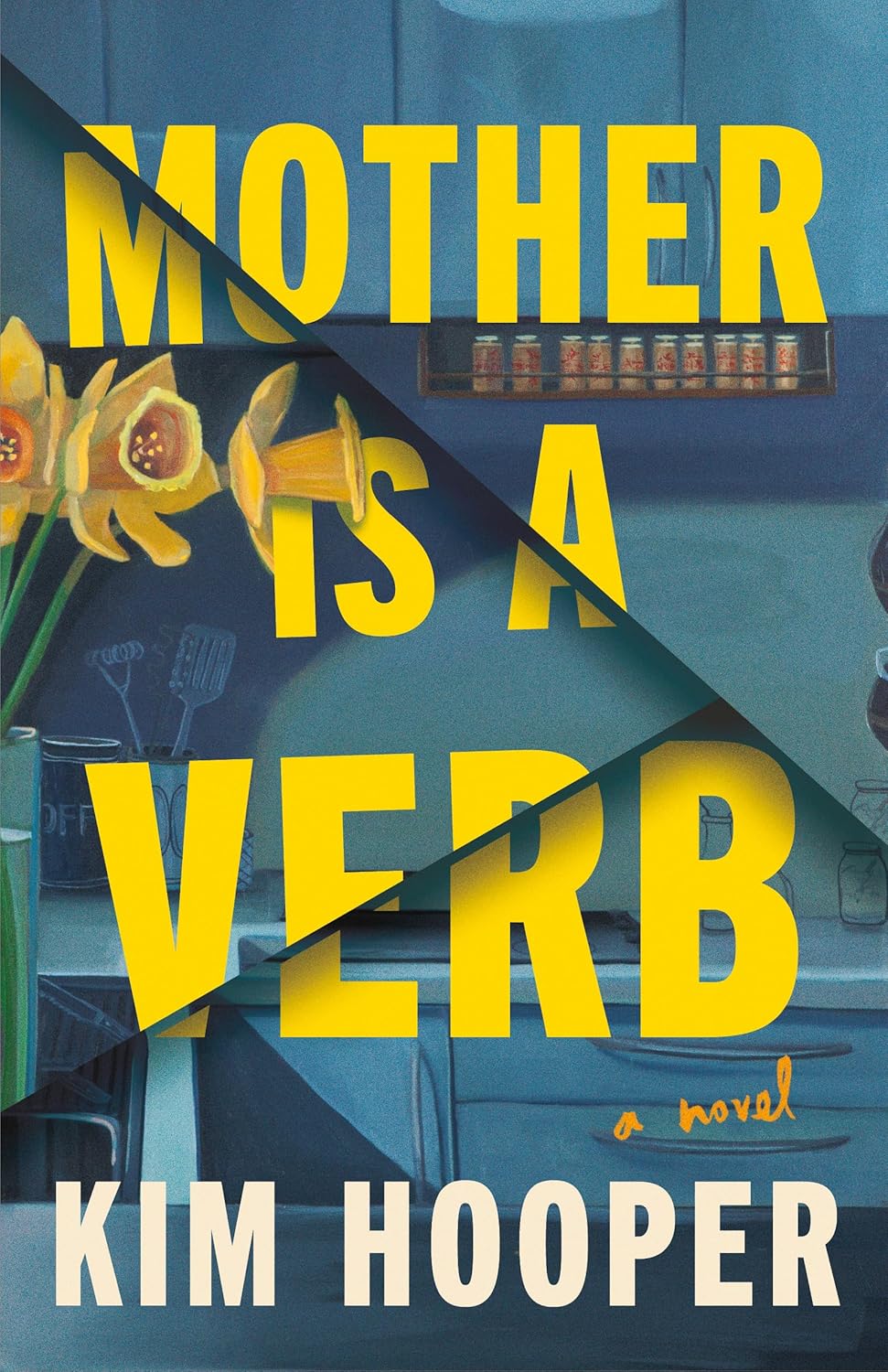
‘Mother Is a Verb’
By Kim Hooper
Lake Union Publishing: Feb. 17, 2026
Paperback, 431 pages
What arts and culture topics would you like us to cover? Please email ideas or feedback to features@epochtimes.nyc