



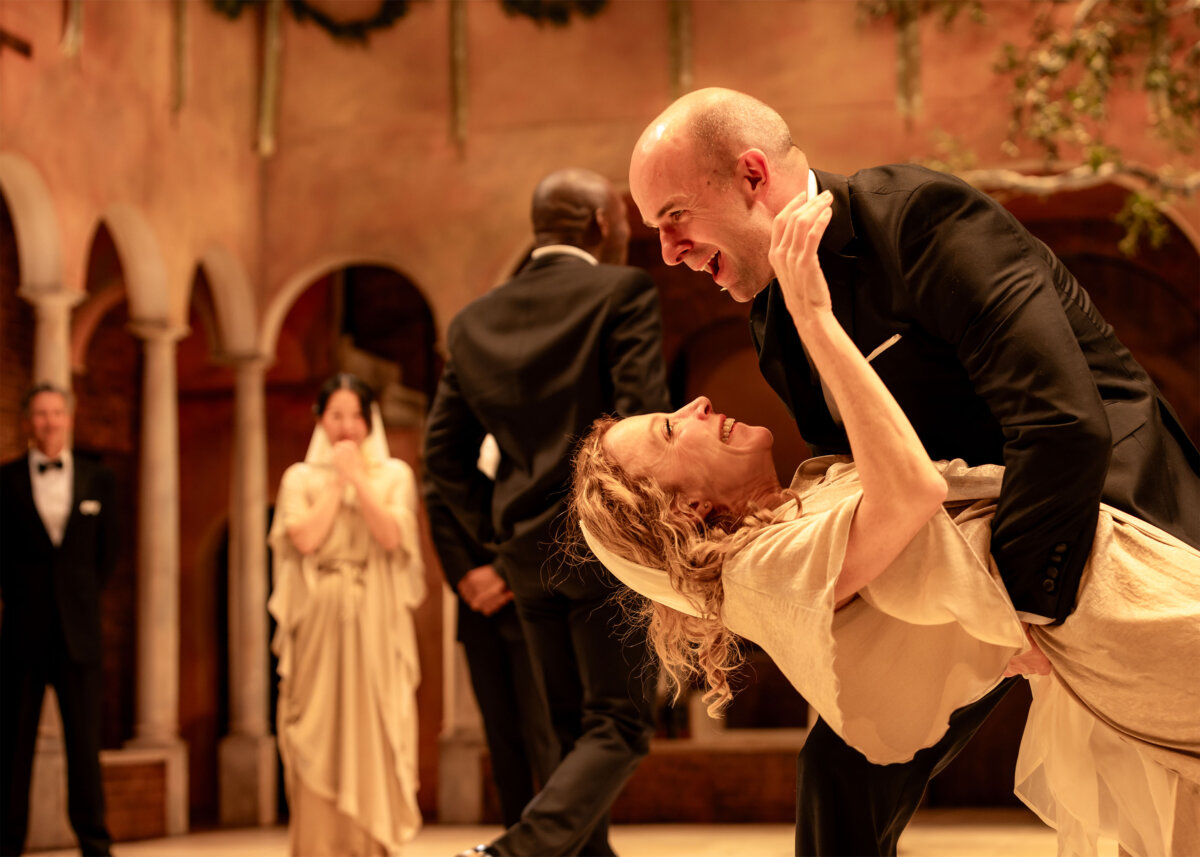
Watching a couple that intensely dislikes each other argue, bicker, and disagree can be amusing if the barbs are written by William Shakespeare, the greatest dramatic wit that ever lived. When we witness such a pair fall madly in love as they insult each other, their romantic sparring becomes hilarious. Never has “opposites attract” been delivered with such howling laughter as in Shakespeare’s “Much Ado About Nothing,” now in an exceptionally entertaining revival at the Chicago Shakespeare Theater.
 Benedick (Mark Bedard, L) clings to a tree while talking with Claudio (Samuel B. Jackson), in “Much Ado About Nothing.” (Kyle Flubacker)
Besides the romantic firepower of Beatrice and Benedick’s road to love, there’s another romantic entanglement in the play. That’s the problem of Claudio and Hero. Claudio falls head over heels in love with Hero, but that relationship undergoes some serious setbacks when a friend makes up falsehoods that get in the way of their nuptials.
It’s an interesting example of how real true love never runs smooth. Beatrice and Benedick can’t help but hold the audience’s attention. It’s a hoot to follow the machinations of their friends, who convince them to jump to far-fetched conclusions. Of course the only reason Beatrice pretends not to care for Benedick is because she’s secretly in love with him. It’s obvious that Benedick is mean to Beatrice because he finds her irresistible but doesn’t want her to know because he worries she’ll loathe his attentions.
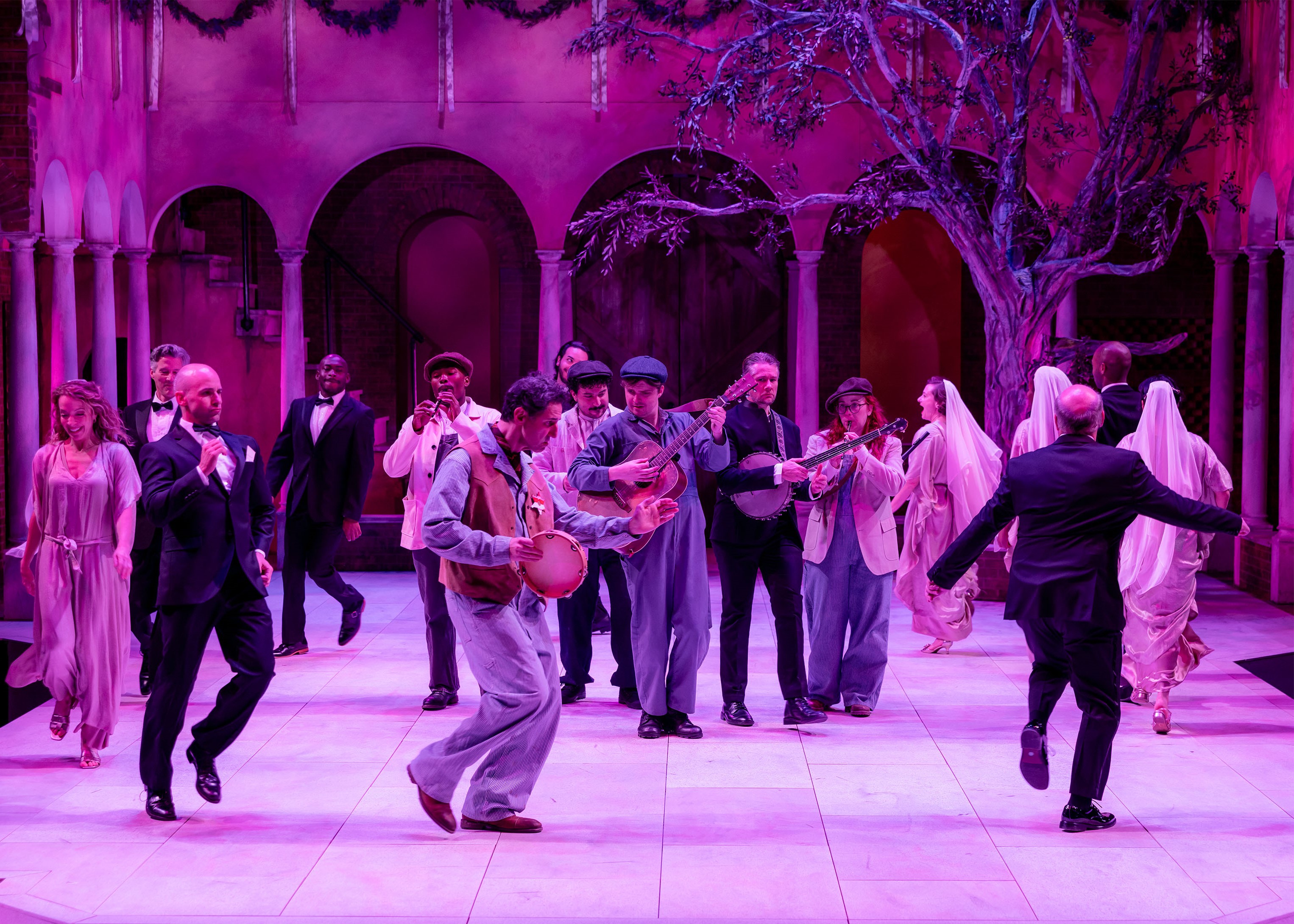 The company of “Much Ado About Nothing.” (Kyle Flubacker)
While Jerry Seinfeld’s sitcom show was supposed to be about nothing, the “nothing” in this Shakespearean comedy has a different meaning that might indicate what his play is about. In “Much Ado About Nothing,” the “nothing” isn’t about lack. In Shakespeare’s time, “nothing” referred to gossip and eavesdropping. It could be construed as friendly blabbermouthing or backstabbing nastiness.
Beautifully Performed
This is one of Shakespeare’s funniest comedies, but as in all his works, some deep insights emerge, regarding honor, deception, redemption, and the importance of love.
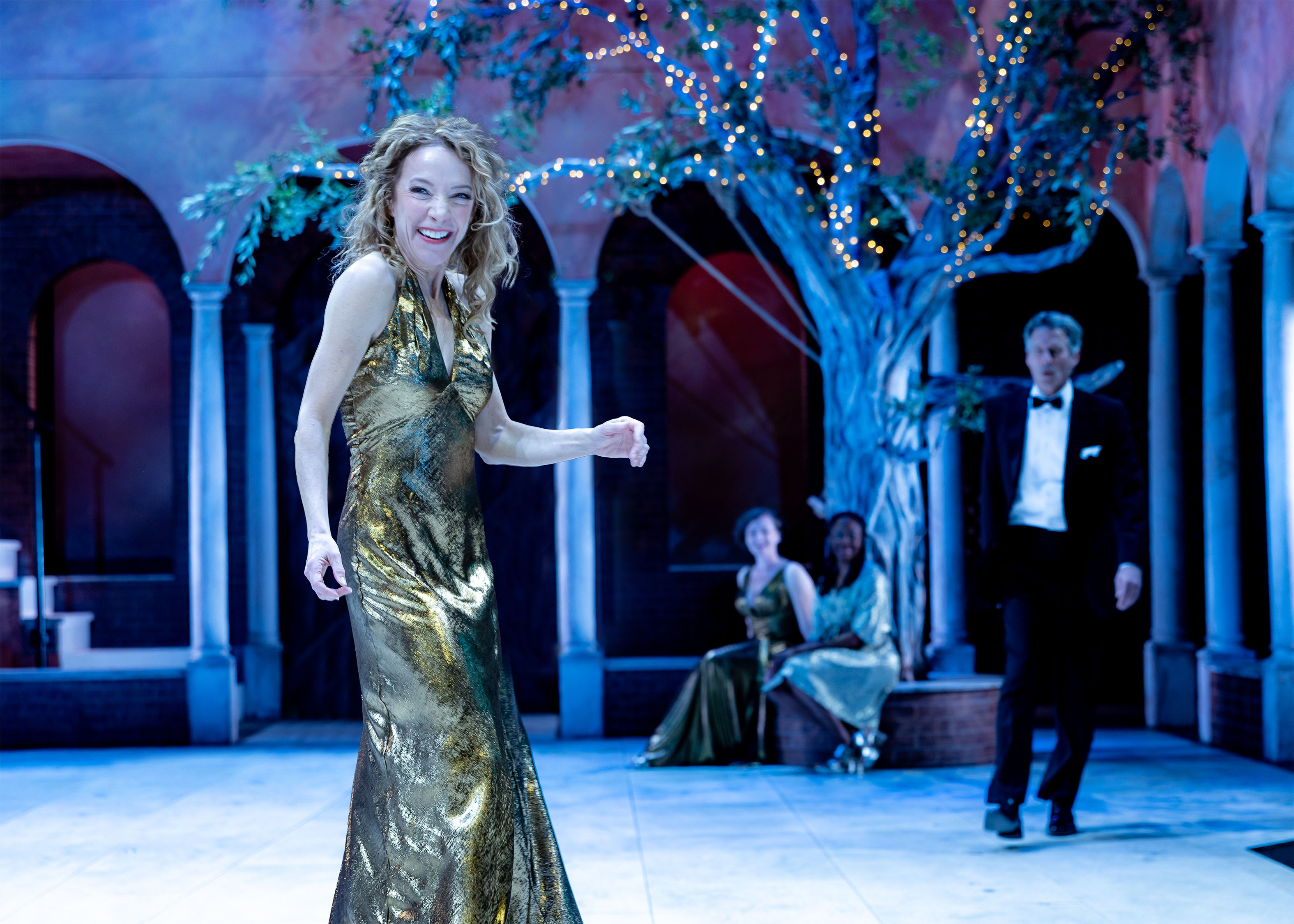 Beatrice (Deborah Hay) laughs amid a torrent of comedy, in “Much Ado About Nothing.” (Kyle Flubacker)
Because the Bard understood human nature like very few do, the play, which was written in 1599, feels especially modern and sophisticated. In addition, “Much Ado About Nothing” is enhanced by the exceptional production values that Chicago Shakespeare brings to all its Shakespearean productions.
Director Selina Cadell steers the performers with pitch-perfect direction that aims for the biggest laughs and the most fun. Tom Piper does wonders with the scenic and costume design, creating a lovely Italian courtyard setting centered by a tree and a swing. He clothes the cast in elegant formal wear for evening and resort-style threads by day.
Furthermore, the performances are top notch. As Beatrice, Deborah Hay is as engaging and hilarious as a woman slinging barbs can get. Mark Bedard is a hoot as the confirmed bachelor Benedick, who looks bewildered as he’s tricked into falling helplessly in love. Moreover, the way the two actors interact physically—with Hay falling down stairs and Bedard tearing his clothes as he tries to climb a tree—is reminiscent of old-fashioned slapstick that’s a riot on its own.
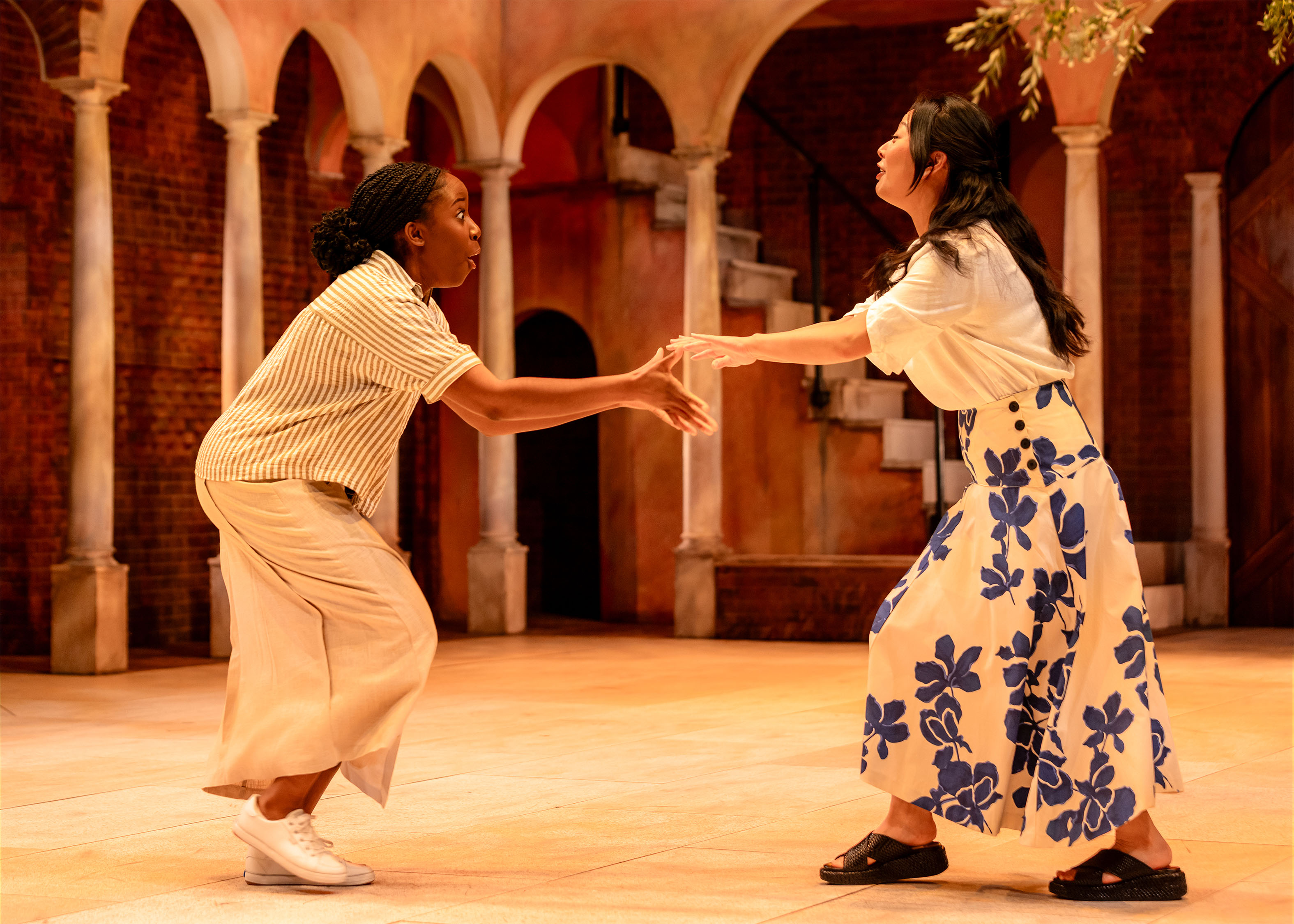 Ursula (Felicia Oduh) and Hero (Mi Kang) are in cahoots, in “Much Ado About Nothing.” (Kyle Flubacker)
Added to all the hijinks is Sean Fortunato as Dogberry, the comical and incompetent constable who plays an important role in uncovering some secret goings-on. Because Fortunato typically plays more serious parts, it’s a treat to watch this compelling actor tackle a zany character.
Others who contribute wonderful portrayals include Mi Kang as Hero and Samuel B. Jackson as Claudio. The cast is rounded off by Kevin Gudahl, Debo Balogun, Joey Chelius, Suzanne Hannau, Erik Hellman, Colin Huerta, and Jaylon Muchison.
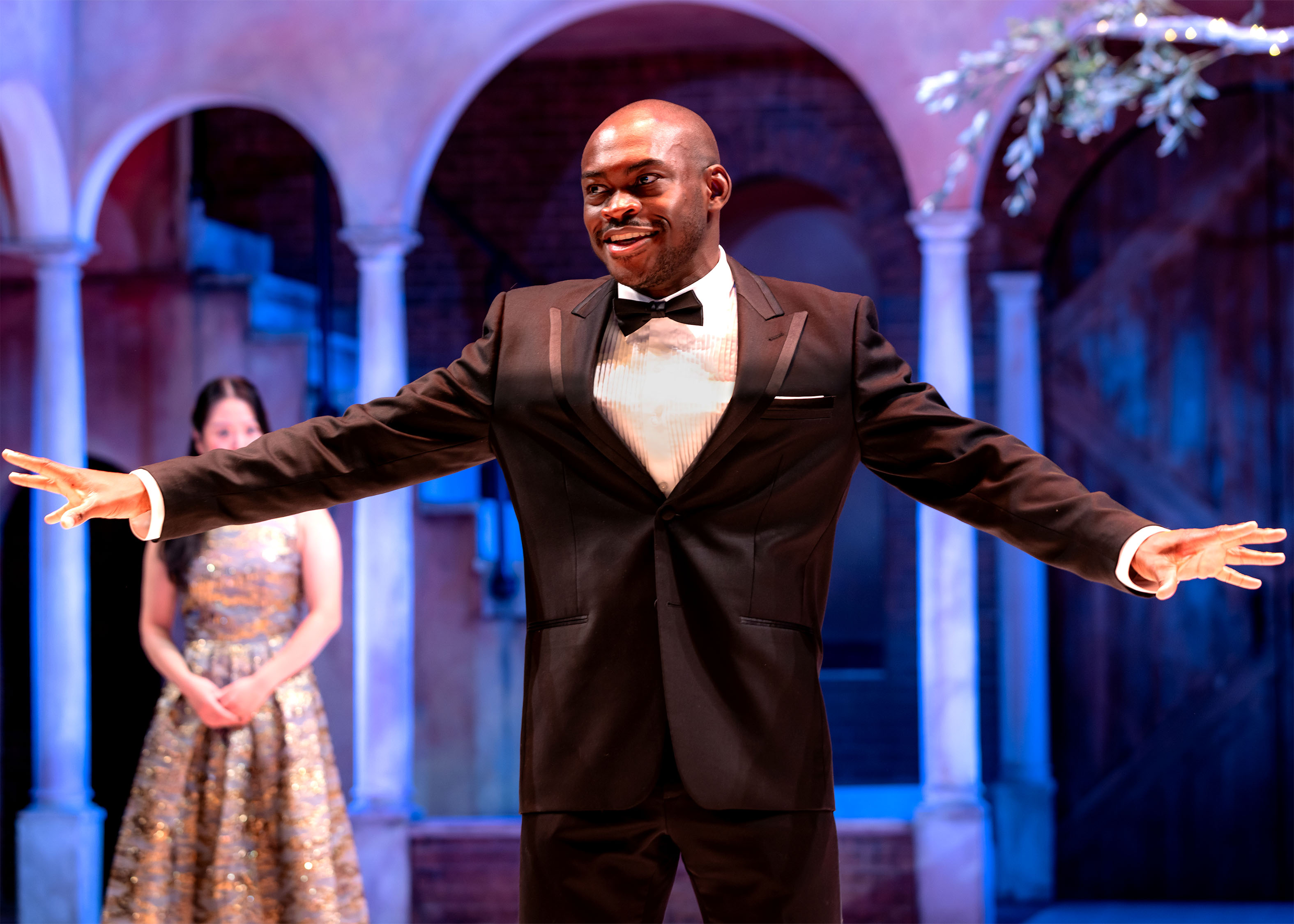 Don Pedro (Debo Balogun) gets involved in everyone’s love life, in “Much Ado About Nothing.” (Kyle Flubacker)
Shakespeare is a special treat any time of the year, but this delicious romantic comedy comes across as even more feel good, fun, and entertaining during the holidays. Plus, it’s always a good idea to take in the Bard at Chicago Shakespeare Theater because this theater is among the best, if not the best, theatrical producer of Shakespeare in America.
‘Much Ado About Nothing’
Chicago Shakespeare Theater
800 E. Grand Ave. at Navy Pier, Chicago
Tickets: 312-595-5600 or ChicagoShakes.com
Runs: 2 hours, 40 minutes (one intermission)
Closes: Dec. 21, 2025
What arts and culture topics would you like us to cover? Please email ideas or feedback to features@epochtimes.nyc
