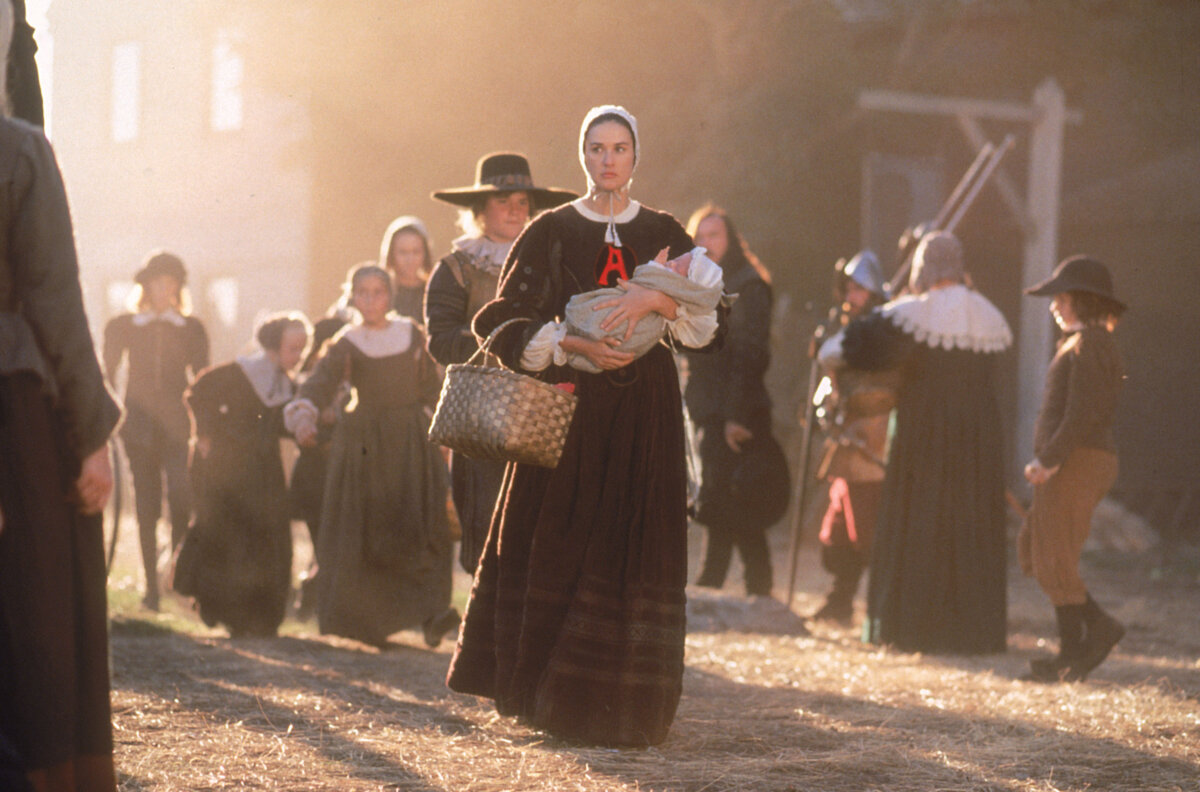
Two distinct schools of thought shaped colonial America in the years leading up to the Revolution: the strict Christian morality of Puritanism and the humanistic ideas of the Enlightenment.
Deists like Thomas Paine inspired colonists to believe in ideas of liberty and the equality of man. Yet the Founding Fathers never lost sight of the moral compass that had guided the region’s early years, declaring the new country “One Nation Under God.”
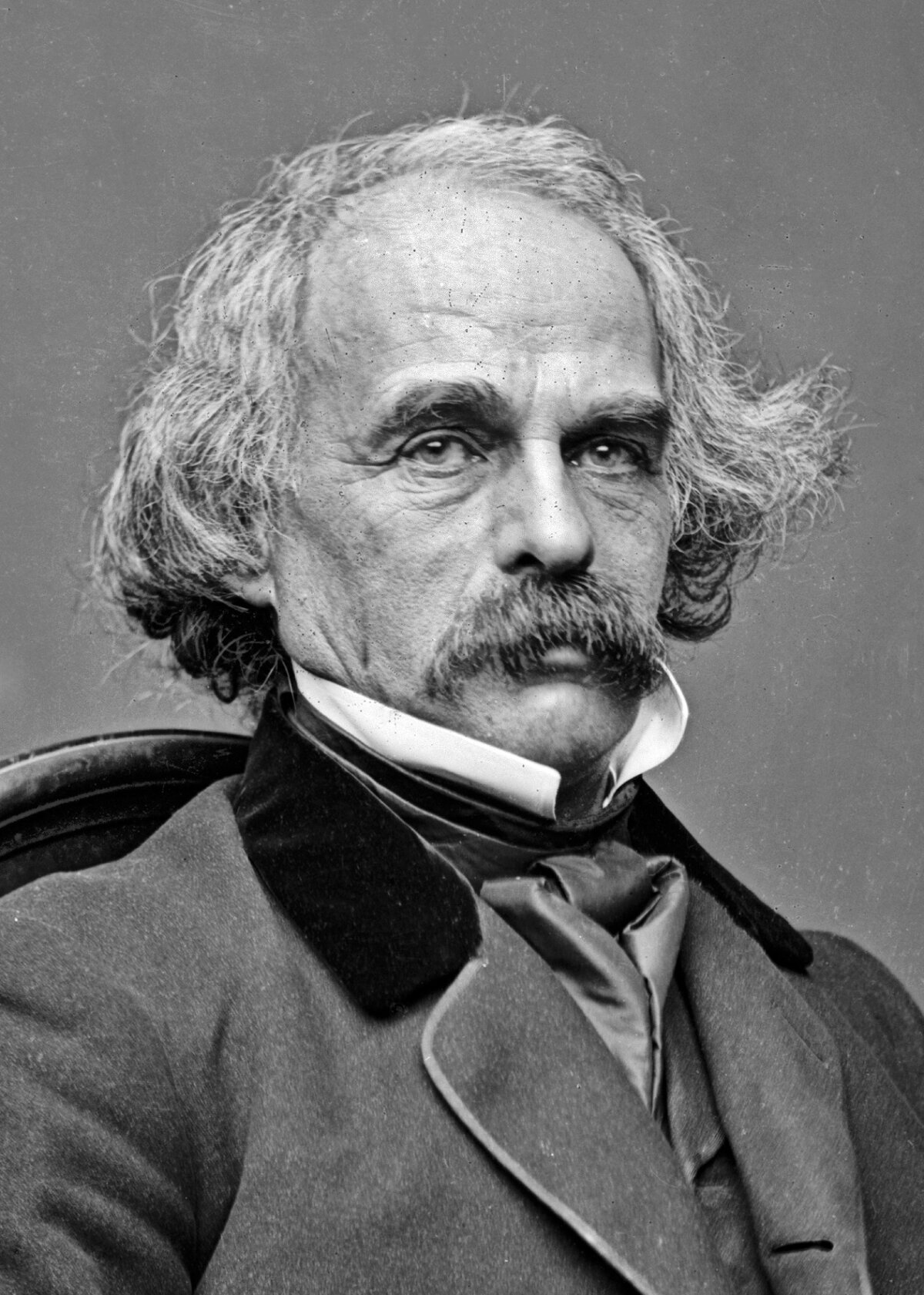
Over the years, American writers have used their creativity to explore and express what America meant to them. Nathaniel Hawthorne (1804–1864) grew up in the Puritan tradition, which shaped New England’s early days. He was also influenced by the Transcendentalist ideology that flourished in educated American circles of his day and became one of the foremost writers in the Romantic movement of the American Renaissance. These two schools of thought combined to create his most powerful and famous work, produced at the midpoint of his career and life: “The Scarlet Letter.”
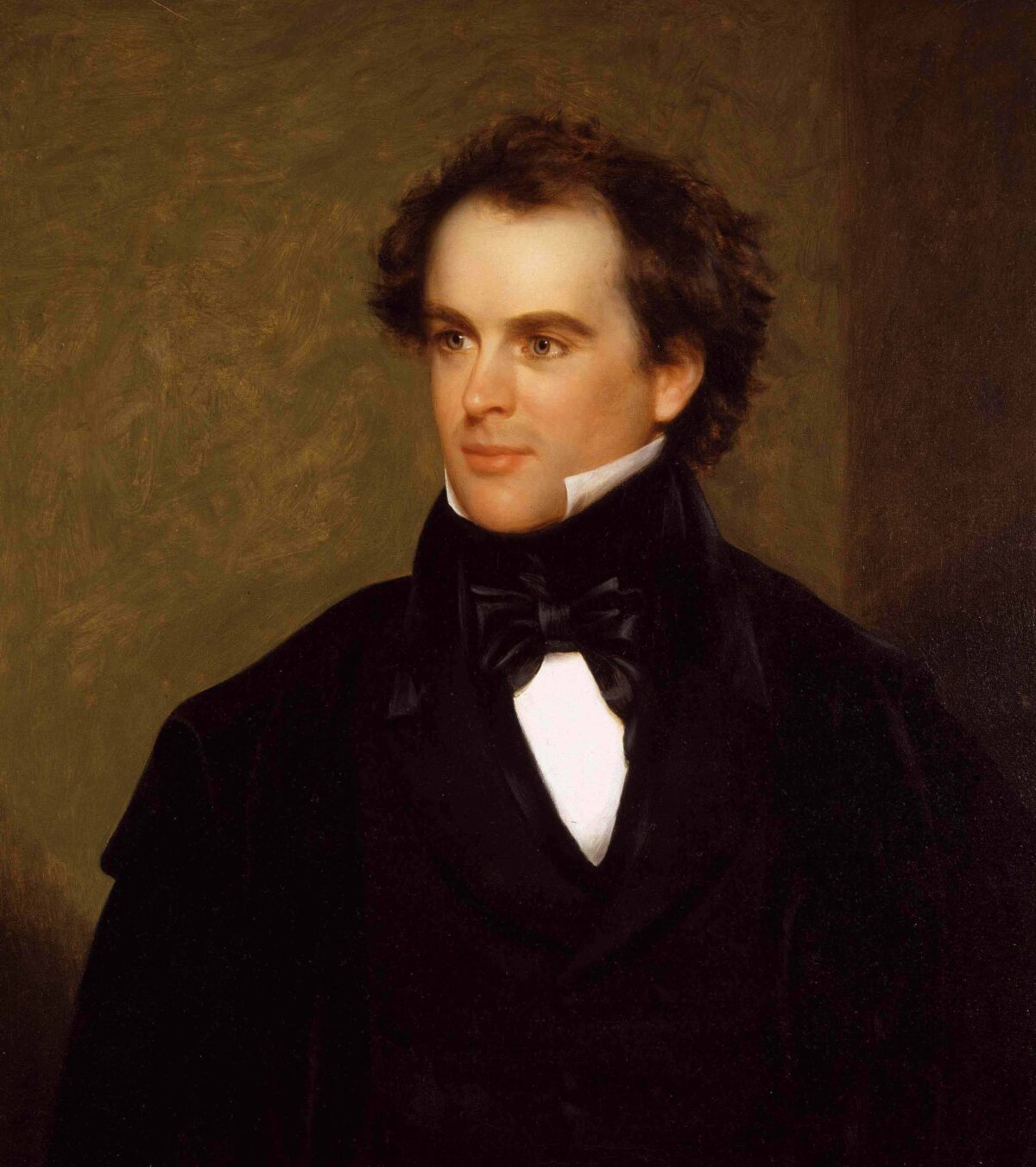
He was born on July 4, 1804, in Salem, Massachusetts. His relatives were early settlers and leaders of the Massachusetts Bay Colony. Hawthorne changed the spelling of his surname from Hathorne to Hawthorne, perhaps to distance himself from their stern reputation.
‘A Puritan Historical Fiction’
“The Scarlet Letter,” published in 1850, was one of the first mass-produced books in America. It was an immediate success and the first printing of 2,500 copies sold out in 10 days.
Before he published “The Scarlet Letter,” he was previously known as an author of short stories and magazine articles. He had also been the chief executive officer of the Salem Custom House.
His government position inspired the autobiographical essay “Custom-House,” which was published alongside “The Scarlet Letter” in its first edition. The piece elicited outrage from Salem residents for its thinly veiled references to current politicians and public figures. It also provided rare insight into Hawthorne’s thoughts and feelings about his hometown.
In “Custom-House,” he admitted his complicated relationship with Salem, writing that “though invariably happiest elsewhere, there is within me a feeling for old Salem, which, in lack of a better phrase, I must be content to call affection.” That reluctant fondness is reflected in his great novel, as he neither glorifies nor condemns colonial Salem and its residents.
A sensitive soul, Hawthorne was keenly aware of the disapproval that his chosen profession would have drawn from his sober-minded ancestors. He declared in “Custom-House”: “No aim, that I have ever cherished, would they recognize as laudable; no success of mine … would they deem otherwise than worthless, if not positively disgraceful.”
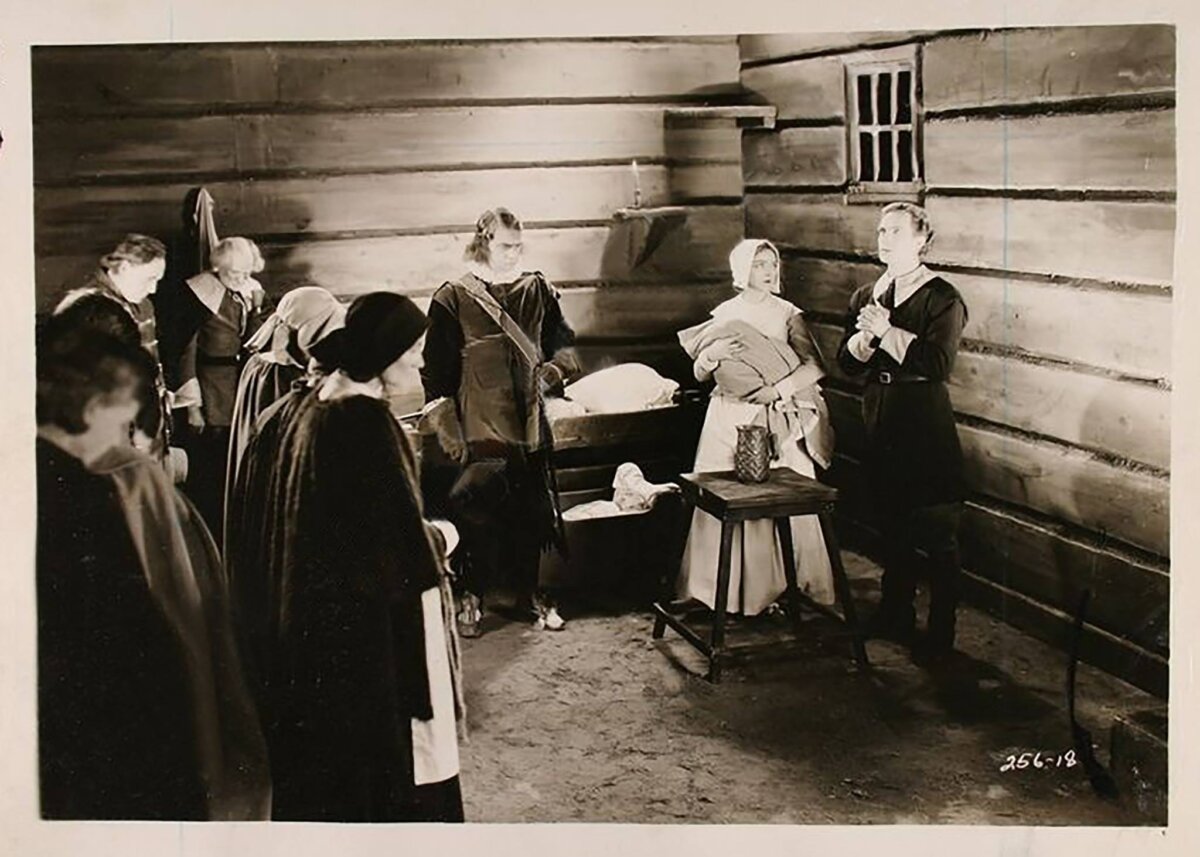
“The Scarlet Letter” is part melodrama and family history, as Hawthorne populated the pages with caricatures of real historical figures. Ann Hibbins, a Salem woman who was executed for witchcraft in 1656, appears in the novel as pious governor Richard Bellingham’s spinster sister; she tempts Hester Prynne to join her coven in a midnight tryst with Satan in the woods.
Although none of his real-life ancestors appear by name in the text, Hawthorne was influenced by magistrate John Hathorne, a “figure of that first ancestor, invested by family tradition with a dim and dusky grandeur, [who] was present to my boyish imagination, as far back as I can remember.”
A Romance
Against the backdrop of the unflinchingly somber depiction of Salem, he crafted three powerful characters: the sinful woman Hester Prynne, the secretly corrupt clergyman Arthur Dimmesdale, and Hester Prynne’s cruel husband Roger Chillingsworth.
These aren’t mere sketches of archetypes, but deeply nuanced three-dimensional characters. The rest of the characters are merely supporting players.
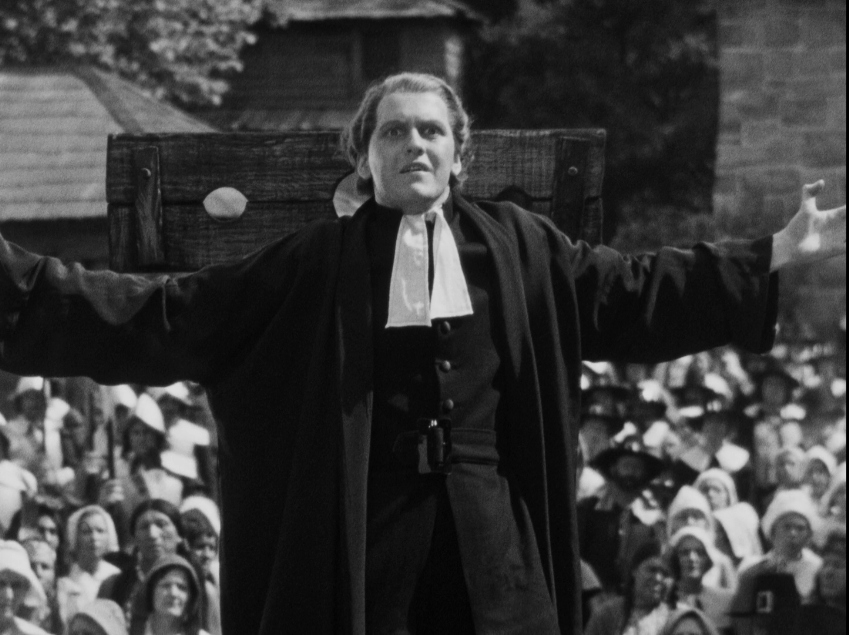
The romance of the story lies in its deep symbolism and its timelessness. The central image of the letter “A” is an important theme throughout the story. It appears not only as the embroidered badge on Hester’s breast but also as a blazing meteor in the sky and, eventually, the mysterious emblem of shame on Dimmesdale’s flesh.
Interestingly, the shameful word for which the letter stands is never written in the book. Its implication must be inferred, giving it an awful significance that was more powerful than were it more plainly stated.
Eventually, that badge of shame is transformed into Hester’s mark of redemption. Hester was industrious. Her neighbors declare that “it meant Able, so strong was Hester Prynne, with a woman’s strength.”
The novel’s romantic quality is evident from the fact that the same basic tale could be repeated in many other settings. Here, the Puritans sternly disapprove of Hester while they venerate Rev. Dimmesdale for his perceived holiness.
This ostracization redeems Hester in the reader’s eyes and makes her a virtuous example of patience, forgiveness, and humility, despite the hypocrisy of those who condemned her.
Hawthorne wrote four novels, which he called romances: “The Scarlet Letter,” “The House of the Seven Gables,” “The Blithedale Romance,” and “The Marble Faun.” In the preface to his later novel “The House of the Seven Gables,” the author distinguished American genre of the romance as distinct from the novel.
A novel “is presumed to aim at a very minute fidelity, not merely to the possible, but to the probable and ordinary course of man’s experience.” A romance “has fairly a right to present that truth under circumstances, to a great extent, of the writer’s own choosing or creation.”
Guilty Until Proven Innocent
Hawthorne recognized the flaws of his Puritan ancestors and their unforgiving condemnation of others, described in the harshest characters of “The Scarlet Letter.” He acknowledged with regret that the good they did was overshadowed by these harsher actions.
While he didn’t outright condemn Puritan society, he revealed how they often fell short of Christian charity. He also revealed the culture’s quickness to condemn and execute judgment without a fair trial, as was evidenced in real life by the Salem witch trials.
Justice often turns into superstition and blind condemnation, illustrating the need for the order of the American government and law system; this allows the accused to be innocent until proven guilty, instead of the other way around.
Hawthorne died in 1864 at age 59, leaving behind an inspiring body of novels, short stories, and historical essays. Each is worthy of being studied and enjoyed as part of the American literary experience.
Nevertheless, none of these works encapsulates his mind and talent more than “The Scarlet Letter.” American author Henry James described the romance in his biography of Hawthorne as:
“Beautiful, admirable, extraordinary; it has in the highest degree that merit which I have spoken of as the mark of Hawthorne’s best things—an indefinable purity and lightness of conception, a quality which in a work of art affects one in the same way as the absence of grossness does in a human being.”
James elaborated that “the best of it was that the thing was absolutely American; it belonged to the soil, to the air; it came out of the very heart of New England.”
What arts and culture topics would you like us to cover? Please email ideas or feedback to features@epochtimes.nyc