The Roman Publius Virgilius Maro, better known as Virgil, is undoubtedly one of the West’s greatest poets. Not only did he invent Rome’s mythic founder Aeneas and the celebrated Trojan horse, his creativity also inspired countless literary masterpieces throughout history.
Less known among Virgil’s works is the “Eclogues,” sometimes called “Bucolics.” The collection of 10 poems is often hailed as an elegant praise of nature’s soothing beauty. Yet amid its delightful scenes lie disturbing details that offer prescient lessons about peace and its conditions.
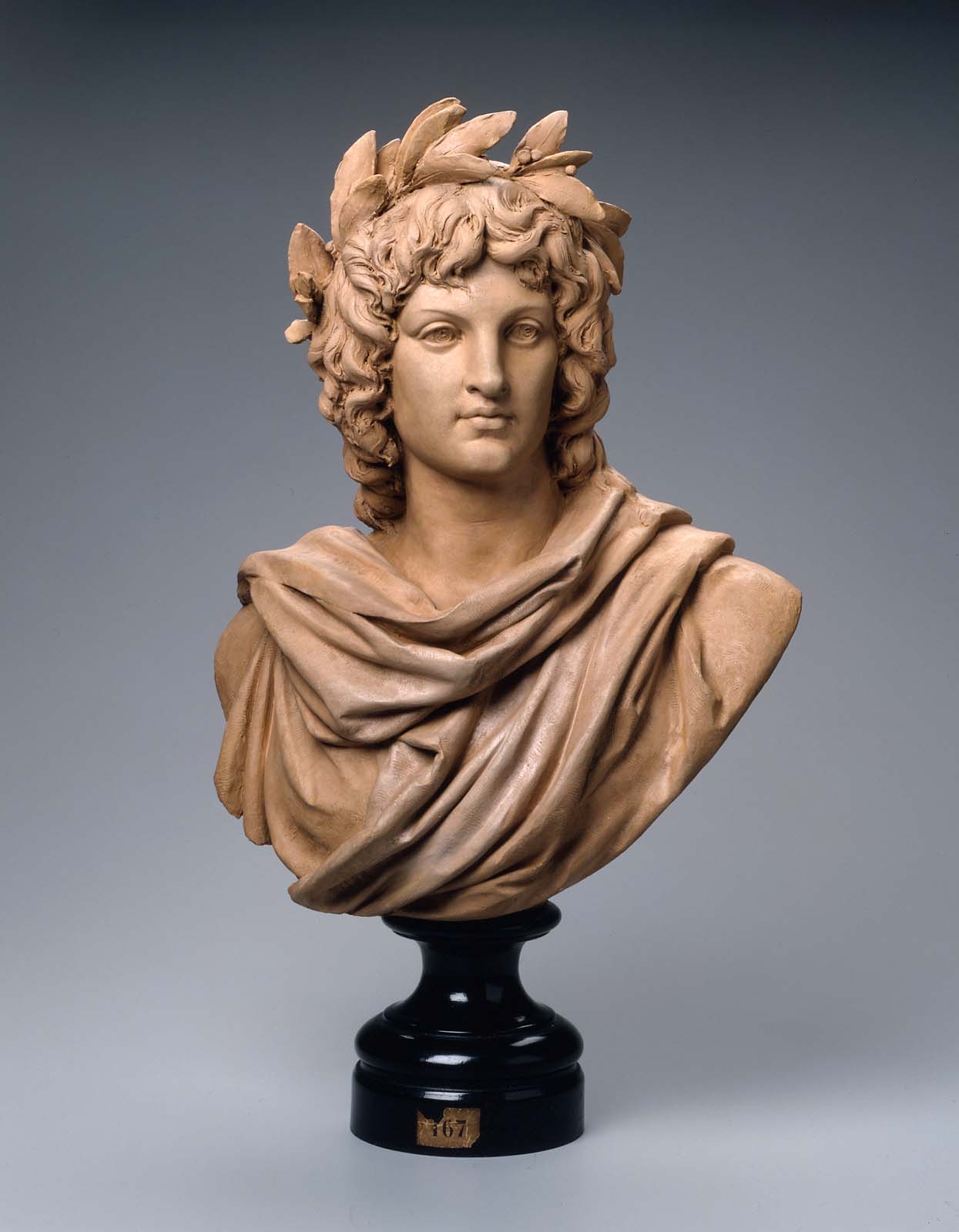 Bust of the Young Virgil by Albert-Ernest Carrier-Belleuse. Museum of Fine Arts–Boston. (Public Domain)
A Budding Poet
Virgil was born on Oct. 15, 70 B.C. near the modern Italian town of Mantova. He received the best education available, mainly in Milan and Rome. Compelled to study rhetoric, medicine, and astronomy like most students, Virgil eventually abandoned these subjects to devote himself to poetry and philosophy. Though almost nothing is known about his parents, they were probably affluent and politically involved. Their son often spent time with elites from the highest Roman ranks.
In his early 20s, Virgil joined a group of philosophers in Naples to study Epicureanism. Epicureans were interested in simple lives free of social and political turmoil. They espoused the maxim “carpe diem,” though they also avoided excess.
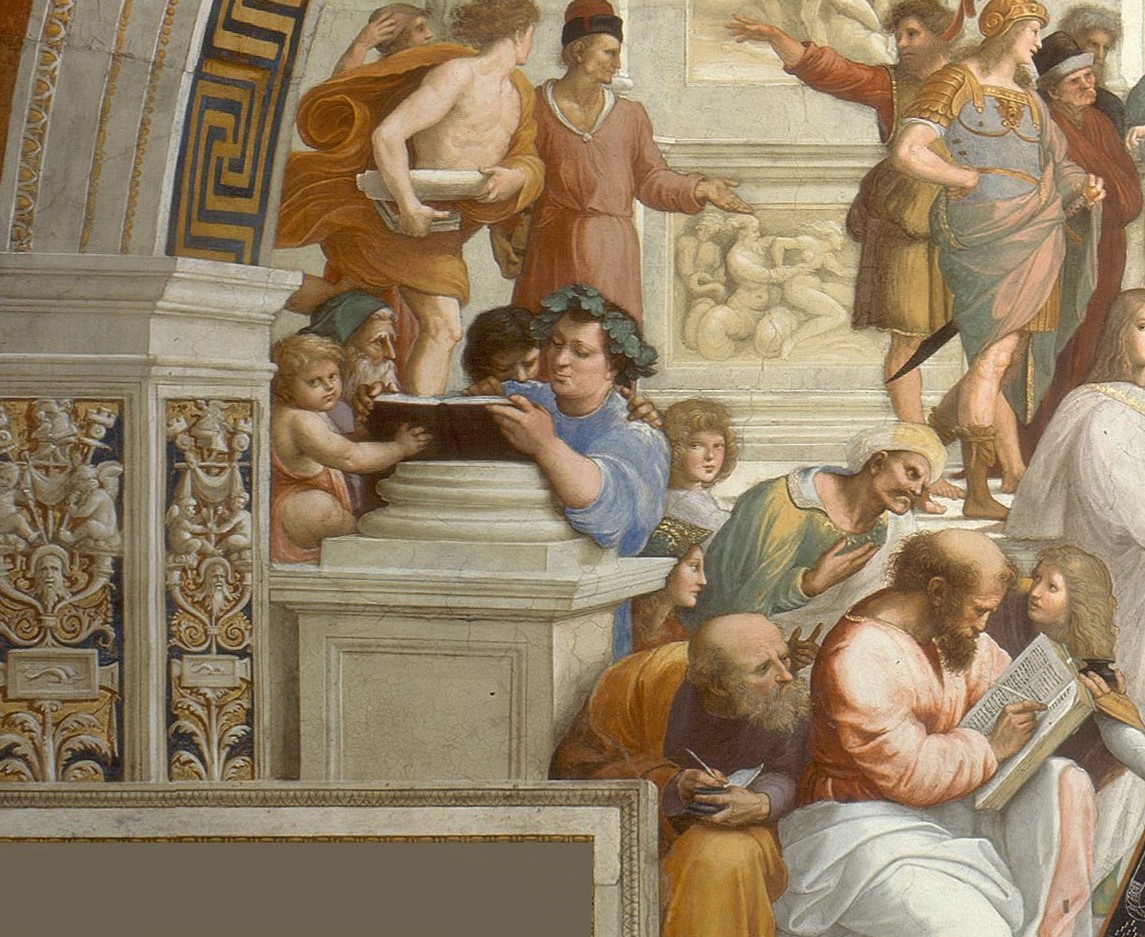 A detail from a “School of Athens” by Raphael. The Greek philosopher Epicurus (in blue, center) is known for promoting the pursuit of pleasure, but there’s more to that story than meets the eye. (Public Domain)
As Epicurus, the founder of Epicureanism, wrote, “it is not continuous drinkings and revellings, nor the satisfaction of lusts, nor the enjoyment of fish and other luxuries of the wealthy table, which produce a pleasant life,” but the moderate pursuit of simple pleasures.
Inspired by new intellectual acquaintances, Virgil began writing poetry. His poems often allude to the Epicureans’ simple pleasures, like consuming hearty food in good company or relishing the flight of swallows in cloudless summer skies.
Though he often wrote about nature, Virgil’s most famous poem is the “Aeneid,” which narrates the epic adventures of “pious Aeneas” and his quest to found Rome. None other than Rome’s first emperor, Augustus, commissioned the work. Augustus wanted to divulge a compelling founding myth for his newfound empire. Legend has it that Virgil, a perfectionist, edited the same verses hundreds of times. Still dissatisfied with his work after a decade of labor, he wished to burn the entire poem. Once he died suddenly and prematurely, Augustus published the book with as few changes as possible.
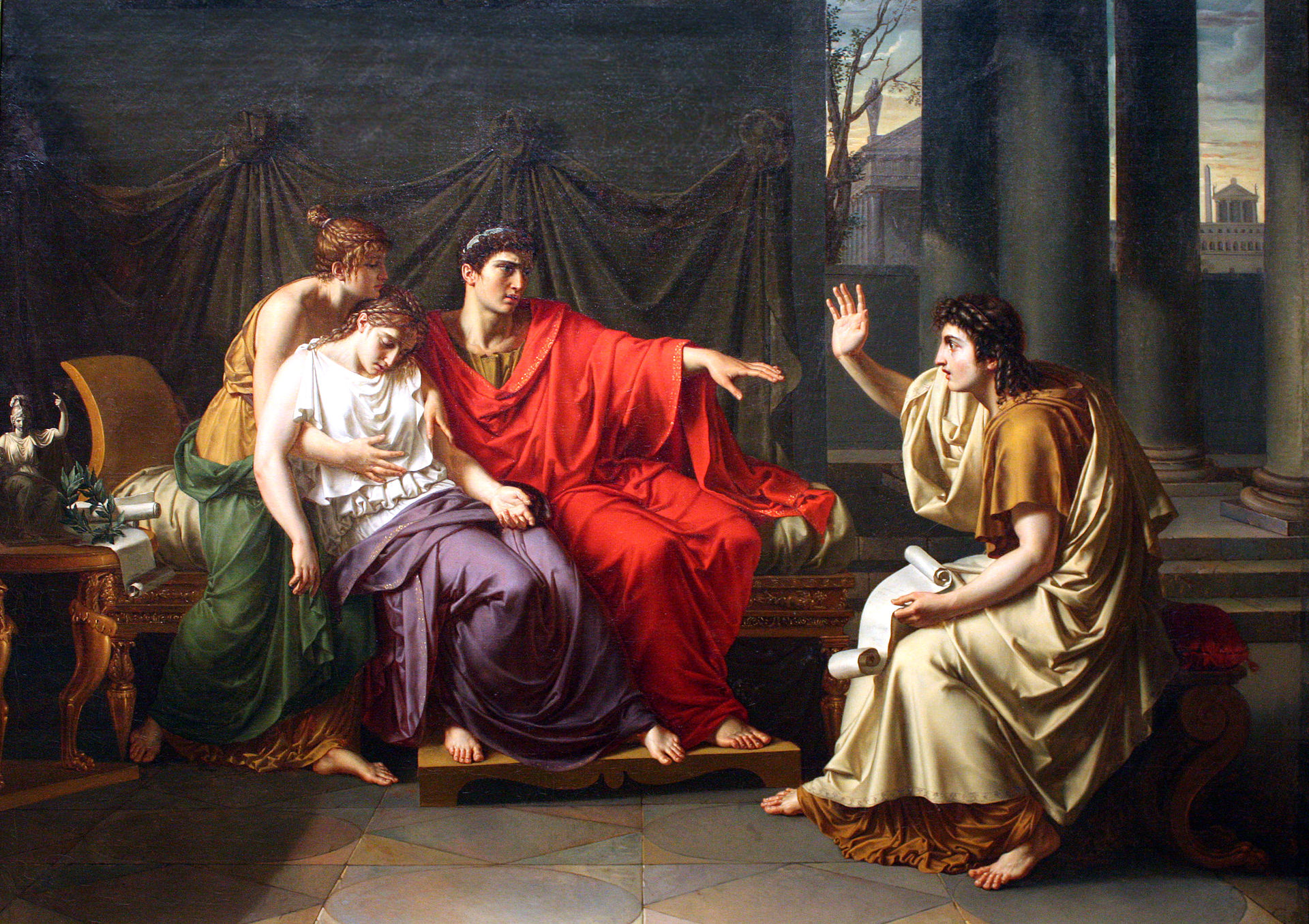 “Virgil Reading the Aeneid to Augustus, Octavia, and Livia” by John-Baptiste Wicar. Art Institute of Chicago. (Public Domain)
By the time Virgil started the “Aeneid,” his literary career had already taken off. His second major work (the “Georgics”) is an elegant, didactic ode to nature dedicated to one of Augustus’s close advisors. Trees, bees, farming, viticulture, and other agricultural topics are described vividly and memorably by the poet, who displays a keen sensibility towards the environment and its myriad details.
Nature was Virgil’s creative source, but also a place to escape his circumstances, be it through visits to the countryside or flights of the imagination. Indeed, the “Georgics” is set in contrast to the harsh realities of war, which loom in the poem’s background as they did in the poet’s life.
Civil War and the First Emperor
In 44 B.C., on the Ides of March (March 15), Julius Caesar was stabbed 23 times. His death plunged the polarized Roman republic into civil strife. Contending factions vied for power, waging war against each other with little concern for innocent civilians.
During its republican era, Rome was ruled by two consuls with equal power. Four years after Caesar’s murder, the consul Gaius Asinius Pollio advocated for the Treaty of Brundisium, which promised to restore peace and stability. One of the treaty’s stipulations was that Antony, an eminent military commander with grand aspirations for absolute power, should marry the sister of his archenemy: Augustus, Caesar’s adopted son and soon-to-be first emperor.
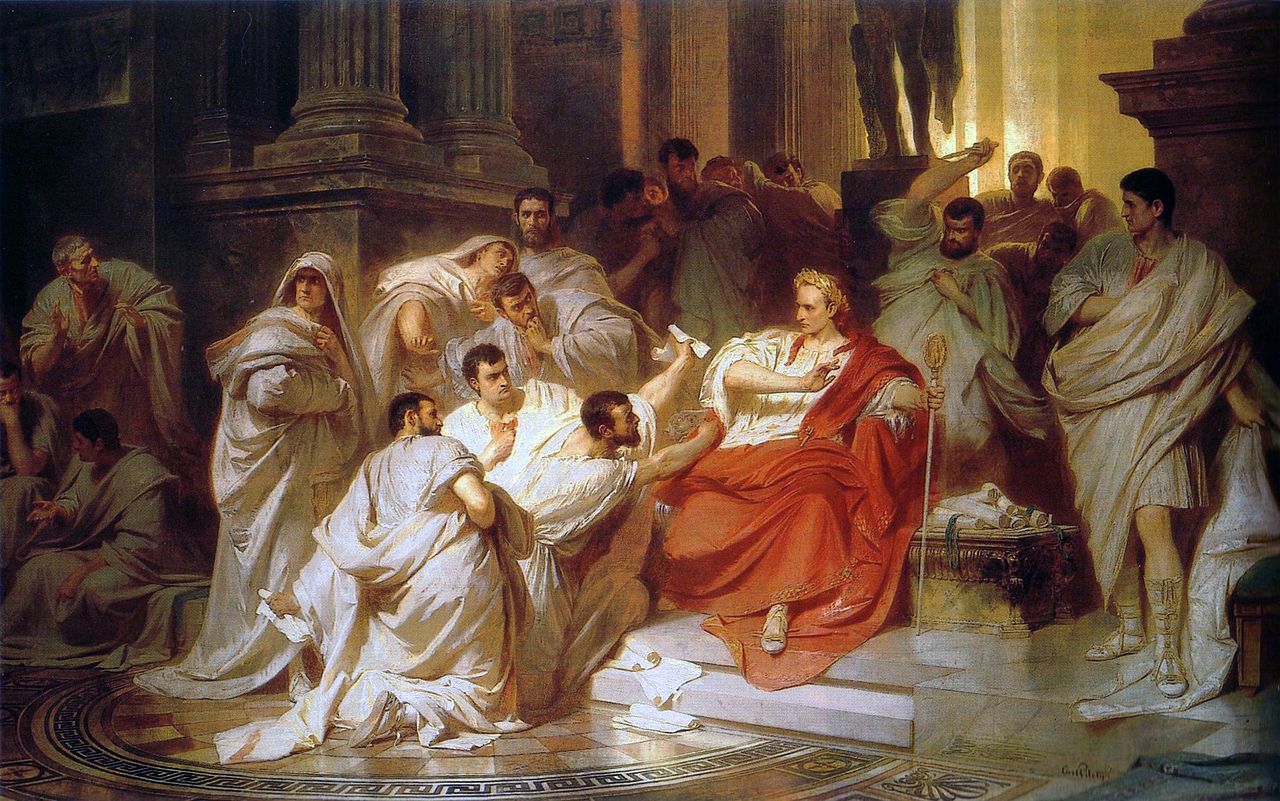 “Murder of Caesar,” 1865, by Karl Theodor von Piloty. The senators encircle Caesar and assassinate him in a 19th-century interpretation of the event. (Public Domain)
The treaty proved illusory. Conflicts continued until an all-out war erupted. After a devastating loss at Alexandria, Egypt, Antony took his own life with his famous co-conspirator Cleopatra. Without enemies to challenge him, Augustus ascended to Rome’s throne, establishing one of history’s most formidable empires.
Virgil died at Brundisium, 21 years after the treaty. The poet had seen plenty of bloodshed. During times of need, he took refuge in his verses, fashioning imaginary scenarios as alternatives to a violent, chaotic world. That was true in the “Georgics” and in his first major work, the “Eclogues.”
Nature’s Soothing Beauty
The “Eclogues” were written in the six years following Caesar’s death, as murderous armies battled constantly throughout the Italian peninsula. Unlike the troubles that surrounded Virgil’s native land, the poems’ fictional shepherds sing of love, friendship, and the steady passing of seasons. War or ambitious greed have no place in nature, so it seems.
Take the seventh poem. One of the two herdsmen sets the scene for a singing competition in a charming landscape: “Your cattle will come through the fields to drink here themselves/ here Mincius borders his green shores with tender reeds/ and the swarm buzzes from the sacred oak.”
The same delicacy applies to the landscape about which one of the competing singers speaks. “Mossy springs and the grass sweeter than sleep” are told to “keep the summer heat from [his] flock: now the dry solstice comes/ now the buds swell on the joyful branches of the vine.”
Juniper, myrtle, hazel, pine, ash, and many other trees are named. Their leafy branches provide cool relief from the coming heat. The herdsmen’s songs also mention a lover who adorns a boar’s head as an homage to his beloved’s beauty. Milk libations are poured to Priapus, whom the Romans worshipped as the god of agricultural fertility. The passing of seasons brings along new textures, some soft, some tougher. But the herdsmen don’t seem phased by change. They praise its rhythms and accept its inevitability.
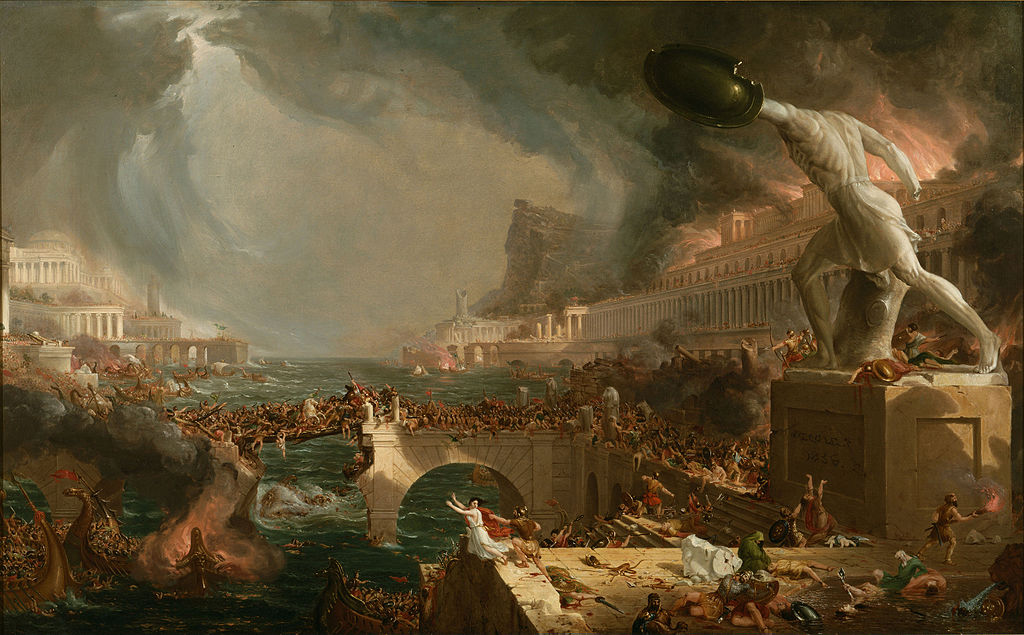
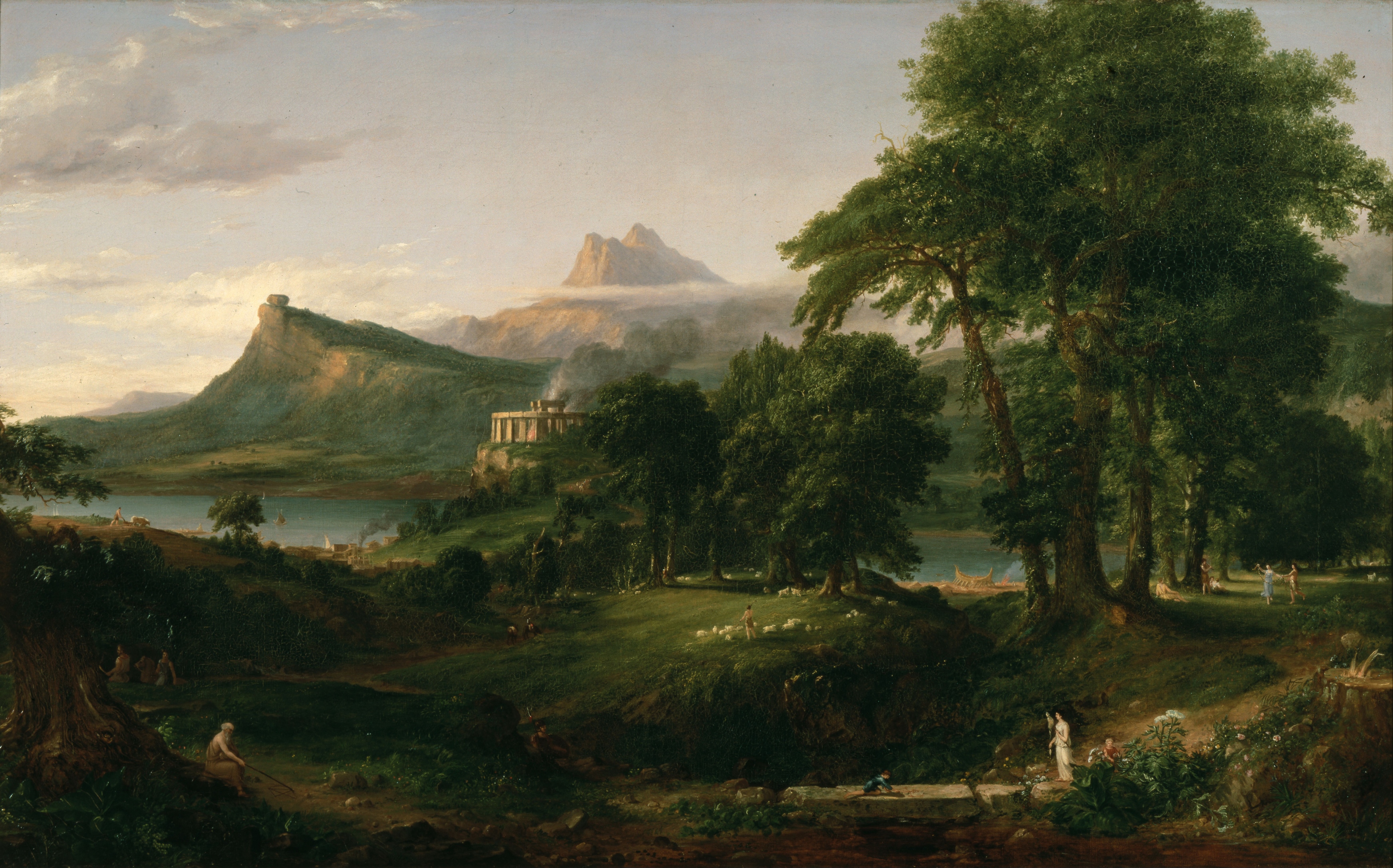 “The Course of Empire: The Arcadian or Pastoral State,” 1834, by Thomas Cole. Oil on Canvas, 39.5 inches by 63.5 inches. New York Historical Society. (Public Domain)
There’s a lulling charm to these gentle but meticulous descriptions. Virgil’s deliberate display of nature’s graceful beauty pits the environment against urban settings that too often failed to offer quiet and relief.
Behind Peaceful Appearances
The landscapes in the “Eclogues” aren’t ravaged by war like the sceneries in the more realistic “Georgics.” Yet other evils lurk beneath the surface.
To appease the soldiers who supported Augustus during his takeover, the emperor appropriated vast swaths of lands from innocent farmers and redistributed them to war veterans. Almost overnight, tens of thousands of Northern Italian smallholders lost their beloved properties and their freedom.
In the “Eclogues,” dispiriting details and disturbing themes reflect the farmers’ plight. One of the two farmers in the first poem is on his way to exile, forced to abandon home indefinitely. In the second poem, the head shepherd confesses that he’s suffered from an anxious fit caused by unrequited love and empty promises, partly due to the time’s uncertainty. The next canticle portrays two more shepherds exchanging sharp insults and invoking a series of awful images: ferocious wolves, insidious snakes, drowning rams, starving cows, and even the evil eye.
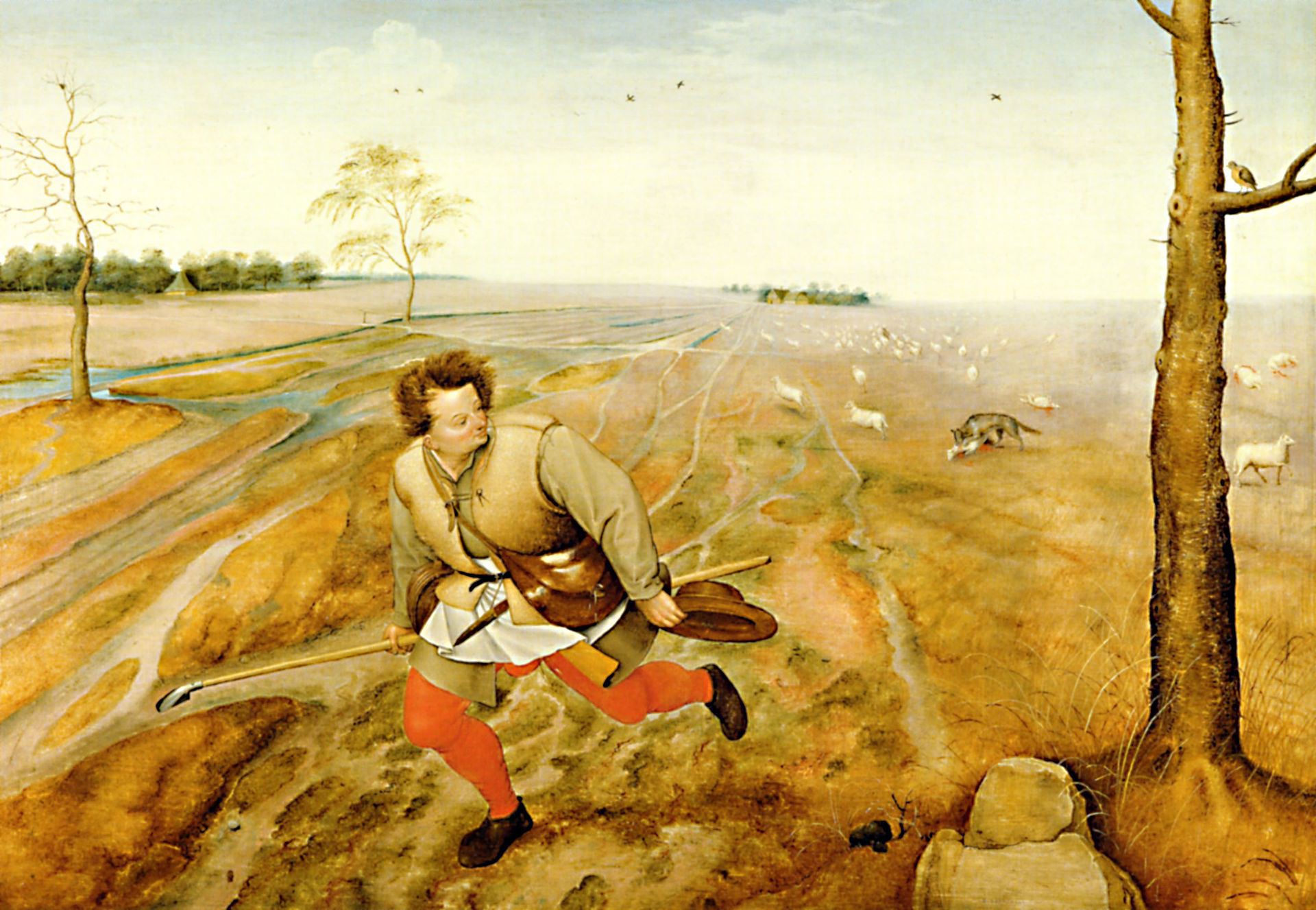 “The Bad Shepherd,” circa 1616, Jan Brueghel the Younger. Oil on panel. Lives of the rural folk were disrupted and destroyed during the era in which Virgil wrote. (Public Domain)
With coercive dispossessions of land came war crimes the poems mention in passing, but unambiguously. Eclogue IV sings of an abominable offense committed by the Romans, though it never discloses the deed. There’s more demise in the fifth poem, which tells of a farmer whose death stunts his plot’s yields. Floods, theft, rape, envy, witchcraft, and even bestiality are among the central themes of the remaining Eclogues. Their characters cannot escape physical and psychological suffering.
Indeed, Virgil’s fictional landscapes aren’t as idyllic as they seem. Behind lush hilltops and soothing, lovely songs lurk the same fear and suffering that trouble war-ridden cities. Far from depictions of a pristine, unravished world, the “Eclogues” are a poignant reminder that conflict and decay are inseparable from human life—that wherever humans go, they must always battle evil, often a product of their own actions.
Peace and Human Agency
Why did Virgil mar his delightful descriptions with vivid reminders of suffering? Why did he insist on brutal facts, when in poetry he could escape them?
The “Eclogues” were openly dedicated to the same people who orchestrated the Italian farmers’ demise, and whose warmongering ravaged Italy’s landscapes. Augustus was Virgil’s patron, after all. Like most poets in imperial Rome, Virgil declared his support for the emperor in hopes that his rule would end his compatriots’ misery. But he never tried to sugarcoat reality.
 A leaf from a Renaissance copy of “Leaf from Eclogues, Georgics and Aeneid,” by Cristoforo Majorana. Virgil’s work not only survived the end of antiquity, but was preserved and illuminated centuries later. (Public Domain)
Evidently, the poet felt the need to send a subtle but unequivocal message. In presenting the world as he’d seen it—an interplay between creation and destruction that affected ordinary people most of all—perhaps he could remind the powerful that their deeds had real, often disastrous consequences.
By contemplating Virgil’s pastoral verses, we can rediscover the enduring cycles of nature, silence, and other elements of a peace no one can disturb. Yet, the poet reminds us, peace is as fragile as a leaf, always susceptible to indifferent breezes. It’s not a given, but a project to establish and maintain, despite its challenges, with unrelenting hope.
What arts and culture topics would you like us to cover? Please email ideas or feedback to features@epochtimes.nyc