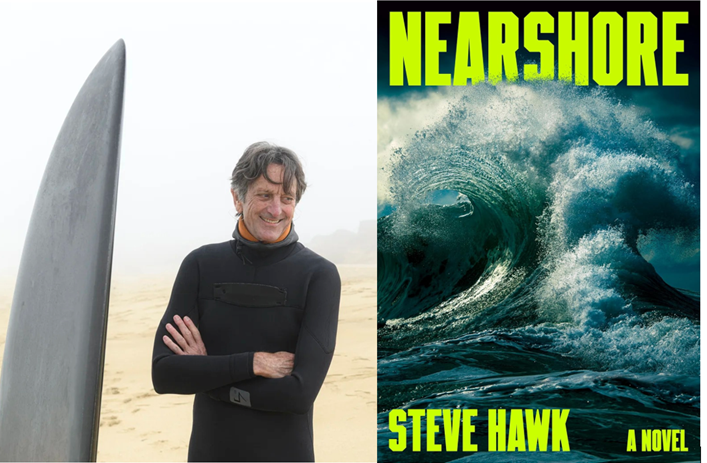
Steve Hawk’s debut novel, “Nearshore,” begins on an empty stretch of I-77 in West Virginia, about five miles north of the state capital. It’s here, during a balmy Tuesday morning in March, that a nuclear device detonates.
A good thriller should start off with a bang. And “Nearshore” definitely qualifies.
Hawk describes the yield as “relatively meager, just over one kiloton,” with the resulting blast, heat, and radiation extending “about three hundred yards, seven hundred yards, and nine hundred yards, respectively.”
That detached, even-handed, professional style is fairly representative of the book’s tone and voice: It’s precise, professional, detailed, creepy at times, and very effective.
Remember to wear your life-jacket, kids, we’re just getting started.
Lifeguard With a Gun
When you think of a modern thriller hero, a lifeguard may not be the first career choice to come to mind. When the average person hears the word “lifeguard,” they probably picture slow-motion running beach bunnies and hunky guys in red swimsuits from “Baywatch,” the ’90s light-action TV series. This is not exactly the sort of professional you’d think to take on terrorists.

The author of “Nearshore,” however, is the former editor of Surfer, Sierra, and Stanford Business magazines, as well as the website surfline. His first book, the non-fiction “Waves,” explores the science and beauty of ocean waves.
It’s pretty safe to say the guy knows something about surfing and ocean safety, which undoubtedly includes lifeguards. He’s also currently co-writing a book with his brother, Tony Hawk, about the history and culture of skateboarding.
Hawk’s answer to the “Baywatch” problem, so to speak, is Jamie Palmer. He’s a California State Parks lifeguard who patrols a roughly 20-mile stretch of the San Mateo County coast, from Devil’s Slide down to Pescadero.
Palmer’s a former professional surfer who disappointed his farming family by choosing the sea over the land. As the coast’s default body-recoverer, Palmer’s handled far more drownings and other fatalities than rescues. He carries the psychological weight of that work quietly, while also enduring recurring nightmares.
On a day when Palmer was planning just to ride some waves, he noticed a whaler going in circles in the bay, a sure sign that the boat had lost its crew. His day goes from bad to worse when he realizes the vessel belongs to his best friend, Alex “Boneyard” Bonnard, a Stanford business professor he’s known since childhood.
Guardian Duties
Bonnard is presumed drowned in the accident, leaving Palmer as guardian to Boneyard’s teenage son, Luca. Palmer never wanted kids, having seen too many mothers go to pieces over their lost children. “I mean, imagine loving something like that. … And then losing them.”
Soon after the accident, he connects with Bonnard’s doctoral student, Chelsea Wu. Wu is an unapologetic oddball. She’s about what you’d expect from someone who codes all day at Stanford; she’s looking for language patterns in huge companies to determine how cliques are formed, a fascinating science called “homophily.”
Wu’s an intense, brainy nerd and Palmer is gruff and dryly sarcastic; he processes the world in an almost non-verbal way. Yet they connect on a deeper level. This is partly spurred on by their shared affection for Boneyard and Luca. But she’s also harboring a troubling secret about one of the world’s biggest tech firms.
The company is run by Simon Gray, a brilliant innovator of supply-chain optimization, who sees other tech titans like Musk and Thiel as “naïve and feckless adherents to the Enlightenment’s siren fantasy.” Gray describes his security chief, Brett Asher, as having a “lean velociraptor frame” that never failed to startle his boss.
Needless to say, these are very powerful and serious people. Wu finds a disturbing coincidence that suggests they’re connected to the nuclear bomb detonating in West Virginia. What can a lifeguard, a coder, and a teenager do against an enemy like that?
Riding the Wave
“Nearshore” is reminiscent of Neal Stephenson’s early works before the “Snow Crash” author lost his way. It’s a top-notch techno-action thriller. The story explores the inner workings of systems and professions that are both fascinating in equal proportions. The characters are as real, interesting, and vulnerable as readers could wish for.
There is arguably a subtextual dig against rightist extremism here. But it could easily be argued that leftist ideologies simply wouldn’t be believable in the roles needed. It’s open to interpretation, and it doesn’t distract from the larger story, which is all that really matters.
Hawk allows a kind of ebb and flow to the story itself. Again, this is not surprising for someone who is, let’s say, mildly obsessed with surfing.
Most thrillers try to keep the shocks, twists, and action coming in a rapid and ever-escalating manner. Some of the best thrillers can do this expertly, but most end up feeling contrived, forced, or formulaic.
Hawk knows when to move the pacing to calmer waters and let the natural currents do their thing. That doesn’t mean there are boring parts—quite the opposite.
But understanding the details of what’s happening in the larger plot and in Palmer’s daily routine—dealing with washed-up bodies is an occasional divergence for him and us, or Chelsea’s exploration of homophily—allows for a steadier, more satisfying culmination of thrills.
In short, get into your wetsuit and grab your board. It’s worth it.
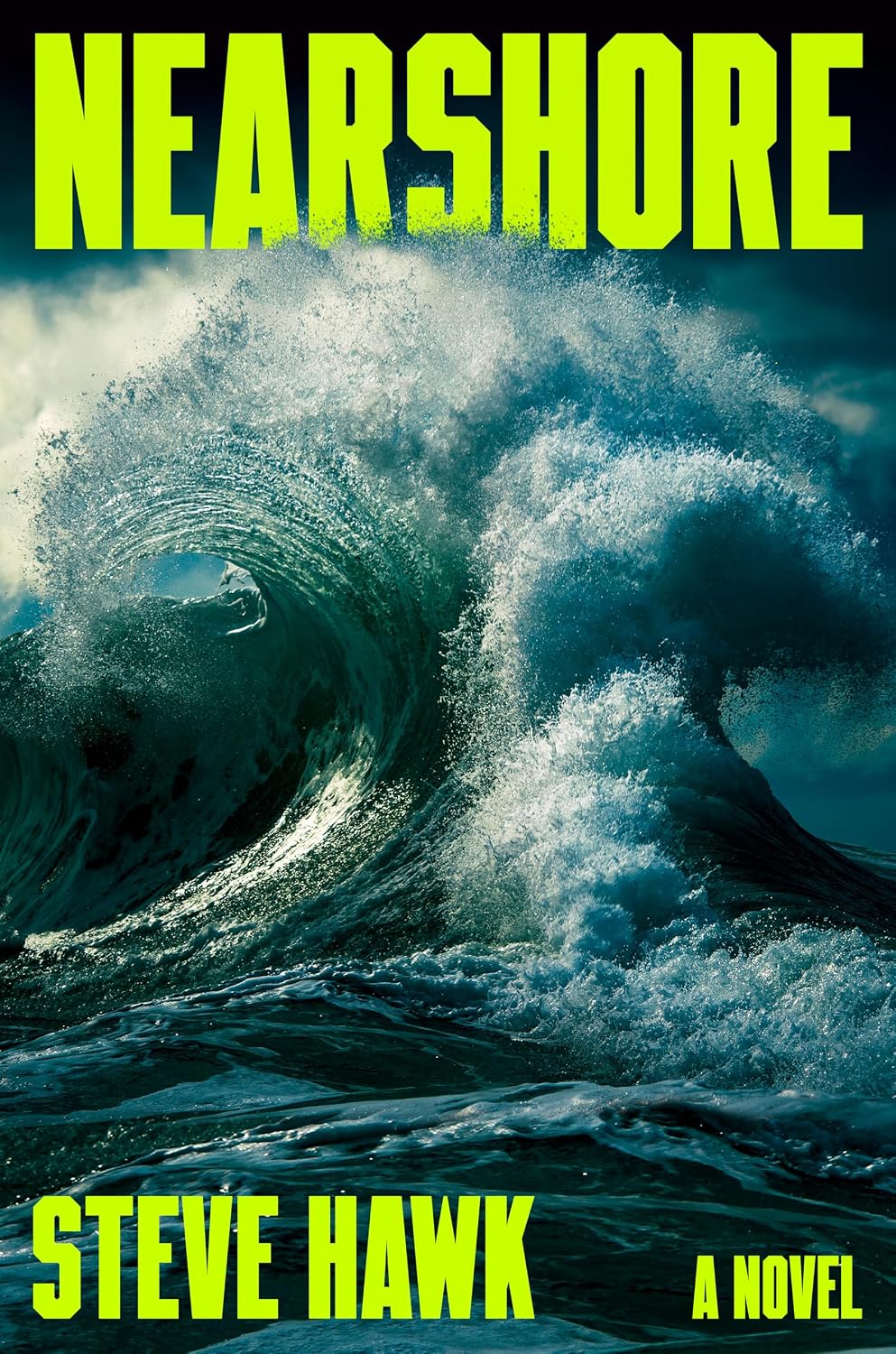
‘Nearshore’
By Steve Hawk
Viking: Aug. 18, 2026
Hardcover, 352 pages
What arts and culture topics would you like us to cover? Please email ideas or feedback to features@epochtimes.nyc.