



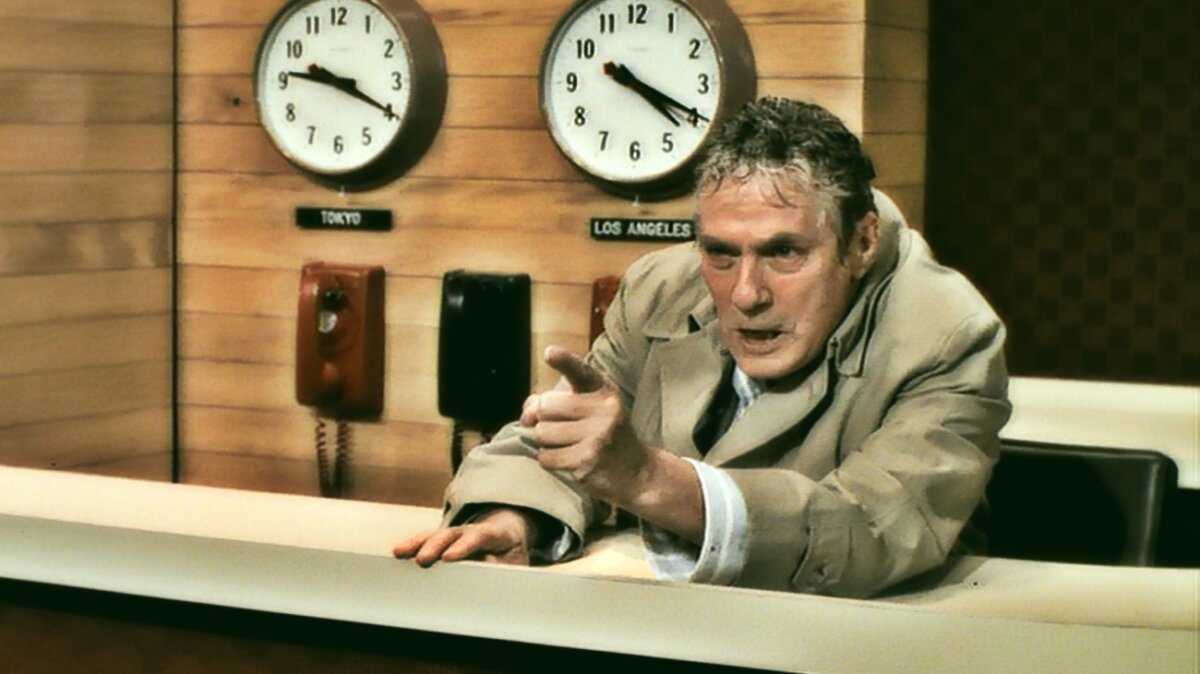
R | 2h 1m | Drama, Comedy, Satire | 1976
Tied with “Rocky” at the 1977 Oscars ceremony with 10 nominations and four wins, “Network” predicted the downfall of legacy TV decades before it actually started.
As scathing as it was unforgiving and prophetic, “Network” employed blistering satire as its principal weapon, which succeeds all the more because it’s delivered with deadpan seriousness. Presenting this kind of absurdity with even a whiff of knowing, tongue-in-cheek self-awareness would have neutered its desired sting, so it’s all played with straight faces for the duration.
Basement Dwellers
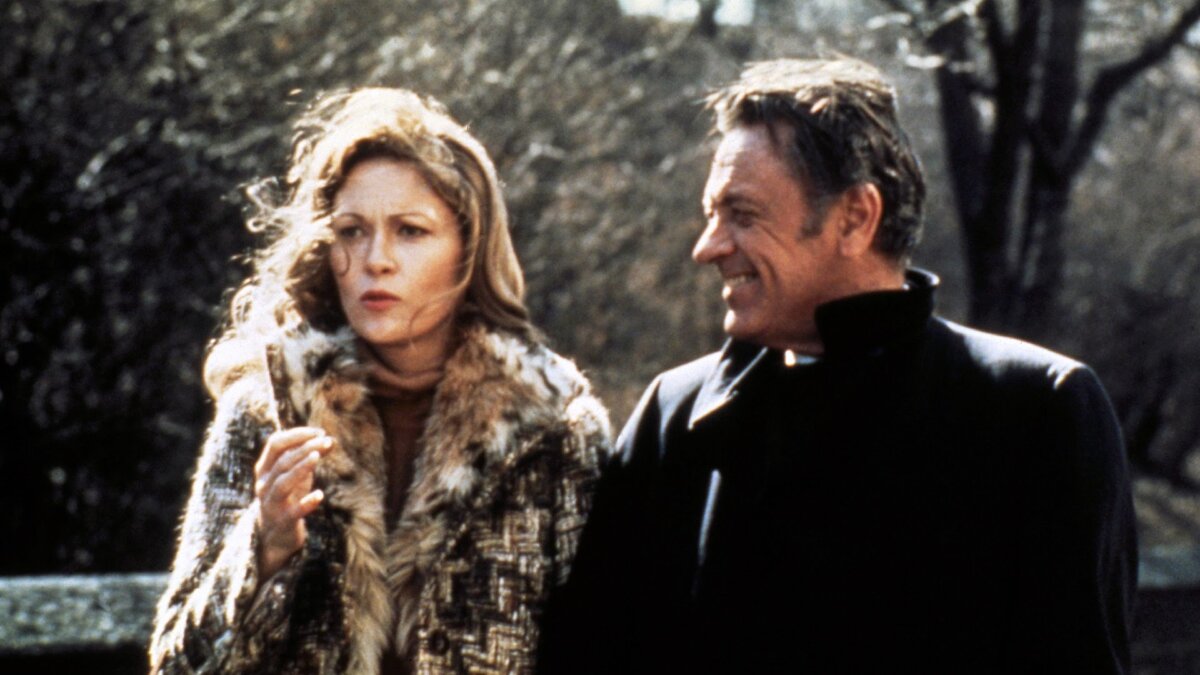
Set in New York City just before the arrival of early cable TV, the main plot involves assorted employees at the fictional UBC network. Regularly finishing dead last behind CBS, ABC, and NBC, the UBC brass and programmers are beyond desperate for any kind of salvation. That’s exactly what they get in the form of Howard Beale (Peter Finch).
In addition to his perpetually tanking ratings and low market shares, the recently divorced Beale wears his wounded ego during his nightly newscast and his boss, news director Max Schumacher (William Holden), has reached his limit.
Friends since the glory days of Edward R. Murrow, Max feels that telling Howard he’s being let go in two weeks’ time will allow the latter to compose himself and exit with a modicum of dignity. Max was dead wrong.
Anyone who has ever worked in live TV or radio will attest; if you’re planning on firing on-air talent, you do it on a Friday immediately after their last appearance. That way, they can’t return spewing bad blood and delivering embarrassing, bellicose tirades.
Fatal Train Wreck Ahead
When Howard is given his virtual pink slip, he announces, with poise and calm resolve, that he will kill himself on the air because he’s tired of all the “B.S.” While Max realizes that Howard’s a lost cause and wishes to block him from making a total fool of himself, prime time programming director Diana Christensen (Faye Dunaway) views it as a godsend.
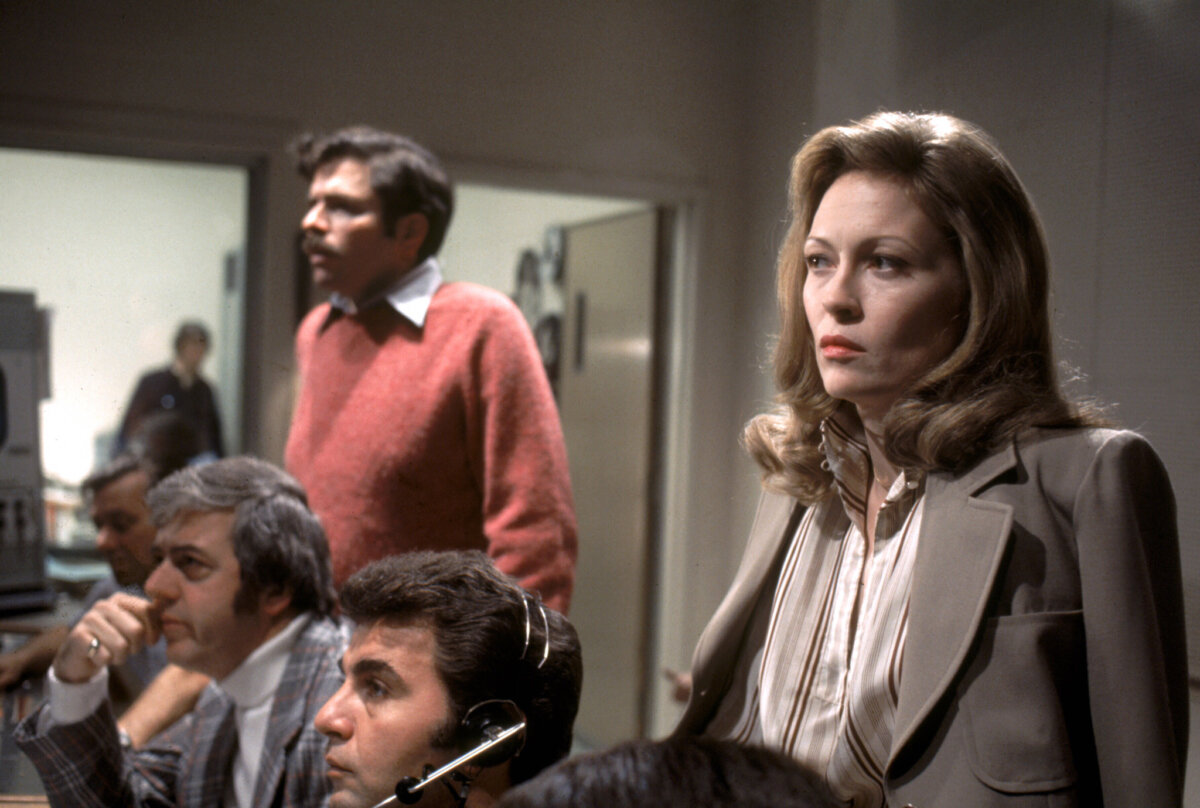
A woman with ice water in her veins, Diana is, by her own admission, a failure at everything except her work. She recognizes that keeping Howard on the air with his unhinged, mad-prophet ranting will result in skyrocketing ratings.
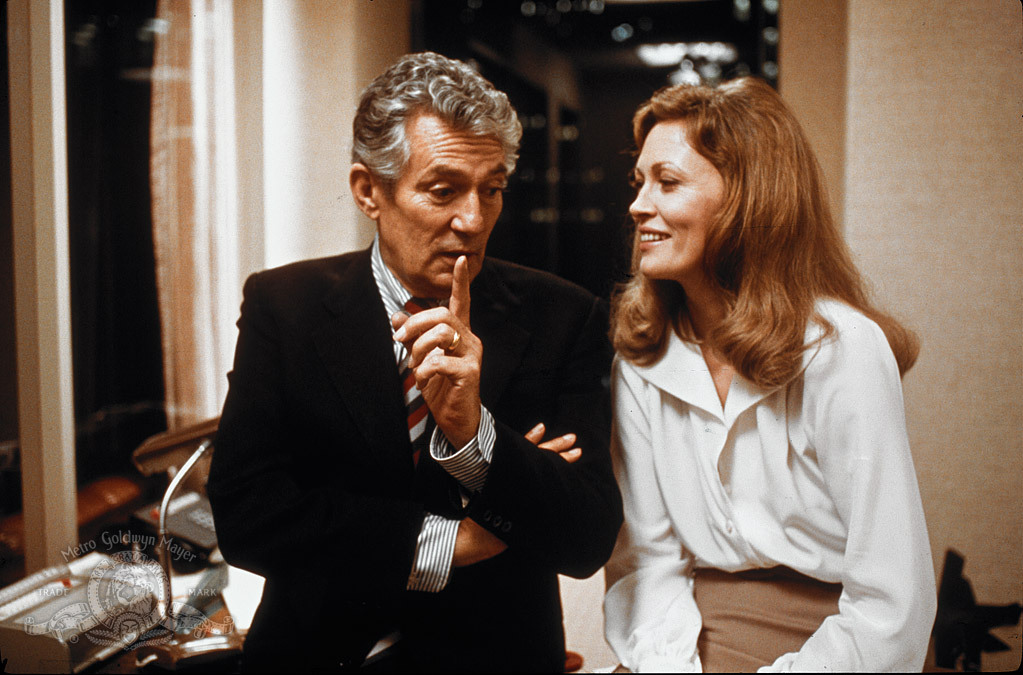
She presents her pitch to senior VP Frank Hackett (Robert Duvall) and, after token resistance, he agrees. It also helps that Max and Frank already hate each other. Frank has been looking for a reason to fire Max, and Max’s loyal defense of Howard results in his dismissal.
Things get all the more interesting when the head-butting between the married Max and the single Diana leads to a torrid, ultimately doomed affair.
Already the winner of two Oscars (“Marty,” “The Hospital”), screenwriter Paddy Chayefsky captured his third for “Network,” and it is arguably his finest and most insightful creation.
Based on the documentary included in the new CriterionBlu-ray release, two full years before completing it, Chayefsky contacted Sidney Lumet and requested Lumet to direct it. Lumet started his career in live TV and Chayefsky recognized that only he could correctly realize his unique vision.
Full Circle ‘Battle’
Ironically (or maybe not), Chayefsky foresaw events carried out by a domestic terrorist sect depicted in a Howard Beale offshoot UBC show (clearly based on Patty Hearst and the Symbionese Liberation Army).
The domestic terrorist theme came full circle with the 2025 Oscar-winning “One Battle After Another” (“Battle”), a deplorable movie that celebrates and condones a multitude of anti-American platitudes.
In 1976, the most memorable line from “Network,” “I’m as mad as hell, and I’m not going to take it anymore,” became part of the lexicon. People were tired of being lied to on multiple levels and they had legitimate beefs.
In “Battle,” those protesting aren’t angry because they’re being lied to but because they’re being told the truth, something they can’t handle (thank you, Jack Nicholson).
The protesters in “Network” were birthed out of the 1960s counterculture. They hated “the man” because it was in vogue and anticapitalist. Fifty years later, the argument remains the same and the proposed solution is as equally vapid and empty.
The biggest difference between “Network” and “Battle” is that the idealists in 1976 thought they had a viable alternative, something that was ultimately proven unworkable with 1989’s tearing down of the Berlin Wall by citizens of communist East Germany.
The characters and the filmmaker of “Battle” continue to believe that communism and domestic terrorism are the solution to democracy and free market capitalism.
In the 50 years since “Network” debuted, TV programming has only reinforced its predictions and confirmed that communism is one long continuous exercise in futility.
How much more obvious does it need to be?
The movie is available on home video. For streaming options, visit justwatch.com.
‘Network’
Director: Sidney Lumet
Stars: Faye Dunaway, Peter Finch, Robert Duvall, William Holden
Running Time: 2 hours, 1 minute
MPAA Rating: R
Release Date: Nov. 27, 1976
Rating: 5 stars out of 5
What arts and culture topics would you like us to cover? Please email ideas or feedback to features@epochtimes.nyc
