



Few of the great composers left behind written statements that we would explicitly label as a New Year’s resolution. Some did keep diaries or make statements that approximated this practice, though. Others exemplified resolutions through their behavior.
Five famous composers modeled a personal commitment to self-improvement—or at least tried to:
The Importance of Routine: Johann Sebastian Bach
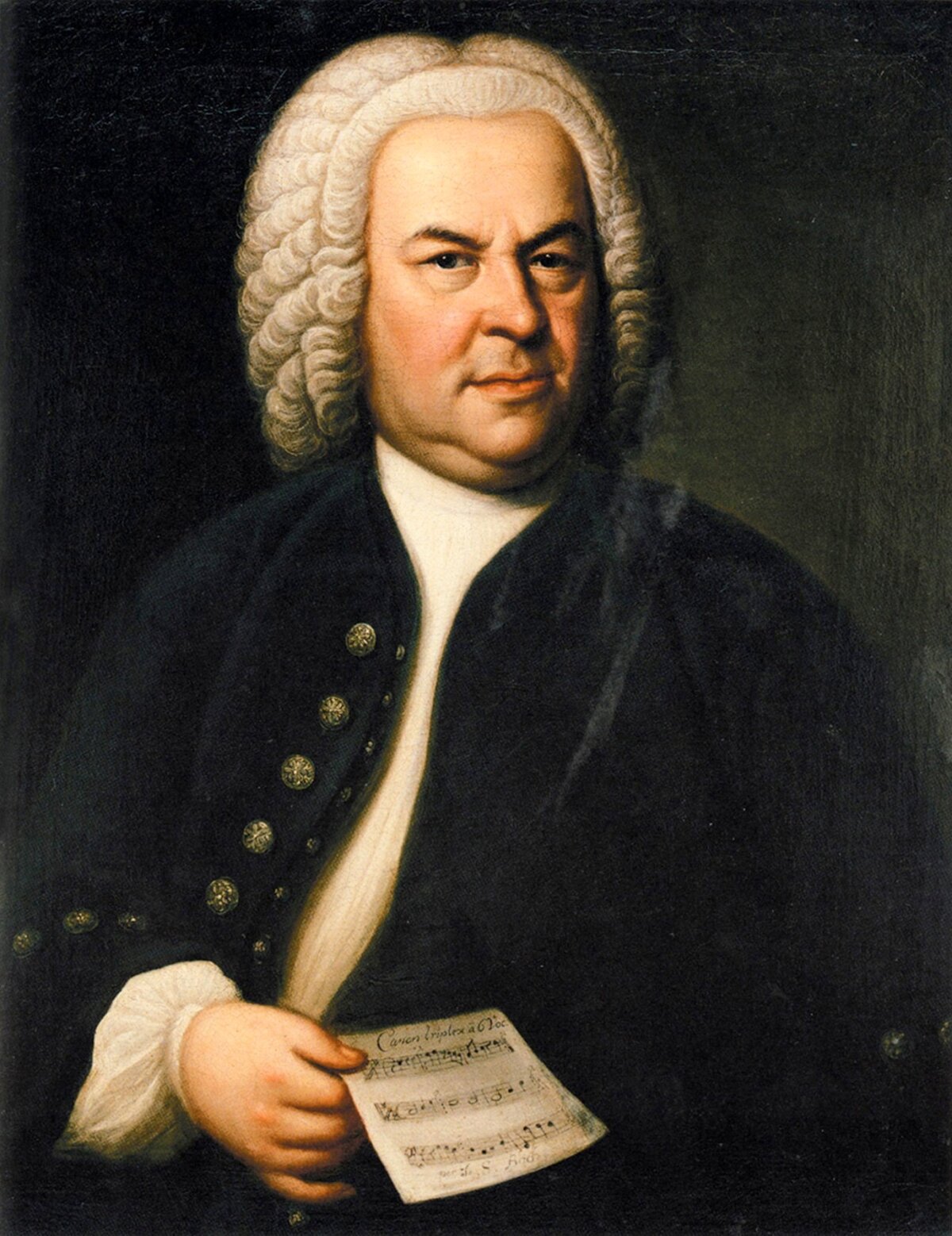
Johann Sebastian Bach was staggeringly prolific, with more than 1,000 works surviving to our own time. What is more, noted scholar Christoph Wolff has argued that this might amount to only around 10 percent of his total output.
Bach was famous for churning out pieces on a weekly basis for all occasions. This included seven cantatas for New Year’s Day.
One of the best of these is the fourth part of his Christmas Oratorio (BWV 248). Titled “Fallt mit Danken, fallt mit Loben” (Bow with thanks, bow with praise), it was first performed on New Year’s Day in 1735 and focuses on the transforming power of Jesus’s name.
Bach also may have composed a New Year’s Oratorio that has not survived. His surviving chorale “Das alte Jahr vergangen ist“ (The old year has passed away), BWV 288, may be part of this larger lost work.
Modern people often think artistic creation is a simple act of creative inspiration, coming and going at whim. No idea could have been more alien to Bach, who understood the importance of routine in the compositional process. If he could offer a New Year’s resolution from beyond the grave, he might say something like, “Stick to a schedule.”
The Need for Order: Wolfgang Amadeus Mozart
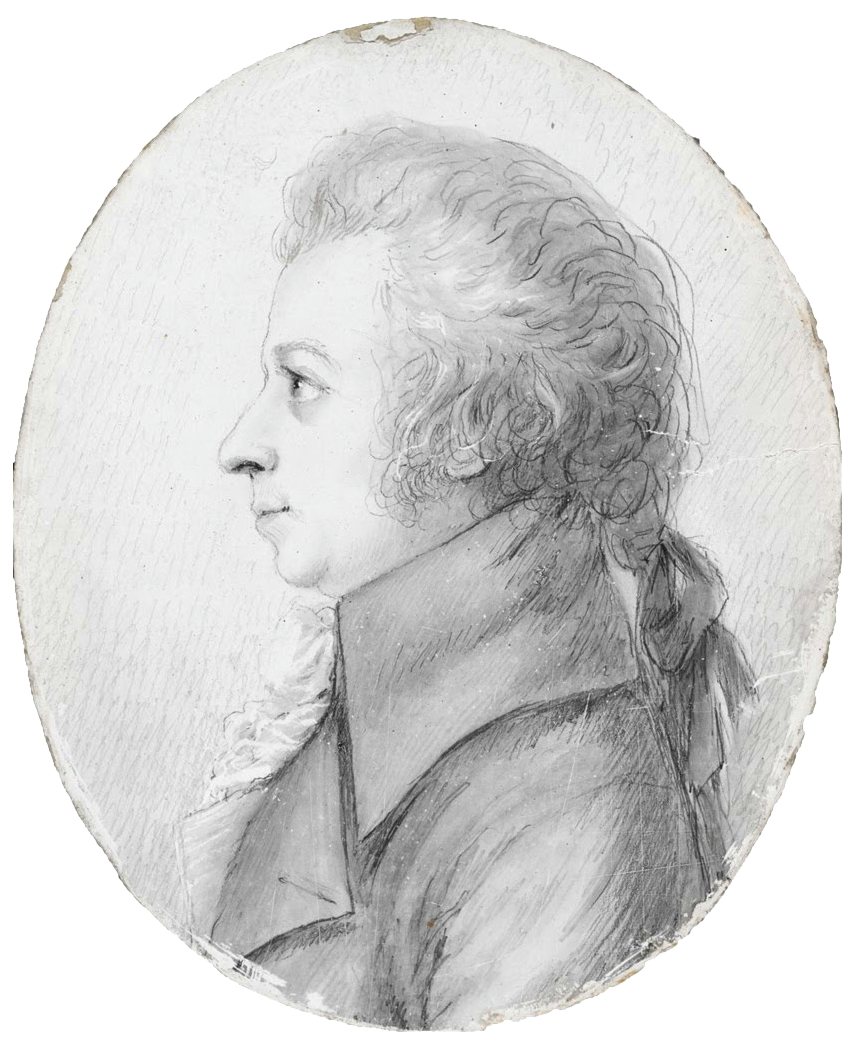
In February 1784, Wolfgang Amadeus Mozart began to catalogue all his works composed that year, beginning with his Piano Concerto in E flat (K449). Though not specifically a New Year’s resolution, it was a habit that he kept up diligently until he died seven years later in 1791.
1784 marked a year of crisis for Mozart. That August he began suffering from a terrible illness marked by abdominal pain and vomiting. He eventually recovered, and this was one of his most fertile creative periods. Since he was composing at a faster rate, he resolved to at least keep track of it. His desire to catalogue his works might be expressed with the resolution to “bring order to your art.”
Expressing Gratitude: Ludwig van Beethoven
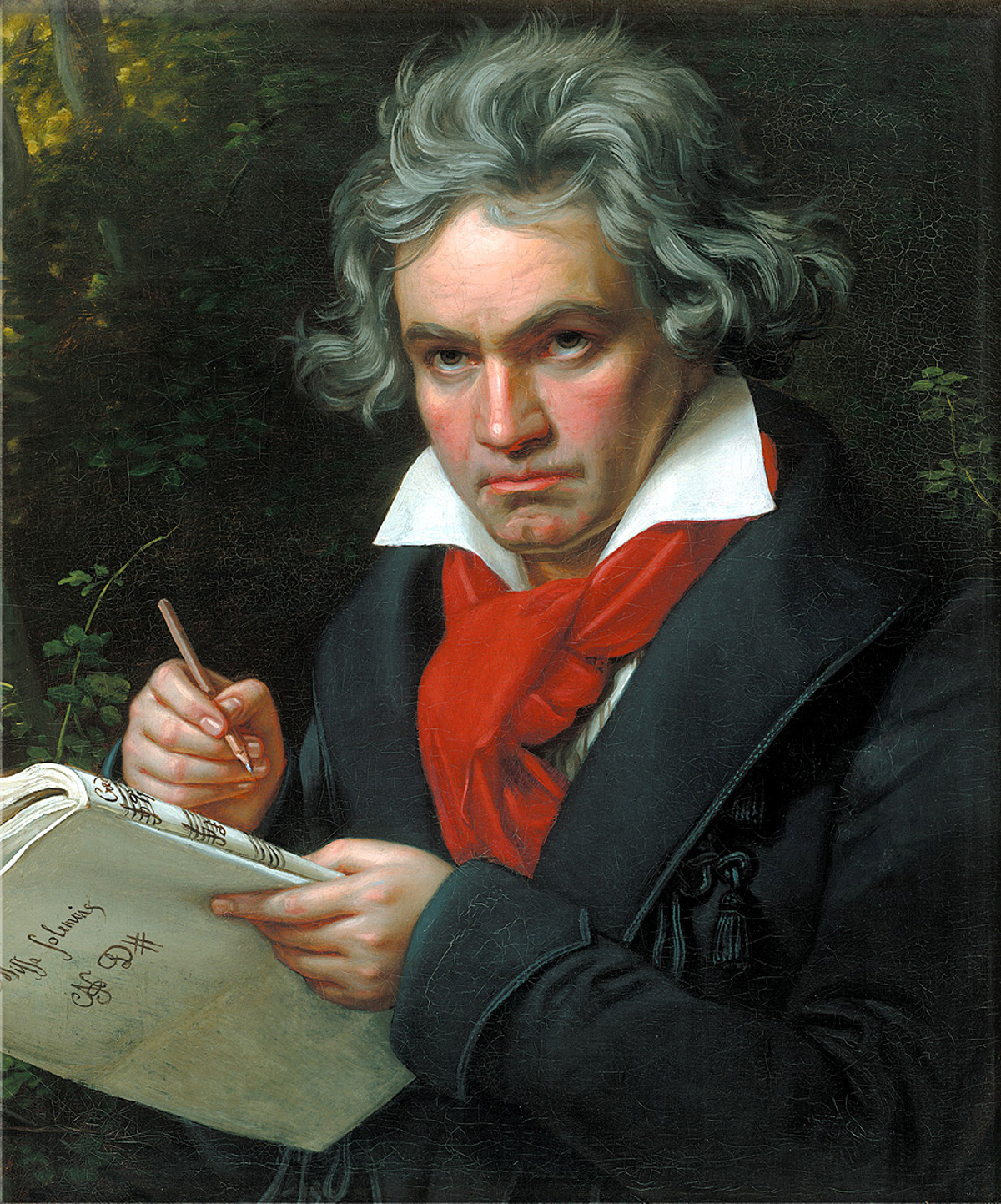
Though Beethoven left us no recorded New Year’s resolutions, he did have a habit of writing down maxims in his “Tagebuch,” or diary, that he kept between 1812 and 1818. Encompassing his daily cares and personal struggles, these included thoughts like “There is much to be done on earth, do it soon!” and “Don’t waste time with bad people.”
More directly relevant is his practice of sending New Year’s greetings to patrons. In 1819 he wrote to Archduke Rudolph of Austria to invoke blessings and goodwill and to beg the duke to continue bestowing his favors upon the composer.
At the end of that same year, he also wrote a short canon, “Glück zum neuen Jahr” (Good luck for the New Year). The manuscript is dated the last day of December, and it addressed Countess Anna Maria von Erdödy as a New Year’s greeting.
Erdödy has been put forward as a candidate for Beethoven’s “immortal beloved,” whom the composer once addressed in a love letter. What is less speculative is that her close friendship and support of his work led the composer to dedicate this three-voice canon to her.
Though he could be famously irascible, Beethoven never forgot to express his gratitude to those who believed in him and made his art possible. Expressing his thanks in the form of a New Year’s greeting was a way to acknowledge this past support while looking forward.
Kicking Bad Habits: Pyotr Ilyich Tchaikovsky
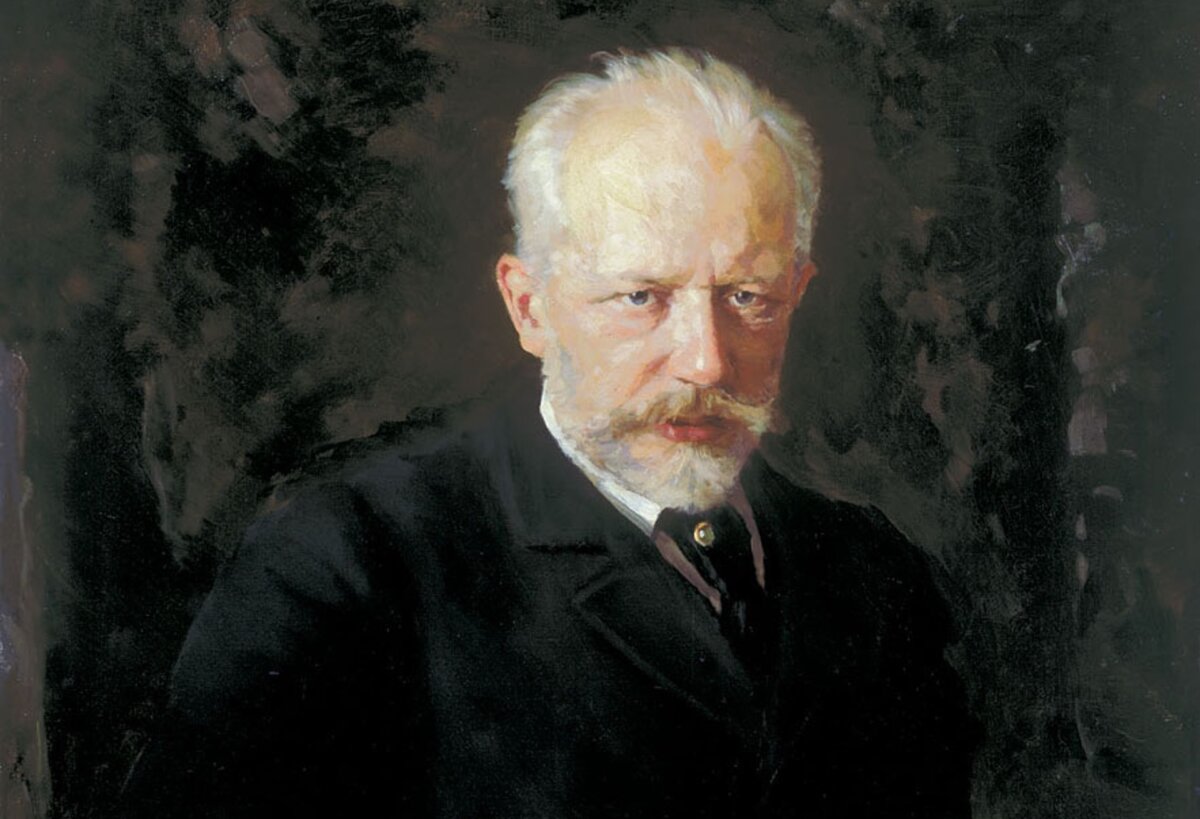
Tchaikovsky’s diaries are full of vows to limit social interaction and compose more regularly. At the turn of 1889, Tchaikovsky hinted at a new resolution: to drink less. He begins his January 1 diary entry with the note that his New Year’s celebration was excessive, to the point that he did “not even remember” it. He began the new year by working “all morning” on the first scene of his new ballet, “Sleeping Beauty,” inscribing a musical phrase on the entrance of Aurora. Tchaikovsky then recorded that he “did not drink vodka during dinner. It’s a good thing!”
Artists are often associated with bad habits regarding personal indulgences. In modern times, this has become something of an accurate stereotype, and one that usually afflicts lesser figures like those of the 1960s counterculture. Among greater figures in premodern times, though, the problem has always persisted to some degree. It is admirable to see Tchaikovsky trying to kick a bad habit, demonstrating the basic truth that personal discipline requires mental sharpness. If he had written the above diary entry in the form of a maxim, he might have come up with the resolution to approach work with a clear mind.
Keeping Promises: Jean Sibelius
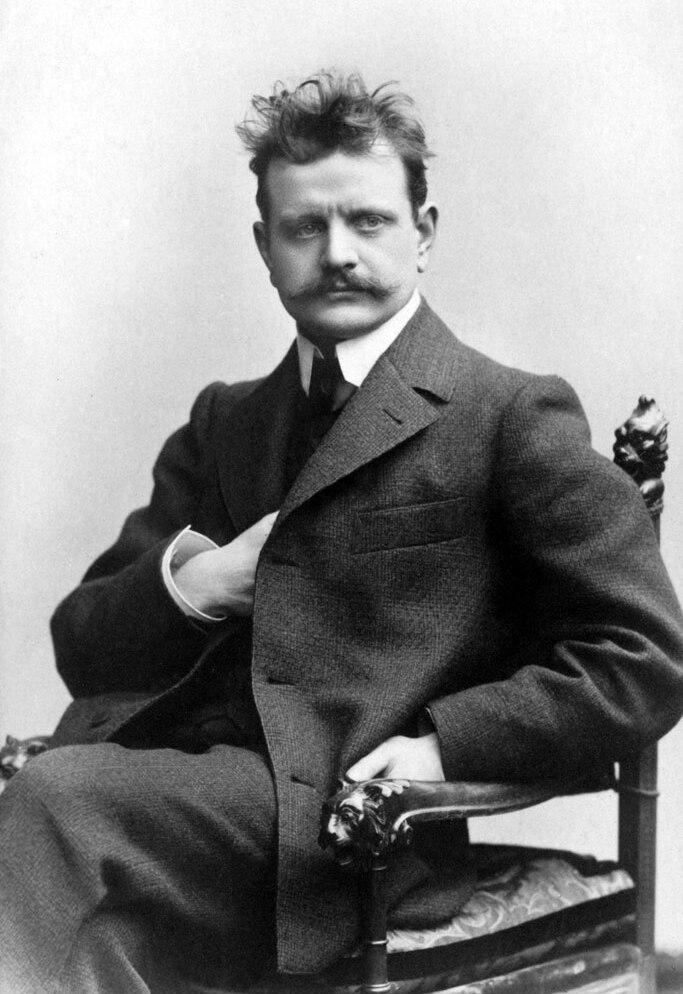
In September 1926, Finnish composer Jean Sibelius wrote in his diary that he was working on something new: an eighth symphony. It was to be his masterwork, a project he toiled on for nearly two decades but never finished.
For the next few years after starting it, he made contradictory statements about its state of completion. In 1927 he told a music critic that two movements were written down. A year later he told Serge Koussevitzky, conductor of the Boston Symphony Orchestra, that everything was still in his head. That same year he wrote to his wife, saying, “[M]y work will be wonderful. It just seems to take so long to get it finished.”
In 1931 he informed Koussevitzky that the symphony would be ready to perform the following spring. When January rolled around, though, he realized he would not be able to finish it and recanted on his promise. That did not stop Sibelius from making new assurances to conductors in Finland and America that he would soon be finishing his much-anticipated work. Sometimes a conductor would even announce a scheduled performance, only to retract it later. In 1933 he promised to deliver the completed score to Koussevitzky in December. Shortly after the New Year, though, he sent a telegram: “Regret impossible this season.”
Then in 1945, Sibelius’s wife reported that he burned a laundry basket full of manuscripts “on the open fire in the dining room.” The Eighth Symphony was likely among this batch, though its destruction was not made public knowledge until after Sibelius’ death.
The obvious lesson here is, “Don’t make promises you can’t keep.” One might also draw another moral, though, about the pitfalls of perfectionism.
Sibelius’s case is a cautionary tale. Like Bach, Beethoven, and Mozart, however, he still shared a commitment to artistic excellence. His failure in this instance is still a reminder that every new year is an opportunity to make a positive change.
What arts and culture topics would you like us to cover? Please email ideas or feedback to features@epochtimes.nyc
