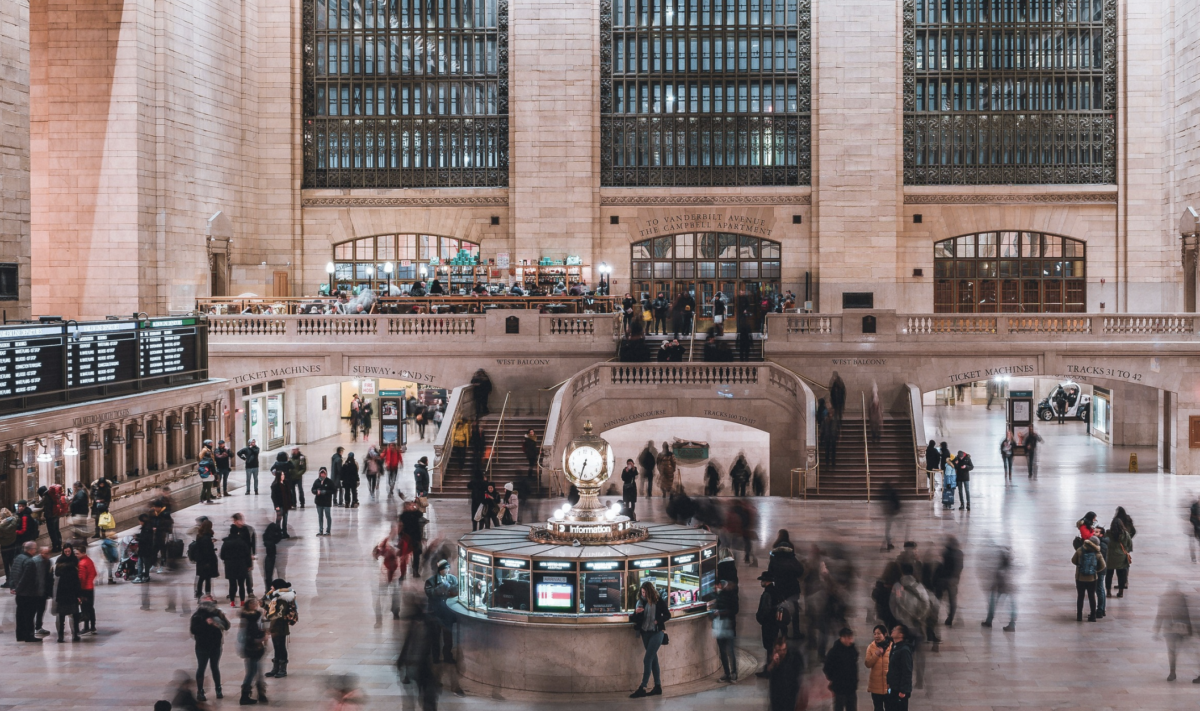
In the heart of New York City, the movement never stops. Every day, roughly 750,000 people stream through the grand concourses of Grand Central Terminal. For countless commuters, travelers, and visitors, this is more than a point of arrival or departure. It’s a crossroads of life’s many encounters.
A Tragedy That Inspired a Station
The story of Grand Central Terminal’s birth is chronicled in the 2017 “Building Grand Central Terminal” by Gregory Bilotto and Frank DiLorenzo.
On the frigid morning of Jan. 8, 1902, two steam trains collided in the tunnel along Park Avenue. Smoke, steam, and flames engulfed the tunnel, killing 17 people and injuring 36. The scene was horrific—bodies lay crushed among shattered train cars; reports described three men hanging from a train window, burned alive by scalding steam as they tried to escape.
The tragedy shocked the city and changed the course of New York’s rail history. In response, on May 7, 1903, the New York State Legislature passed a law banning steam locomotives in Manhattan after June 30, 1908.
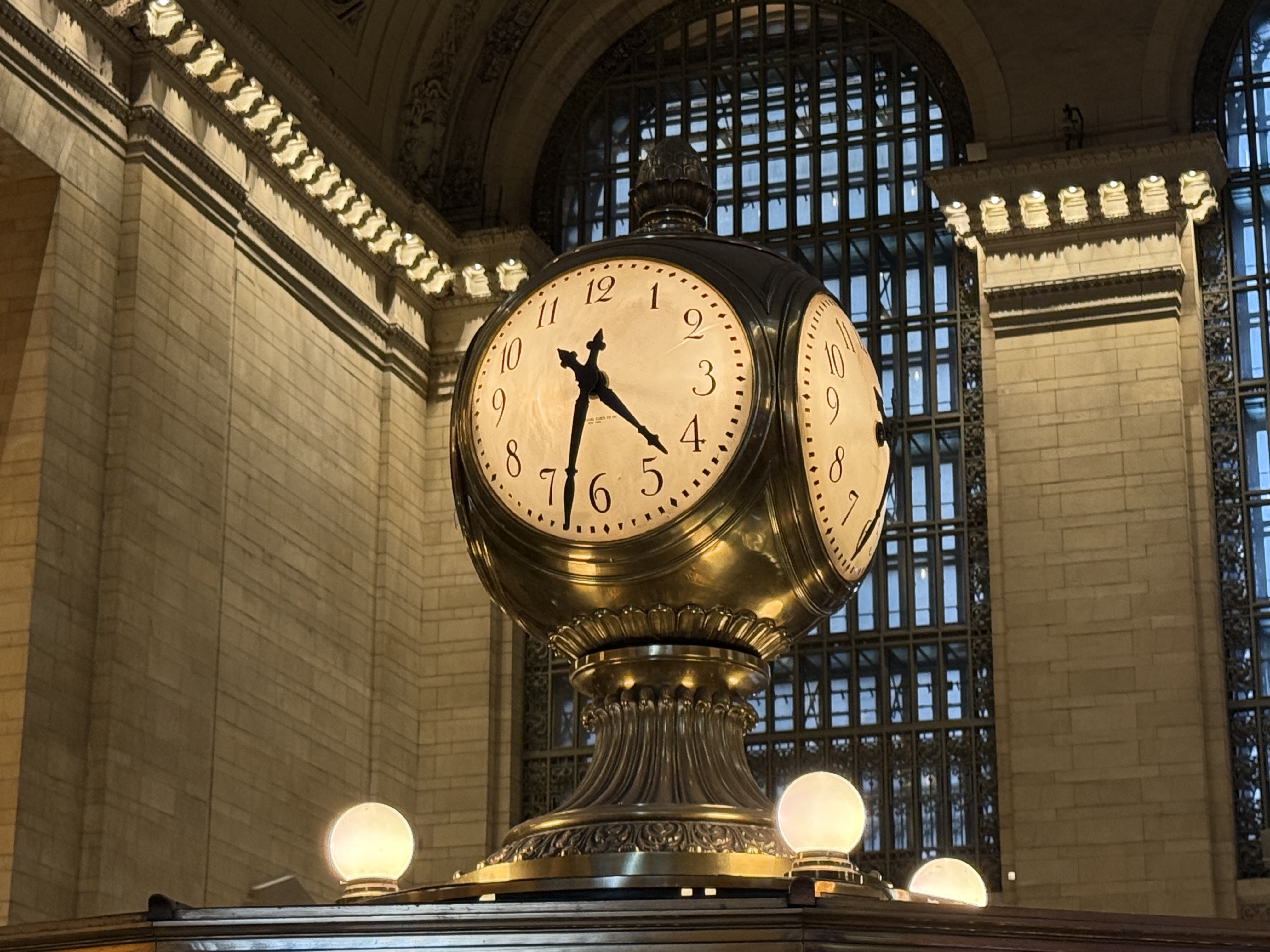 The iconic four-faced clock at the Information Booth in the main concourse. (Jenny Zeng/The Epoch Times)
All railways in the city—passenger and freight—were ordered to convert to electric power. A monumental redevelopment plan began, and the construction of a new Grand Central Terminal was set in motion. Engineer William J. Wilgus led the effort. His bold vision introduced the revolutionary concept of air rights—placing train tracks underground and allowing skyscrapers to be built above. The idea reshaped modern urban development.
At midnight on Feb. 2, 1913, Grand Central Terminal officially opened. More than 150,000 people flocked inside and marveled at its soaring Beaux-Arts design: vaulted ceilings, vast spaces, and a sense of modernity. In that moment, New York wasn’t merely a city—it was a model of ambition and possibility.
Secrets in the Celestial Ceiling
Step into the main concourse and your eyes will lift toward the emerald-green vault overhead. Delicate white lines trace constellations, dotted with shimmering bulbs like stars in a night sky. Look closely and you’ll notice that the constellations appear reversed. Many believe this “error” represents a divine, celestial perspective.
The next time you enter the station, tilt your head toward that “reversed sky.” You might feel as though you’re a star among millions, seeing New York from above the constellations.
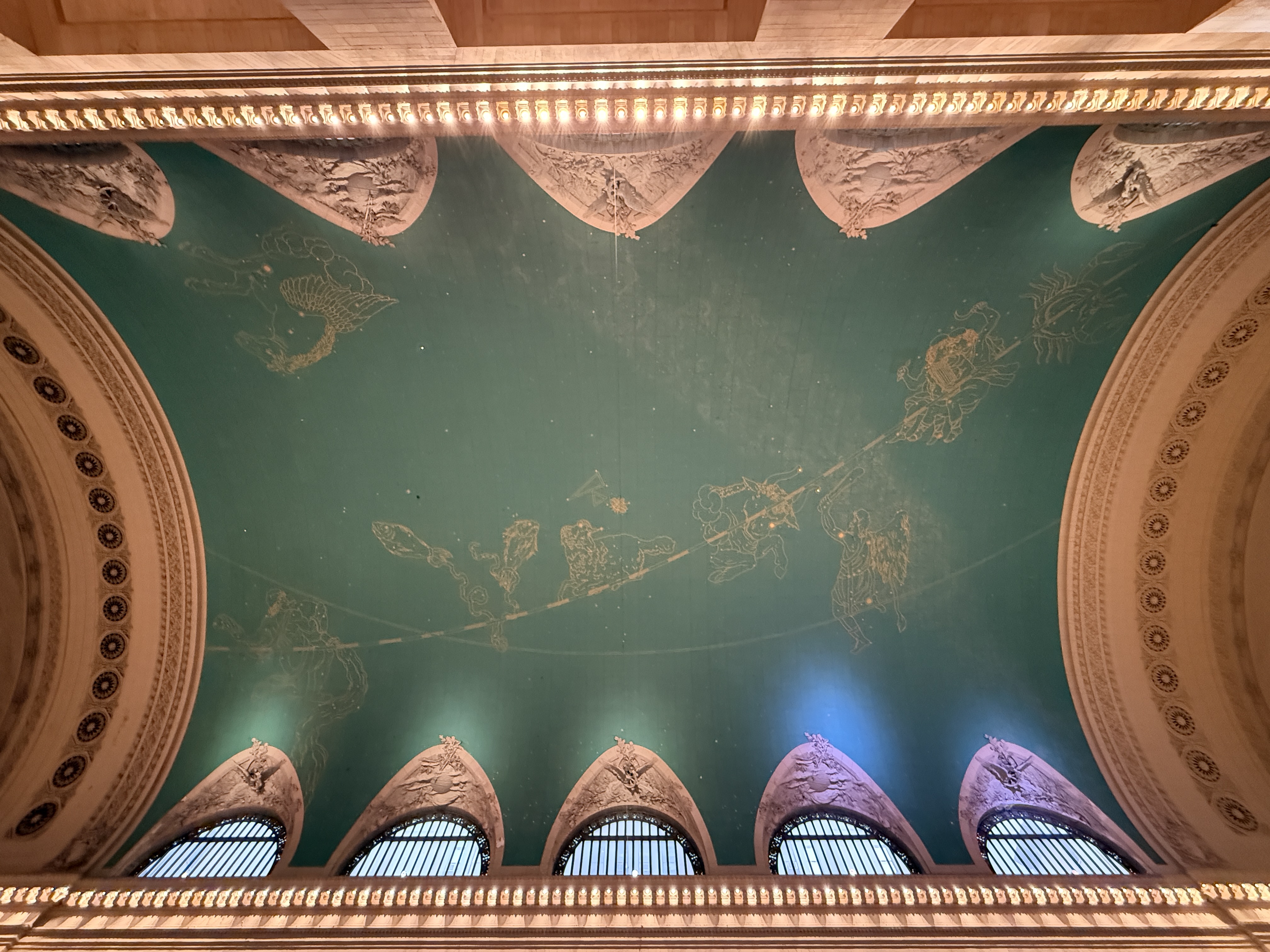 The emerald-green ceiling depicting constellations. (Jenny Zeng/The Epoch Times)
At the center of the concourse, the four-faced clock stands as a silent witness. It’s a meeting point, a shared heartbeat for generations of New Yorkers. “Meet me at the clock” is part of the city’s vocabulary. Estimated to be worth more than $20 million, its opal faces keep remarkably precise time—said to drift no more than one second every two billion years.
Outside, another masterpiece stands guard above the crowds: The Glory of Commerce, completed in 1914 by French sculptor Jules-Félix Coutan. At 48 feet tall, Mercury—the god of commerce—stands at its center, flanked by Hercules and Minerva. Beneath them gleams a four-yard-wide Tiffany glass clock—the largest Tiffany clock in the world.
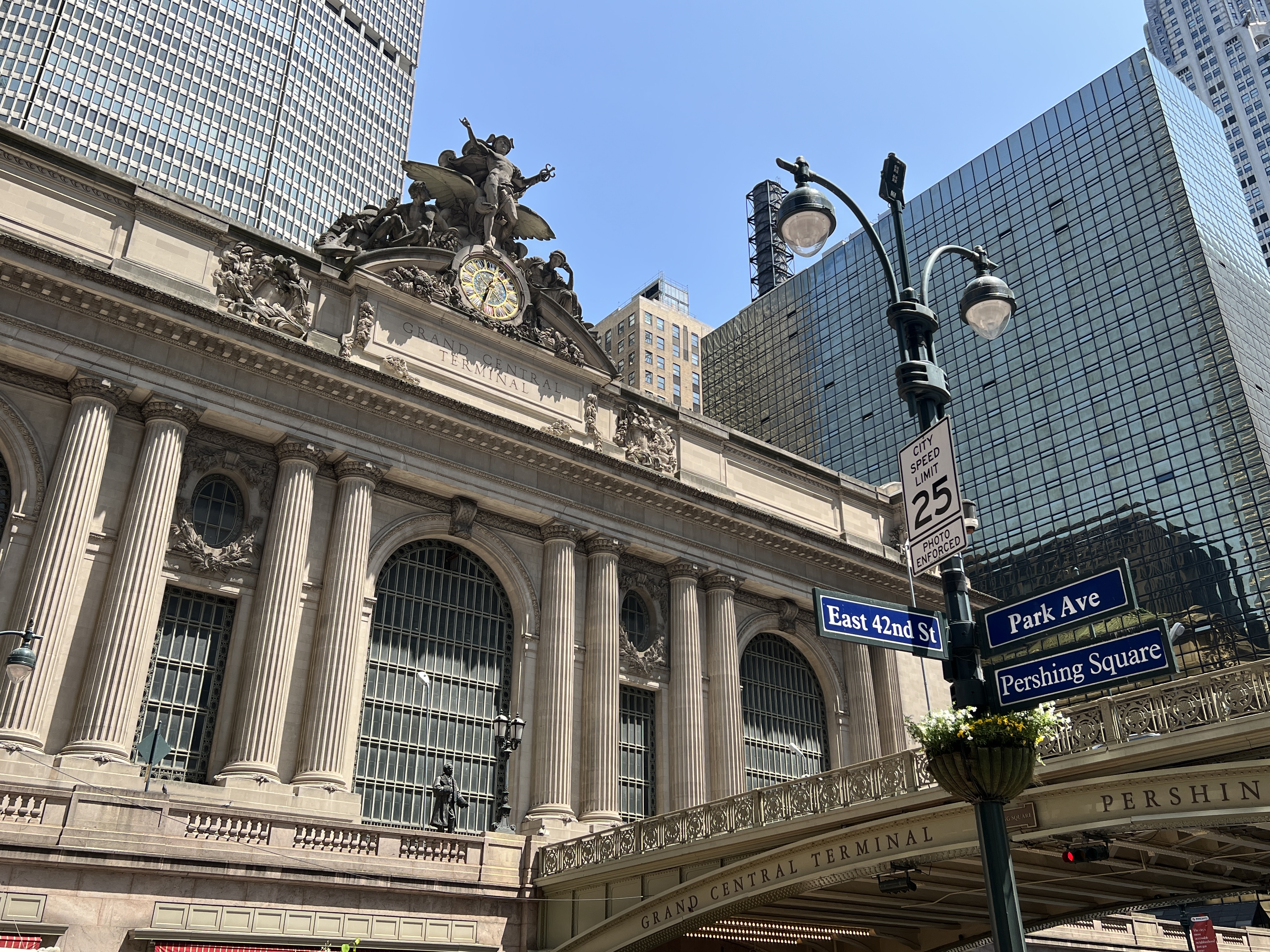 “The Glory of Commerce” sculpture on the exterior of Grand Central Terminal, in 2023. (Jenny Zeng/The Epoch Times)
A Culinary Journey Within
Grand Central has always been more than a place to catch a train. Its vaulted spaces hold a world of flavors and stories.
Beneath Guastavino’s iconic tiled arch, the Grand Central Oyster Bar has served New Yorkers since 1913. Under tiles that echo a subterranean cathedral, workers toast the end of a day and travelers pause before journeys for a bowl of clam chowder or a plate of oysters.
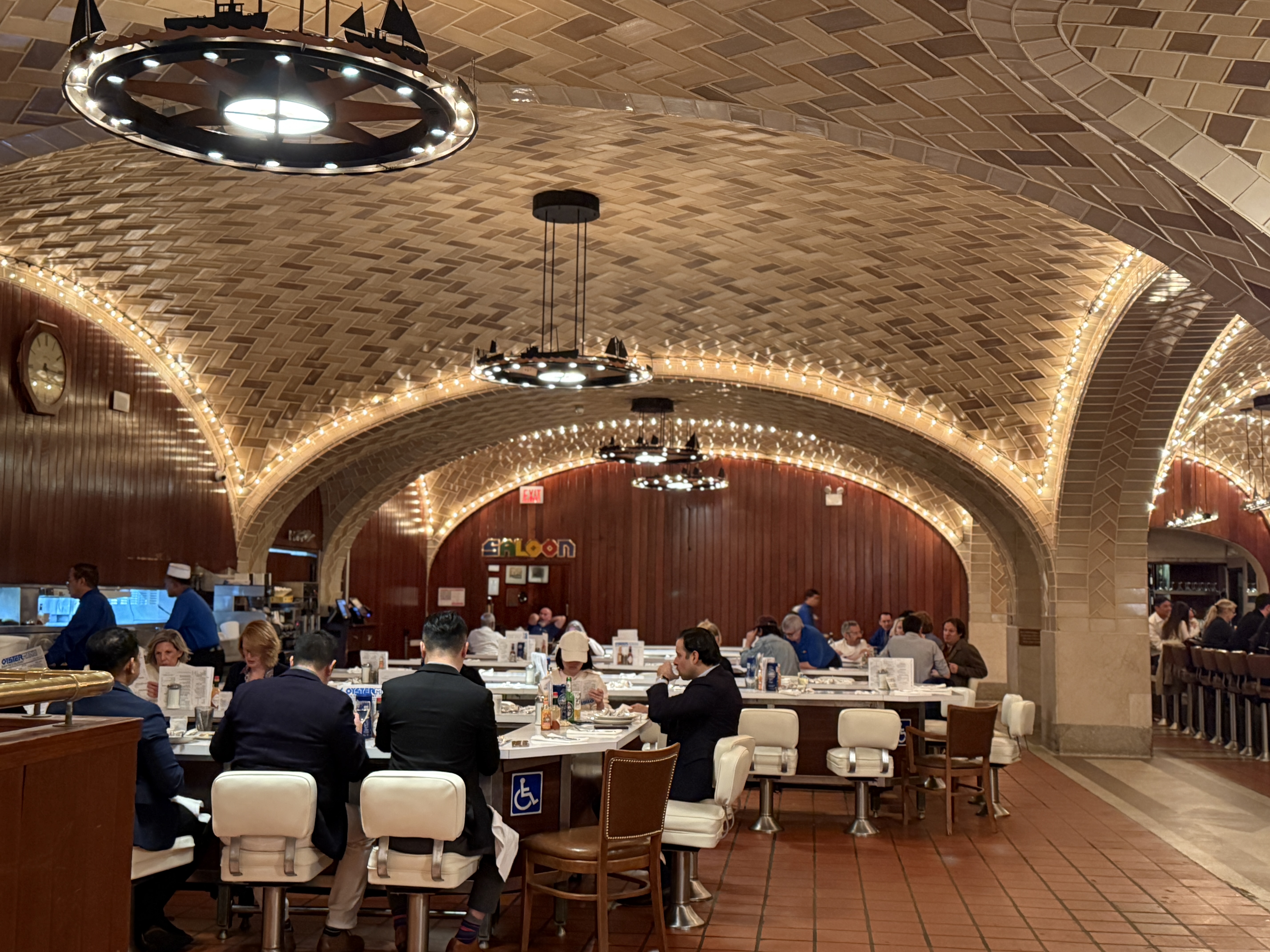 The historic Grand Central Oyster Bar, over a century old. (Jenny Zeng/The Epoch Times)
Nearby, the newly opened Grand Brasserie channels European elegance with chandeliers and marble walls, offering old-world calm amid the city’s rush.
Downstairs in the Dining Concourse, everyday hunger meets comfort: Shake Shack burgers, Magnolia Bakery treats, Doughnut Plant pastries, and the aroma of Joe Coffee energizing travelers before catching their trains.
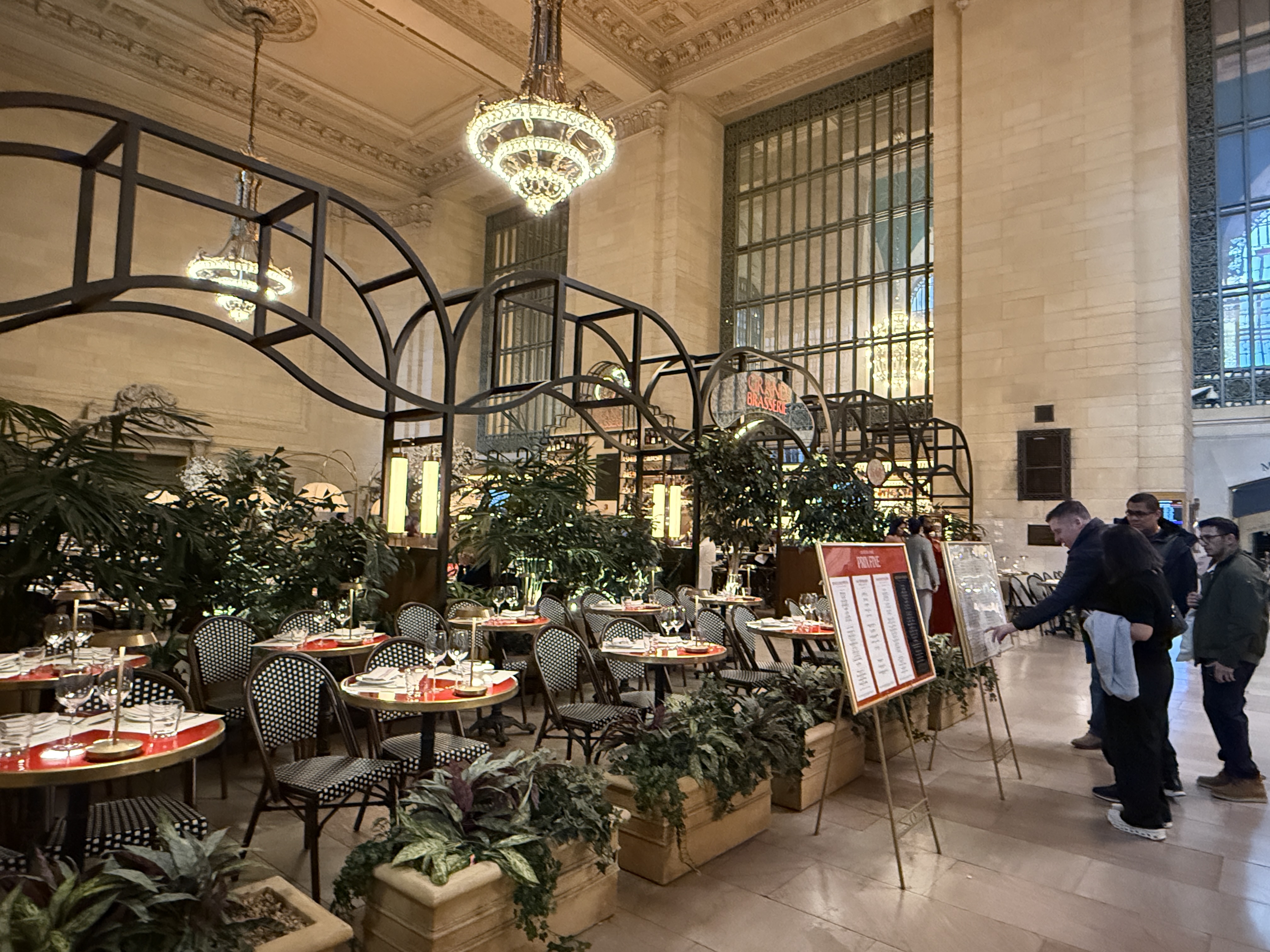 The French-style restaurant Grand Brasserie inside Grand Central Terminal. (Jenny Zeng/The Epoch Times)
At the Grand Central Market, fresh produce, seafood, and fragrant spices line bustling stalls. Here, the flavor of everyday life meets the schedule of the rails—a living urban still-life.
There is also a small shop tucked along the corridors: Taste NY. A New York State initiative, it gathers flavors from more than 70 local farms and artisan producers: cheeses, hard ciders, maple syrups, and honey. Every jar proudly reads “Made in New York.”
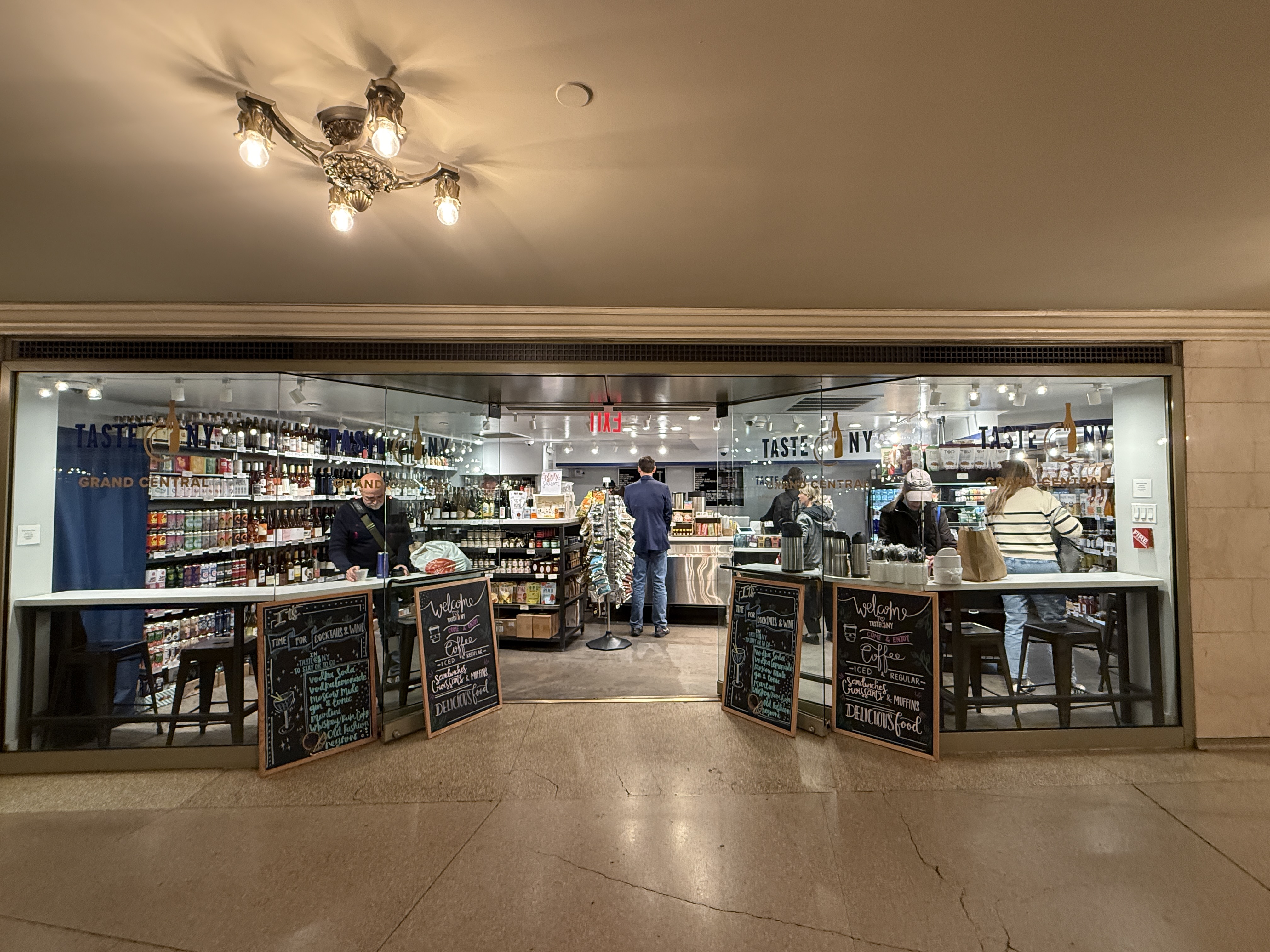 The Taste NY shop, highlighting New York-made products. (Jenny Zeng/The Epoch Times)
Its mission is simple—offer commuters a taste of the state’s land and labor. Seasonal offerings rotate and include Hudson Valley strawberry jam in spring and fresh apple cider in autumn. On weekends, wine tastings turn the station into a brief “flavor layover.”
A Season of Celebration
As autumn deepens and the holidays approach, Grand Central dons festive attire. Beginning mid-November, the New York Transit Museum presents the Annual Holiday Train Show, in its 21st year of celebration. Miniature trains depart a tiny Grand Central, passing the Empire State Building, Chrysler Building, and Central Park before reaching the North Pole. Lights twinkle, whistles blow, and magic fills the air. It provides nostalgia for adults and wonder for children.
Meanwhile, Vanderbilt Hall welcomes the beloved Grand Central Holiday Fair, a tradition since 1993. Under warm lights, vendors display handcrafted jewelry, ornaments, fragrances, and home goods. The hall glows with joy, music, and holiday camaraderie.
These festivities transform Grand Central not only into a hub of travel and shopping, but into a venue of shared memories.
Grand Central Terminal’s history is a mirror that reflects New York’s vitality, innovation, and resilience. From steam to electricity and crisis to rebirth, this station has witnessed how a city evolves and how countless lives begin new chapters here.
In Grand Central, every footstep carries a story. Every journey begins again.
What arts and culture topics would you like us to cover? Please email ideas or feedback to features@epochtimes.nyc