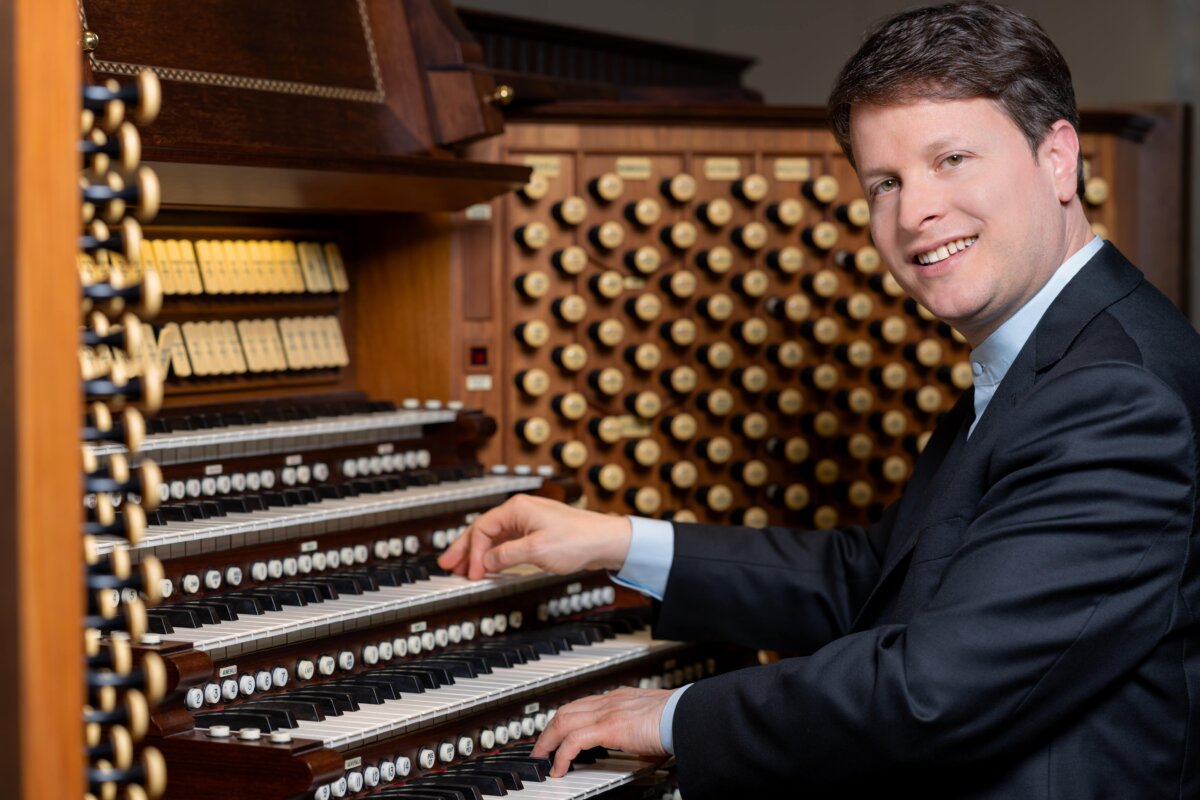
It was a breathtaking evening in mid-September. Beneath the lofty stone vaults of the Church of St. Mary the Virgin in Midtown Manhattan, resounding echoes filled the space, making the notes seem to float in the air. This was the solo recital of Paul Jacobs, the first organist ever to win a Grammy Award. As the opening chord struck, the audience was instantly transported back to 1840—the era when Felix Mendelssohn performed Bach’s organ music.
Seated in the organ loft on the church’s second floor, Paul Jacobs’s hands flew across the multiple keyboards while his feet moved deftly across the pedals, as though conducting an invisible orchestra. From the gentle sound of flutes to the piercing reeds, to the ethereal, otherworldly timbres, all unfolded under his command. When the thunderous final chords of the “Passacaglia and Fugue in C minor” resounded through the church, the echoes lingered long. The audience held their breath until the last note faded, then burst into thunderous applause.
The impact of this concert defied words, giving me, for the first time, a profound understanding of why the organ is called the “King of Instruments.” Behind the performance of Paul Jacobs—appointed the youngest department chair in Juilliard’s history—what inspiring stories lie hidden?
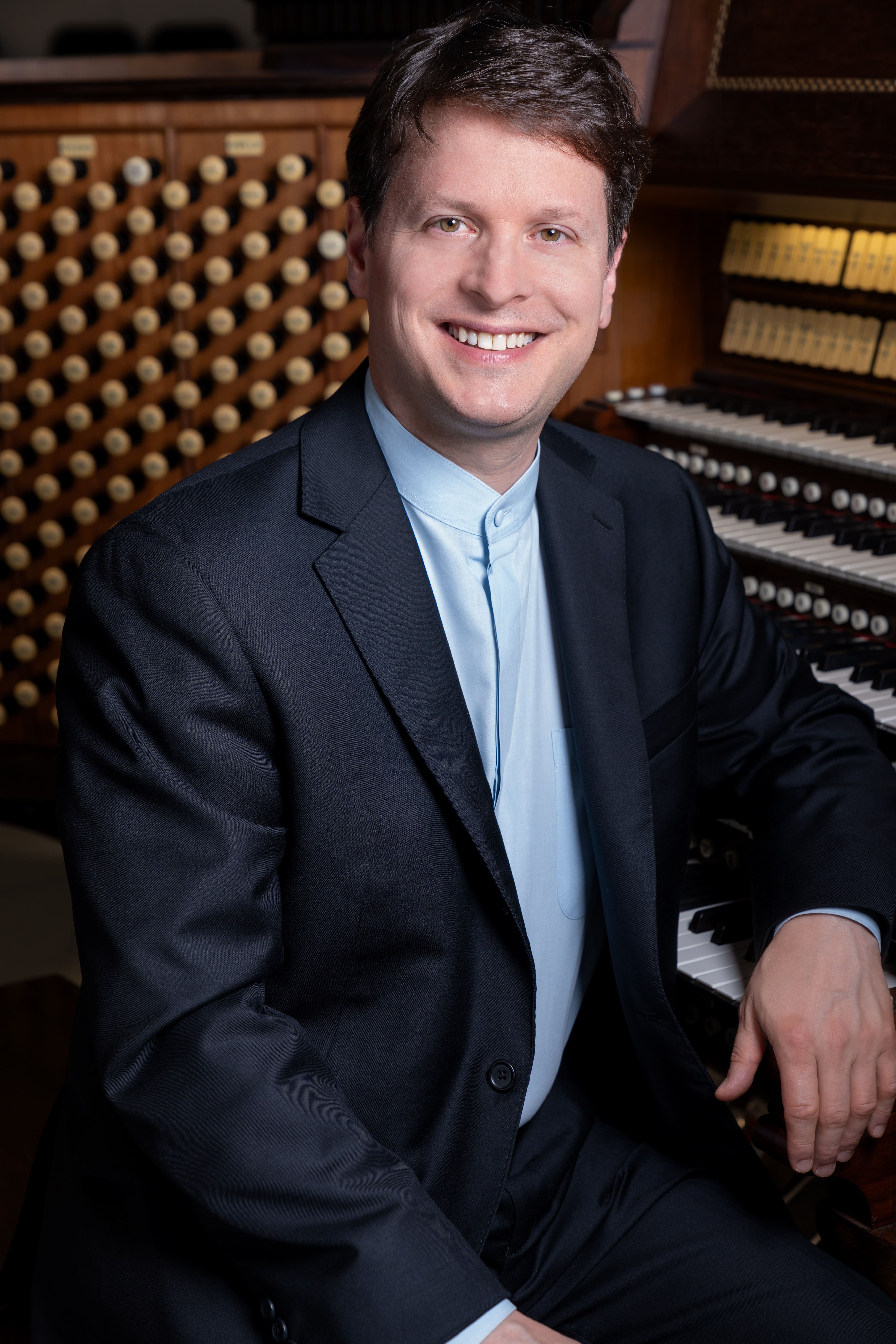 Grammy-award winning organist Paul Jacobs. (Priscilla C. Scott)
Experiencing the Power of Traditional Music With Heart
“Traditional music has an eternal charm; it is a treasure passed down from generation to generation. These works, already several centuries old, should be carried into the future. They are pinnacles of human musical achievement, and as many people as possible should experience them.” In the interview, Jacobs explained his devotion to the traditional music of Bach, Mendelssohn, and others. He believes these centuries-old works represent the brightest achievements of human civilization, worthy of being handed down through the ages.
Yet he is acutely aware of the changes of our time. Today’s audiences are accustomed to short clips on social media, seeking rapid sensory stimulation while lacking the patience to immerse themselves in longer works. “I worry that we are losing our ability to reflect,” he said, his tone calm but tinged with warning. For Jacobs, music is not merely entertainment, but a way to cultivate one’s inner life.
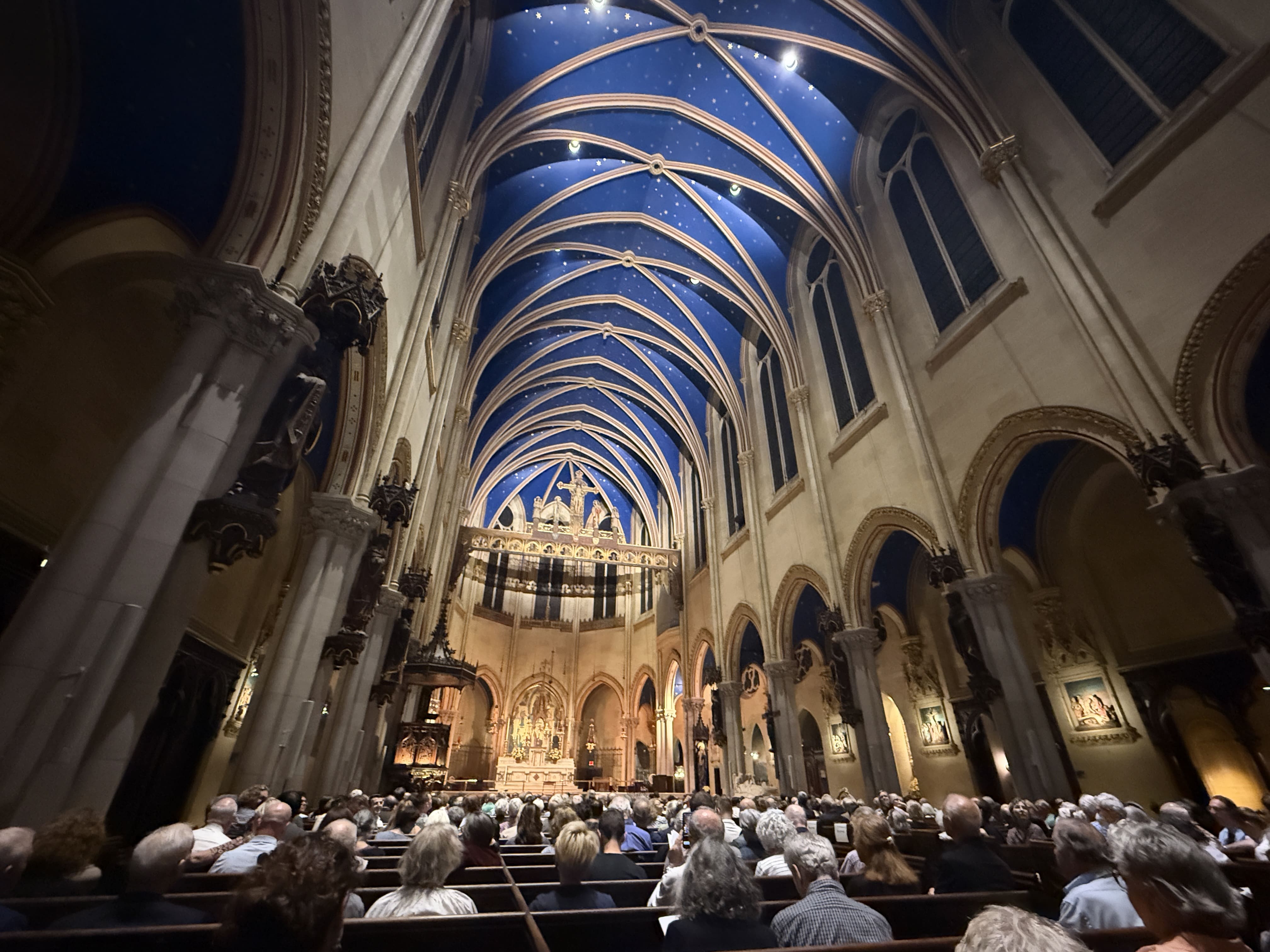 The audience had the opportunity to listen to Jacobs’s performance of Bach’s “Toccata and Fugue in D Minor.” (Jenny Zeng/The Epoch Times)
At the concert in the Church of St. Mary the Virgin, Paul Jacobs performed one of Bach’s most famous works—the “Toccata and Fugue in D minor” (listen to it here.) The piece is highly dramatic: its opening strikes like a cinematic shockwave, and the subsequent melodies unfold layer by layer, pulling the listener’s spirit along. Though it has been performed for centuries, to Jacobs each performance feels fresh and powerful, especially the fugue in the second half, which moves him deeply.
That evening’s program—whether the solemn opening “St. Anne Triple Fugue,” the majestic “Passacaglia,” or the fiery, exuberant “Prelude and Fugue in A minor”—was filled with timeless classics. Jacobs explained that while painting and architecture are great arts, once completed they remain fixed. Music, however, is different: it must be reawakened through the hands and hearts of contemporary performers to truly come alive. Recordings are precious, but they cannot replace the visceral shock and spiritual resonance of live music echoing through a space.
For this performance, he asked the audience not to applaud between pieces.
“Because of the nature of the program, and since I was hidden from view while playing, I wanted everyone simply to focus on listening to the music, and only respond after the final chord ended and the echoes had faded.”
That uninterrupted hour of performance was like a baptism: the audience fully immersed in a sea of notes, while the performer served only as a medium, allowing the spirits of Bach and Mendelssohn to speak again.
Bach’s St. John Passion is also one of Jacobs’s favorite works to experience (listen to it here). In a previous Epoch Times interview, he said:
“We often forget that ‘passion’ doesn’t merely mean ‘intense emotion,’ but, more literally, ‘suffering’ or ‘enduring.’ Bach’s music expresses just this—the intense agony of Christ for the sake of the human race. Bach transforms the pain of Christ into the beautiful medium of music, and the music gives our own lives hope.”
A Boy’s Encounter With the ‘King of Instruments’
Paul Jacobs’s musical journey did not begin in the bustling metropolis of New York, but in a small farming town in Pennsylvania. Although his family had no professional musical background, his mother noticed his talent at an early age. At the age of 4, he was already captivated by his sister’s piano lessons, sitting quietly in the corner and listening intently. Soon after, he began his own piano studies.
At 11, Jacobs first encountered the organ in a church. The massive instrument required both hands and feet to work together, and he had to grow tall enough to reach the pedals. “The organ is the most ‘physical’ of all instruments,” he recalled, “because you must also play music with your feet, which no other instrument requires.”
Although he lived in a small town, Jacobs was fortunate to meet mentors and friends. The head of the local college music department and the church organist gave him more than just technique—they passed on a deep love for music. This early inspiration set the course of his life. By the age of 15, he had been appointed chief organist at a cathedral with 3,500 parishioners, and the reputation of a “child prodigy” began to spread.
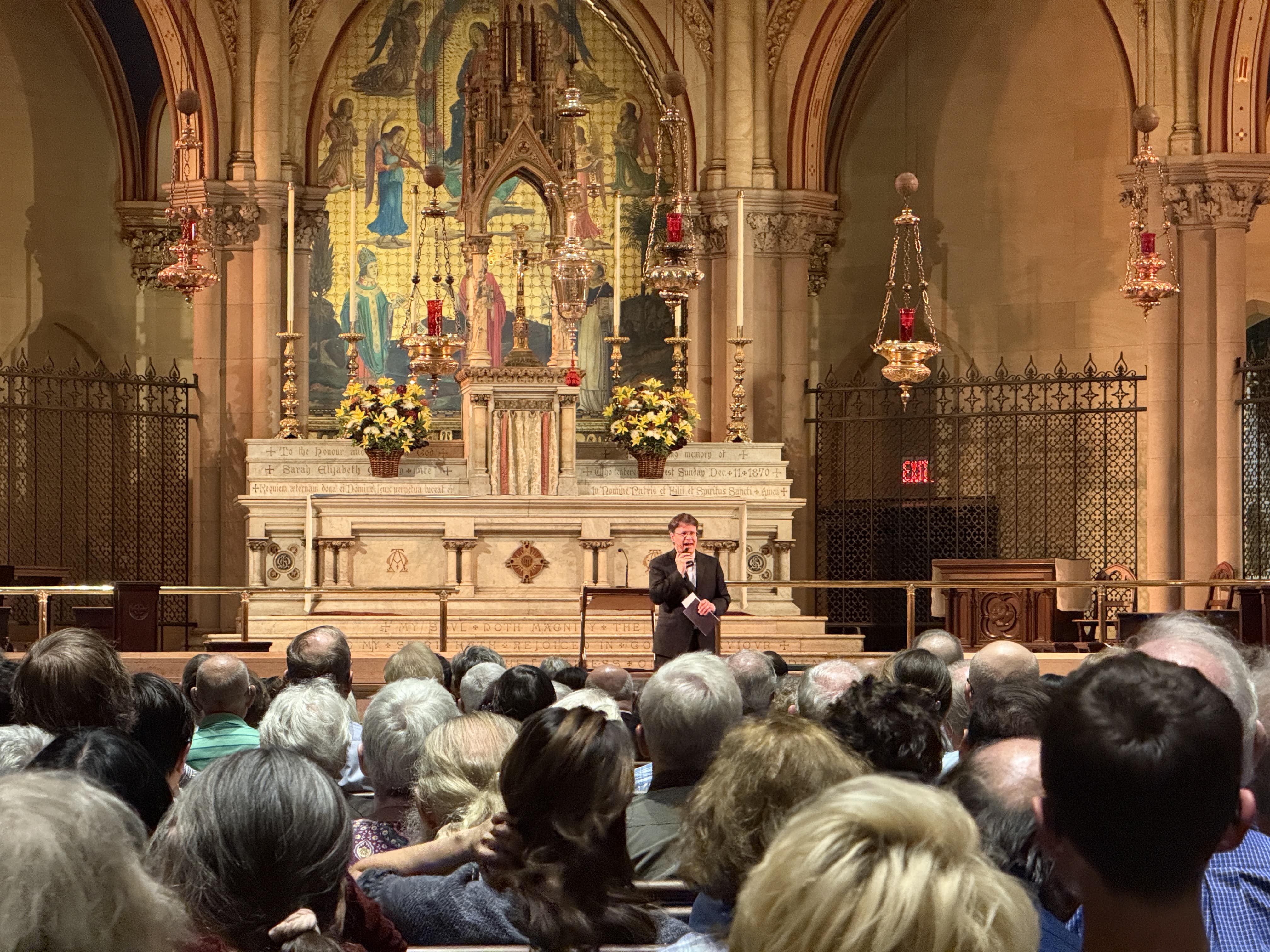 Paul Jacobs introduces Bach music before a group seated in the Church of St. Mary the Virgin in Midtown Manhattan. (Jenny Zeng/The Epoch Times)
Challenging the Eighteen-Hour Performance Limit
Jacobs’s name was truly written into music history when he was 23 years old. That year, on the 250th anniversary of Bach’s death, he undertook an 18-hour marathon performance of Bach’s complete organ works.
The performance began at six o’clock in the morning with the “St. Anne Prelude” and concluded at 12:18 a.m. the following day. Eighteen hours, hundreds of movements, countless breaths and changes of stops—he poured nearly his entire being into the keyboards and pedals.
“Exhausted, but indescribably happy,” he said. This marathon feat allowed audiences, for the first time, to experience the vast universe of Bach’s music in such a concentrated span of time. It also established Jacobs as a leading interpreter of Bach in the modern era.
Later, he became the only organist ever to win a Grammy Award. In 2011, he received the honor for his recording of Messiaen’s “Livre du Saint Sacrament” (“The Book of the Blessed Sacrament”). For him, this was not merely personal glory, but a moment when the organ itself was once again brought into the spotlight.
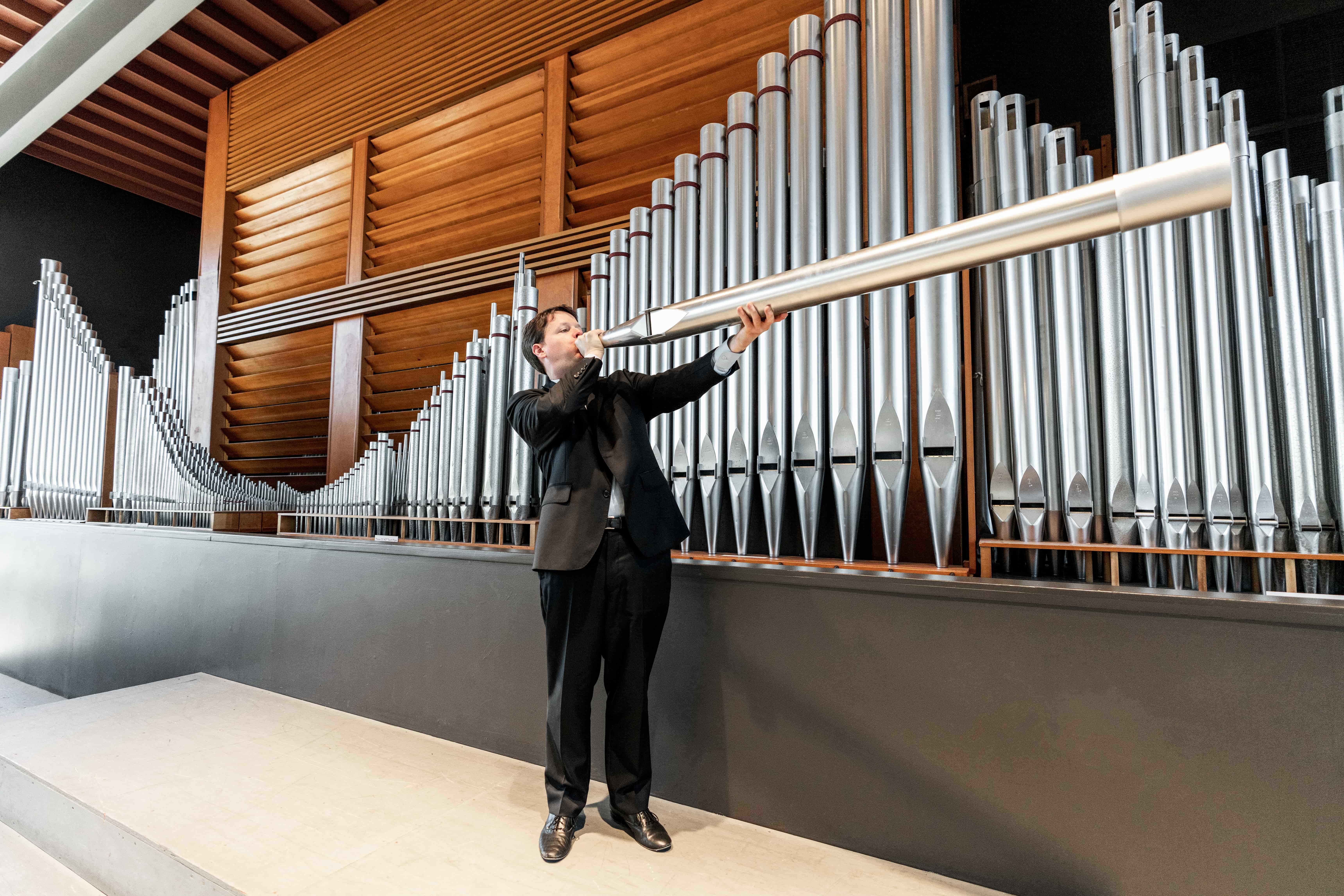 Paul Jacobs incorporates a playful spirit into his profession. (Priscilla C. Scott)
The Organ: Mysteries of the King of Instruments
Jacobs likes to compare the organ to “an invisible orchestra.” Indeed, it is one of the most complex instruments ever designed by humans, with thousands of pipes capable of producing melody, harmony, and counterpoint simultaneously, with tonal colors as varied as those of a full symphony orchestra.
“Unlike the piano, the organ has no universal standard. Each one is unique,” he explained. This means that before every performance, he must spend one to two days familiarizing himself with the instrument and setting up hundreds of tonal combinations for the repertoire—much like a chef designing a new recipe. “It’s very time-consuming, but it makes every performance a completely new experience.”
In some venues—such as his performance at the Church of St. Mary the Virgin—the audience cannot even see the performer. The sound comes from high above in the church, sometimes with a slight delay. “That’s also the challenge of being an organist,” Jacobs said with a smile. “It’s like conducting a massive orchestra.”
Why Insist on Traditional Music
In an era dominated by pop culture and fast-paced consumption on the internet, why continue to perform works written centuries ago? Jacobs’s answer was firm yet gentle: “Because this music can reach into the depths of the human spirit. It not only answers questions but also reveals the mysteries of life.”
He admitted that the classical music industry often focuses on the violin and piano while overlooking the organ. But he has never doubted the value of the instrument. Over the years, he has not only collaborated with major symphony orchestras worldwide but also trained a new generation of organists. Since 2003, he has taught at the Juilliard School, and by the following year, he had become the youngest chair in the School’s history. For over two decades, he has watched his students step out into the world, carrying this ancient art into churches, concert halls, and academies.
For Jacobs, performance is not about reproduction but about “dialogue.” When he plays a Bach fugue or a Mendelssohn prelude, what he feels is a communication across time and space. “It’s a way of encountering wiser souls,” he said. “It’s as if the composers from long ago are speaking to us, and their words still matter deeply today.”
He quoted Schumann’s maxim: “Surround yourself with those who are wiser than you.” Jacobs has also been a champion of new compositions being written for the organ, and he has collaborated with many living composers and premiered their music. For Jacobs, the organ is a bridge to such a dialogue. Music is not a static painting or sculpture, but an art that must be given life through contemporary performers. Each performance is a reunion of souls.
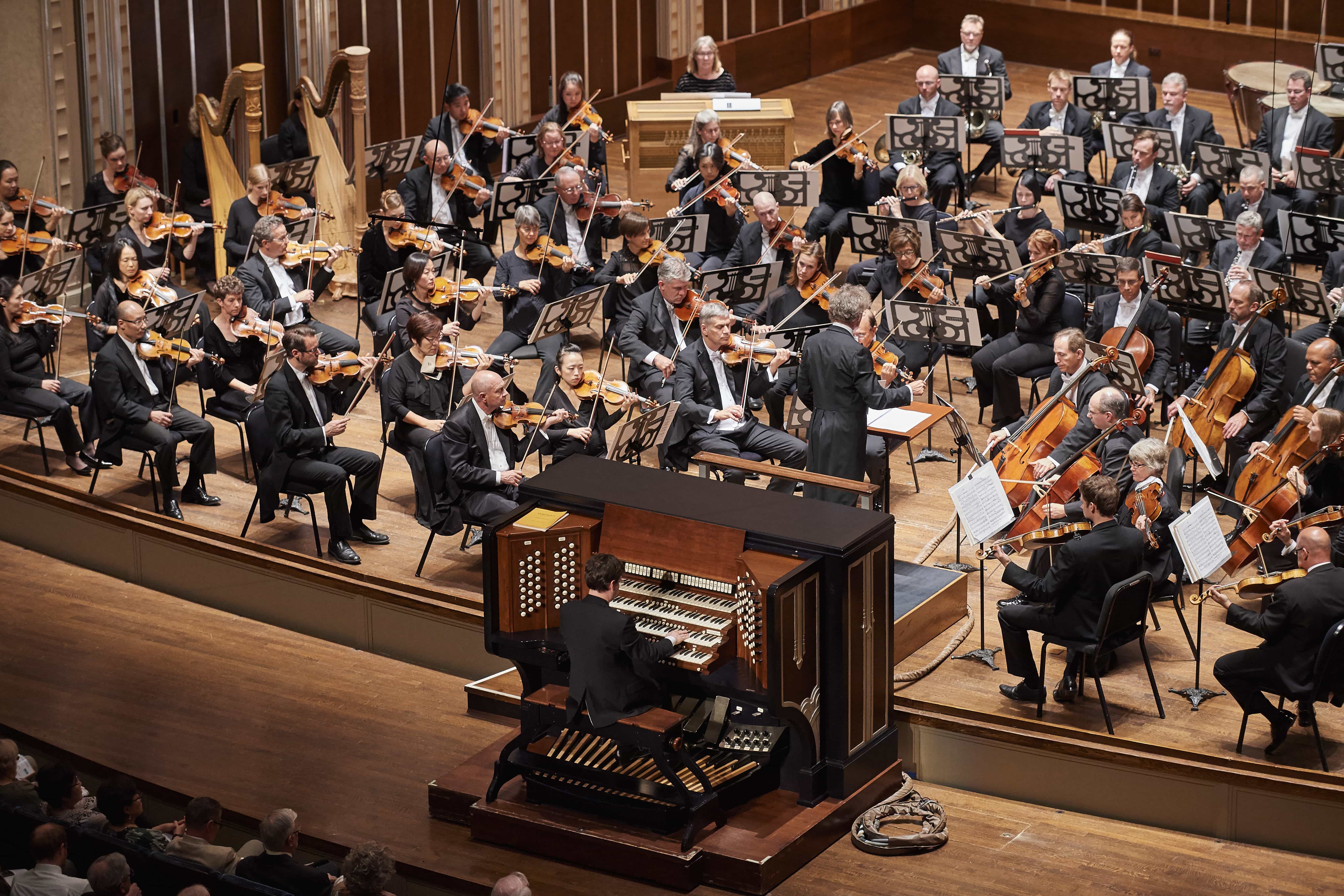 Jacobs performs with the Cleveland Orchestra. (Roger Mastroianni)
‘Music Is My Everything’
Now 48 years old, Jacobs looks back on his journey from a small town to the international stage with deep gratitude. “It is almost a miracle,” he said. Music lifted him from humble beginnings, enabling him to teach at one of New York’s top music schools, collaborate with the world’s finest orchestras, and travel across five continents to share the music he loves with countless people.
He admitted that he has never married, because music has taken up his whole life. “Music is my first love, and it is my everything.” This complete devotion may well be the reason he has become one of the most influential organists of our time.
The sound of the organ is not merely music—it is like a call from the past. Through Paul Jacobs’ playing, we connect with Bach and Mendelssohn, and also enter into dialogue with our own souls.
In this fast and noisy age, perhaps it is precisely this kind of sound that we need—one that reminds us to pause, to listen with our hearts, and to rediscover beauty and meaning that transcend time.
Paul Jacobs’s 2025-26 concerts schedule is available here.
What arts and culture topics would you like us to cover? Please email ideas or feedback to features@epochtimes.nyc