On Aug. 27, 413 B.C., Nicias noticed a lunar eclipse. A pious man, the Athenian commander-in-chief interpreted the omen as a warning to stay in Sicily, where for two years he’d been leading the biggest military campaign in Athens’s history.
The decision proved disastrous. Nicias has since been a byword for weakness and incompetence. For some, he ranks among history’s worst military generals. Yet a closer look at his career reveals consistent moral uprightness. Though inadequate for war, it made him a praiseworthy politician.
Mines, Festivals, and Politics
Nicias was born around 470 B.C. to a slave-owning aristocratic family that made most of its wealth from Athens’s silver mines. His family had ties to top politicians. The list included Pericles, a pioneering statesman who ushered Athens into its history-defining golden age.
Nicias and Pericles became close colleagues, even though Pericles’s reputation was tarnished by personal and political scandals. When Pericles died in 429 B.C., Nicias emerged as a promising successor. He stood out for his exceptional honesty, best embodied in a simple lifestyle and a refusal to take bribes.
Nicias coupled his simplicity with exemplary diligence. According to the biographer Plutarch (circa A.D. 50–A.D. 120), when Nicias “was general, he remained at the [meeting chamber] till night, and when he was councillor, he was first to reach and last to leave the council.”
Plutarch described Nicias as timid and “distrustful of success,” often preferring privacy to company and peace to war. He was also deeply religious. In the public sphere, Nicias channeled his piety through patronage. He paid for the construction and consecration of statues and shrines devoted to several Greek gods, sponsored religious festivals, and presided over communal rites, always assigning religious significance to his endeavors.
During the Festival of Delos, one of ancient Greece’s most important religious ceremonies, Nicias sponsored the formation of a “bridge” of richly adorned ships between the islands of Delos and Rineia, where he headed a large procession “arrayed in lavish splendor.”
Such opulent displays usually suggest self-serving motives. Nicias certainly knew that subsidizing public projects would boost his fame. But there’s no reason to doubt the genuineness of his faith, which remained robust throughout his life. In Plutarch’s words:
“It is clear that there was much ostentatious publicity, looking towards increase of reputation and gratification of ambition; and yet, to judge from the rest of the man’s bent and character, one might feel sure that such means of winning the favour and control of the people were rather a corollary to his reverent piety.”
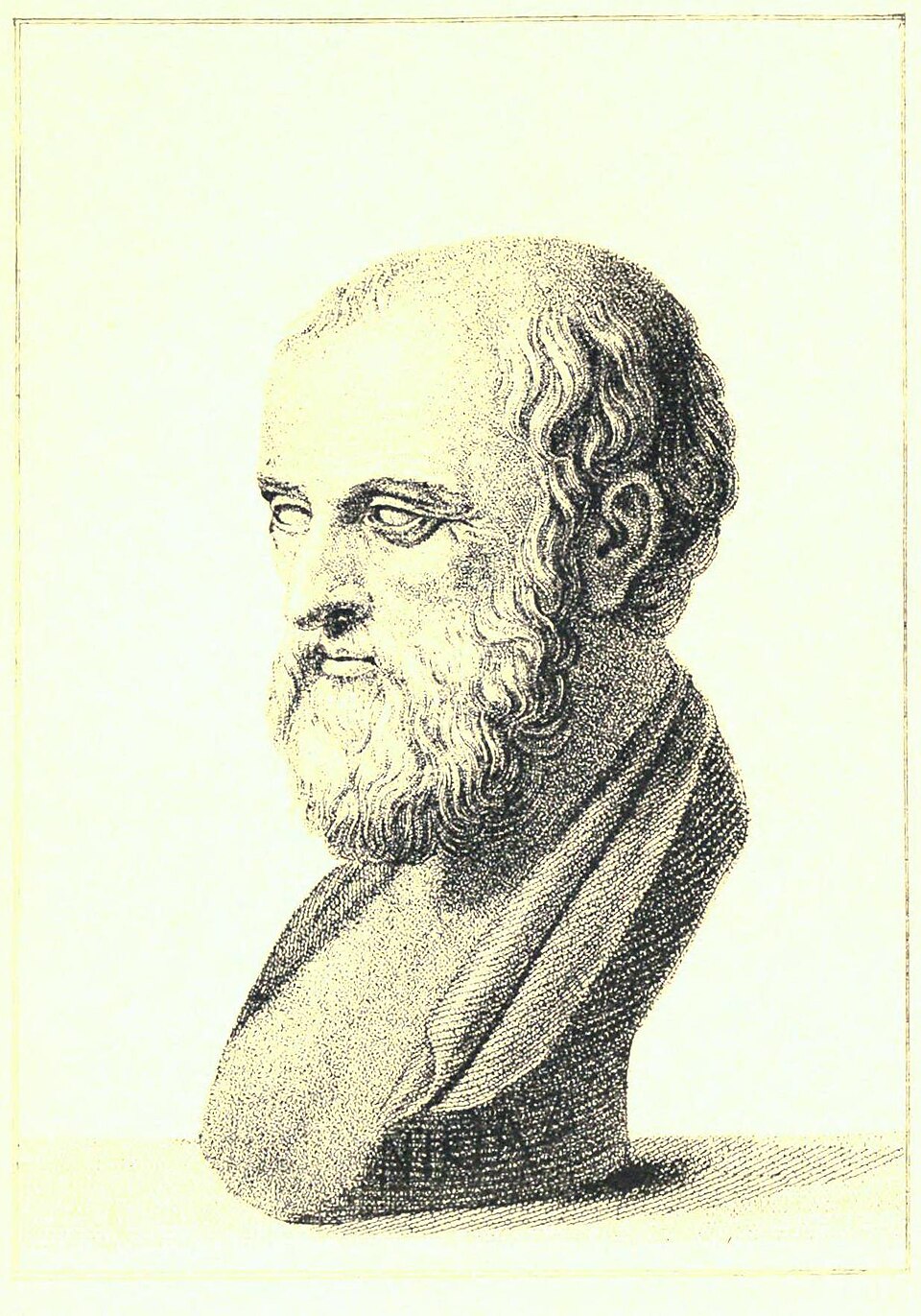 A bust of Nicias from a 1906 book on famous orators. (Public Domain)
The ‘Peace of Nicias’
In the international arena, Nicias rose to fame during peace negotiations between Athens and Sparta. By 421 B.C., the two city states had been at war for over 10 years. The Peloponnesian War, which began under Pericles’s rule, engulfed virtually all of Greece.
Moved by a decade of military and economic hardship, the warring factions decided to negotiate a ceasefire. Athens selected Nicias as chief diplomat. He was largely responsible for establishing a promising peace treaty, which became known as the “Peace of Nicias.” According to Plutarch, the treaty made Nicias stand out as a pacifistic voice amid a widespread bias towards war. He became a household celebrity; people praised him as “a man beloved of God” for his role in ensuring what they hoped would be lasting peace.
Yet peace didn’t last. The stipulated 50-year truce only lasted three, during which ploys and skirmishes persisted. Sparta didn’t fully comply, various city states protested alleged prejudices against them, and some of Athens’s more belligerent politicians continued to undermine their foreign competitors.
To some, the treaty’s failure reflected Nicias’s incompetence, though the factors at play were too numerous to identify a single culprit. The same couldn’t be said of the Sicilian Expedition, where Nicias’s leadership played an even more crucial role.
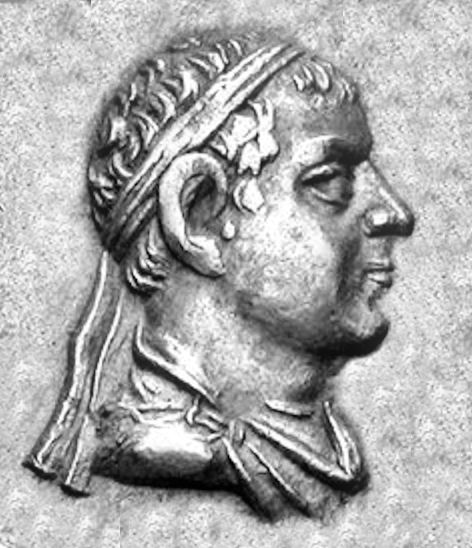 Nicias, as portrayed on a coin. (CNG Group/CC BY-SA 3.0)
The Sicilian Expedition
In 415 B.C., the Athenians decided to send a colossal fleet to Syracuse, which controlled eastern Sicily. The decision followed tense debates in Athens’s general assembly. The most vocal advocate for the “Sicilian Expedition” was Alcibiades, a rogue, youthful politician with a murky reputation. He’d been appointed to lead the campaign alongside two other men: Lamachus, an experienced but unremarkable military officer, and Nicias, who was at least 55.
Nicias didn’t want the assignment, which he judged foolish and overly ambitious. His reservations were detailed by the Athenian Thucydides (circa 460 B.C.–400 B.C.), a historian and politician who knew Nicias and participated in the war. Thucydides occasionally embellished his factual account of the war with speeches that, in his words, adhered “as closely as possible to the general sense of what [someone] really said.”
In the first of two speeches against the expedition, Nicias urged his fellow Athenians to refrain from biting off more than they could chew. Domestic conflicts were far from over. Athens had also just recovered from a plague, and food supplies were dwindling. As Nicias allegedly put it, Athens shouldn’t “be persuaded by foreigners into undertaking a war with which [it had] nothing to do.”
Without naming Alcibiades, Nicias advised the general assembly to guard themselves against self-serving players:
“if there be any man here, overjoyed at being chosen to command, who urges you to make the expedition, merely for ends of his own … do not allow him to maintain his private splendor at his country’s risk, but remember that such people injure the public fortune while they squander their own.”
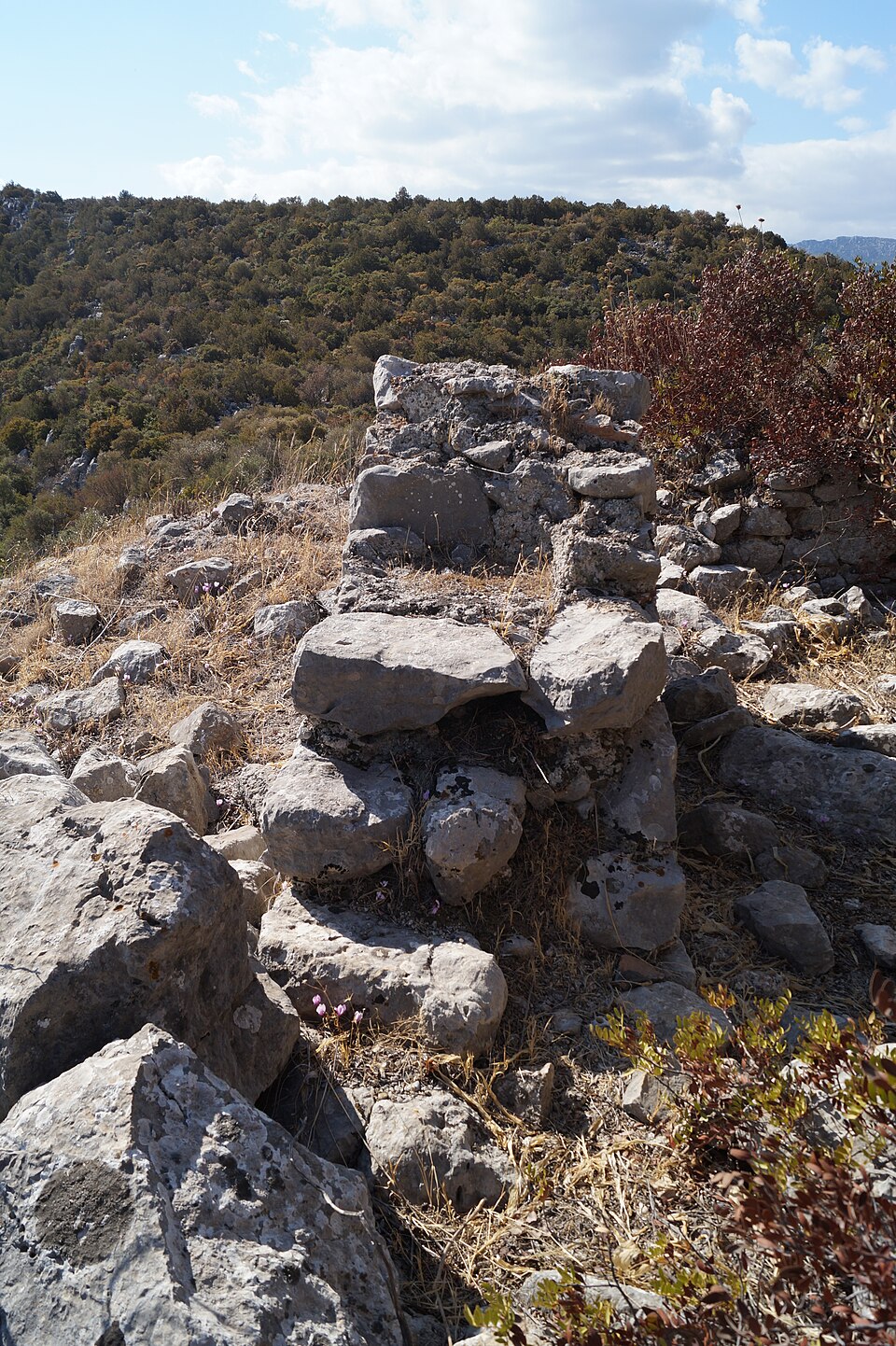 The Wall of Nicias, which Nicias had constructed during his military campaigns. (Schuppi/CC BY-SA 4.0)
Nicias’s rhetoric confirmed his reputation as a cautious, middle-of-the-road politician who preferred safety to conflict. Yet his speeches failed. Sicily was too compelling a potential prize, and Alcibiades too charismatic a figure for the young Athenian army to resist his shameless imperialism. Fueled by the prospect of domination, Athens set sail.
Nicias could have protested more adamantly. Although it was uncommon for a military chief to willingly withdraw from his post, it wasn’t impossible. Yet he chose to obey. He knew that victory would earn him immense glory. But he was also motivated by love for Athens and respect for its customs, which demanded that he assume control of the army, regardless of his personal preference. His patriotic love became more apparent as the campaign took a catastrophic turn.
Delay and Defeat
At first, the expedition went in Athens’s favor. Its formidable fleet secured several victories as Nicias spearheaded efforts to cut off Syracuse’s supplies.
But the tide turned quickly. Unable to bypass Syracuse’s defenses, Nicias loosened pressure, choosing caution even though a full-scale assault would’ve likely occasioned Athens’s victory. Meanwhile, Syracuse called for help from the Spartans. By now, Alcibiades had defected to Sparta, where he revealed Athens’s plans in exchange for immunity. Lamachus had been killed, leaving Nicias as the sole commander of the Athenian forces.
Once reinforcements joined Syracuse, Athens began suffering one loss after another. Nicias called for help as well. But it was too late.
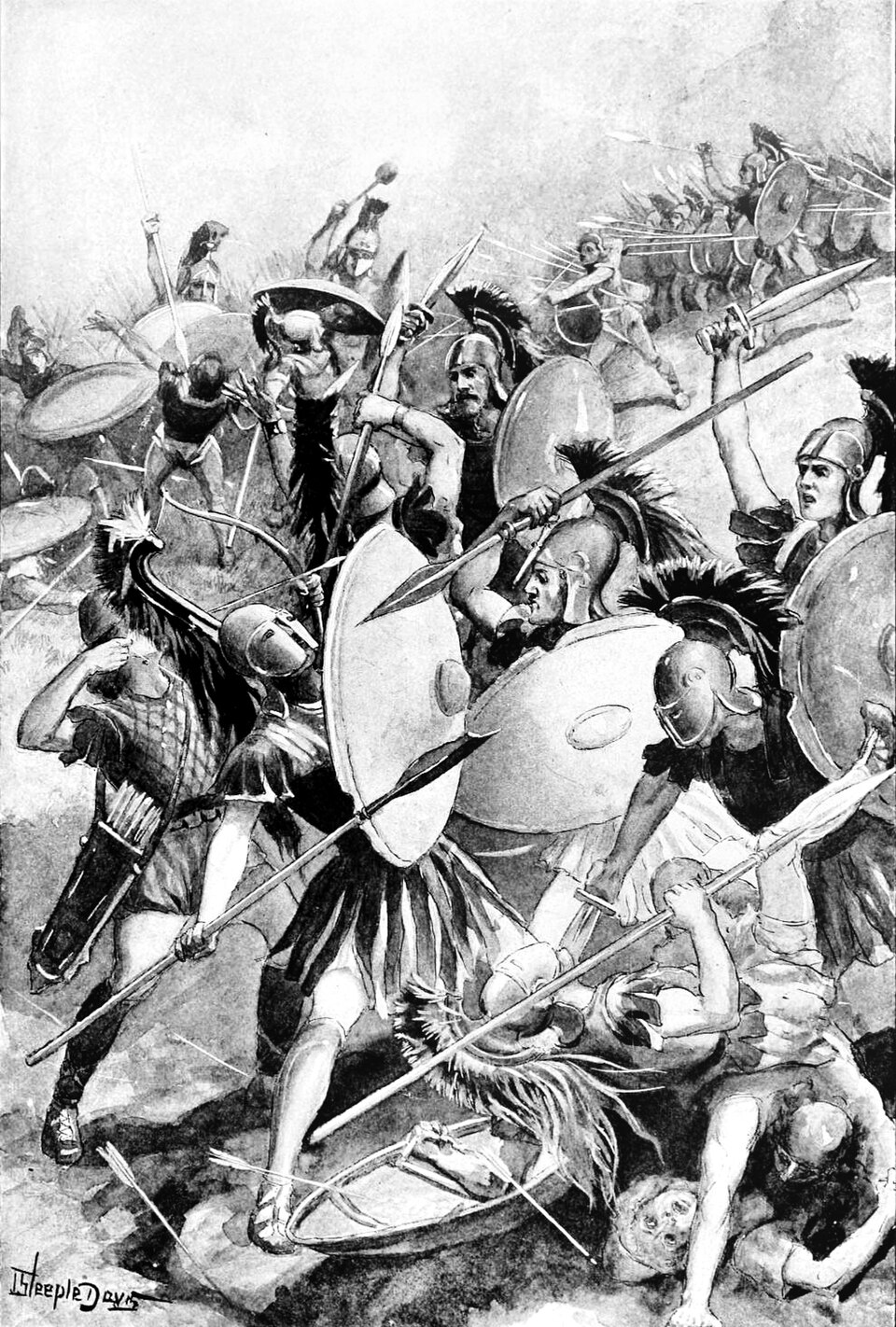 A depiction of the destruction of the Athenian army at Syracuse, from a 1900 history book. (Public Domain)
On Aug. 27, 413 B.C., after almost two years from the Athenians’ departure, a lunar eclipse shone on Sicily’s war-scarred shores. After interpreting the event as a bad omen, Nicias decided to delay a retreat that would have saved most of his army. The Athenian fleet was docked in Syracuse’s bay. A few days after the eclipse, the Syracusans blocked the bay’s narrow entryway. The only way out was a full-scale naval battle.
The clash that ensued marked one of Athens’s worst defeats in history. Nicias had stayed on land to spur his troops with emotional speeches despite a debilitating kidney infection. He coolly imparted instructions and appealed to his soldiers and sailors’ inner strength, reminding them that they were fighting for their homes, wives, and children, and that “Men make the city and not walls or ships.”
After a desperate land retreat, the Athenian troops were imprisoned, and Nicias was executed. The news shocked Athens. As Plutarch put it in the last sentence of “Life of Nicias,” “So hard was it for the Athenians to believe that Nicias had suffered the fate which he had often foretold to them.”
Nicias’s Virtues
Nicias was no military leader. His excessive caution cost Athens incredible losses. Even he attributed most of his early career’s military successes to luck and divine protection. He also wasn’t a gifted public speaker. Before crowds, his rhetoric failed more often than not; he was not much shrewder behind closed doors.
 Possibly Polygnotus and Nicias facing each other, by David Humbert de Superville. (Mr.Nostalgic/CC BY 4.0)
Yet Nicias’s life demonstrated a consistent devotion to his homeland’s safety and success, best exemplified in his staunch opposition to the Sicilian Expedition, and his readiness to obey the will of Athens’s democratic majority, even when it diverged from his own. He chose to be Athens’s full-time public servant and was ready to sacrifice all for the city. His uncompromising piety ultimately proved deadly. But before that fatal day, it had been a source of inspiration and moral uprightness for thousands of Athenians, as were his efforts to stop the war.
Failures notwithstanding, Nicias’s pious patriotism is noteworthy, not least because it raises timely questions about what traits might best suit a leader to win in times of war or to rule in times of peace.
What arts and culture topics would you like us to cover? Please email ideas or feedback to features@epochtimes.nyc