



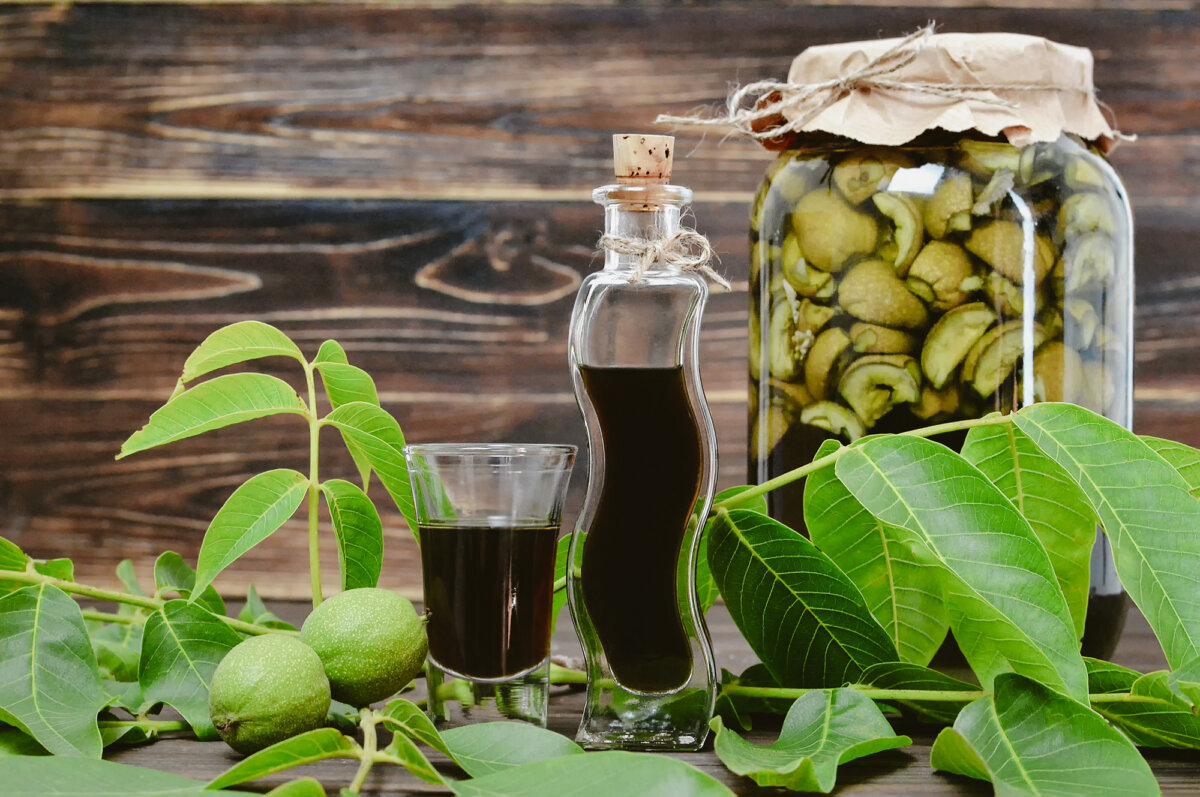
In many parts of the United States, you’re likely to find some sort of walnut tree. Several species are indigenous to North America, and they seem especially ubiquitous in the Midwest and East Coast.
The variety in the grocery store is the English or Persian walnut—a softer-shelled walnut with a milder taste. But someone with a black walnut tree is unlikely to harvest the nuts because it takes enormous effort to get them open and their flavor is stronger and less delicate.
But what if you could use them to make a nutty liqueur that doesn’t require getting through the nut’s armor-like shell? It turns out the unripe walnut is the key. When I saw an Instagram reel by foraging mixologist Danny Childs showing how easy the process is, I had to try it myself.
Danny Childs trained as an ethnobotanist in South America and creates beverages made with foraged and locally—often personally—grown ingredients. He is the author of the James Beard Award-winning book “Slow Drinks” and founder of a company by the same name that offers business consulting, workshops, and even pop-up events.
Childs started making nocino about eight years ago when a forager friend turned him on to the idea. What started out as a trial batch has become an annual production of more than 20 gallons.
From the Celts to Your Yard
According to Childs, Roman soldiers learned the practice from the Celtic Pict tribe of Eastern Scotland, who would harvest walnuts around the summer solstice and soak them in alcohol to make a dark, flavorful liqueur. The Picts believed the elixir had magical powers. The Romans adopted the practice.
“According to ancient lore,” Childs wrote in an Instagram post, “Romans would send an odd number of barefooted virgins into the trees each year on the night between June 23 and June 24 to collect the walnuts.” The resulting infusion was kept for winter solstice activities.
Years later, as Christianity dominated the culture, the Church co-opted some pagan rituals. Rather than harvesting walnuts on the summer solstice, the activity became associated with the similarly scheduled Feast of St. John, and the drink likewise was enjoyed during Christmas around the winter solstice.
Today in Italy, it’s known as nocino (pronounced “no-CHEE-no”). Over the border in France, it’s liqueur de noix.
Hunting and Gathering
In Europe, the preferred walnut variety is Juglans regia, which is also known as English, Persian, or common. In the United States, Juglans nigra, the black walnut, is king. White walnut and varieties such as Texas, California, and Arizona will also serve.
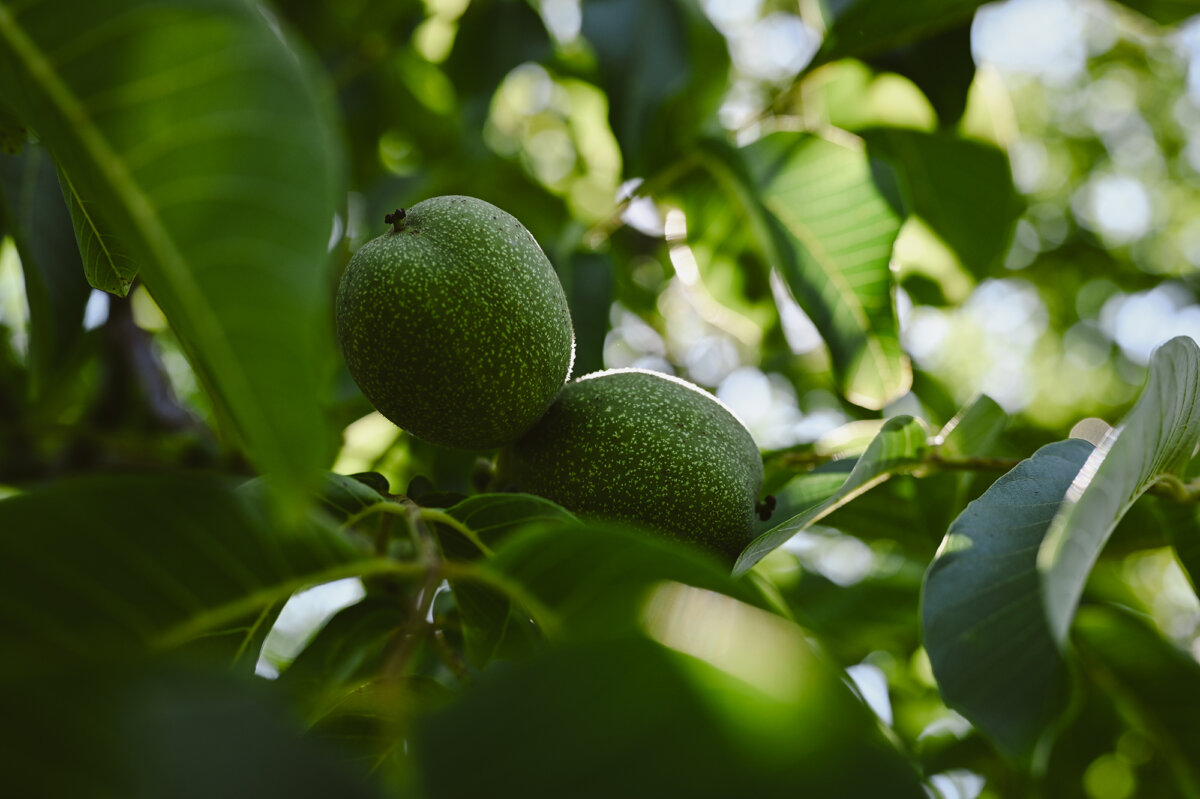
In its early stages, the black walnut is roughly the size of a lime. Its green color and citrusy skin don’t make it appear particularly appetizing. But this is what you’re searching for.
If you ask a nonna in Italy, she may tell you that the time to harvest the unripe walnuts is the Feast of St. John, June 24. But this is not science. If your nonna lives in Climate Zone 3 in northern Wisconsin or Zone 7 in North Carolina, you may need to follow a different saint depending on how your seasons vary. Better still, listen to the walnuts themselves: The nuts should be just soft enough that you can cut through them easily with a knife, because the hard shell—a brown layer beginning to appear just beneath the green flesh—hasn’t formed yet.
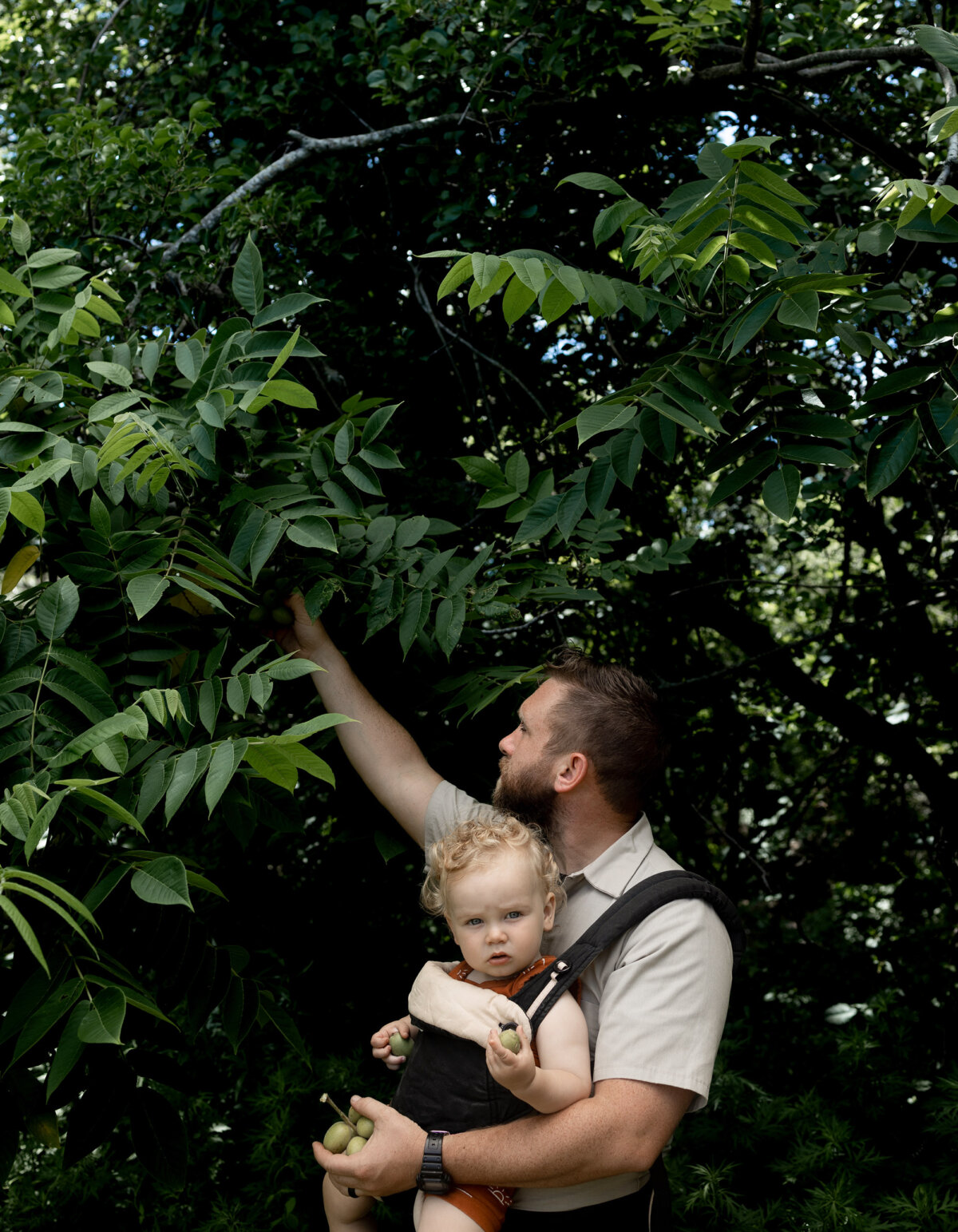
“I pick my black walnuts on the running trail in the town where I live in suburban New Jersey,” Childs said, “attracting weird looks from joggers in the process.” He also finds the less common white walnuts—also known as butternuts for their softer, creamier flavor—along the edge of a parking lot in a corporate office park.
I foraged mine from a city park right across the street from my home in Madison, and while there were no barefooted virgins, I can confirm the weird looks. The last time I gathered so many of these hard, green, citrusy nuts, I was just one of the neighbor kids using them to pummel each other in the backyard. Childs noted that they are also good baseball substitutes.
Processing Walnuts
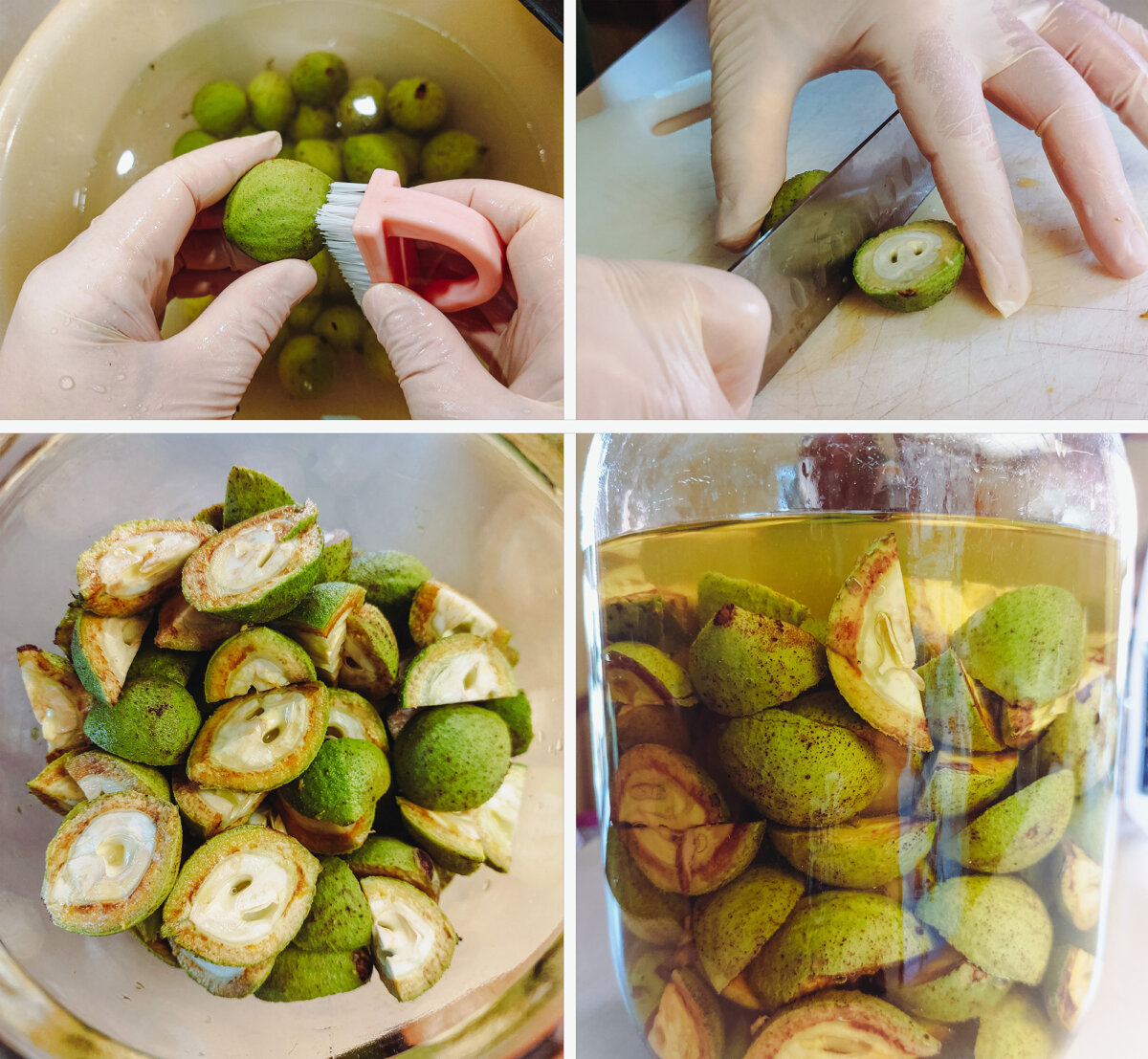
After giving the nuts a good washing, I used a sharp knife and cutting board to halve or quarter them, tossing the lot of them into a repurposed two-gallon glass jar (it once held a disturbing amount of pickled herring, my grandmother’s favorite!). The green nuts and their juices can stain, so don’t get it on your hands, clothing, or certain countertops. (In fact, one of Childs’s foraging friends makes an ink out of the liquid.) Use rubber gloves when handling them.
The liquid seeping out of the walnuts was clear and had a faint yellow tint to it. But by the next day, my jar of early-stage nocino had oxidized to become the color of coffee.
The nuts need to be covered with grain alcohol diluted with water to 50–80 proof (25–40 percent ABV). You can use this online alcohol dilution calculator to do the math for you. After the batch ages for several months, you filter out the walnuts.
In Italy, nocino is often served as an after-meal digestif, and some home and commercial recipes include various spices such as cinnamon, orange peel, cloves, or vanilla beans. In fact, Italian digestifs in general often include 30-plus secret ingredients, but these ingredients can dominate the mix. A few too many cloves will leave you with a clove liqueur. Childs insists on keeping it straightforward. While he does use Angostura bitters, which itself contains more than 40 ingredients, he doesn’t overdo it. “I like the walnut liqueur to taste like walnuts,” he said. He often uses his nocino as a cocktail ingredient, so if he wants to adjust the flavor, he can do so by altering the other cocktail ingredients.
Don’t try to sample the nocino before its time—the walnuts contain tannins, which initially make the mix rather bitter. Over months, however, the tannins mellow and the walnut flavor strengthens. The addition of sugars will round the bitterness off even more.
Bottle it up and sip it plain or use it in a cocktail. Childs likes a Black Walnut Old Fashioned, made with 2 1/2 ounces of bourbon, three-quarters of an ounce of nocino, a half ounce of demerara syrup, and a dash each of orange and Angostura bitters. Stirred with ice and served over ice in a rocks glass, it’s a solstice celebration of your walnut tree.
Walnut Nocino
Makes approximately 2 1/4 quarts (2.13 liters)
- 2 quarts (1.9 liters) young black walnuts, butternuts, or any other walnut species
- 151-proof grain spirit, for topping
- 3 1/2 cups (830 milliliters) water
- 1 1/2 cups (360 milliliters) rich demerara syrup
- 1 ounce (30 milliliters) Angostura bitters
Harvest black walnuts on or around June 24, before the shells have hardened and the immature walnuts can easily be cut with a knife. Cut them in half, place them in a 2-quart or 2-liter mason jar, cover them with 151-proof grain spirit, and allow them to macerate at room temperature for approximately 5 months.
In late November, strain out the walnuts and reserve the liquid. It should yield about 4 cups (950 milliliters). To this, add the water, demerara syrup, and bitters. Store at room temperature and allow to sit for an additional month for the volatile compounds to subside, yielding a smooth, spiced flavor that will continue to improve and mellow with time.
Nocino will keep indefinitely at room temperature.
Recipe from “Slow Drinks: A Field Guide to Foraging and Fermenting Seasonal Sodas, Botanical Cocktails, Homemade Wines, and More” by Danny Childs. Follow Danny Childs on Instagram at @slowdrinks.
