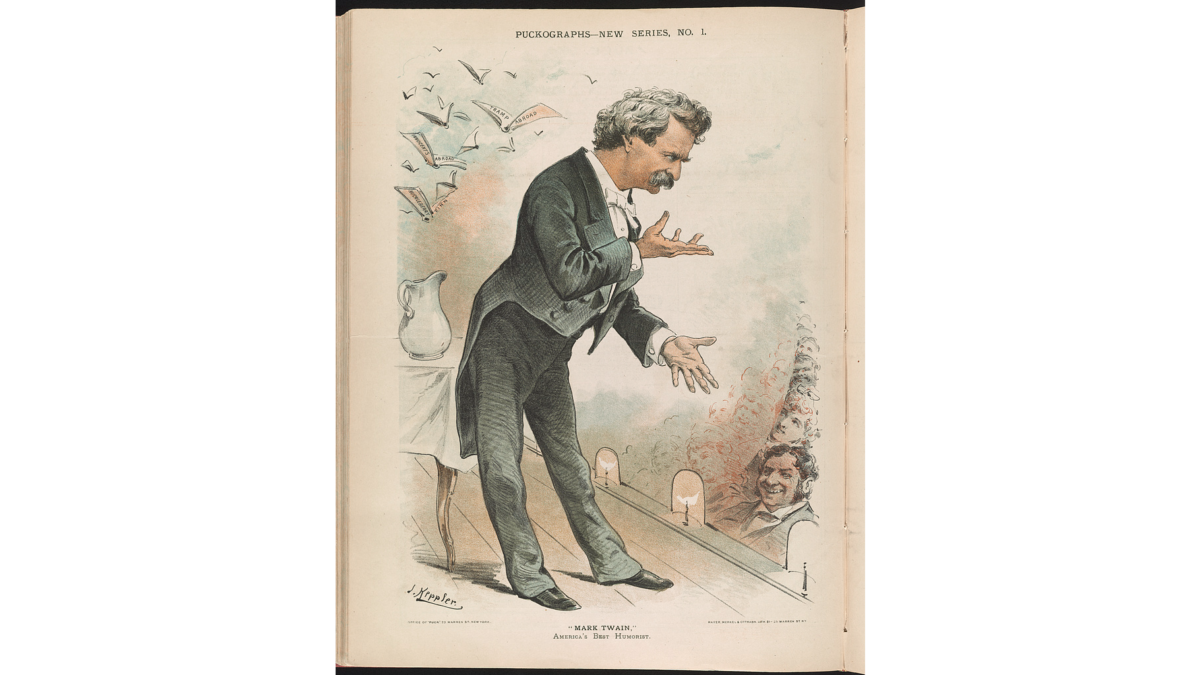
In his short story “How the Author was Sold in Newark,” Mark Twain contemplates one of his lectures that didn’t go as planned. During this particularly humiliating lecture, he learned that wisdom is a virtue that should always be sought. However, it often can’t be obtained without attentiveness to surroundings and knowledge of the whole truth.
A Scheduled Lecture
Twain states that he must make a confession. This particular confession will serve as a balm to his wounded self, even though, he confesses, “I don’t know what balm is, but I believe it is the correct expression to use in this connection—never having seen any balm.” Regardless, he wishes to confess a rather unpleasant event that left him rather embarrassed, so that he can heal himself and criticize the young man who brought it all upon him.
It began with a scheduled lecture. Twain was scheduled to speak in front of a society for young men on a specific day and, in the afternoon of that specific day, he had the chance to meet one of the young men from the society.
During their conversation, the young man explained that he had an uncle who never laughed or cried anymore. This tragedy weighed sorely upon the young man and his family; all they wanted was for their uncle to cry or laugh. The young man himself cries, saying: “Oh, if I could only see him laugh once more! Oh, if I could only see him weep!”
Touched by this emotional display, Twain tells the youth to bring his uncle to the lecture, promising that he can move the uncle. The youth overflows with gratitude, but Twain merely reassures him: “I have got some jokes in that lecture that will make him laugh if there is any laugh in him; and if they miss fire, I have got some others that will make him cry or kill him.”
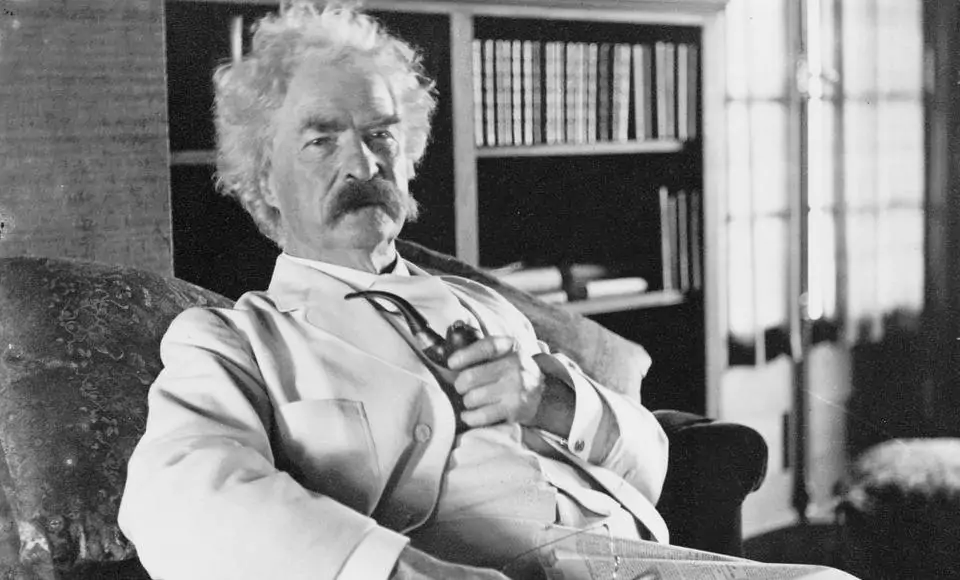 Mark Twain in Naples, Italy. (Public Domain)
Not Wise Yet
Later, Twain arrived at the lecture and, seeing the uncle in the audience, prepares his best to elicit any amount of emotion from the old man. He began with more milder jokes, then, when those didn’t work, he proceeded to more severe ones. Still, the old man didn’t respond.
Twain continued on, throwing quips and jokes from all sides. He strained, exerting all his energy until he began sweating and losing his voice. Despite the wittiness or severity of his jokes, the old man remained stoic.
Finally, Twain gave one last, grand effort and produced “one wild burst of humor, and hurled a joke of supernatural atrocity full at him!” Having finished, the president of the society approached Twain and wondered aloud why he would carry on so wildly.
Through this story, Twain comically demonstrates that, if he had been more attentive or had asked the youth more questions, he would have been spared the embarrassment. For, without the full truth of the situation, Twain failed to properly deal with it.
Thus, Twain exclaims with Jane Austen in “Persuasion”: “[He] hoped to be wise and reasonable in time; but alas! Alas! [He] must confess to [himself] that [he] was not wise yet.” He admits his mistake, as well as the youth’s mistake, but he does so with comedic flair and a laugh. He shows that a comedic outlook and a proper laugh are the tonic that cures any blindness, deafness, or folly. Laughter will eventually lead to wisdom, but not yet.
What arts and culture topics would you like us to cover? Please email ideas or feedback to features@epochtimes.nyc