



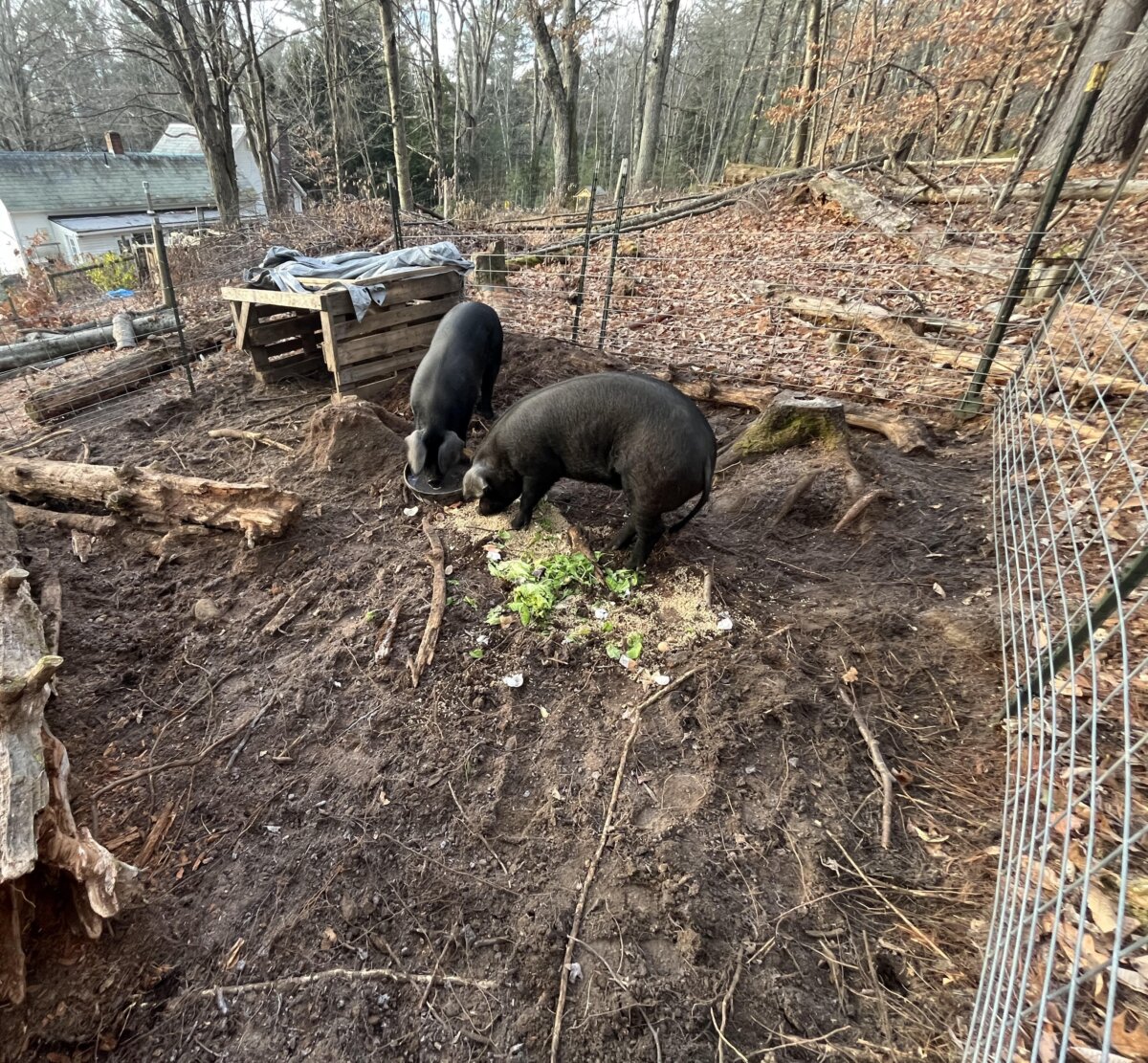
From June 2025 to January 2026, the most common text exchange between my wife and me was, “The pigs are out!”
Once that text came in, a routine would begin: boots on, orange bucket filled with water or feed, going outside and yelling to pigs, pigs following bucket back to pen, pigs eating or drinking while the busted part of the pen gets fixed. I’ve excluded the cussing for political reasons.
Stewarding pigs was an adventure we were woefully unprepared for. Having raised and butchered meat chickens two summers before, we thought that the next logical step in our meat-raising journey would be pigs. We contacted a nearby farm and got on its spring farrowing list for two pigs, each a Large Black/Duroc cross. Large Blacks are a heritage breed from England, known for their enormous size and mild temperament. Durocs are a sturdy American breed with high-quality meat. It seemed like an ideal match, and we were excited to welcome the hogs to our homestead.
Although late farrowing pushed our purchase off from April to June, we still had to rush to build their first pen. Within weeks the pigs outgrew it and spent their time either churning it into a mucky mess or escaping. Despite knowing that we needed to move them to a larger area, we spent weeks trying to hold their makeshift pen together with an increasing number of desperate tactics, including rocks, zip ties, and an old chicken coop door. Eventually, though, we got them into the quarter-acre of woods we’d cleared the previous winter, which is where we wanted them in the first place.
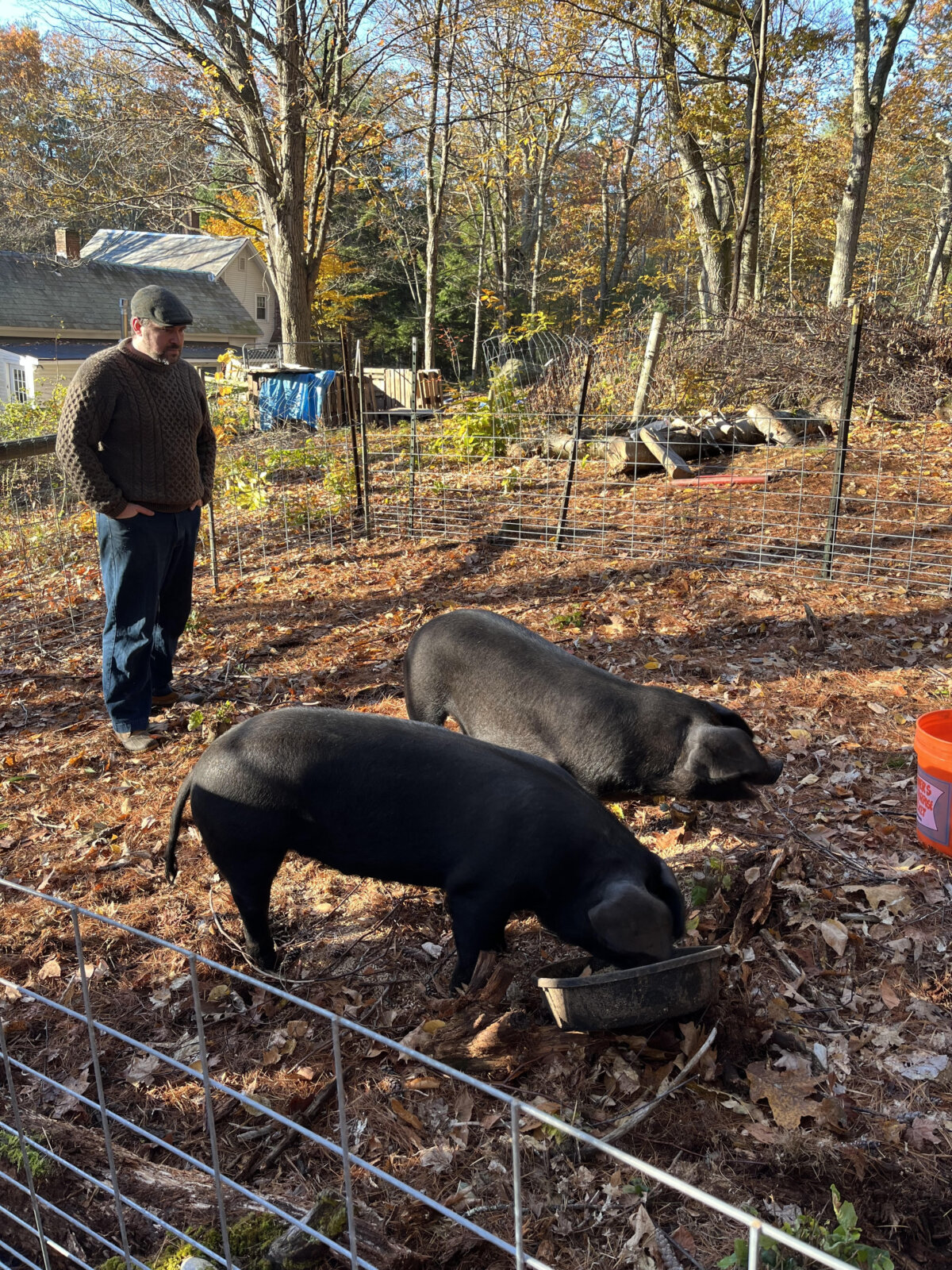
Aside from the promise of bacon and pulled pork, we wanted the pigs in the woods to clear away the dead logs and overgrowth. Pigs are natural rototillers. They use their tough noses to dig up a patch of earth faster than you could with a shovel. This disturbance wakes up the latent seed bank of native grasses that exists far below the forest growth. What follows should be a healthy pasture.
Although they’d moved to a larger pen and had plenty of natural fodder for entertainment, the draw of the deep woods beyond the fence proved irresistible for the pigs. In the final few weeks of their lives, Bacon and Christmas Ham (as we’d taken to calling them) would escape on a daily basis. We were usually able to lure them back via the aforementioned routine. However, there were times when they just did not want to go back and would instead get down by the road, venture too close to our neighbors’ yard, or bust into our new chicken run and terrorize the birds.
The day before they were scheduled to be butchered, Bacon and Christmas Ham made a last-ditch escape effort. We were moving their pen closer to the driveway, where the butcher could easily collect them. Perhaps sensing that this was their last chance to explore the woods, they made a break for it. We chased them all around our property for more than an hour. They even said hello to our astonished mailman as he came up the driveway to deliver a package. Finally, the promise of the feed bucket combined with general exhaustion got them into their pen.
The next day, they had their appointment with our mobile butcher, Doug. That day came with a weight. The pigs had far more personality than the chickens, and for all the aggravation of their escapades, they were genuinely enjoyable. I loved the way they’d scratch their butts against an old tree stump, or how they’d greet me in the morning with their trademark grunts, or how they’d emerge from their shelter in a billow of steam on a frigid morning.
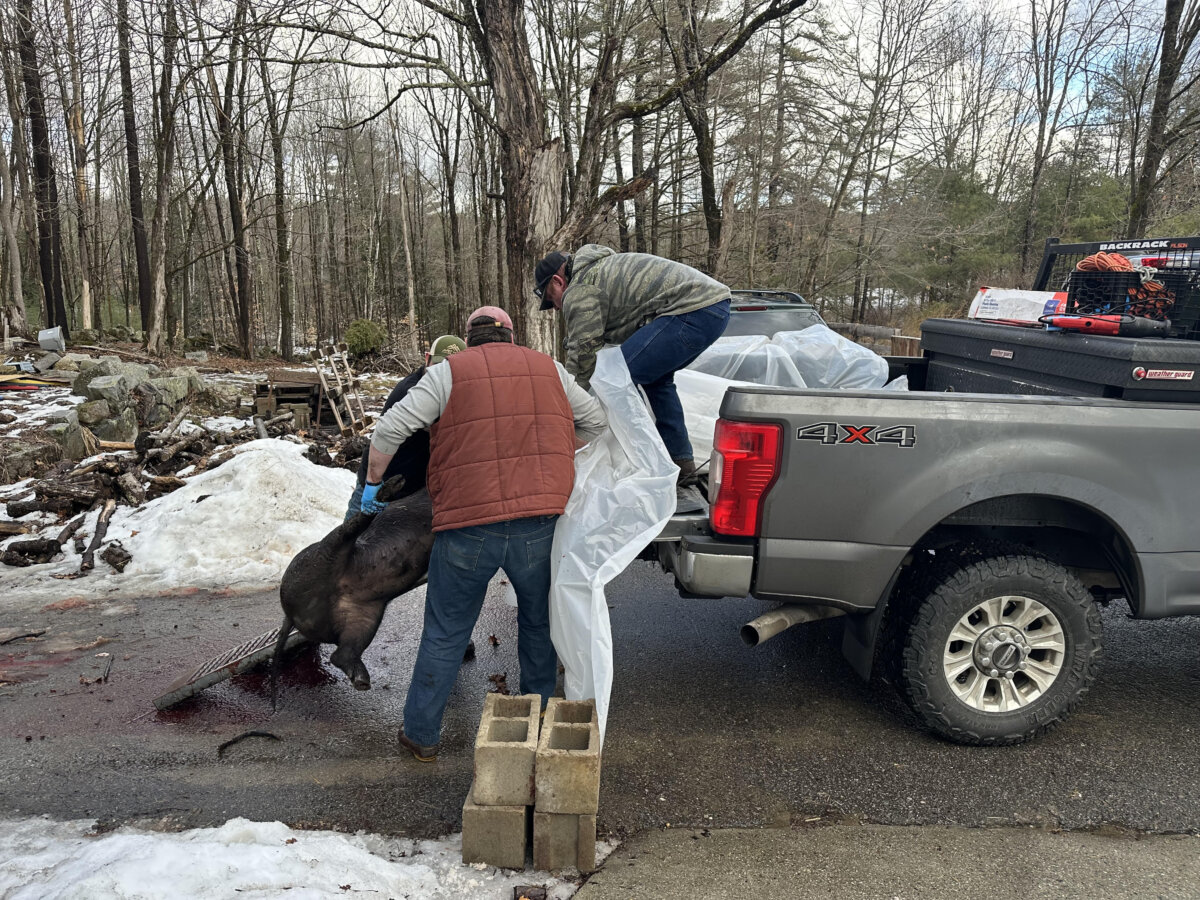
But they were never here to stay, and we knew that. They’d accomplished their job of clearing the woodland, and now they were going to serve our family as food. And no amount of protesting that I would never get pigs again could compare with the flavor we experienced when we took our first bite of homegrown pork a week later.
If you’ve ever heard the word “terroir” used when describing a wine, know that it means the “flavor of the surrounding environment.” I’ve never been able to taste it in a pinot noir, but when the notes of pine, earth, and iron came bursting through that bite of meat, I knew that no other pork in the world tasted like this. This was our pork, something we grew here on Owl Hill. That alone is enough to make me want to get pigs again next summer.
Notes from Owl Hill is a homesteading column written by longtime Epoch Times lifestyle and features writer Ryan Cashman. Follow along as he and his family tap maple trees, plant gardens, tends to a growing flock of sheep, fix up their historic farmhouse, and ruminate on the challenges and rewards of homesteading on a small, rocky hillside in rural New Hampshire.
