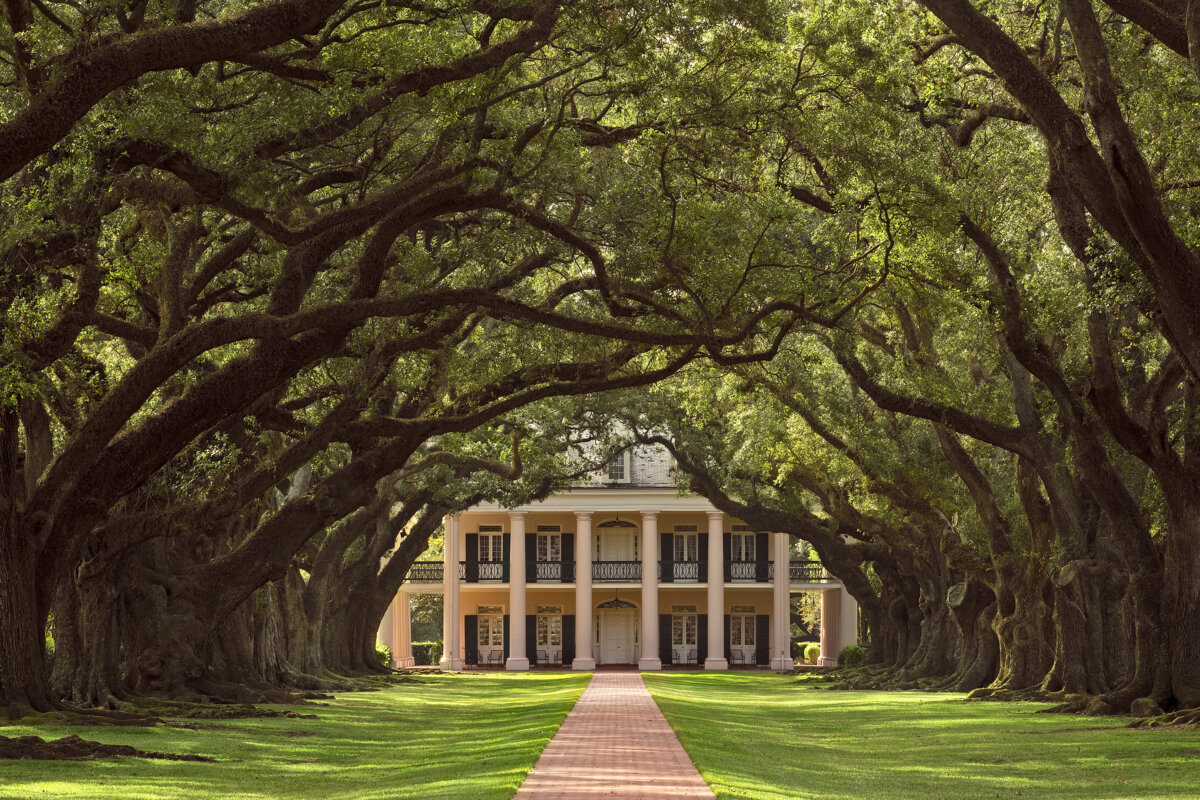
The nearly 300-year-old southern live oak trees, with branches intertwining to create a wide canopy, serve as natural sentries along the alley to the mansion. Their twisted, brown limbs contrast noticeably with the straight lines of the columned mansion at the alley's end. (Oak Alley Foundation)
The powerful Mississippi River, just beyond the back of Oak Alley Plantation in St. James Parish, Louisiana, is just one feature of the 25-acre antebellum property that distinguishes it as interlaced with nature. Most distinct is its long, canopied path, or alley, featuring two rows of immense southern live oak trees planted in the 1700s. And to the east and west of the house are expansive ornamental gardens.
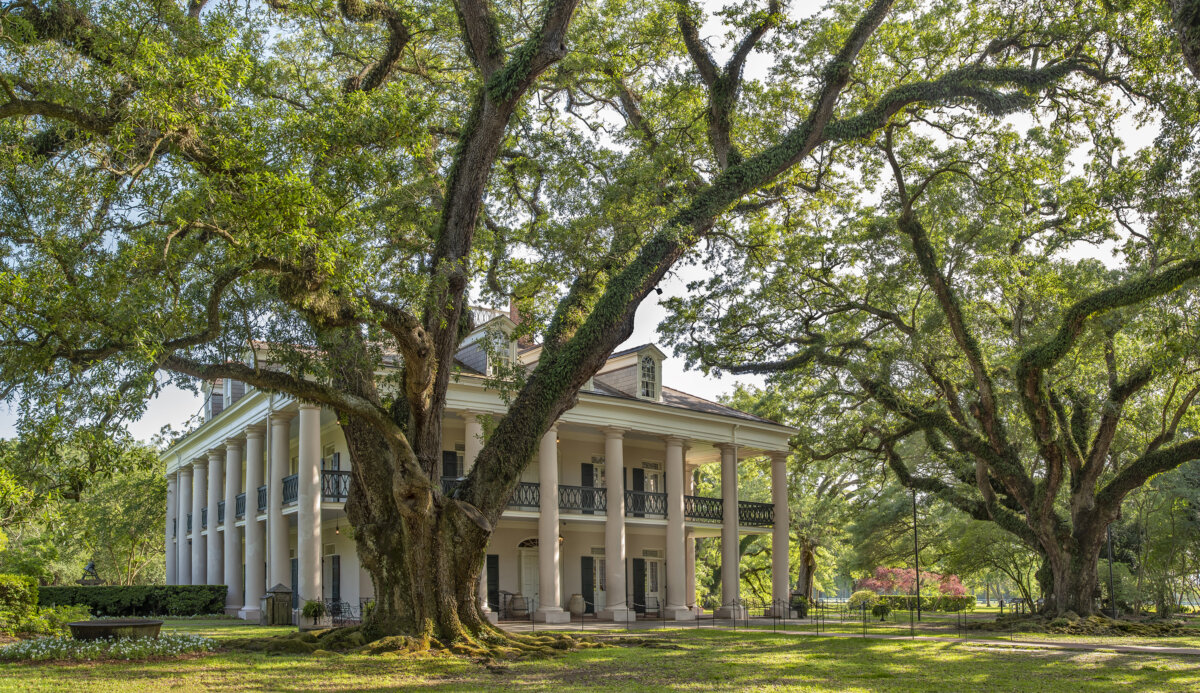
Completed in 1839, Oak Alley Plantation is also a novel showplace because of its Greek Revival architecture, instead of the fashionable Creole-style architecture favored by 19th-century affluent planters. Greek Revival style is evident in Oak Alley’s two-story classical columns and grandiose porticos. In contrast, Creole style focuses on architectural design incorporating open, airy spaces and steeply pitched roofs because of the state’s hot, humid summer climate.
According to architect, author, and educator Christine Huckins Franck, Greek Revival was beginning to pique the interest of the Louisiana gentry when Oak Alley was designed. Franck noted that even though Oak Alley is predominantly Greek Revival-style architecture, its design still considers the area’s climate, as is evident in the deep porches shading the house and the alignment of window and door openings for ventilation.
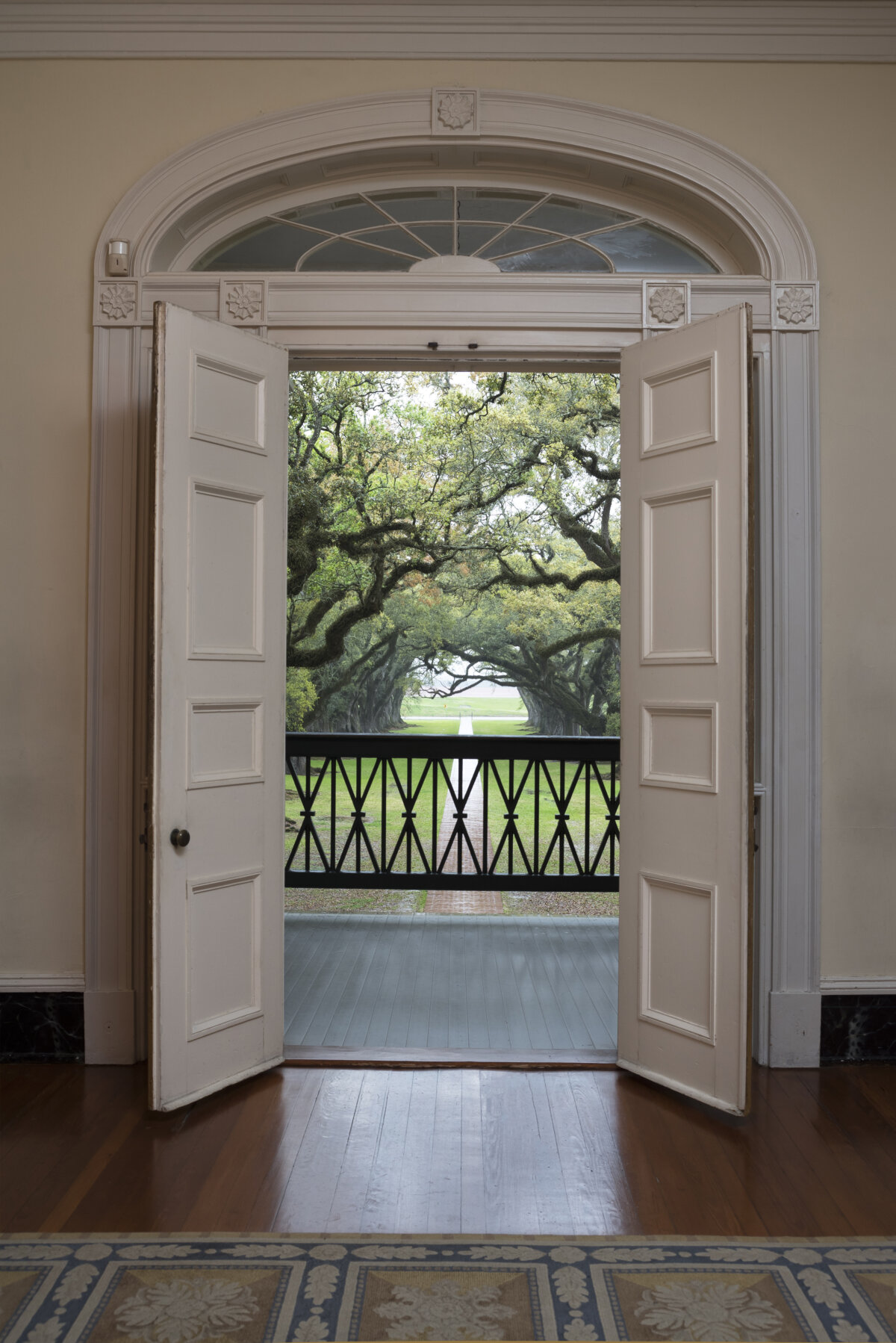
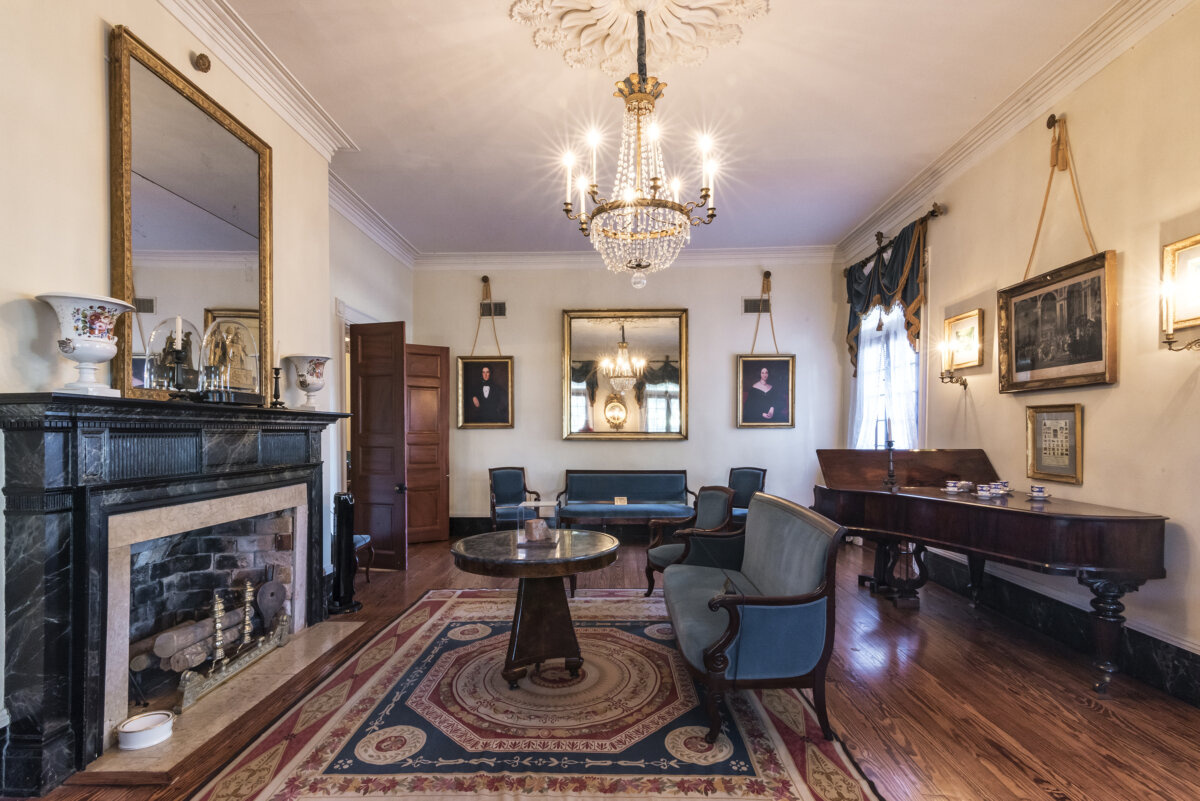
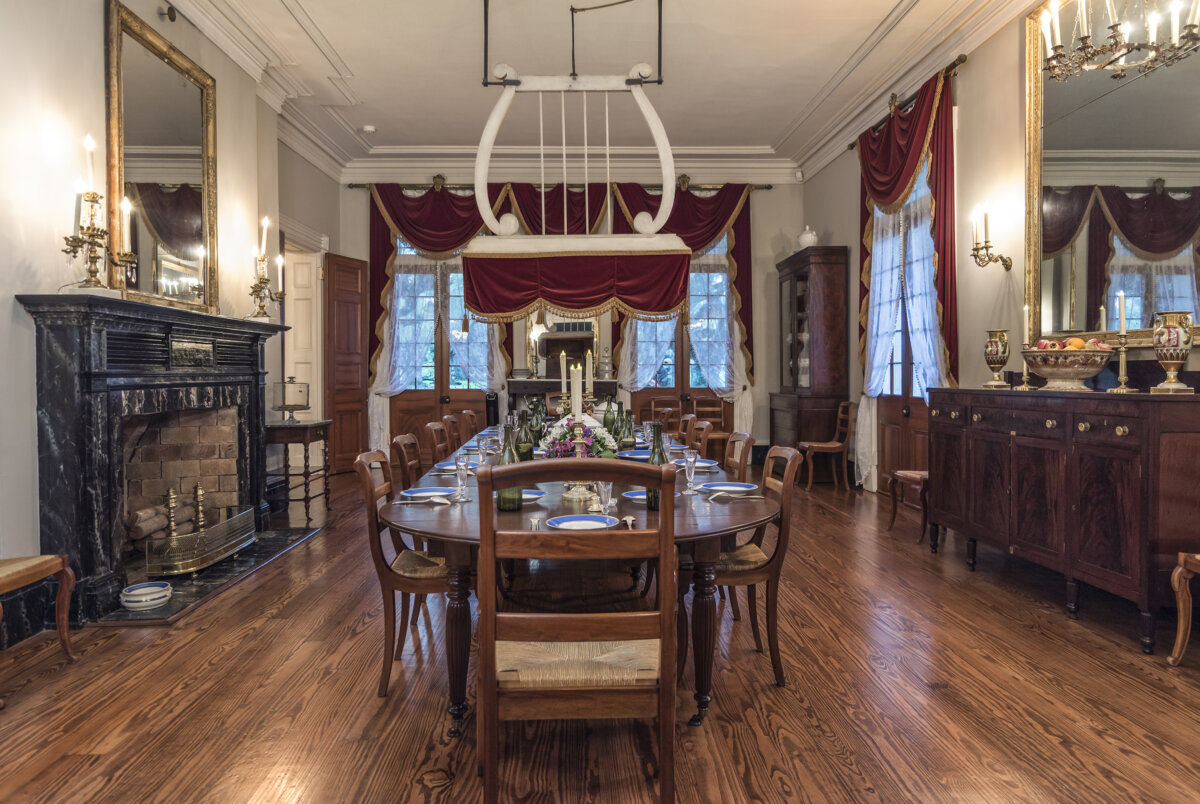
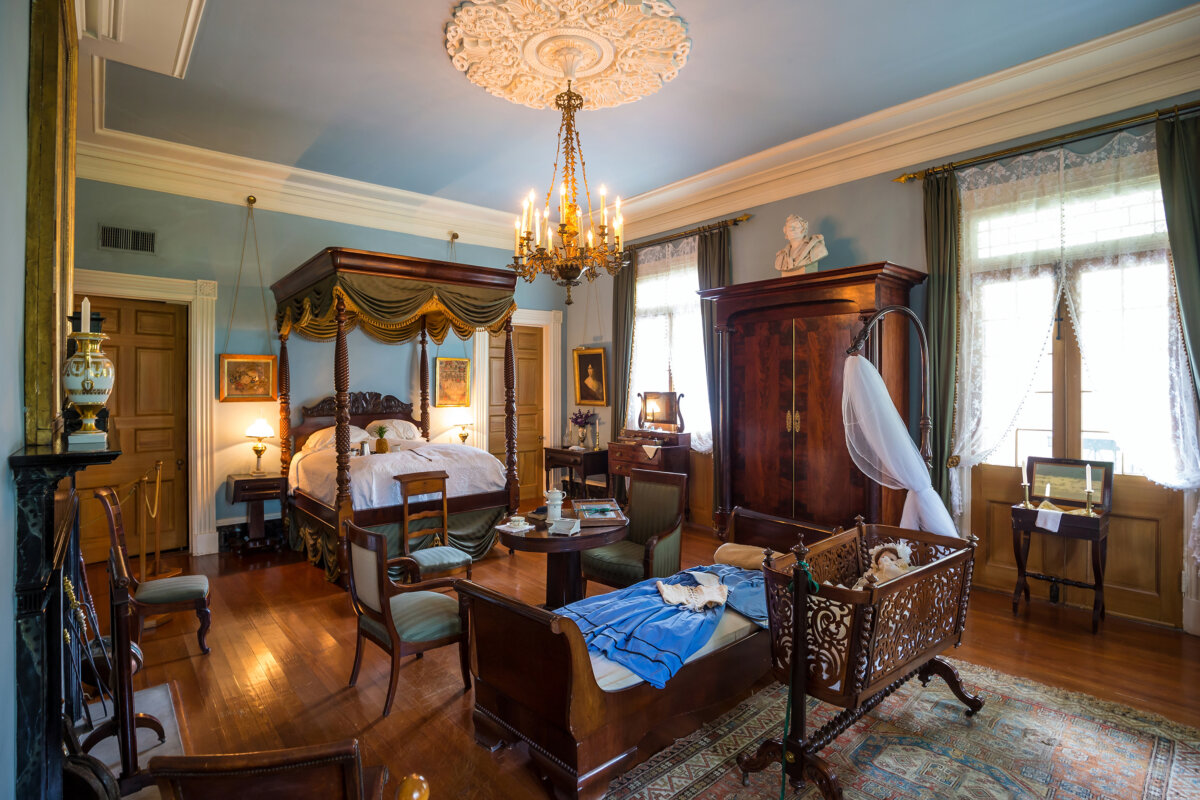
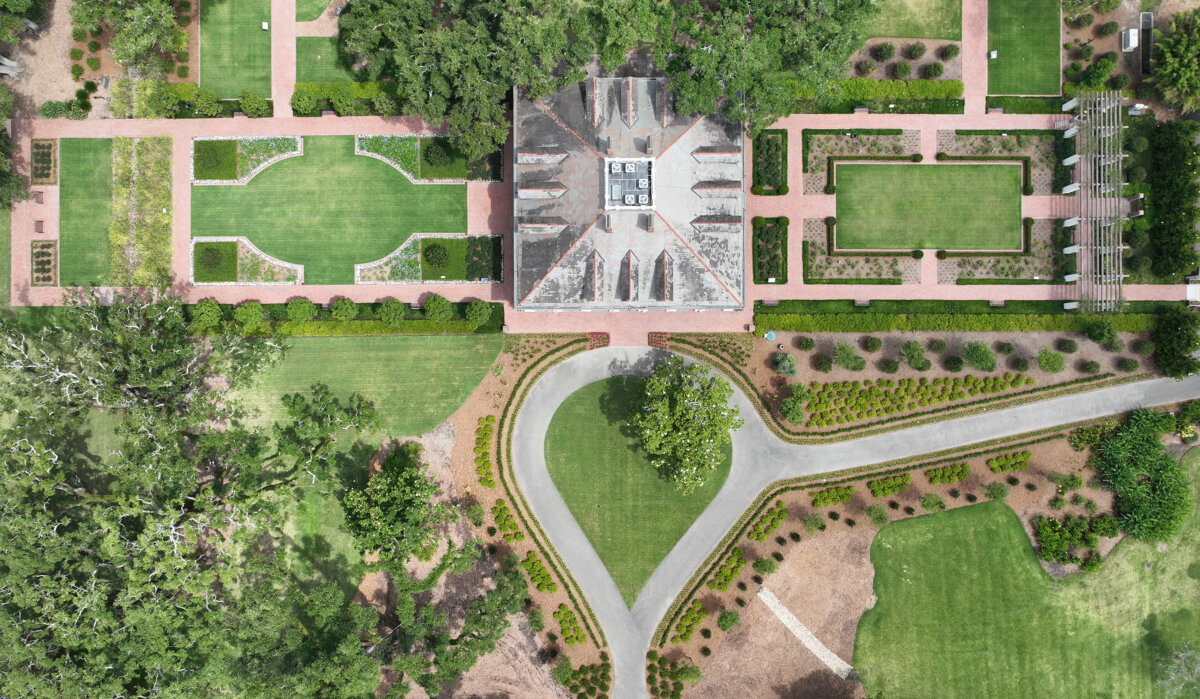
Majestic southern live oak trees with limbs reaching and sprawling in every direction surround the square-shaped, two-story Greek Revival-style mansion. As the main architectural feature, two-story Tuscan columns are featured on all four sides; 28 of them correspond to the 28 live oak trees lining the alley. The exterior walls are pale pink stucco over bricks to convey the look of marble, and the roof of the mansion is hipped. (Oak Alley Foundation) Paneled doors to Oak Alley Plantation’s mansion sit under an arched, sunburst transom featuring a rosette molding in place of a capstone. Rosette moldings also decorate the doorframe. The exterior view from the open door is of the bundled wheat wood railing that runs along the mansion’s upper balconies. (Oak Alley Foundation) Paneled doors made of cypress wood open from the mansion’s entryway into the parlor. Hanging from a large, decorative medallion on the parlor’s ceiling is an exquisite focal point: a crystal-and-brass chandelier with a circular candelabra. Polished heart pine covers the floors, while the mantel is painted to look like black-and-white marble. Blue velvet-covered French Charles X and Louis Philippe style furnishings provide seating in this room. (Oak Alley Foundation) Over the dining room table is what was known as a shoo-fly fan, which is original to the mansion. Resembling the shape of a lyre, the idea of the unique fan originated in East India and was called a “punkah.” The intent is for someone, typically a house slave in antebellum times, to pull on a rope to make the fan swing slowly back and forth while people ate at the dining table. The air flow discouraged flies from landing on food and provided a breeze on sweltering summer days. Crimson velvet drapes with gold-tassel trim hang regally on the tall windows below the molded tray ceiling. (Oak Alley Foundation) Each of the main rooms at Oak Alley Plantation exhibit an exceptional and distinct ceiling medallion, from which hangs an equally singular lighting fixture. This upper-floor bedroom is no exception. Densely furnished with handcrafted 19th-century period antiques, centerpiece items in this room are the sleigh-style daybed and the intricately carved cradle on a turned base with Chippendale legs. The carved four-poster, canopy bed is outfitted with forest-green velvet with gold-tassel trim that hangs from the bed’s tester, or top frame. (f11photo/Shutterstock) Sprawling symmetrical gardens on either side of the mansion include manicured lawns, mature trees, and flower gardens. From an aerial view, the mansion’s symmetry is evident, with three gabled dormer windows on each side of the square design. (Oak Alley Foundation)
What arts and culture topics would you like us to cover? Please email ideas or feedback to features@epochtimes.nyc
A 30-plus-year writer-journalist, Deena C. Bouknight works from her Western North Carolina mountain cottage and has contributed articles on food culture, travel, people, and more to local, regional, national, and international publications. She has written three novels, including the only historical fiction about the East Coast’s worst earthquake. Her website is DeenaBouknightWriting.com